Ultraman Tiga Ep. 42: The City Where the Girl Disappeared

Directed by Tsugumi Kitaura. Written by Keiichi Hasegawa. Airdate June 21, 1997.

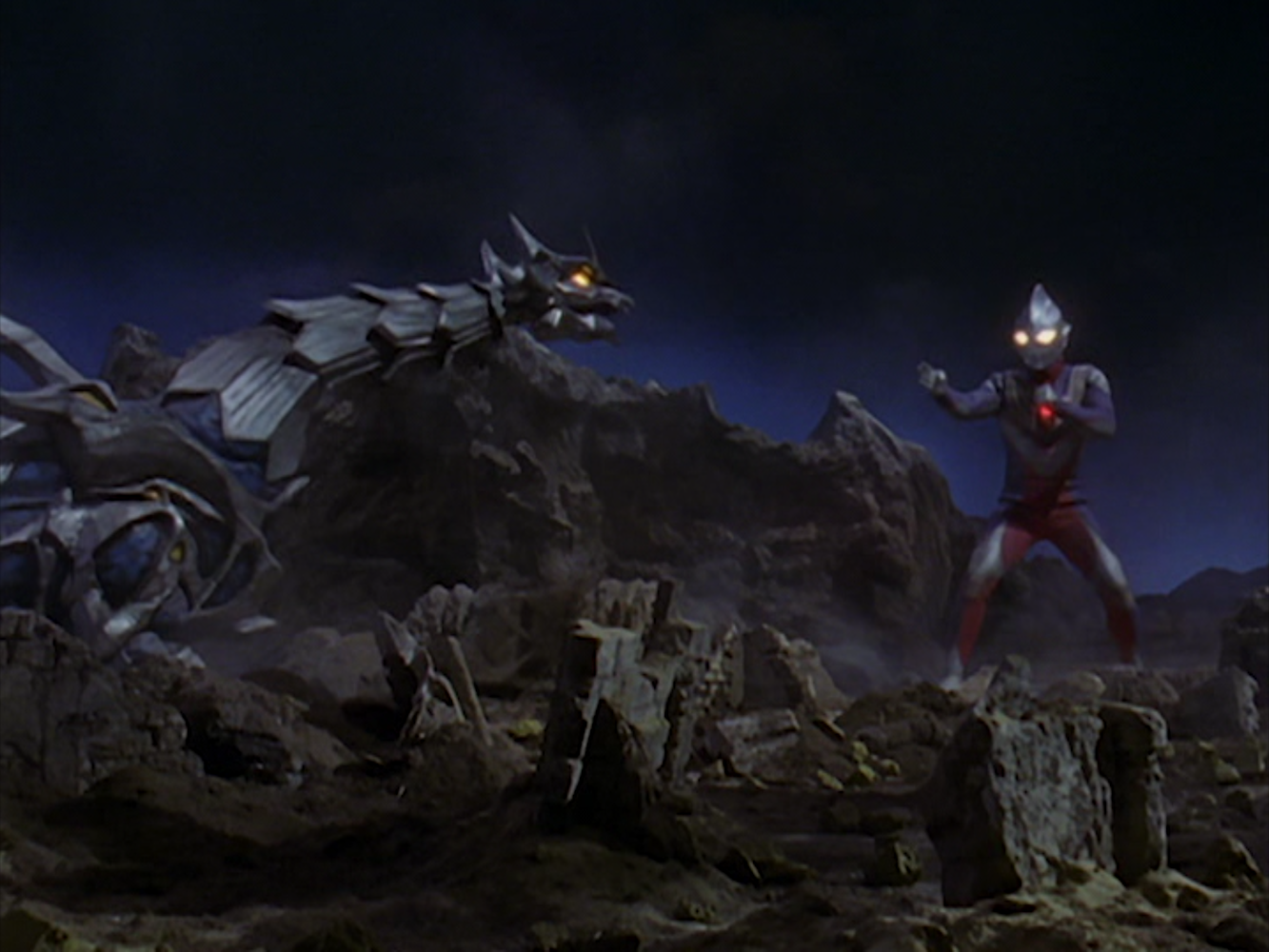
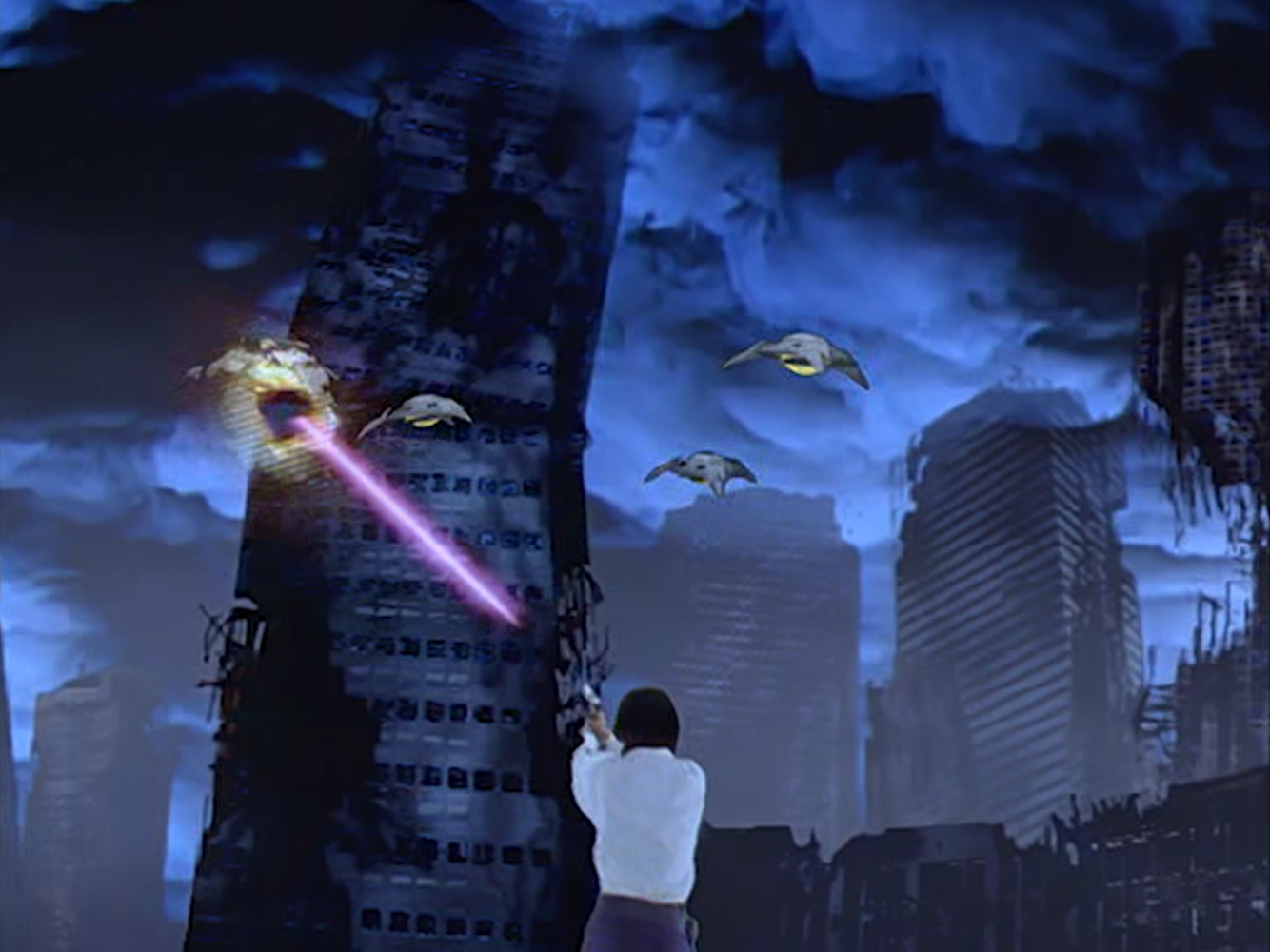
The digital effects in Ultraman Tiga are one of its major flaws. They hit their nadir in this episode, where they account for around 90% of the visual effects, leaving only a fraction for old-fashioned suitmation action in the finale, where Tiga takes on the giant robot form of an artificial intelligence called, no kidding, “Karen.”

Continue reading “Ultraman Tiga Ep. 42: The City Where the Girl Disappeared”
Ultraman Tiga Ep. 41: A Friend From Space

Directed by Tsugumi Kitaura. Written by Ai Ota. Airdate June 14, 1997.

The fourth and final Ultraman Tiga script from Ai Ota. Her previous episodes show her talent for stories with fairy-tale and fantasy slants, similar to Ultraman Taro but without the Showa-era crackpot absurdity. “Deban’s Turn” is a delightful children’s story, while “The Battle of Zelda Point” takes a sombrous approach to what could have been a simple girl-and-her-pet fable. Good stuff, and Ota would continue to write other enjoyable scripts for future Heisei Ultra shows. 

Continue reading “Ultraman Tiga Ep. 41: A Friend From Space”

Ultraman Tiga Ep. 40: Dream

Directed by Akio Jissoji. Written by Akio Jissoji, Akio Satsukawa. Airdate June 7, 1997.

Director Akio Jissoji is primarily interested in the visual style of his episodes, less in their narratives. His greatest Ultra Series episode, Ultraseven’s “Nightmare of Planet No. 4,” is essentially a guided tour rather than a full-fledged story. His previous Ultraman Tiga episode, “Flower,” is an exercise in stage aesthetics stretched over the thin framework of an alien invasion. “Dream,” Jissoji’s second Tiga episode, comprises his usual visual hallmarks: image collages, canted angles, diffused lighting, off-center framing, cartoonish sound effects, and classical music. But it also has a strong story driving it. Not a complex story, but one that supports and enhances Jissoji’s preferred style. The result is arguably the director’s best work for the Heisei Ultra shows.

Continue reading “Ultraman Tiga Ep. 40: Dream”

Ultraman Tiga Ep. 39: Dear Mr. Ultraman

Directed by Kyota Kawasaki. Written by Keiichi Hasegawa. Airdate May 31, 1997.

Another kaiju, Galra, has come to wreck the city. Galra belongs to the same ancient monster group as Golza and Melba, able to tunnel underground and materialize suddenly. It has high resistance to damage, making it a tough opponent for GUTS and Ultraman Tiga to stop.

Galra, however, isn’t the episode’s main adversary. A man who lives in a shabby apartment is the real enemy.

Continue reading “Ultraman Tiga Ep. 39: Dear Mr. Ultraman”

Ultraman Tiga Ep. 37: Flower

Directed by Akio Jissoji. Written by Akio Jissoji, Akio Satsukawa. Airdate May 17, 1997.

Akio Jissoji returns to direct an episode of an Ultra television series for the first time since Ultraseven’s “The Saucers Have Come” — a gap of almost three decades. (He did direct Ultra Q the Movie: Legend of the Stars in 1990.) Have the years mellowed his eccentric visual style and storytelling techniques? Nope! During his break from television, Jissoji has been directing experimental short films, and he’s gotten even weirder. 

Continue reading “Ultraman Tiga Ep. 37: Flower”

Ultraman Tiga Ep. 36: Smile Across Space and Time

Directed by Teruyoshi Ishii. Written by Masakazu Migit, Keiichi Hasegawa. Airdate May 10, 1997.

Yazumi finally gets an episode of his own. The “guy in the chair” of GUTS, the agent who didn’t even get to go into the field until episode 23, now takes the spotlight. Aside from “One Vanishing Moment,” where he flaunted a militaristic attitude, Yazumi has always come across as the quietest, most restrained member of GUTS. Perhaps that’s why Captain Iruma kept him in the operations chair most of the time rather than fighting monsters in the field.

Continue reading “Ultraman Tiga Ep. 36: Smile Across Space and Time”

Ultraman Tiga Ep. 35: Sleeping Beauty

Directed by Teruyoshi Ishii. Written by Chiaki J. Konaka. Airdate May 3, 1997.

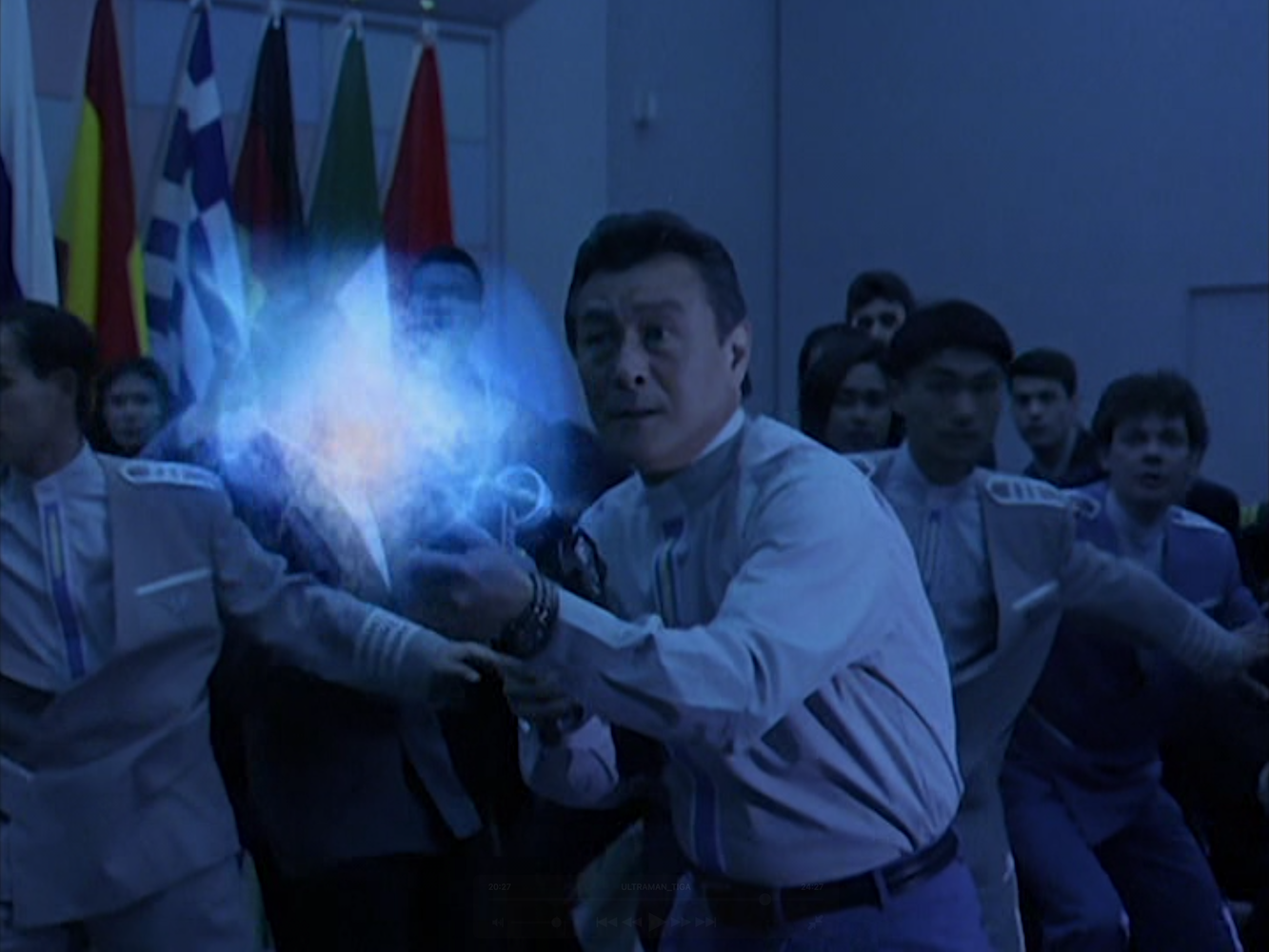
The previous episode left open questions about the alien entity responsible for the assault on the Terran Peace Consortium’s summit in the Cliomos Islands. This episode picks up soon afterward. The TPC East Asia Base is investigating an alien body in cryostasis (codename: Sleeping Beauty) that was transferred from the West Asia Base. The alien — which resembles a typical “gray” but with green skin — has been in stasis for more than two decades. An alloy discovered near it is identical to the material of the bioweapon used in the attack on the TPC summit. 

Continue reading “Ultraman Tiga Ep. 35: Sleeping Beauty”

Ultraman Tiga Ep. 34: To the Farthest South

Directed by Hirochika Muraishi. Written by Chiaki J. Konaka. Airdate April 26, 1997.

The politics and history of the Terran Peace Consortium have materialized in several Ultraman Tiga episodes so far: “The Devil’s Prophecy,” “The Day When the Monster Appeared,” and “The Battle of Zelda Point.” This is the first episode to make TPC politics its centerpiece. It foregrounds two figures who represent the opposing poles of the organization’s purpose: the dovish Commissioner Sawai (Tamio Kawachi) and the hawkish Director Yoshioka (Ken Okabe). 

Continue reading “Ultraman Tiga Ep. 34: To the Farthest South”

Ultraman Tiga Ep. 33: Vampire City

Directed by Hirochika Muraishi. Written by Keiichi Hasegawa. Airdate April 19, 1997.

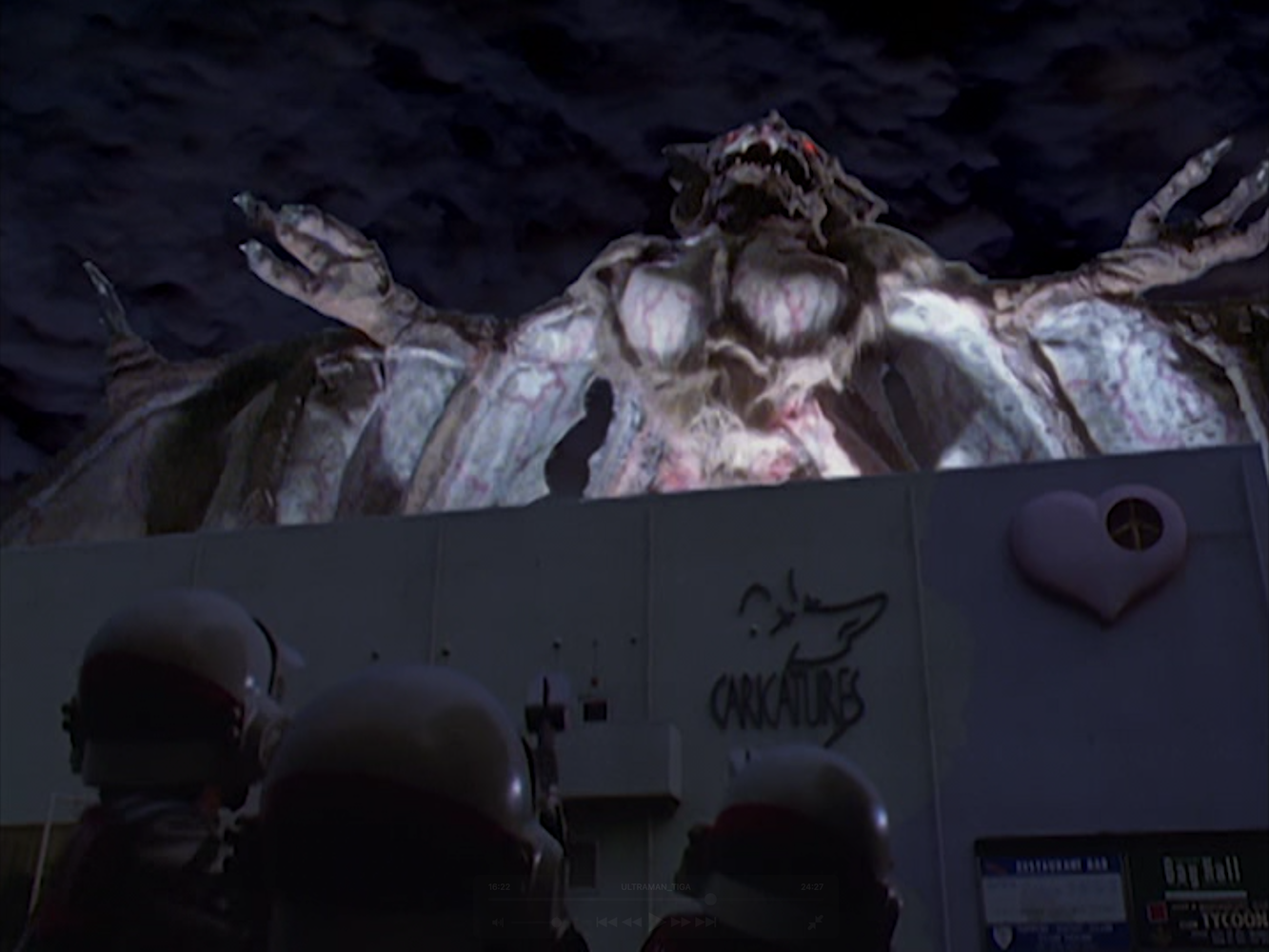
Ultraman Tiga is doing another horror episode, this time with a different brand of fear: the ‘90s noir vampire flick. Welcome back to the days of leather-clad cool vampires who do backflips and make their lairs in deserted nightclubs. The episode goes all-in with a trendy vampire tale, and pulls it off, making for a superior Tiga episode to pick for Halloween than the show’s actual, bespoke Halloween episode

Continue reading “Ultraman Tiga Ep. 33: Vampire City”