
Written and Directed by Akio Jissoji.1 Airdate August 11, 1968.
Our favorite lunatic artist, Akio Jissoji, is back for one last blast in the Showa era. After this, Jissoji won’t direct another Ultra television episode until 1997: “Flower” for Ultraman Tiga. For his temporary farewell, he’s brought along his usual stylistic hits that make his episodes visually rich and strange. He’s got some classical music, too. That’s become another Jissoji trademark.
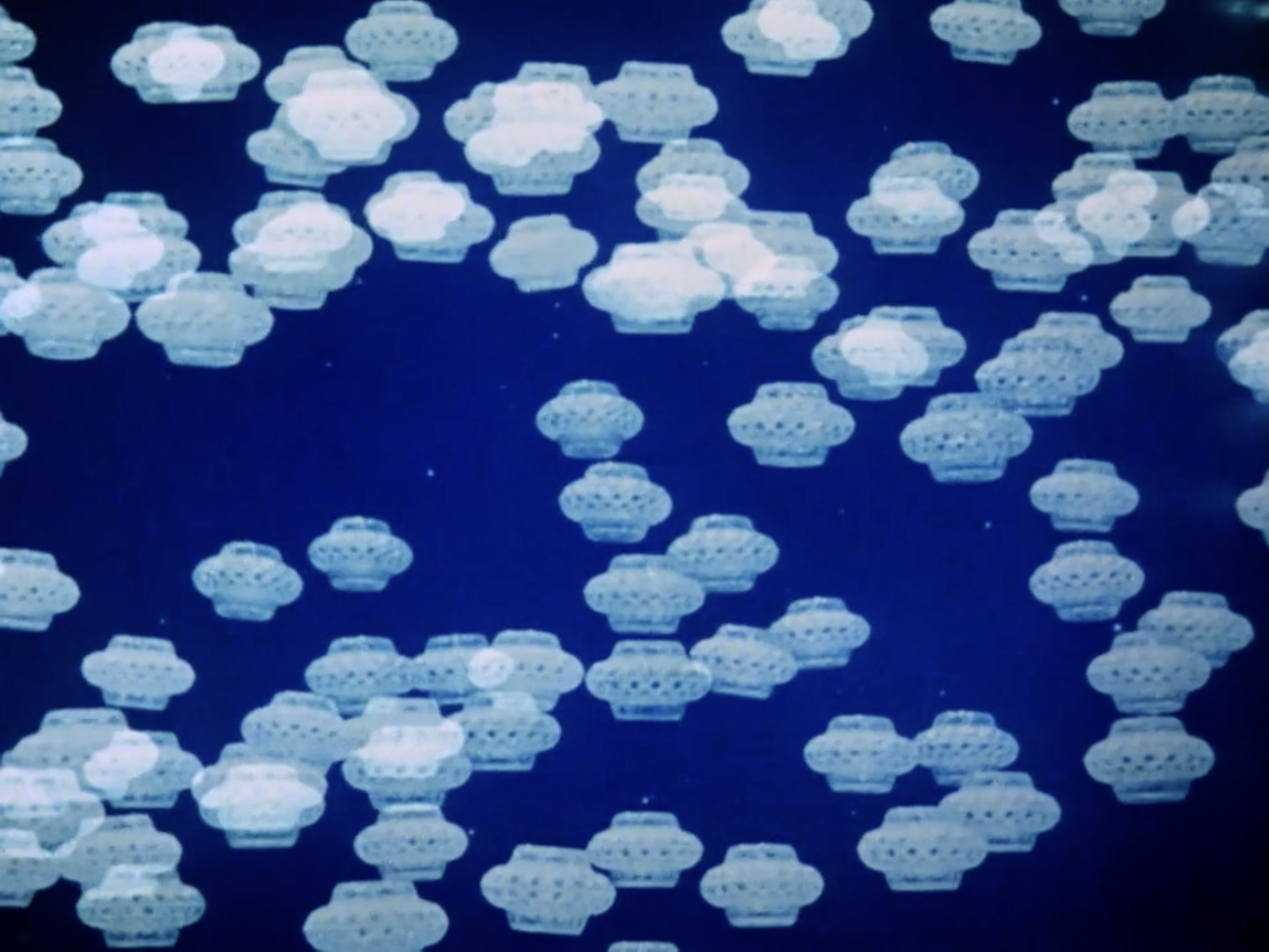
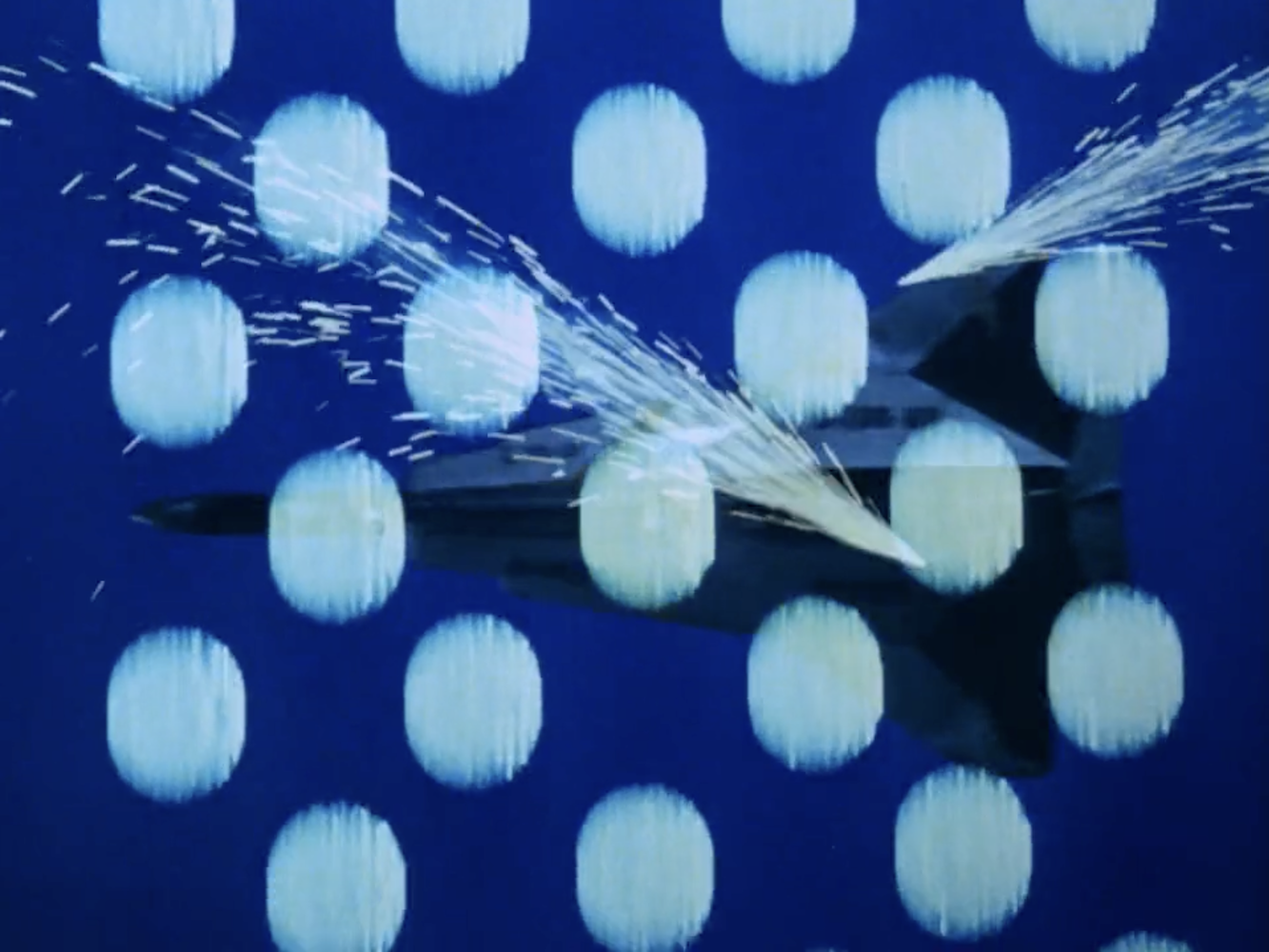
As in several of his episodes, Jissoji makes an effort to reduce reliance on standard suitmation and model effects. He instead focuses on camera tricks and opticals. “The Saucers Have Come” offers one of the finest examples of this experimental approach during its final battle, in which the Ultra Guard and Seven confront Alien Perolynga, the invading extraterrestrials of the week. This sequence is what most viewers remember about the episode. It’s a trippy collage of light bursts, bubbles, saucers, flipping and somersaulting images, and a “fight” between Seven and Alien Perolynga that’s more of an impression of a fight. Quite a sight to behold, and unique among Ultra VFX finales.
This spectacle, however, isn’t representative of the rest of the episode, which is a kitchen-sink drama set in the mundane world of working-class Japan in the late 1960s. The screen is filled with scenes of people doing laundry at a riverside, crowded apartment blocks, boring industrial jobs, and the ugly clank-and-clang of daily life. Jissoji is dipping into the everyday world that director Yasujiro Ozu explored throughout his career — although the two men’s visual styles could not be more different.
This is the most we’ve seen in Ultraseven of day-to-day existence in Japan, a setting far removed from the gleaming futurism of the TDF and Ultra Guard. This realism would become more common in the Ultra Series, starting with Return of Ultraman. It’s a pleasant change in both style and atmosphere.
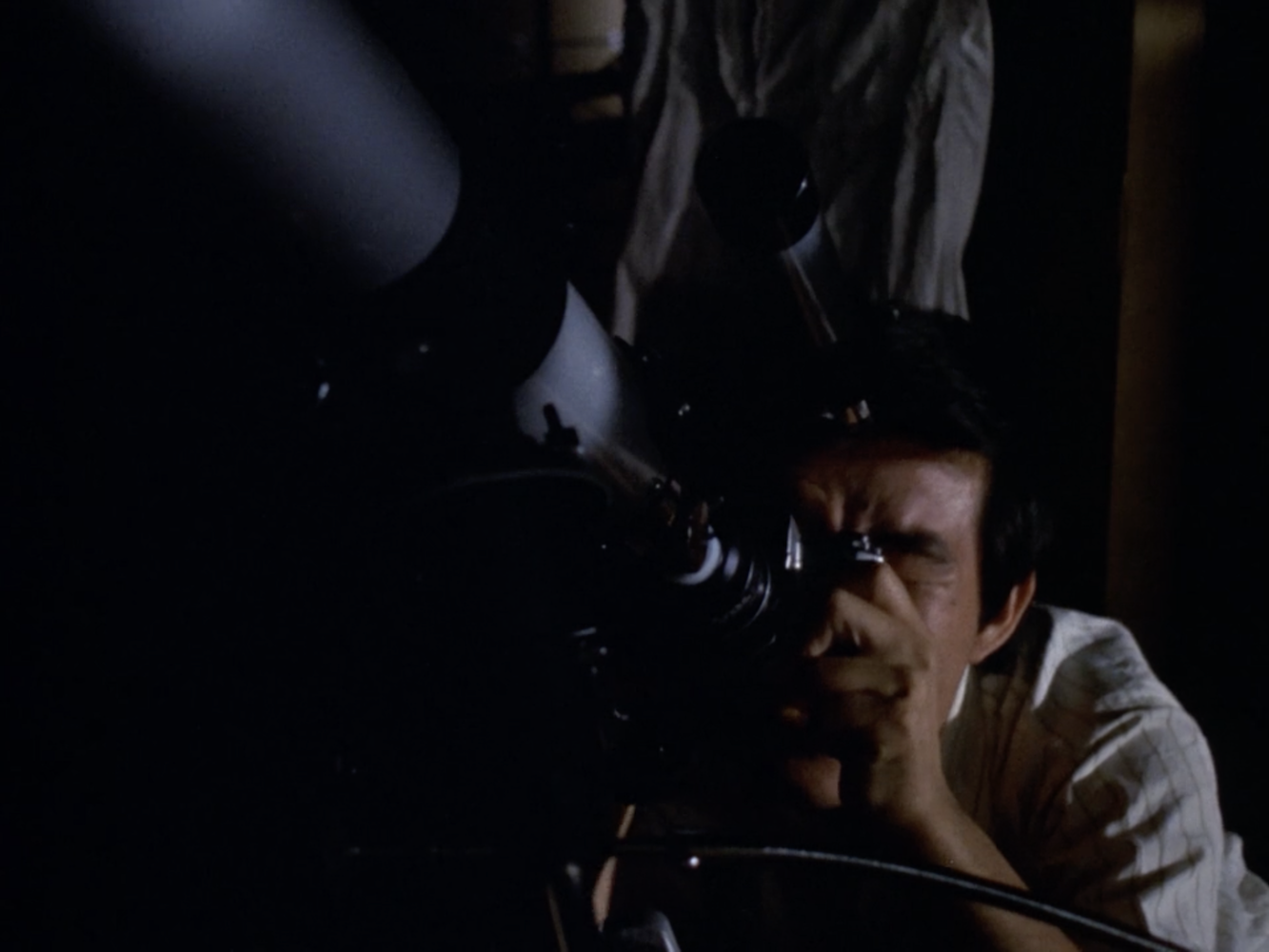
With the Ultra Guard relegated to a subdued role, the part of the protagonist goes to amateur astronomer Saburo Fukushin (Kimihiro Reizei). Fukushin gazes at the stars from the balcony of his cramped apartment by night, then blearily slogs through his mind-numbing factory job by day. His dream is to one day discover a comet that will be named after him. He’s not far removed from Ikuta, the lead character in a later Jissoji classic, Ultraman Tiga’s “Dream.”
One evening, Fukushin looks up at the stars and sees a fleet of alien saucers heading toward Earth. He contacts the Ultra Guard, but they uncover nothing. This triggers a “boy who cried wolf” storyline in which the UG continually dismisses reports from Fukushin and other amateur stargazers because these “saucers” they claim to have spotted seem to leave no trace.
Among the UG members, Furuhashi is naturally the one who dismisses these sightings as a pack of nonsense. Captain Kiriyama takes a more cheerful outlook: the more useless their work is, the safer the Earth must be. Fine glass-half-full thinking, which is exactly what I expect from Kiriyama.
Fukushin continues to see the saucers — as the title says, they are definitely coming. His panicked warning calls are angering his neighbors, particularly Gen, the local drunk. Fukushin finds some solace talking to a boy (Hiroyuki Takano) by the riverside. He explains his astral fascinations to the curious child: “The stars aren’t dirty. They’re pretty. Earth is swarming with humans and it’s noisy.” I’m right there with you, Fukushin. We Highly Sensitive People need solidarity. Fukushin secretly hopes the saucers will take him off the Earth and away from all these awful people.
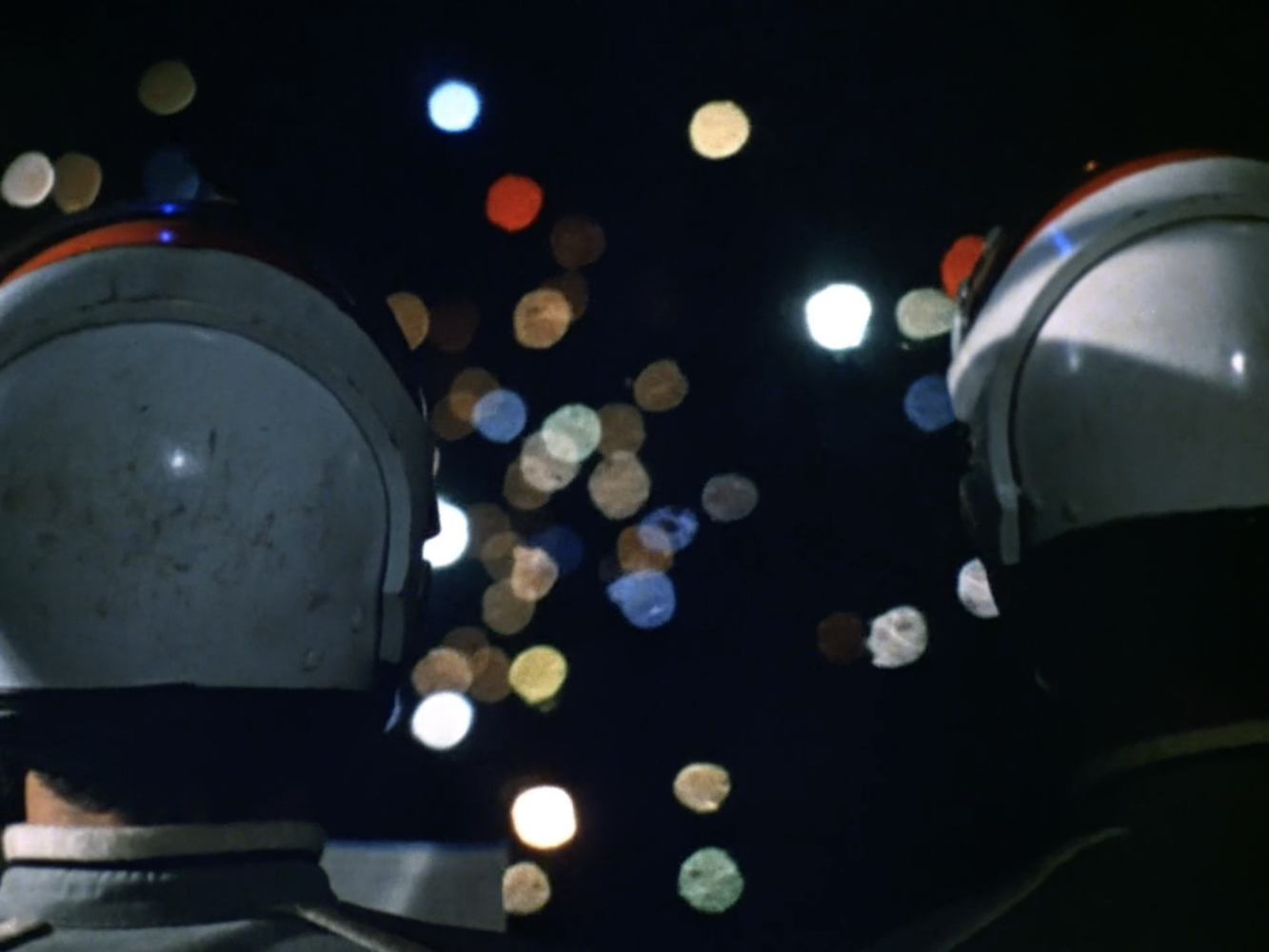
The script pulls out a fantastic twist as it moves into its final third, raising the stakes for Fukushin and drawing him nearer to the impending invasion. When all the spectacle of the battle is finished, Fukushin is left feeling more solitary than ever. He’s a man who feels he has no connection to other humans. The episode conveys this via a simple but powerful closing visual. For Akio Jissoji, it’s a fairly ordinary shot. But ordinariness, the daily grind and ugliness of regular life, is where the story has spent most of its time, and it’s necessary for it to return there.
“The Saucers Have Come” had a follow-up decades later with the Ultraman Taiga episode “The Saucers Have Not Come.” It isn’t a true sequel, as the characters and events don’t neatly line up, but it can be seen as a spiritual continuation set in a different universe. Actor Hiroyuki Takano returned as a character who might be the same unnamed child he played in the original; he mentions meeting a man 50 years ago who wanted to go to the stars.
This is an excellent final bow for Akio Jissoji in the Classic Ultra era. The ordinary world of modern Japan, the isolated and lonely protagonist, the clever story-elevating twist, and the psychedelic action climax all show how effective Ultraseven is at playing in a wide field of ideas and styles. Akio Jissoji was the director best suited to play with these possibilities, and the entire franchise is better for what he did.
Rating: Classic
Previous: The Terrifying Super Ape-Man
Next: Showdown of Dan vs Seven
- The script is credited to Shozo Uehara and Akio Jissoji (under the pseudonym Takashi Kawasaki), but according to Uehara, Jissoji wrote the script alone. ↩︎

