Directed by Hirochika Muraishi. Written by Chiaki J. Konaka. Airdate June 28 & July 5, 1997.
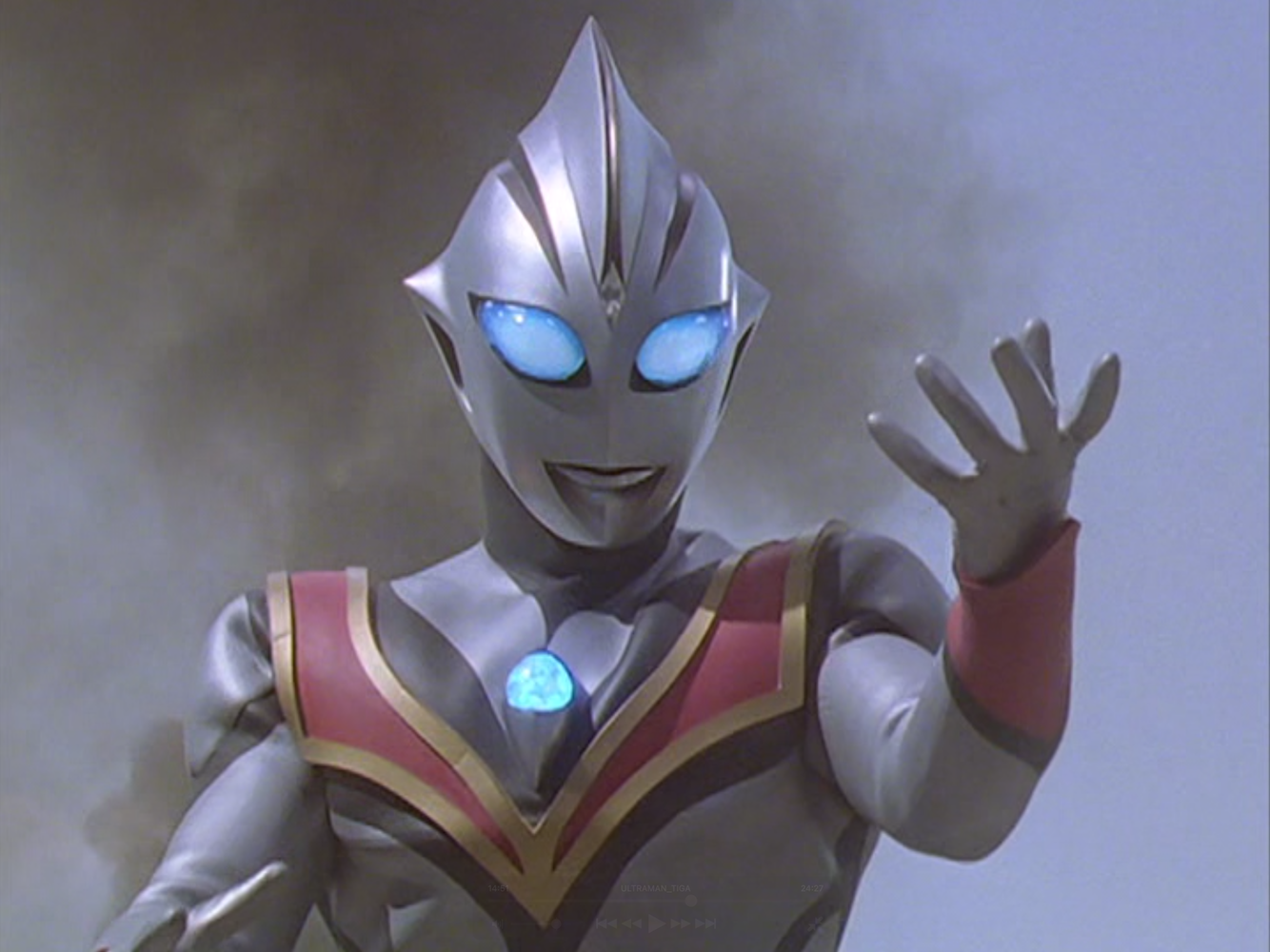
At last, the time has come. Time to introduce an … evil Ultraman! Although a few evil Ultras appeared in the previous shows, starting with “Brother From Another Planet,” they became a hallmark of the Heisei and New Generation eras. This is a fine showing for the first Heisei Evil Tiga, and it comes with the bonus of a robo-landshark, connections back to the mysterious events of the first episode, and a surprise third monster with an interesting twist.
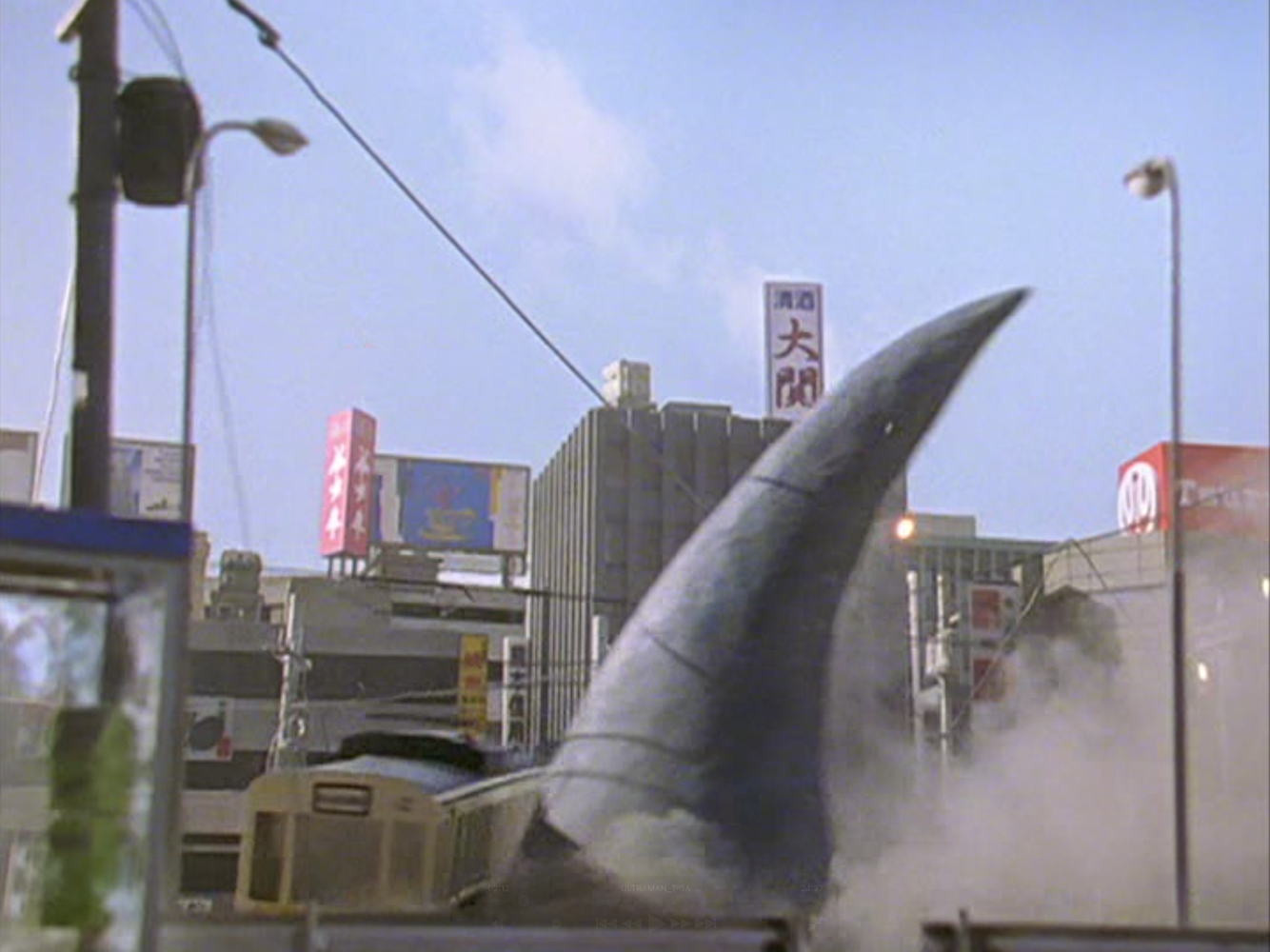
Geozark, the landshark of the title of the first episode, gets events moving immediately. A giant fin starts slicing through the middle of a city in both spectacular and hilarious visuals before it stops before Kumamoto Castle. It looks like another day in the life of GUTS battling kaiju.
But this kaiju has brought something different: the “Ark,” the container holding the remains of the Ultra statues discovered in “Inheritance of Light,” starts to vibrate when it appears. Meanwhile, when Daigo is near Geozark, he begins seeing visions of a mystery man who appears to know his secret identity as Tiga. The enigmatic figure mocks him with a hidden threat: “Do you think you are the only chosen one?”
Daigo encounters this stranger face-to-face after he’s abruptly transported into an empty amusement park at night, a visual reference to the famous Ultra Q episode “Challenge From the Year 2020.” (The amusement park is also here because the Ultra franchise loves amusement parks as spots to fight monsters.) It’s not until the second episode that we learn this man’s identity: Keigo Masaki, physicist and CEO of Cytech. Masaki has discovered a second set of ancient statues underground: one an Ultra and the other a Guardian Kaiju (a.k.a. “Guardie”). He needs Daigo’s Sparklence to seize the power of the Ultra and make himself a god among humans.
The action finale of the second episode is exactly what you’d hope for in this kind of confrontation. We get not only a kinetic martial-arts-style showdown between Tiga and Evil Tiga, but also an intriguing third factor: a guardian monster who is the opposite of monstrous. Guardie ends up the secret ingredient of the story, even if it’s introduced a bit late.
Evil Tiga is a fantastic opponent for Tiga, but his corrupt human host, Masaki, is far less effective. Actor Takashi Kora sneers and cackles with the appropriate amount of glee, but Masaki is a thin character. A CEO from a vaguely defined corporation who wants to seize the power of the gods because, well, that’s what evil CEOs do. His taunting of Daigo in the first episode about working to achieve power rather than having it handed to him never feels like a personal challenge, nor does it connect to Guardie, who takes on the emotional center of the story during the finale. Compare Masaki to Kirino in “Dear Mr. Ultraman,” and you’ll see a better way to write a human villain with a personal grudge against Tiga/Daigo.
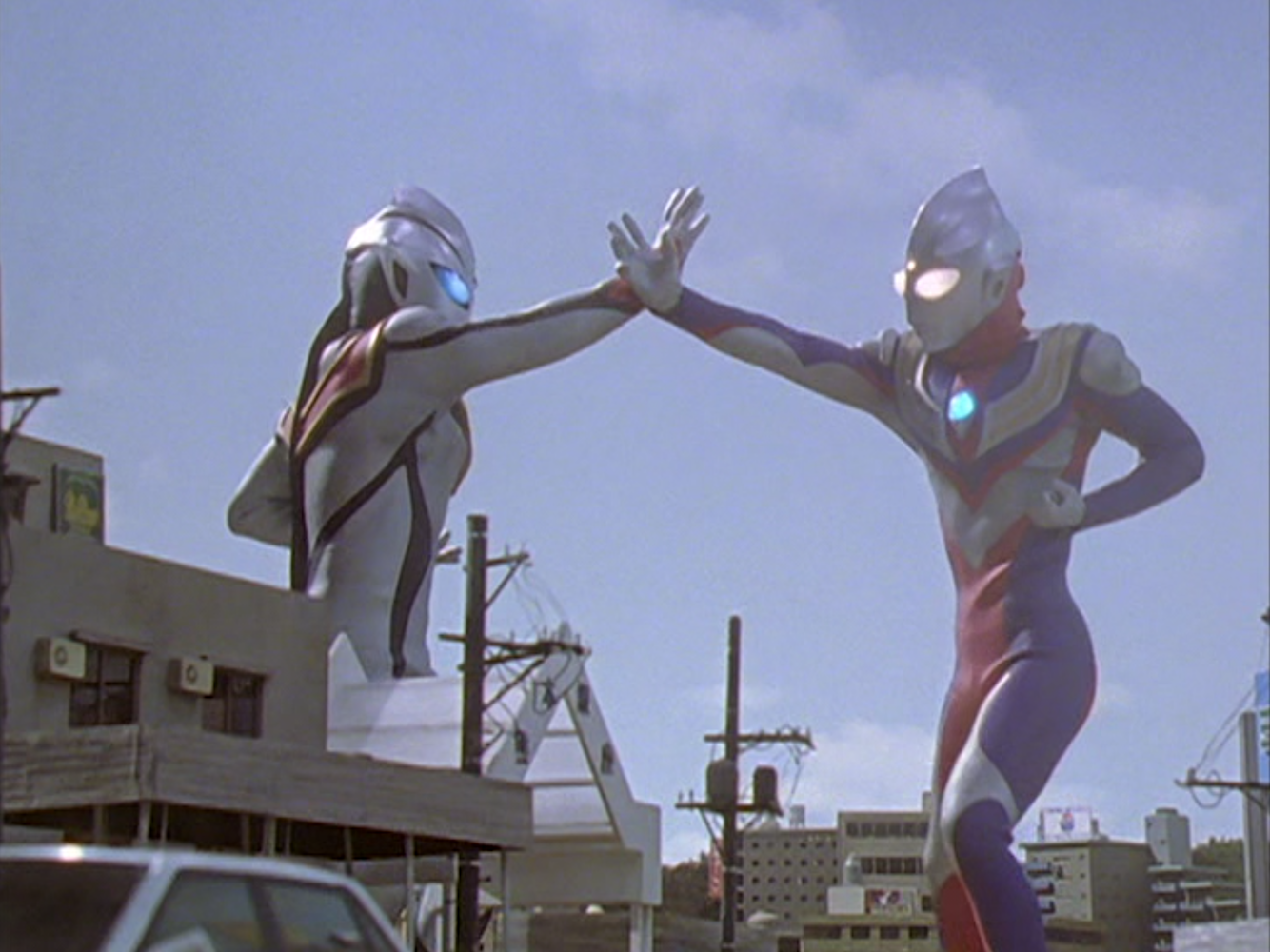
Watching this Heisei-era two-parter while simultaneously writing about a New Generation Heroes show (Ultraman Ginga S) highlights the different approaches these periods take to structure. Evil Tiga doesn’t appear until far into the second episode, while the first episode features a standalone menace, Geozark. If this were a New Generation two-parter, Evil Tiga would’ve debuted at the close of the first episode and probably beaten Real Tiga in a fight. Evil Tiga’s identity as Masaki would then be a reveal in the second episode.
Is one style better than the other? I’ve seen both work, but I honestly find the sharper divide of this Ultraman Tiga two-parter almost refreshing. Geozark doesn’t do much for the overall plot — it’s merely a robot Masaki built to fill the episode’s fight-card requirement — but I’d rather have a fun, new monster than a reused kaiju suit, as New Gen shows often do (e.g., Birdon’s perfunctory appearance in Ultraman Ginga S’s “Split! UPG”).
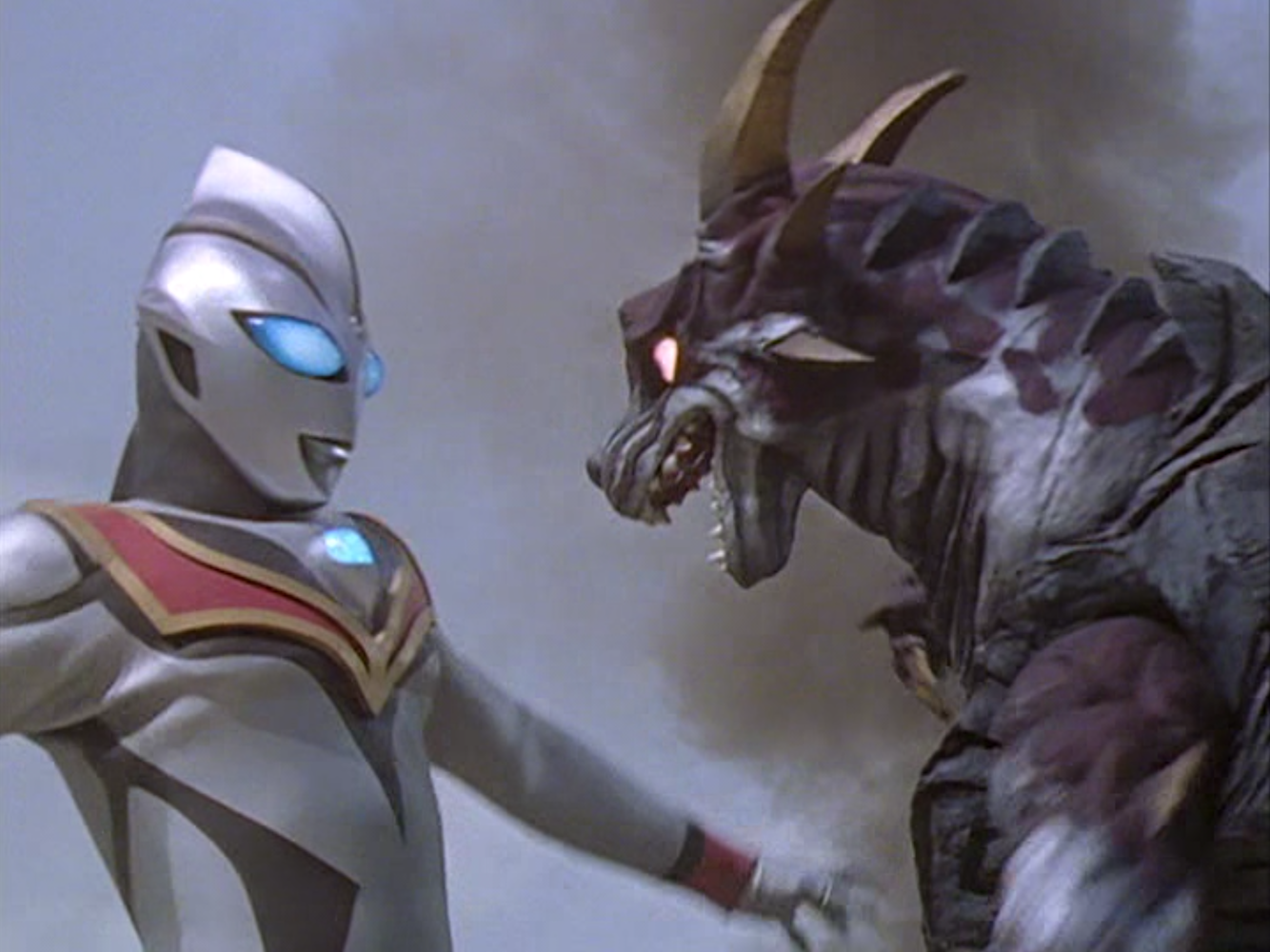
The story definitely requires two episodes to tell. Even at that length, events occasionally feel crammed. There’s a subplot where recurring character Professor Tango (Yoichi Okamura) steals the Ark in order to replicate the sand from the ancient statues and create more Ultras. The reveal that Tango is a traitor working for Masaki is a major turning point for the supporting cast, but it doesn’t come across that way. Tango betraying the TPC should’ve been the center of a full episode, rather than an adjunct to Masaki’s plot. Guardie is a good twist on the standard “guardian kaiju,” but it gets far less screen time than it deserves. Guardie’s fate has sentimental impact — but it might have landed harder with a few more minutes dedicated to it.
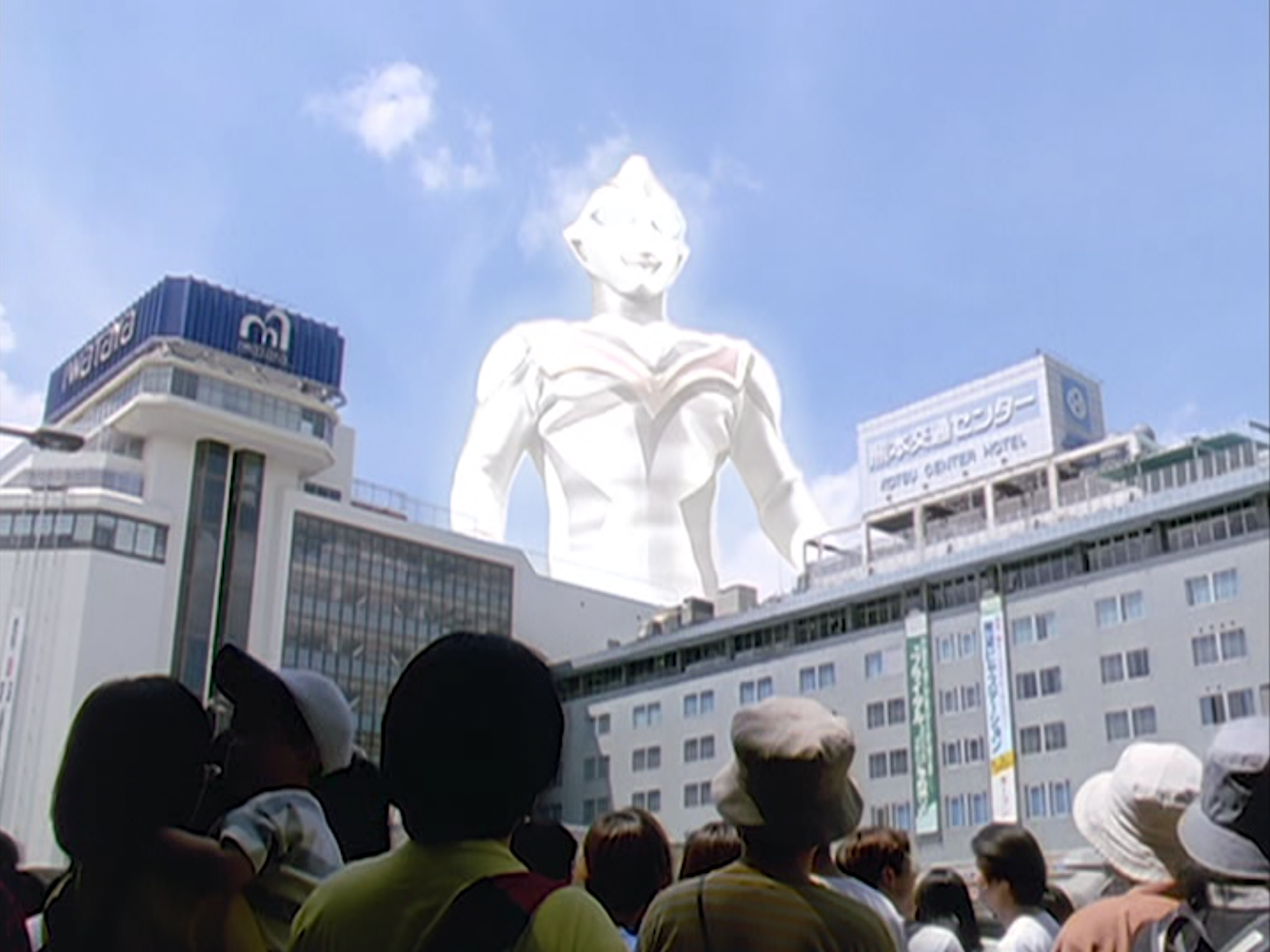
Despite awkward plotting and missed opportunities, this two-parter is an overall success as Ultra entertainment. Along with an exciting action finale, the first Heisei-era evil Ultra, new bits of Ultra lore, and an unusual kaiju, it also features several memorable bits: Evil Tiga appearing to the public to the pompous strains of Wagner’s Tannhäuser, Tiga hurling a robo-shark around an amusement park, a cute mystical dog, nods to Ultra Q, and the suggestion that Captain Iruma may have figured out that Daigo and Tiga are the same. Honestly, I’d be disappointed in Iruma’s acuity if she hadn’t already figured it out.
Rating: Great
Previous: The City Where the Girl Disappeared
Next: Eternal Life