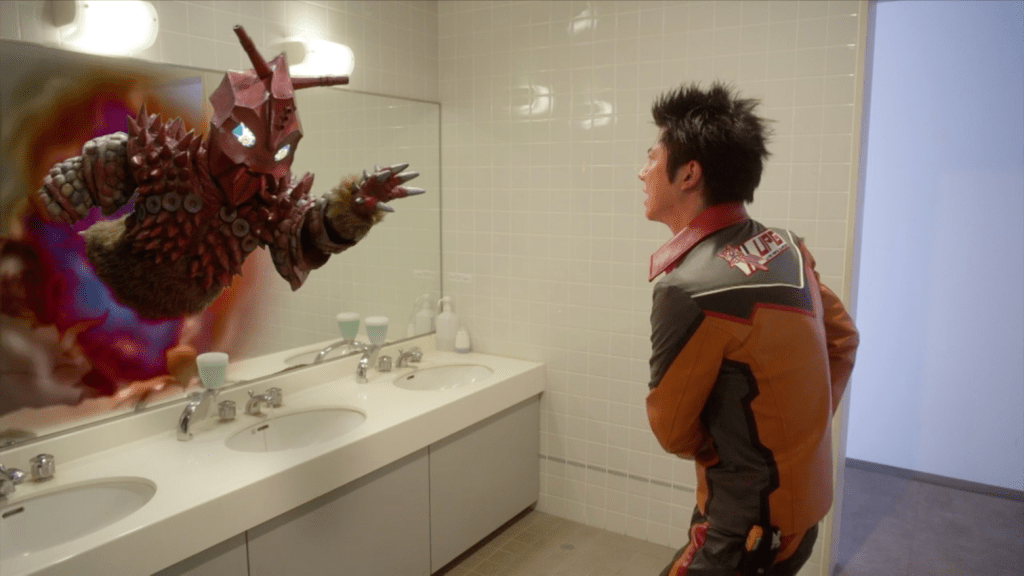
Directed by Yoshikazu Ishii. Written by Hirotoshi Kobayashi. Airdate August 12, 2013.
Here’s an episode that focuses on UPG member Gouki Matsumoto. So far, Gouki has had little to do except futilely shoot lasers at the monsters of the week and drive around with Arisa in the single car the defense team’s budget can afford.
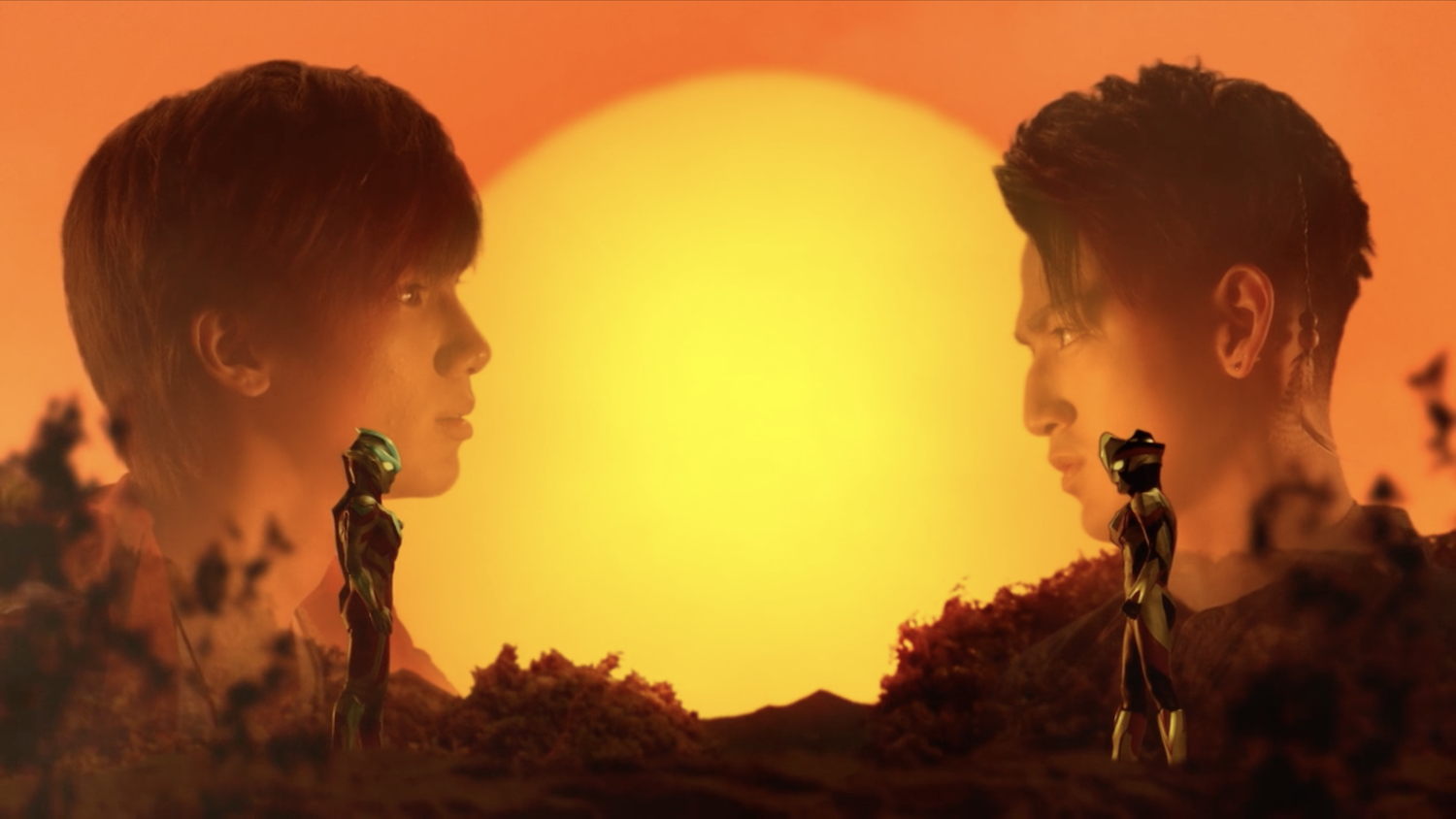
Directed by Koichi Sakamoto. Written by Takao Nakano. Airdate July 22, 2013.
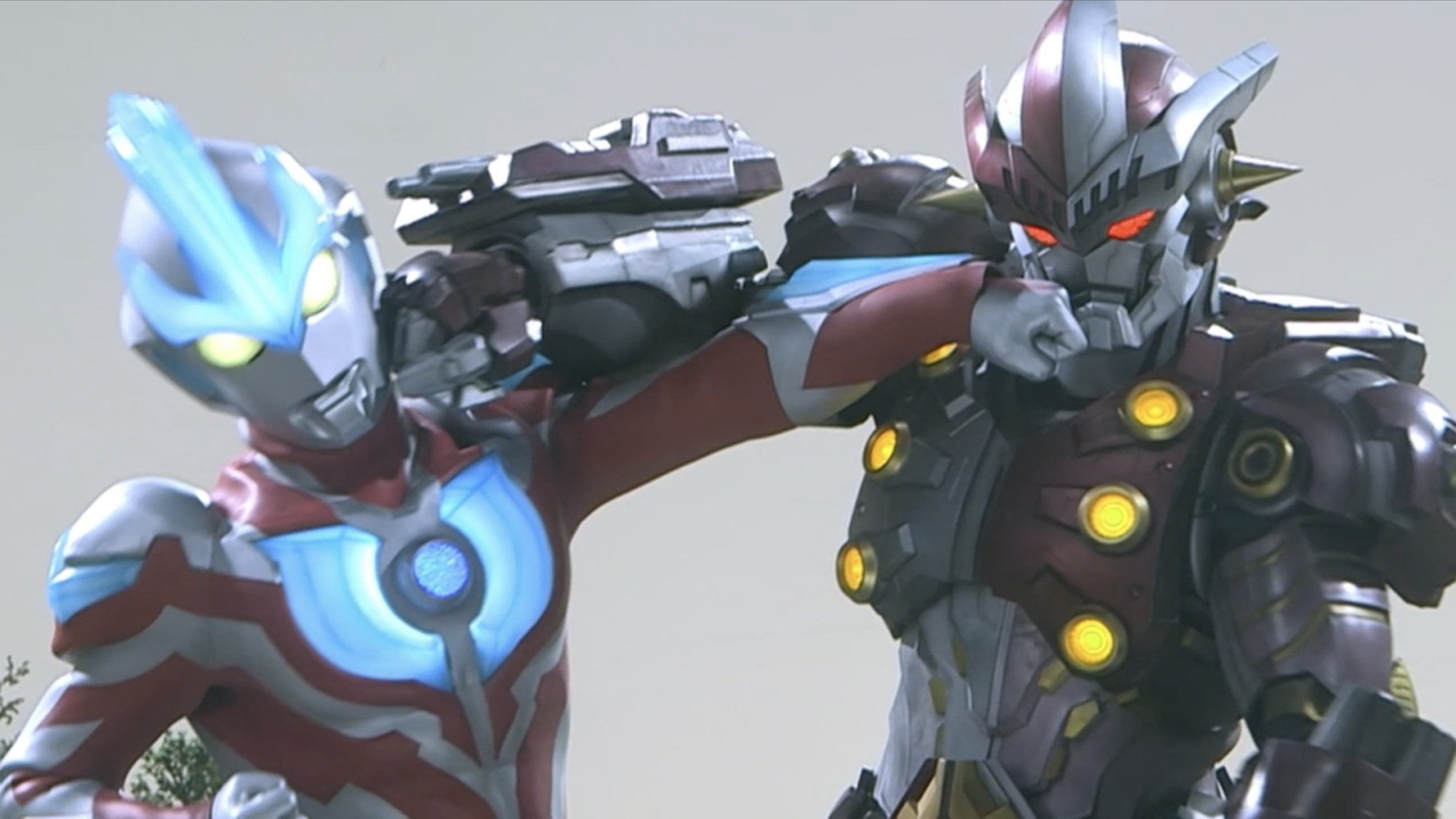
The second episode of Ultraman Ginga S doesn’t make viewers wait long for the title bout. Starting immediately where the last episode abruptly concluded, Ultraman Ginga and Ultraman Victory have their first clash, a battle against the sunset that echoes Akio Jissoji’s favorite compositions. Victory strikes first, reacting when Hikaru asks the basic question: “Uhm, what’s going on here?”
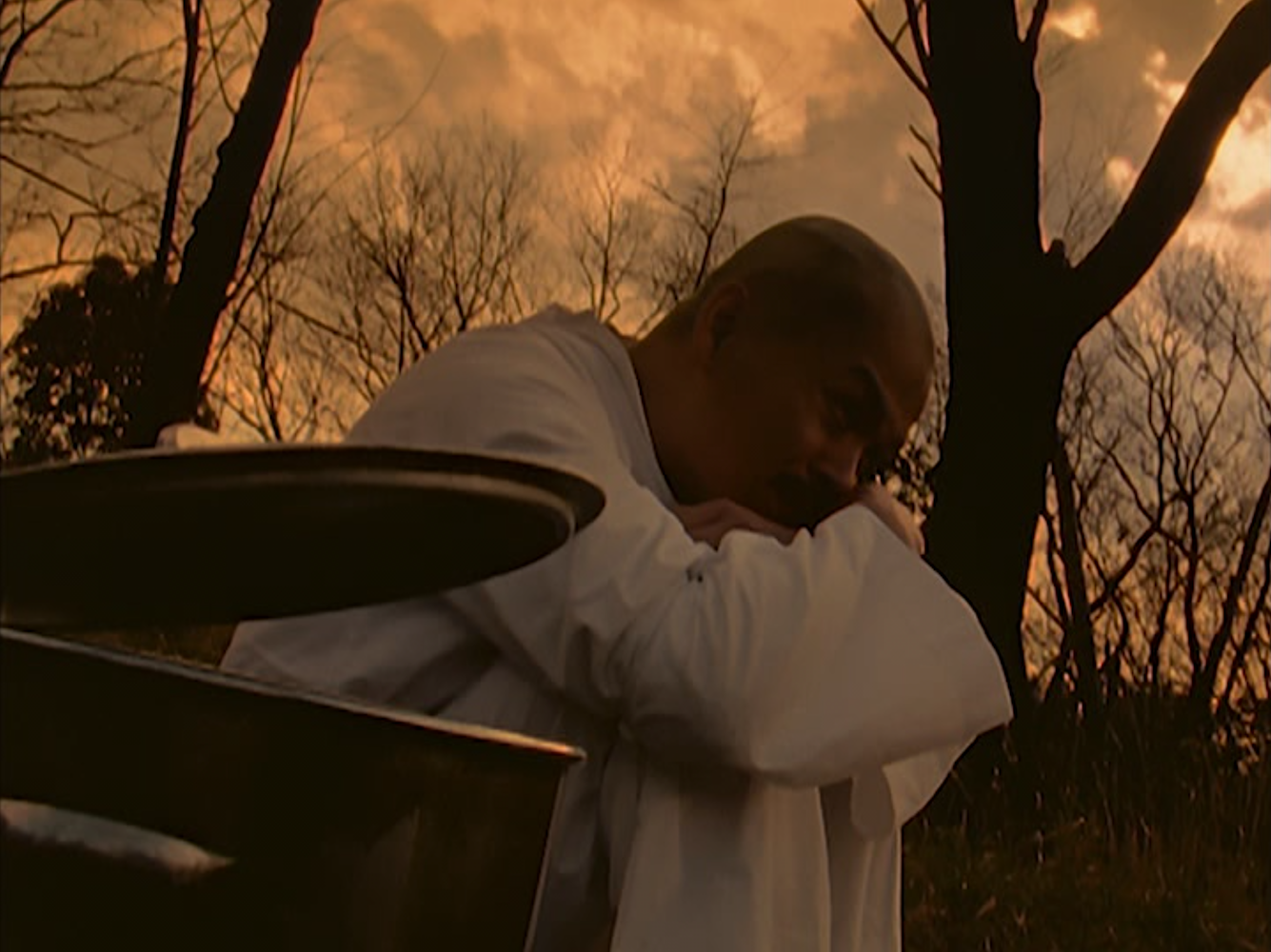
Directed by Kyota Kawasaki. Written by Ai Ota. Airdate March 8, 1997.
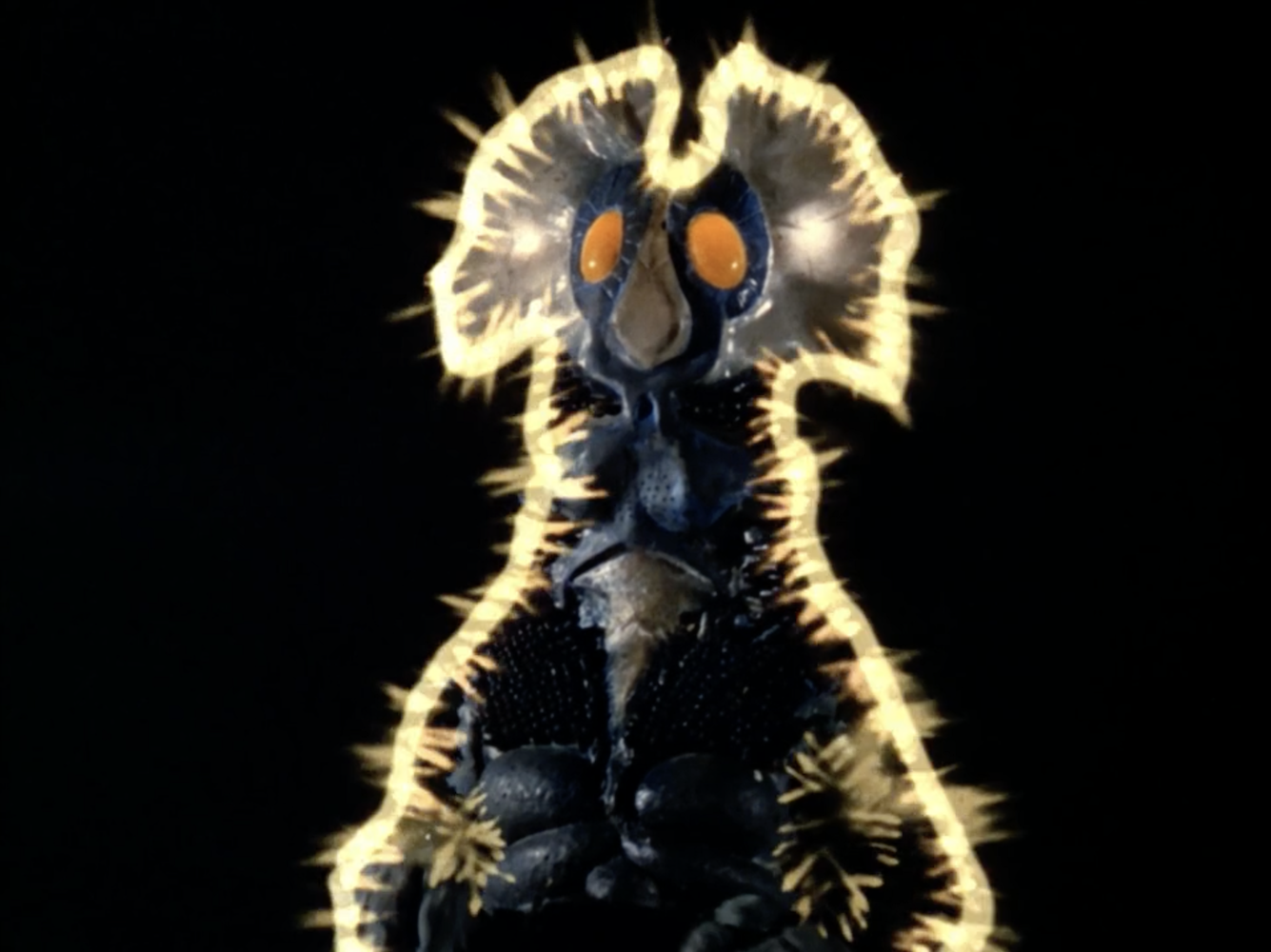
“I Saw Obiko!” starts like another horror outing for Ultraman Tiga, this time with a traditional Japanese folklore approach. The demon Obiko — an actual demon, not an alien pretending to be one — has been frightening people in the area of Hikono City for several months with his sudden appearances. When Obiko actually attacks a young man and leaves physical evidence behind (the man’s hair goes white), GUTS comes to investigate. They soon discover Obiko’s disguise as a noodle vendor who haunts the streets of the town at night.
Directed by Yuichi Abe. Written by Akira Tanizaki. Released Sep. 7, 2013.
Ultraman Ginga was planned to start with a six-episode run, followed by a hiatus, and then five more episodes. After airing episode 6, the show wouldn’t return to its regular weekly schedule for three months. In between, Tsuburaya Pro released a 44-minute special to theaters, paired with an animated episode of Mega Monster Battle Ultra Rush to push the running time to feature length. This Ultraman Ginga Theater Special would later be shortened to a 25-minute episode, “Monster Competition,” to slot between episodes 6 and 7 for future broadcasts, streaming, and home video releases. I’m looking at the 25-minute version here, since the theatrical version is padded with recaps and previews of future episodes.
Directed by Kengo Kanji. Written by Masanao Akahoshi. Airdate August 7 & 14, 2013.
We’re at the halfway point of Ultraman Ginga — the ideal time for an epic two-parter that will rewrite the status quo. Except “epic” isn’t something really within the reach of Ginga’s budget.
Directed by Kazuho Mitsuta. Written by Shinichi Ichikawa. Airdate April 21, 1968.
Similar to “Return to the North!”, this episode looks at the life of an Ultra Guard member outside of the day-to-day work of defending Earth from invaders. We learn that Soga is engaged; his fiancée, Saeko Nambu (Sanae Kitabayashi), is a sophomore at Kyonan University. The other UG members tease Soga by calling him Soga-kun, the familiar form of address that Saeko uses with him. This is a welcome touch of humor and lightness among the Ultra Guard, who rarely have the easy camaraderie of the Science Patrol in Ultraman.
Directed by Tomoo Haraguchi. Written by Akira Tanizaki. Airdate July 24, 2013.
This is the first episode of Ultraman Ginga that manages to tell an effective story despite the show’s severe production limitations. The creative team appears to have figured out, at least for the moment, how to maneuver around corporate restrictions and demands to create something that works as both a YA drama and an Ultra adventure. The scope is still cramped, there’s a distractingly wrongheaded scene, and the monster suits are all reused, but “The Twin-Headed Flame Beast” offers a blueprint for a creative path forward for the show.
Directed by Toshitsugu Suzuki. Written by Keisuke Fujikawa. Airdate Feb. 19, 1967.
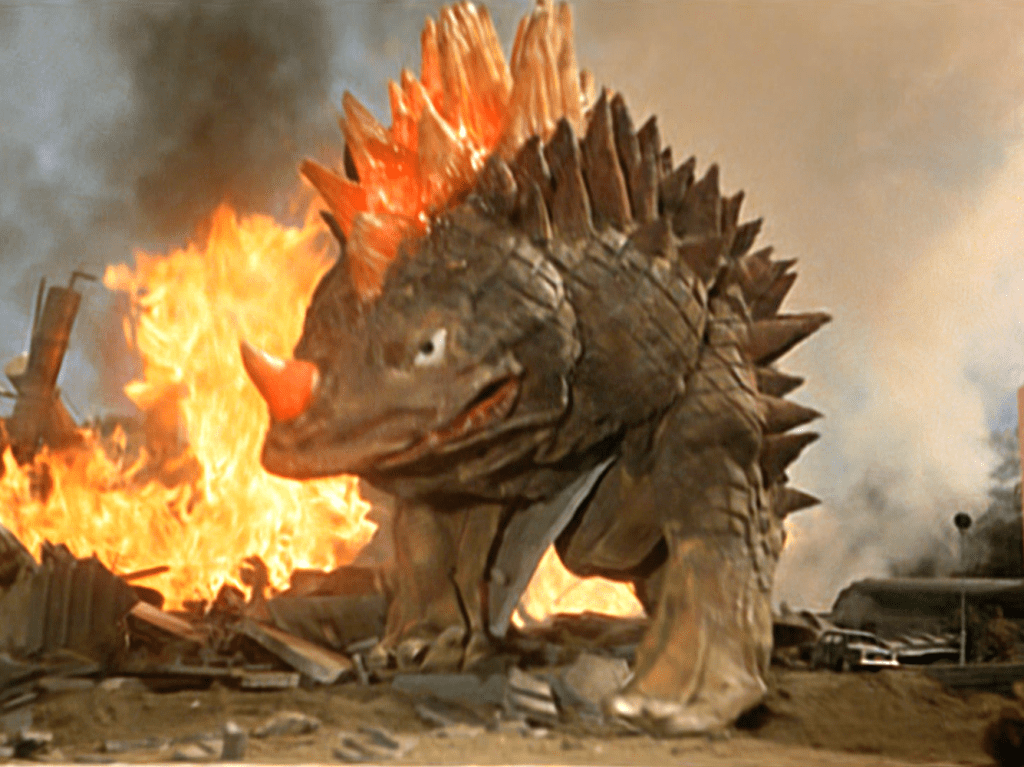
In what feels like a flashback to the earliest episodes, “Endless Counterattack” is a formulaic rampaging monster story with a structure similar to middle-of-the-road episodes like “Science Patrol, Move Out” and “Lightning Operation.” Giant monster Zumbolar appears in the wilds and causes massive destruction with its fiery powers. The Science Parol must find a way to stop it as it trundles toward Tokyo. Ide comes up with an invention, Hayata changes into Ultraman, and the problem is solved after a whole bunch of stuff goes kablooie.
Directed by Toshitsugu Suzuki. Written by Keisuke Fujikawa. Airdate April 7, 1968.
While doing this website, I’ve discovered that writing about the best Ultra episodes is more difficult than writing about good or mediocre episodes. With a classic episode, there’s more to consider and explore and numerous ways to approach the writing. Discovering the ideal way to concisely discuss a complex, multilayered episode in an entertaining and clear way can be rough. It’s rewarding to get to that final version, but it takes serious effort.
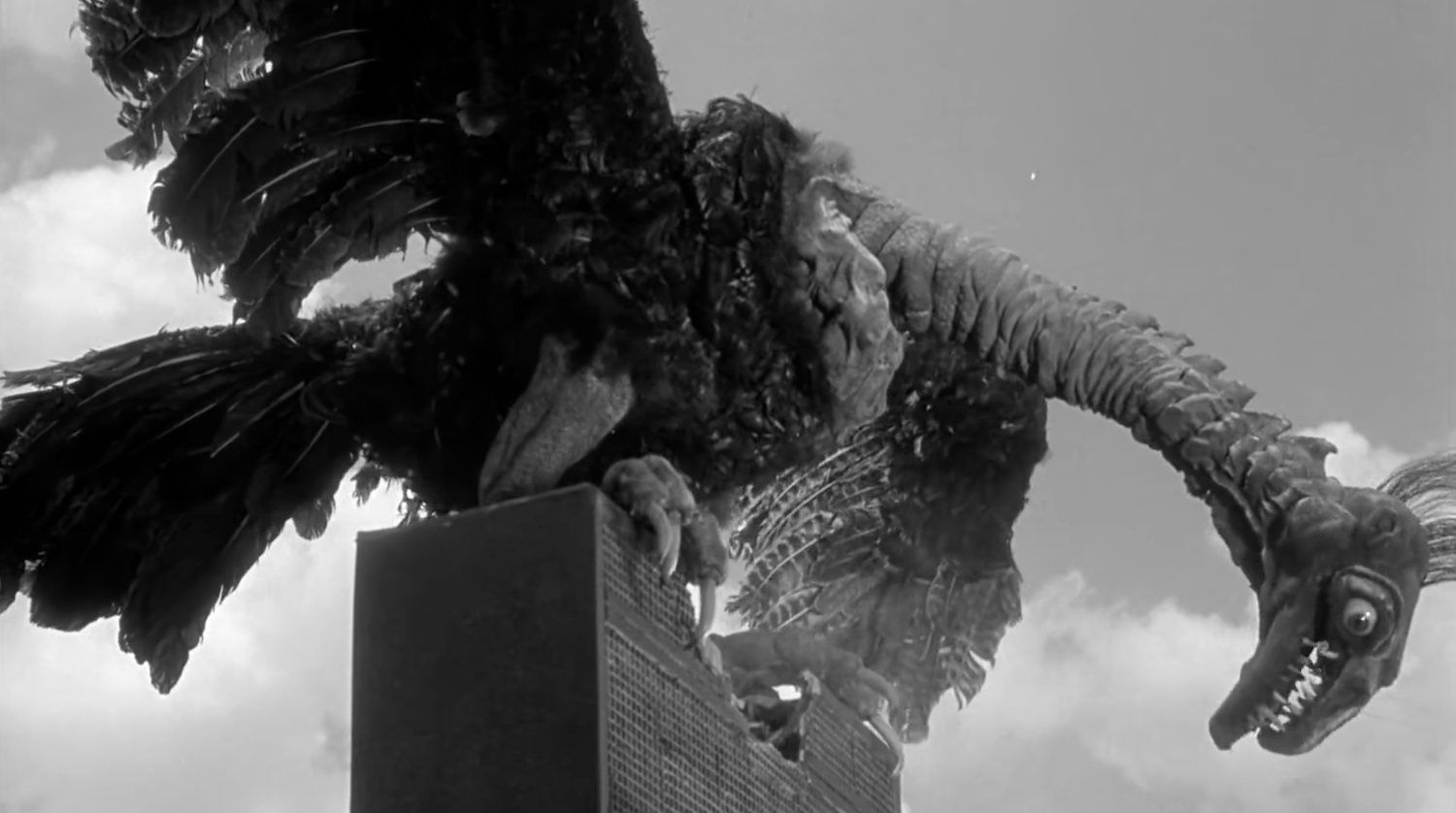
Directed by Fred F. Sears. Written by Paul Gangelin and Sam Newman. Starring Jeff Morrow, Mara Corday, Morris Ankrum.
In these movie breaks, I’ve so far looked at monster films from Japan and the UK. It’s time to pay a visit to the B-movie factories of 1950s Hollywood, the original laboratories where the giant monster craze was spawned and mutated. I grew up on these movies on Saturday and Sunday afternoons, seeing many of them before I saw my first Godzilla movie. I still have immense love for them, their often corny earnestness, and their peculiar cultural zeitgeist of the anxiety-ridden 1950s.