
Directed by Akio Jissoji. Written by Akio Jissoji, Akio Satsukawa. Airdate June 7, 1997.
Director Akio Jissoji is primarily interested in the visual style of his episodes, less in their narratives. His greatest Ultra Series episode, Ultraseven’s “Nightmare of Planet No. 4,” is essentially a guided tour rather than a full-fledged story. His previous Ultraman Tiga episode, “Flower,” is an exercise in stage aesthetics stretched over the thin framework of an alien invasion. “Dream,” Jissoji’s second Tiga episode, comprises his usual visual hallmarks: image collages, canted angles, diffused lighting, off-center framing, cartoonish sound effects, and classical music. But it also has a strong story driving it. Not a complex story, but one that supports and enhances Jissoji’s preferred style. The result is arguably the director’s best work for the Heisei Ultra shows.
“Dream” shares similarities with one of Jissoji’s Ultraman episodes, “Terrifying Cosmic Rays.” In that earlier episode, cosmic rays bring to life a child’s drawing of a giant monster. Here, similar rays materialize a heartbroken man’s dreams as a giant monster. Defeating the kaiju, Bakugon, may require pulling the dreaming man back to consciousness, possibly a nod to another Ultraman episode, Kazuho Mitsuta’s “The Rascal From Outer Space.”
This is the second episode in a row to feature a solitary, lonely man who becomes the center of the story and its “villain.” Kazuma Ikuta (Eisuke Tsunoda) is, outwardly, an ordinary fellow. He works as a drafter for a construction company, but he draws his true joy from a broad interest in the arts. Specifically opera. We hear a lot of Puccini’s Tosca throughout the episode. Rapid cuts around his apartment show his love of the visual arts, music, Shakespeare, and more.
Ikuta is a man who has rich, vivid dreams at night, and that becomes a problem when Morpheus D cosmic rays turn his dreams into physical reality. It becomes an even greater problem when Ikuta is nursing a broken heart after his girlfriend, Tomoko (Yuko Daike), breaks up with him.
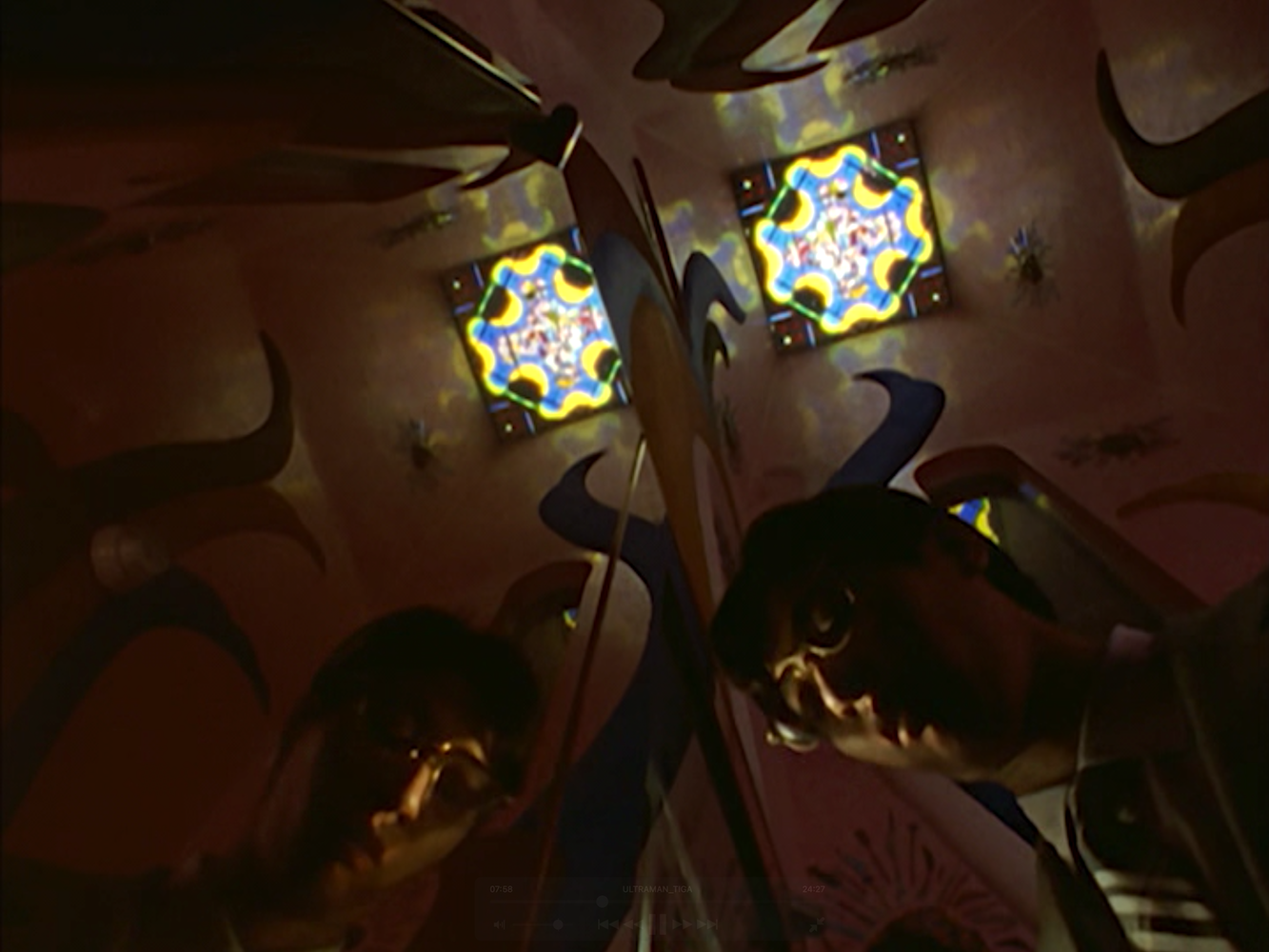
The episode keeps Ikuta visually minimized. He’s the main character, but the camera gives him anonymity. He’s often dwarfed by his surroundings and pushed into dim lighting. When Tomoko icily ends their relationship over dinner at a restaurant (“I don’t have any time to think of you.” Ouch!), Ikuta is crammed into the corner of the frame, unable to make an impression.
We know plenty about Ikuta through the visuals, however. The camera and rapid editing (and constant Puccini) allow us to absorb his internal world: what is meaningful to him, and what might appear in his dreams. A single shot of CDs on the floor or of a stack of books with Othello prominent at the center tells us what we need to know about the man.
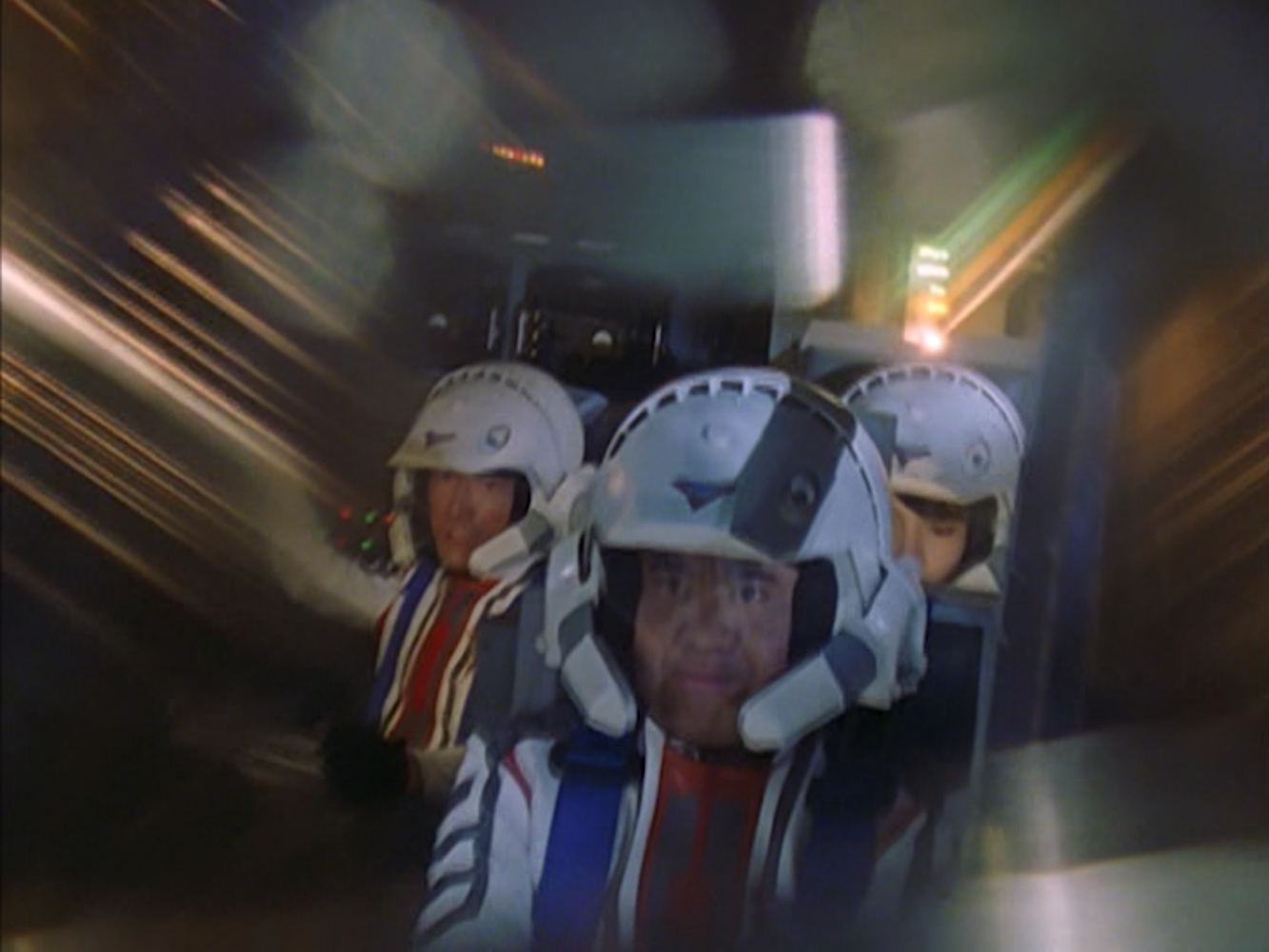
GUTS and Tiga stick to the periphery of the story. There’s some humorous business with Munakata, who enjoys playing the part of a tough plainclothes detective on the case. He eventually goes overboard in his swagger and gratuitously bashes down a door. (Shinjoh: “Hey, leader, you’ve gone too far.” Good laugh line.) This is a nice character sweetener for an episode that’s primarily about the guest star.
After Bakugon’s first emergence, Ikuta seeks help from a therapist, Dr. Chihiro (Kyusaku Shimada). Chihiro is a New Age quack, peddling nonsense therapies at high prices from his oppressively overdecorated office. The doctor is humorous in a way typical of Jissoji’s characters: artificial and aware of his fictional role. Chihiro talks jibberish about “channeling the incubus” and informs Ikuta he must find new love to rid himself of his problems. Unfortunately, Ikuta takes this advice, and takes it too far, leading to even greater danger the next time Bakugon materializes from his hostile dreams.
In contrast to Dr. Chihiro’s claptrap, Professor Kurita (Masami Horiuchi) delivers dry exposition about the cosmic rays to the assembled GUTS team. This is the “serious” science of the episode — and it also seems like claptrap, some technobabble inanities just to give GUTS something to work with.
Chihiro and Kurita are both, in different ways, misleading figures. Daigo finds a clever angle to take on Bakugon that has nothing to do with Kurita’s “Morpheus D” rays, while Chihiro pushes Ikuta in an emotionally unhealthy, obsessive direction that ultimately puts everyone in greater danger.
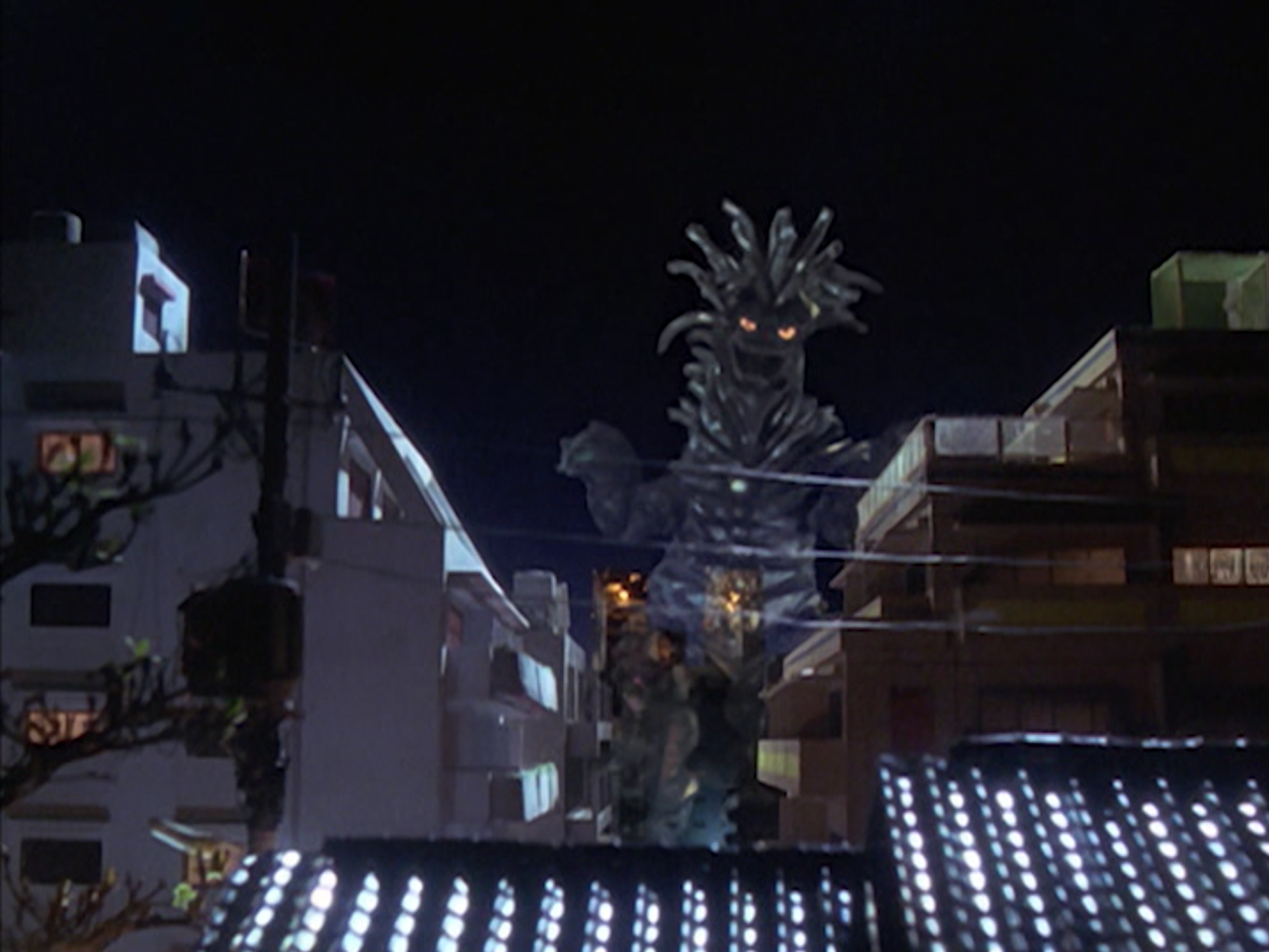
Bakugon, the monster drawn from Ikuta’s dreams, is well-designed for its role: a creature born of dreams or nightmares that doesn’t push too far into absurdity. It’s weird without becoming silly. It’s also incorporeal, existing partly in the waking world and the dream world, which makes it difficult for GUTS or Tiga to stop it. Bakugon’s first appearance in the city makes the monster seem truly terrifying to the populace, something that doesn’t happen often in these shows.
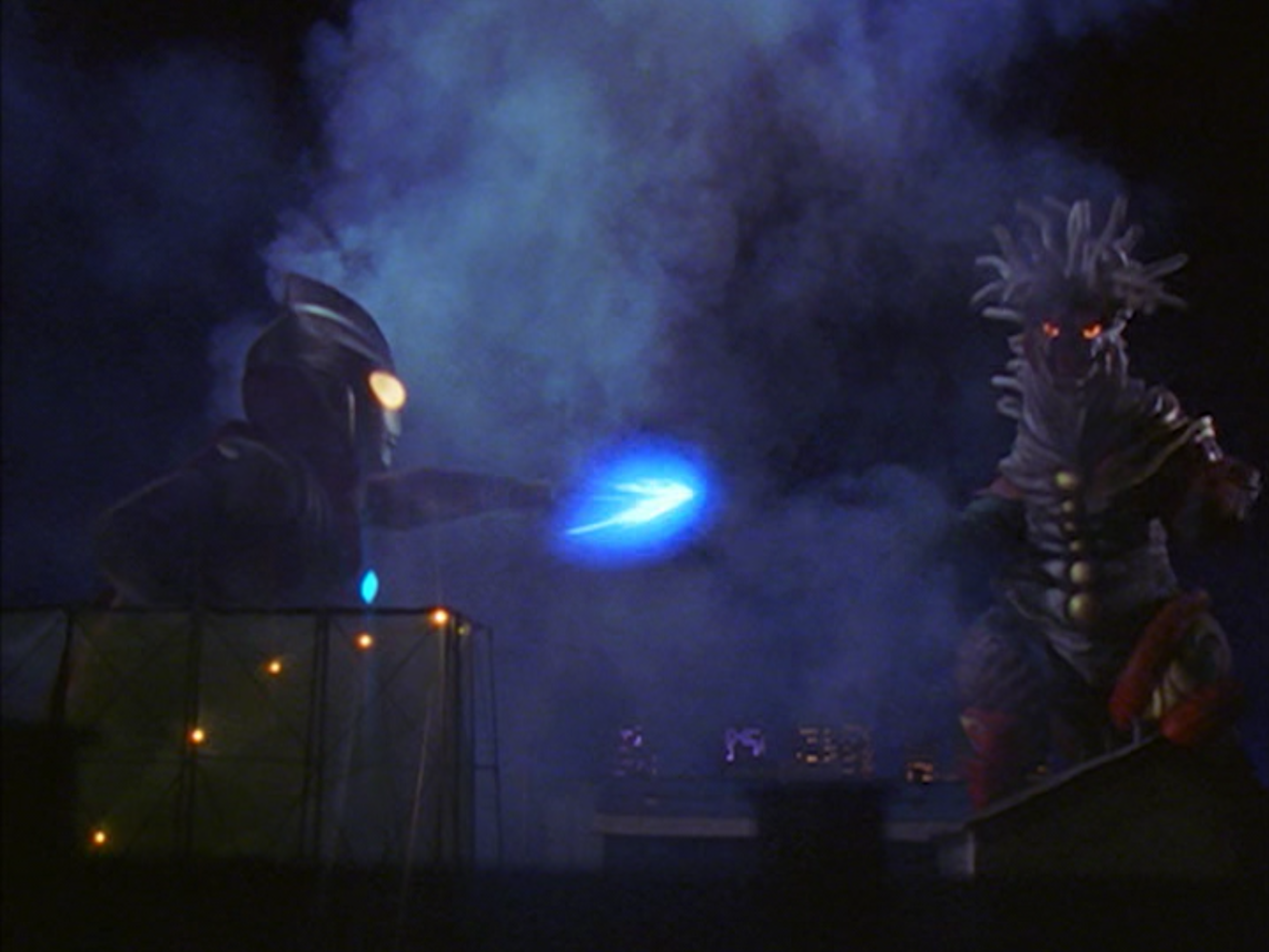
The finale is exactly what a viewer wants from this type of story: Ultraman Tiga vs. Bakugon on one side, Ikuta vs. himself on the other. The kaiju fight follows many of the usual beats, but the dream-state twist keeps it true to the style of the rest of the episode. Meanwhile, Ikuta’s story reaches the only conclusion it probably could, leaving him to cry out the heartbreaking words, “At least let me enjoy my dream. At least my dreams…”
Akio Jissoji was originally set to direct two more episodes, but this ended up being his last for Ultraman Tiga. As much as I love Jissoji’s work, his arabesque style is best contained in a few select episodes so it doesn’t become stale or, worse, edge into parody. I’m content with the superb two episodes he gave us in Ultraman Tiga.
Rating: Classic
Previous: Dear Mr. Ultraman
Next: A Friend From Space
 The Ultra Project