
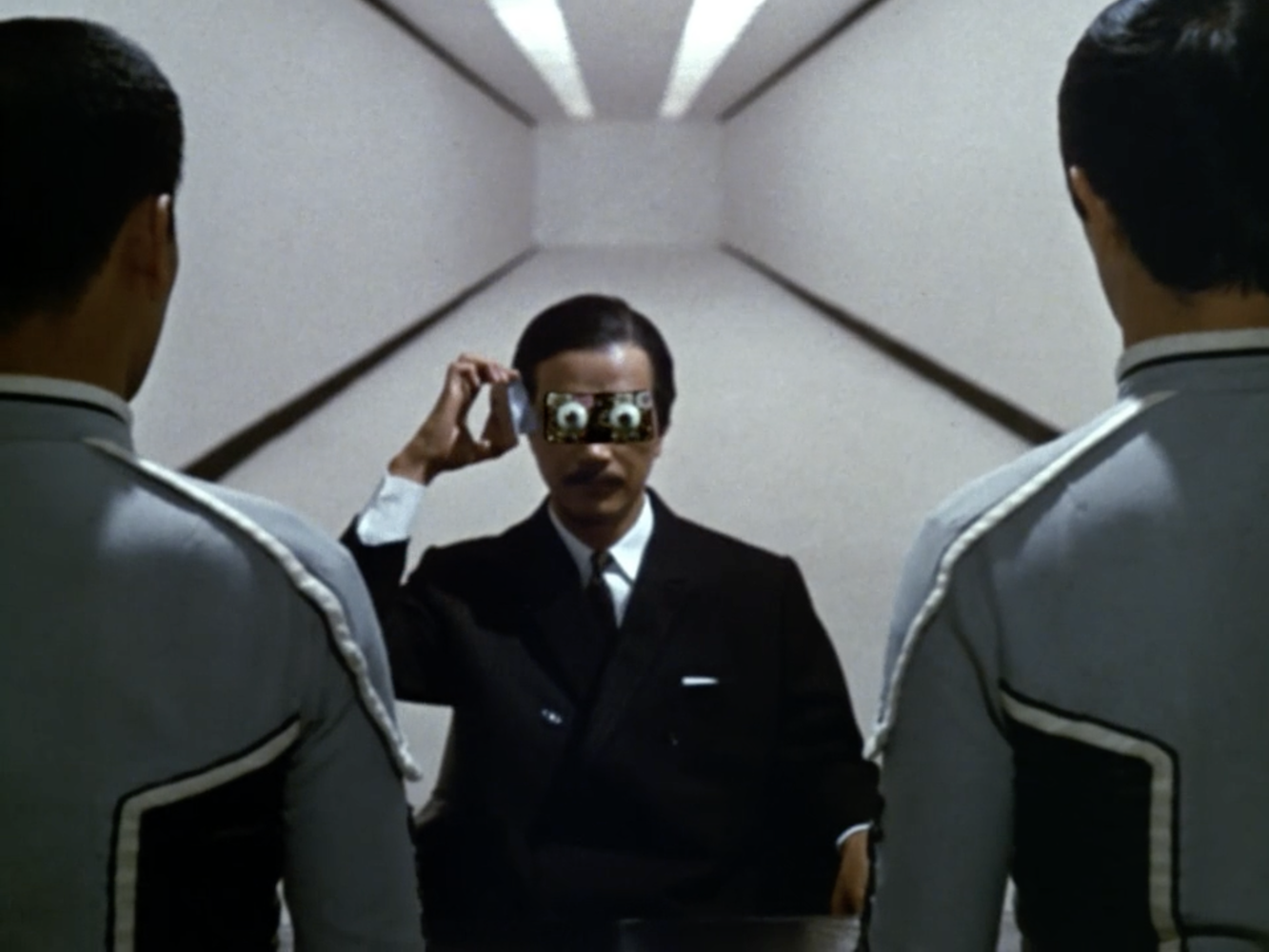
Directed by Akio Jissoji. Written by Shozo Uehara. Airdate July 27, 1968.
Last week, we had director Kazuho Mitsuta’s masterpiece. This week, we have director Akio Jissoji’s masterpiece: a dystopian planetary tale unlike anything in the Ultra Series before or since. A mix of The Twilight Zone, Star Trek, Planet of the Apes, and Jean-Luc Godard’s Alphaville. It’s the most brutal episode of the show, and it’s astonishing to me that it ever got on the air. The network must have given up on Ultraseven ever pulling back a younger audience, because this is an unapologetic work of adult science fiction. Children hoping for giant monster fun won’t enjoy seeing fascist firing squads mow down dozens of innocent people.
Soga and Dan have a big assignment: piloting the test run of the long-range Scorpion rocket, which has the potential to travel beyond the Solar System. The trip doesn’t go exactly as planned, and there’s a hint of what’s to come in a scene of Soga examining foreboding astrological signs. This nod toward the fantastic is a bizarre opening for a science-fiction show.1 It also seems unusual for hardheaded Soga to take an interest in the Zodiac. The moment lands right, however, because it establishes the bent reality the characters will soon witness — and the bent version of an Ultra show that viewers will witness. Jissoji’s visual style drapes UG headquarters in darkness to help the tone: everything is already sinister and “off.” Get ready, folks…
While Soga and Dan are in suspended animation during the test flight (a scene scored to a lovely, slow version of the Ultra Guard theme), the Scorpion rocket goes off course. When they wake days later, they find they’ve landed on what they at first believe is Earth. Apparently somewhere in Japan, although everything looks strangely desolate.
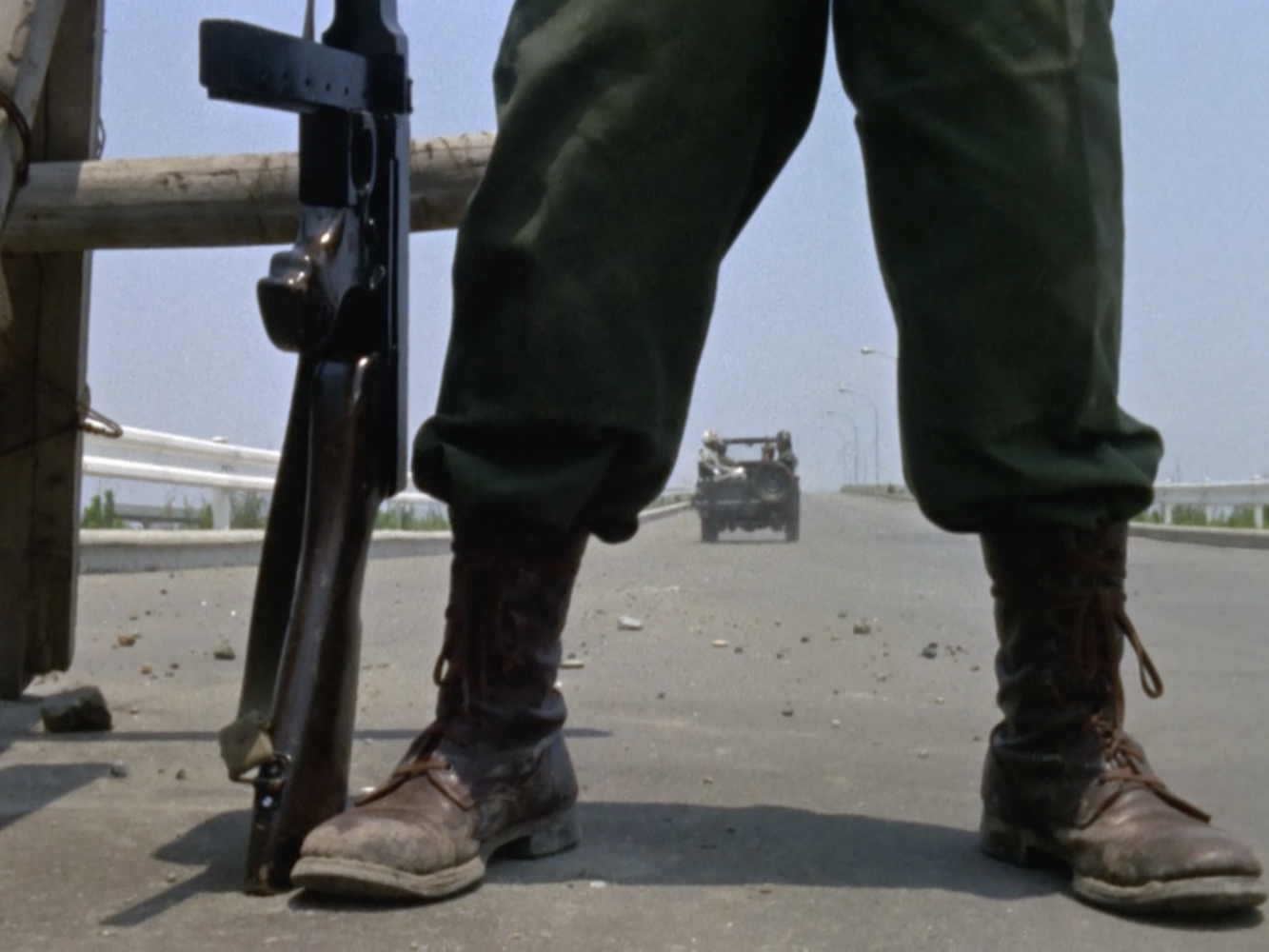
It’s not Earth, as Dan and Soga begin to realize when they’re seized off the street by a group of soldiers and their sadistic commander (Bin Moritsuka). This is Planet No. 4, a nightmare world 7.5 million miles from Earth. The human-looking androids who rule this planet have created a ruthless fascist government, something like Imperial Japan if it had survived World War II. As the robot chief (Masahiko Naruse) explains to his Earth prisoners, humans once ruled this planet, but robots supplanted them when the humans became “lazy.” The robots are now plotting to conquer Earth. They require humans as an energy source, and their own human population is dwindling toward extinction.
Many viewers will find this premise — hibernating astronauts awakening on a freakish and flipped version of Earth where humans have lost dominance — similar to Planet of the Apes. That movie was a smash hit in Japan earlier in the year. There are also similarities to several Star Trek episodes where the crew of the Enterprise discovers an alien planet that’s essentially an alternate Earth, such as “Bread and Circuses” and Trek’s own Nazi-planet fable, “Patterns of Force.”
(And there was this other movie that year with an artificial intelligence killing its human masters. It’s called 2001: A Space Odyssey. You may have heard of it. Man, 1968 was an amazing year.)
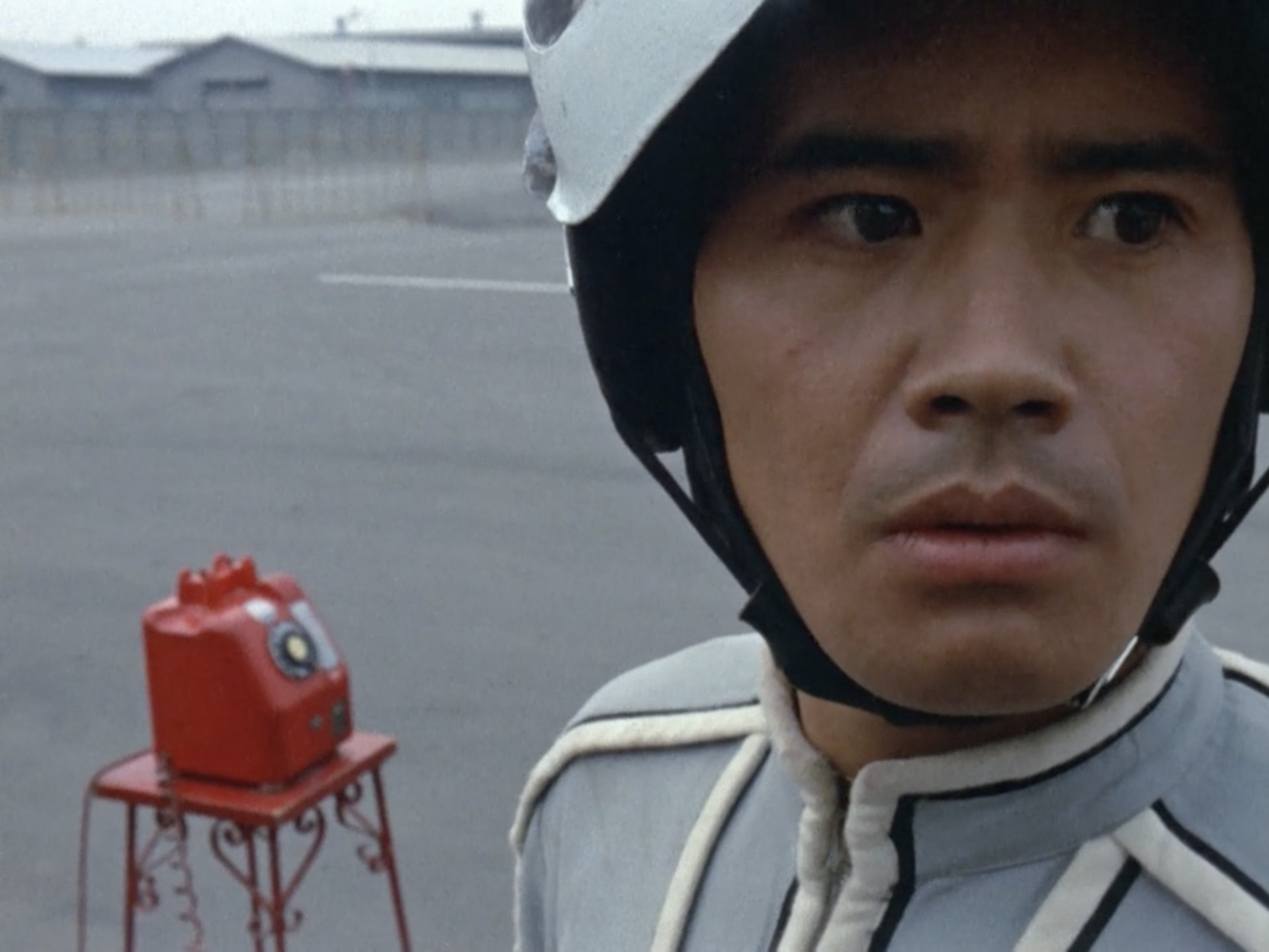
The most direct influence on Jissoji was his admiration for Jean-Luc Godard’s 1966 dystopian film Alphaville. A viewing of that film guided Jissoji’s visual style for the Ultraman episode “Overthrow the Surface,” and this episode feels like an outgrowth of that icy, formalist look. It’s a gorgeous episode, like all of Jissoji’s work. His visual style is marshaled to create a sterile and brutal setting — a red telephone sitting in a nowhere of concrete is one of the most potent images — that’s both a future nightmare and a memory of Japan’s authoritarian past.
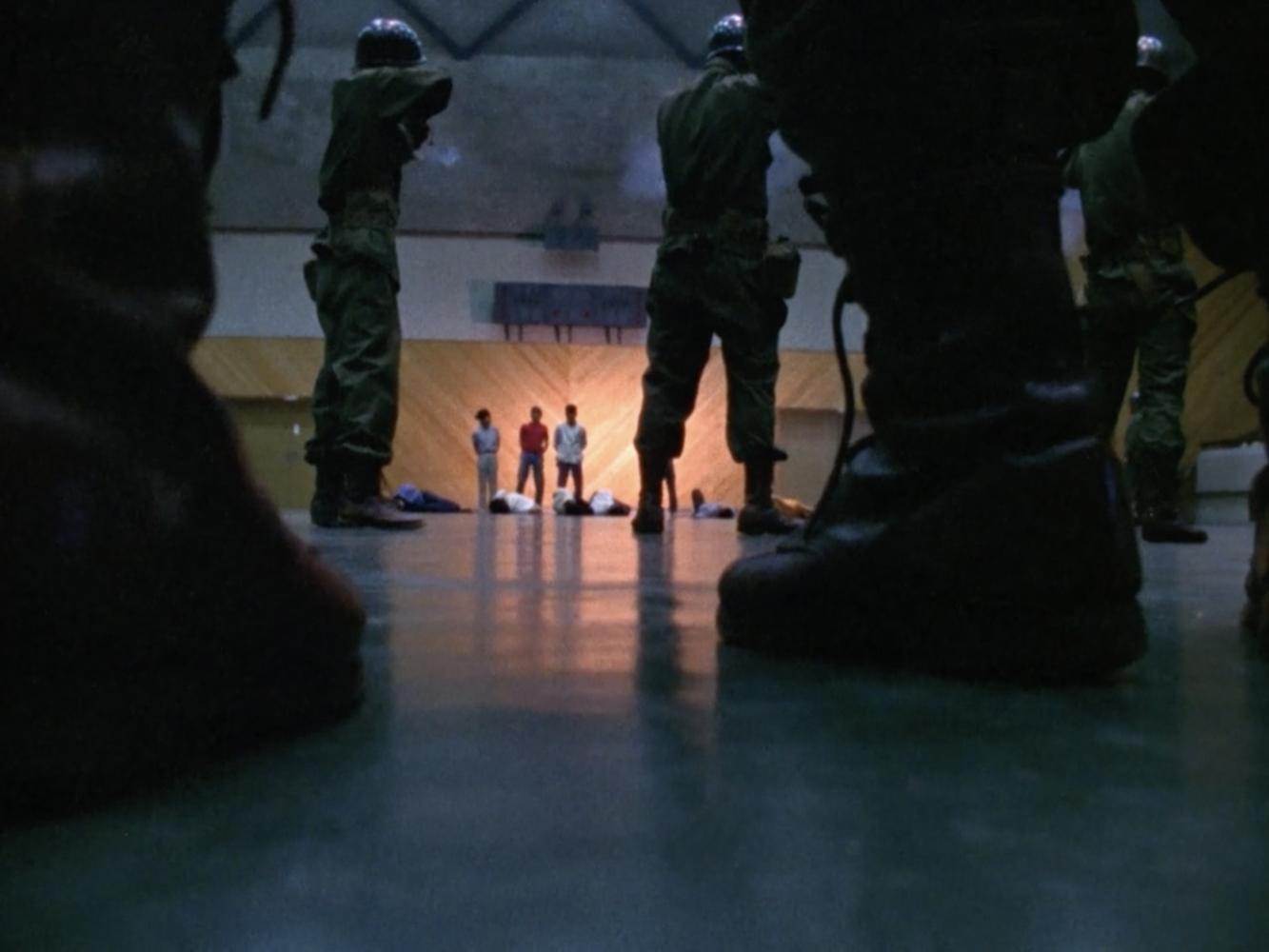
The episode is light on plot; it’s primarily a walkthrough, with the frigid robot chief and his military commander giving their prisoners a tour of this dystopian world while laying out their conquest plans. What Dan and Soga witness swings between unsettling and horrifying, much of it underscored by the grating noise of the robot commander rattling hard candy in his mouth. You simply do not expect to see an episode of a science-fiction superhero show where civilian prisoners are gunned down en masse by firing squads in empty gymnasiums, a soldier whips a young boy in the face, and extras in a television show are murdered with live ammo because that’s how “drama” works on this planet. (The robot chief drily asks, “Do they make dramas differently on Earth?”)
The script, which Shozo Uehara wrote at Jissoji’s request, hits upon several subjects: an examination of Japan’s dark history, a commentary on television spectacle, and the dangers of humans allowing artificial intelligence to outpace them. The episode doesn’t need to emphasize one topic over another; Jissoji and Uehara provide a panorama of commentary and satirical targets, creating a rich dystopian environment. There are several episodes’ worth of material here, but the walk-through presentation ensures that it doesn’t feel messy.
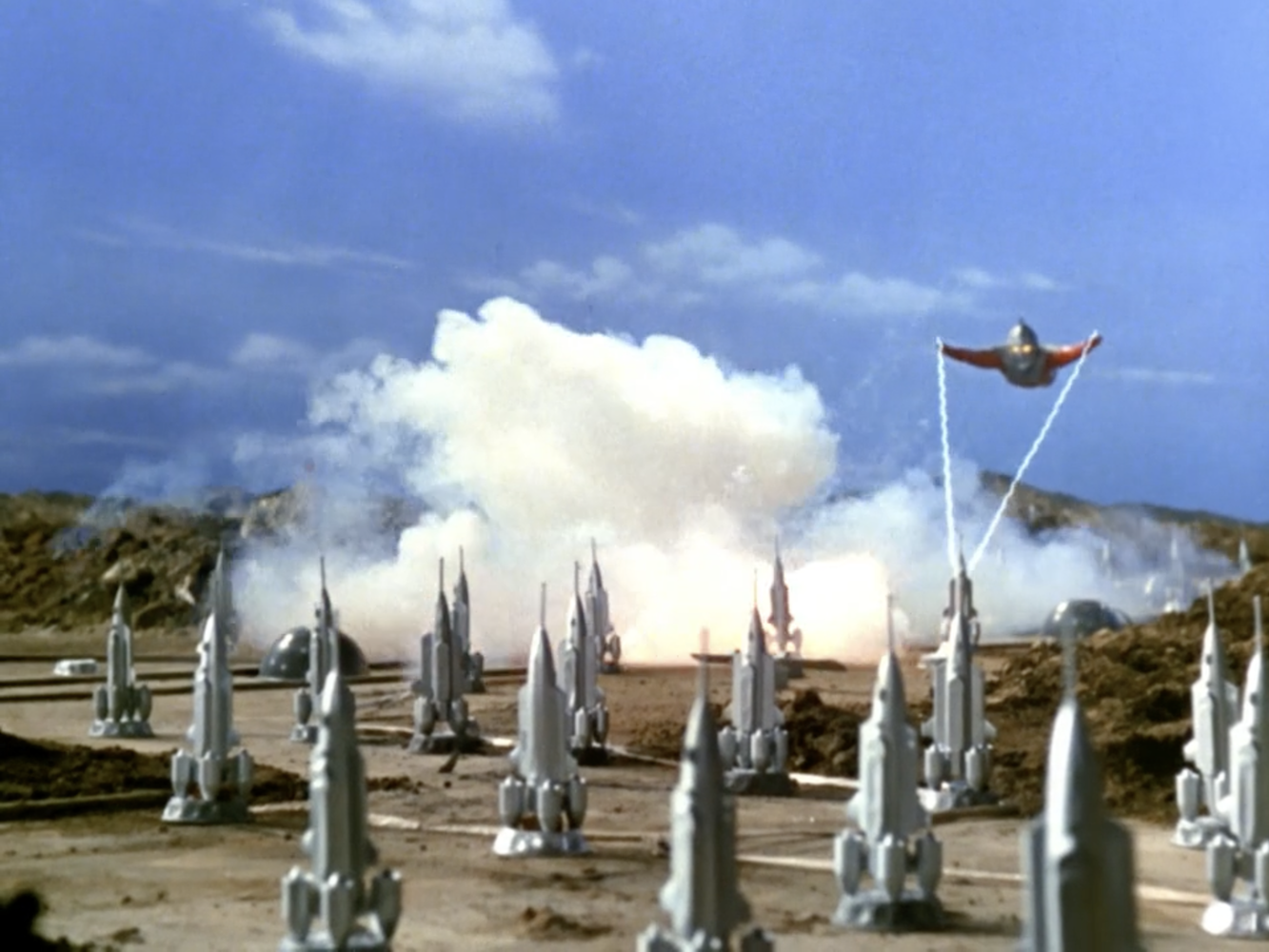
Still, there has to be a wrap-up within a single episode, and so the story goes into a sprint at the end. Dan and Soga make a desperate escape from their captors, and then Dan transforms into Seven and lays down the hurt on Planet No. 4’s offensive capabilities. Too easy a solution for such a heavy and layered story? Arguably. But the special effects finale delivers a palpable, cathartic thrill. No other villains in Ultraseven have earned their comeuppance from our hero more than these android tyrants. It’s a satisfying closing, even if it arrives abruptly.
The back-to-back airing of “Ambassador of the Nonmalt” and “Nightmare of Planet No. 4” is a highlight of the entire franchise. This double punch of caustic social commentary and violent dystopian science fiction is a reason Ultraseven has remained one of the most respected tokusatsu programs. These episodes are shocking in how dark they go and how far they veer from the Ultra Series formula. I’m still awestruck at the achievements of both.
Rating: Classic
Previous: Ambassador of the Nonmalt
Next: The Terrifying Super Ape-Man
- Another warning of sinister happenings is in the title. In Japanese culture, the number four is often seen as unlucky or ominous. The reason for this is that in Japanese, one way to pronounce four (shi) is identical to the word death. Even today in Japan, some buildings skip numbering the fourth floor, similar to how Western buildings sometimes omit the 13th floor. ↩︎

