Directed by Kyota Kawasaki. Written by Shinsuke Onishi. Airdate May 24, 1997.
We’re once again delving into the internal politics of the Terran Peace Consortium — and it’s the most cynical examination of the organization yet. But do not despair too early, viewers! The great Captain Iruma is determined to regain our trust.
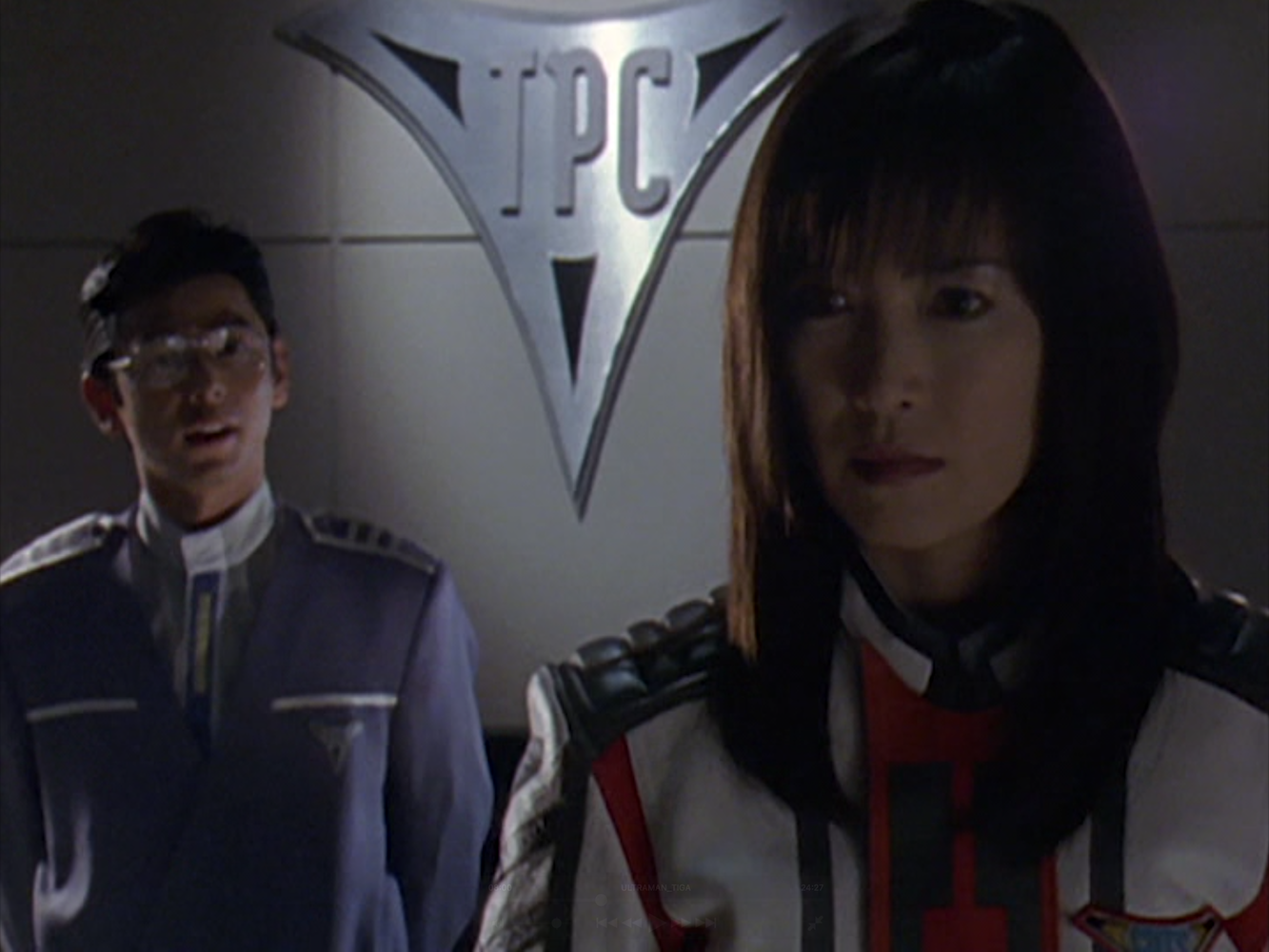
Staff Officer Tatsumura (Tamotsu Ishibashi), a recent transfer to the TPC Intelligence Bureau, tells Captain Iruma in a secret meeting that a slew of sightings of a “mirage monster” are actually a creation of the TPC. There’s no kaiju: it’s all rumors and intentional leaks. The TPC recently defeated the kaiju Deathmon without any help from Tiga, but civilian panic and refusal to listen to GUTS’s instructions made the battle more challenging. In response, Tatsumura devised this mirage-monster hoax to gather more data on how the public reacts to kaiju.
The idea of the TPC purposely stoking fear in the public disgusts Iruma. Worse, Tatsumura wants GUTS to help him uphold the illusion and make it seem more plausible. He orders Iruma to go along with the fake operations — and keep the truth from her team.
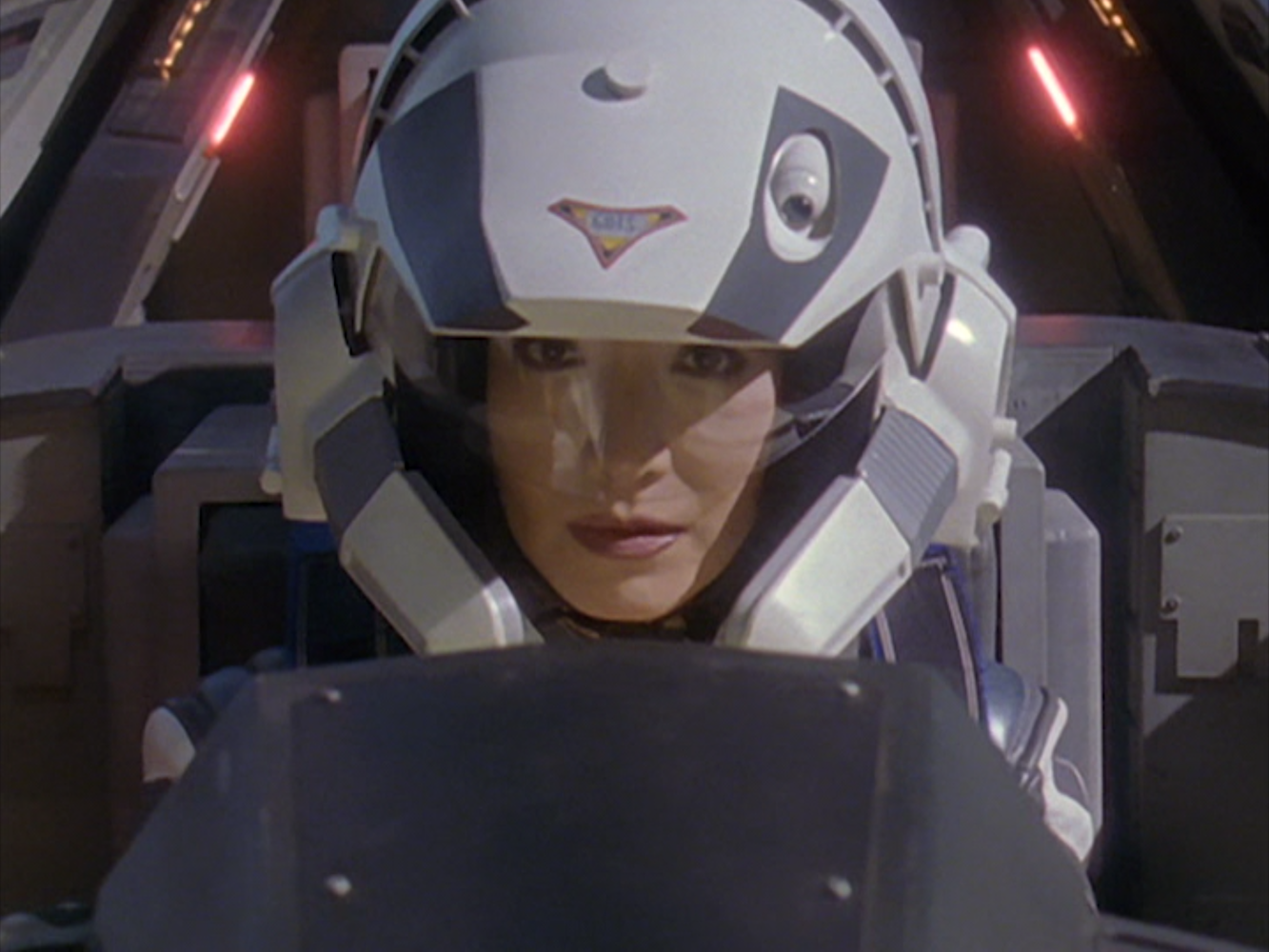
Iruma’s suspicions about Tatsumura deepen during the faux-investigation. What if he isn’t just spreading rumors? After Daigo thinks he sees the mirage creature, Iruma wonders if Tatsumura’s plan is more dangerous than he realizes, and that they might end up with a real monster. (Which, of course, they do. Tiga has to fight something at the end.)
The episode’s central conflict is superb. What Tatsumura demands of Iruma — deceiving the public and lying to the people who trust her most — goes against everything she believes as the leader of GUTS. Some of the team, notably Horii, are suspicious that the mirage monster is nothing at all. Everyone grows restless with the seemingly pointless searching, leading them to doubt their captain, a feeling they’ve neither experienced before nor like. When even Munakata starts questioning Iruma’s orders, you know things have gotten bad.
Tatsumura first appears in the episode when Daigo overhears him talking in the corridor about how GUTS cannot depend on an unknown being like Ultraman Tiga: “From the perspective of a military organization, GUTS and the TPC are too naïve.” His mistrust of Tiga doesn’t come up again, but this bit of dialogue immediately puts him in opposition to Iruma, whose faith in Tiga was strong from early in the show’s run.
GUTS and the TPC also aren’t military organizations, but replacements for them. That Tatsumura refers to them as the military reflects a mindset aligned with the aggressive flank of the TPC, as seen in defense force politics episodes such as “The Devil’s Prophecy” and “The Battle of Zelda Point.” TPC Director Yoshioka represents the more militant approach in those episodes. Yoshioka and Tatsumura, however, are quite different. Yoshioka still believes in teamwork and loyalty (as he shows in “To the Farthest South”). Tatsumura, on the other hand, is an underhanded operative who urges Iruma to betray her own team. Loyalty and transparency mean nothing to him.
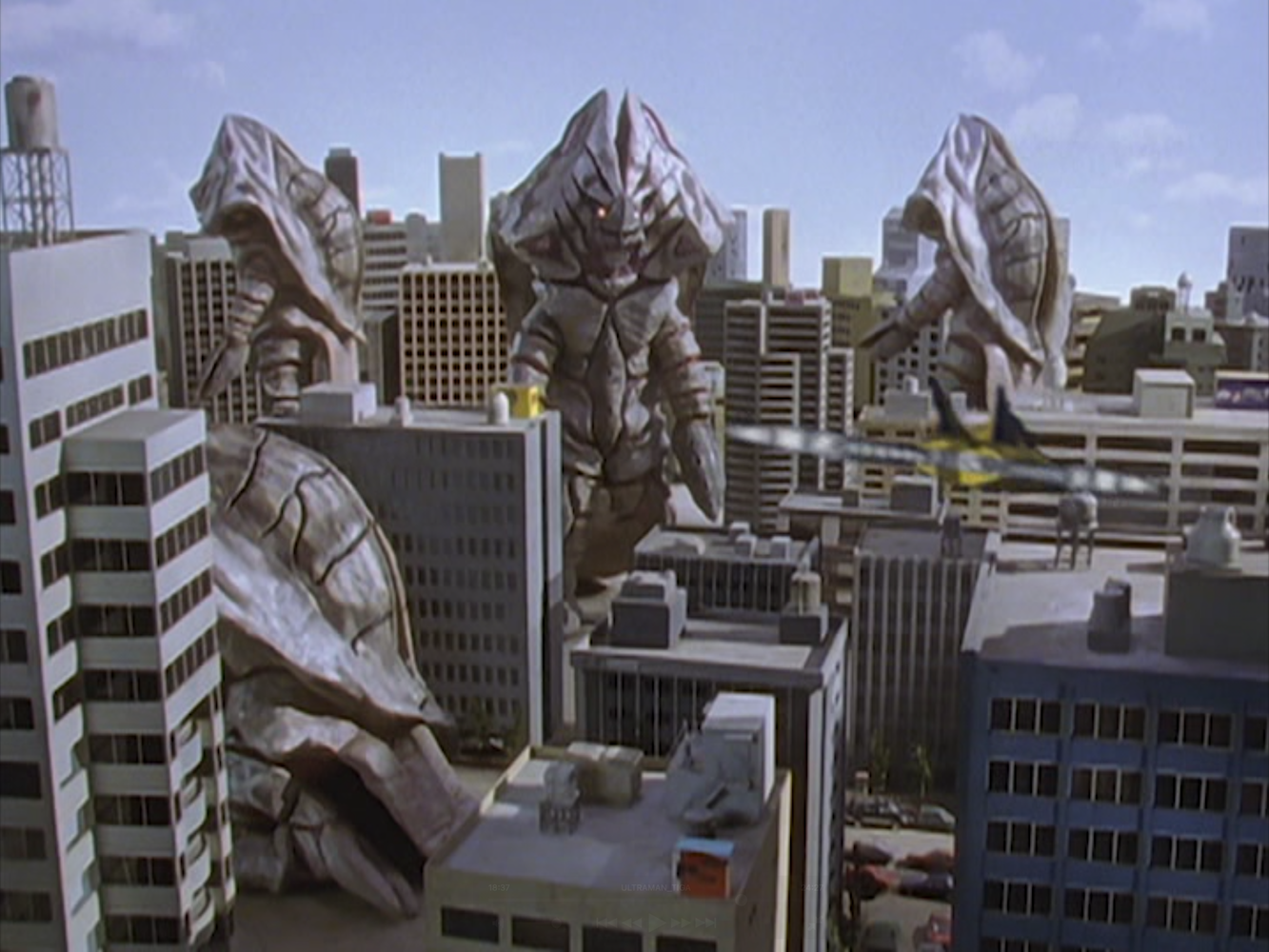
The emergence of kaiju Faldon at first seems like it’s undercutting the drama about Tatsumura’s deception. Turns out, there is a giant monster out there. Faldon arrives during a critical confessional scene for Iruma, which feels highly plot-convenient, as if it’s letting her off the hook too easily. However, the script effectively links Faldon to Tatsumura without deflating Iruma’s story.
As a monster of the week, Faldon is nothing noteworthy. Ultra warriors frequently battle kaiju that can create projections of themselves to confuse their opponents. However, the heart of the final showdown isn’t Tiga or Faldon. It’s Iruma and her choices — and Iruma shines once more in the spotlight, fighting to reclaim the trust of her team and her honor in the best way possible.
The episode strikes an odd balance as it concludes. On one hand, it celebrates Iruma’s abilities and her integrity. It reassures us that her team is behind her, even after a crisis of trust. On the other hand, it suggests a dark metaphysical link between its human and kaiju villains. It’s a link that’s occurred to Iruma before: Do monsters appear because the worst in humans draws them out? Was Faldon’s materialization a coincidence?
This is Tatsumura’s only appearance, which is unfortunate because he’s one of the most effective and despicable human villains in the show. He could have remained an interesting recurring adversary within TPC’s ranks during Tiga’s final stretch. I have a fondness for human villains in Ultra shows who act out of their own motives, rather than as pawns of aliens, robots, telepathic kaiju, etc. (For an excellent Showa Era example, see “Glory for Whom?”)
Although Ultraman Tiga isn’t a heavily serialized show (the rush to produce it didn’t allow for much long-term planning), the occasional episode like “The Mirage Monster” does a great deal to create a sense of an overall narrative. Iruma, as always, is the best character for the show’s more serious side, and this is one of her finest outings.
Rating: Great
Previous: Flower
Next: Dear Mr. Ultraman