Directed by Kyota Kawasaki. Written by Keiichi Hasegawa. Airdate May 31, 1997.
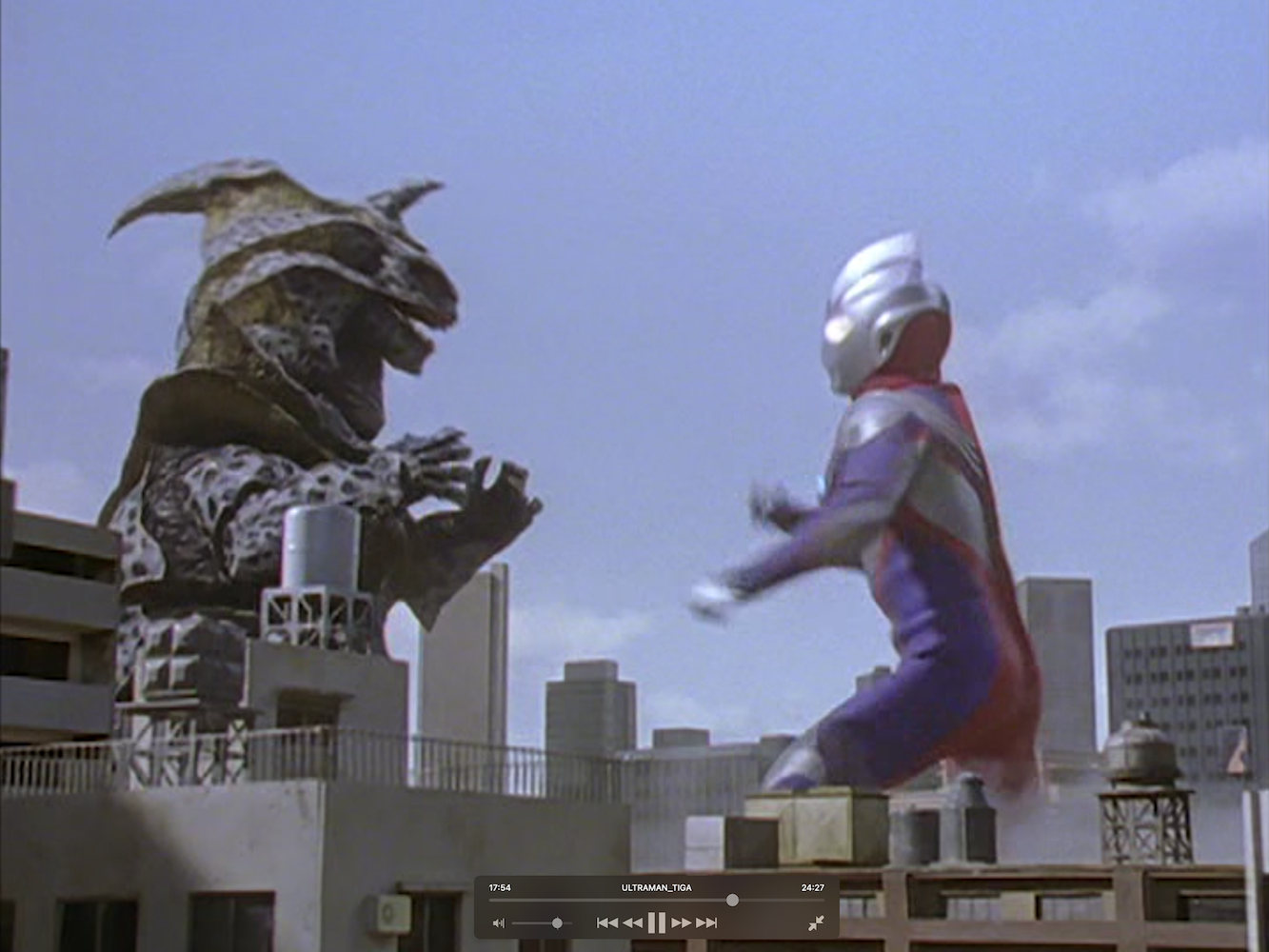
Another kaiju, Galra, has come to wreck the city. Galra belongs to the same ancient monster group as Golza and Melba, able to tunnel underground and materialize suddenly. It has high resistance to damage, making it a tough opponent for GUTS and Ultraman Tiga to stop.
Galra, however, isn’t the episode’s main adversary. A man who lives in a shabby apartment is the real enemy.
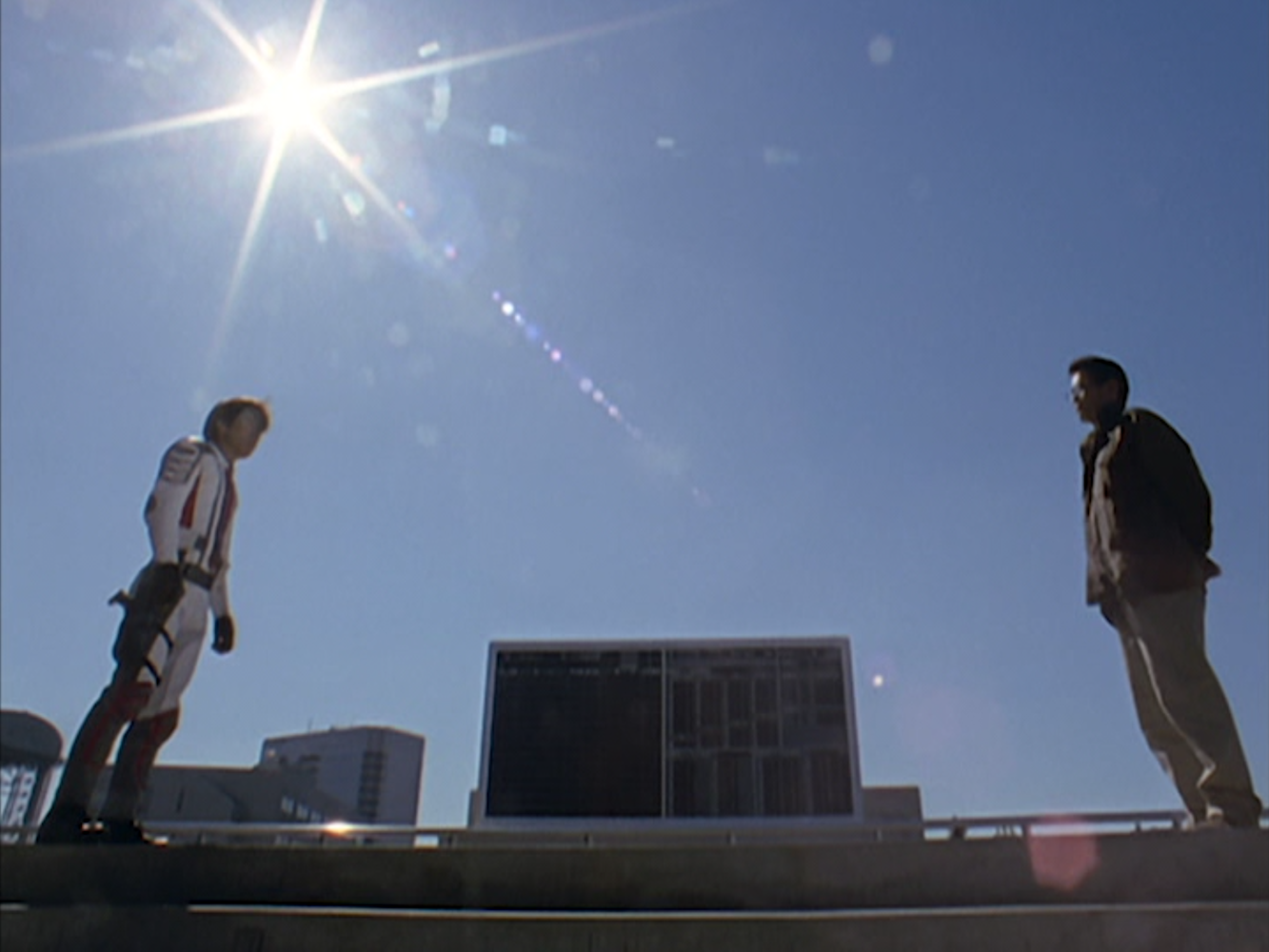
Makio Kirino (Naoki Miyashita) is a solitary man. He looks like a nobody, easily ignored. But Kirino is dangerous. He has the power to see people’s hearts and perceive the future. He used his abilities to discover that Daigo and Tiga are one and the same. After Daigo receives hostile “Dear Mr. Ultraman” emails from Kirino, he agrees to meet with the man. At their second meeting, Kirino issues a challenge: when Galra next appears, Daigo must defeat it without transforming into Tiga. Otherwise, Kirino will reveal Daigo’s secret identity to the world.
Kirino is one of the best characters to make a single-episode appearance in Ultraman Tiga. He’s a villain with an unassuming appearance who lives a life of lower-class anonymity — but he’s as big a threat as any alien invader. He’s not out to conquer the planet, but this challenge to Daigo will put lives on the line and threaten Tiga’s role as Earth’s defender. Kirino is also driven by a dark, resentful urge: his powers work whether he wants them to or not, so to him they’re a curse.
Daigo wants to know why Kirino doesn’t use his abilities to help people. Daigo’s seen him use his powers for good: During the first Galra attack, Kirino directed Daigo into a building to rescue a woman Kirino knew was trapped inside. Kirino can also predict when and where kaiju will emerge. Kirino’s response to Daigo is cynical yet realistic: if people knew his powers, they would exploit them for gain and greed, eventually leading to a systemic collapse. He can’t be a hero; he’ll always be seen as a monster.
To back up Kirino’s bitterness, we see flashbacks to his childhood where bullies beat him for being a “monster.” This mistreatment is the main reason he loathes Ultraman Tiga/Daigo. “For some reason,” he says to Daigo, “you alone are praised as a hero. It’s completely unfair. I can never forgive you.”
The second meeting between Daigo and Kirino in an empty stadium is shot and edited with jarring, rapid cuts that heighten the sense of menace from Kirino, who outwardly appears to be just another civilian. The camera and editing create a gulf between the two men, making it seem as if Kirino has a constantly shifting face and presence.
We only get an amorphous sense of Kirino’s powers, which involve some amount of precognition. This raises the question of why Kirino challenges Daigo at all. Doesn’t he know the outcome of his wager? Or does he only receive certain types of knowledge? However, none of this occurred to me the first time I saw the episode, thanks to the effective storytelling that draws viewers’ attention to where it should be.
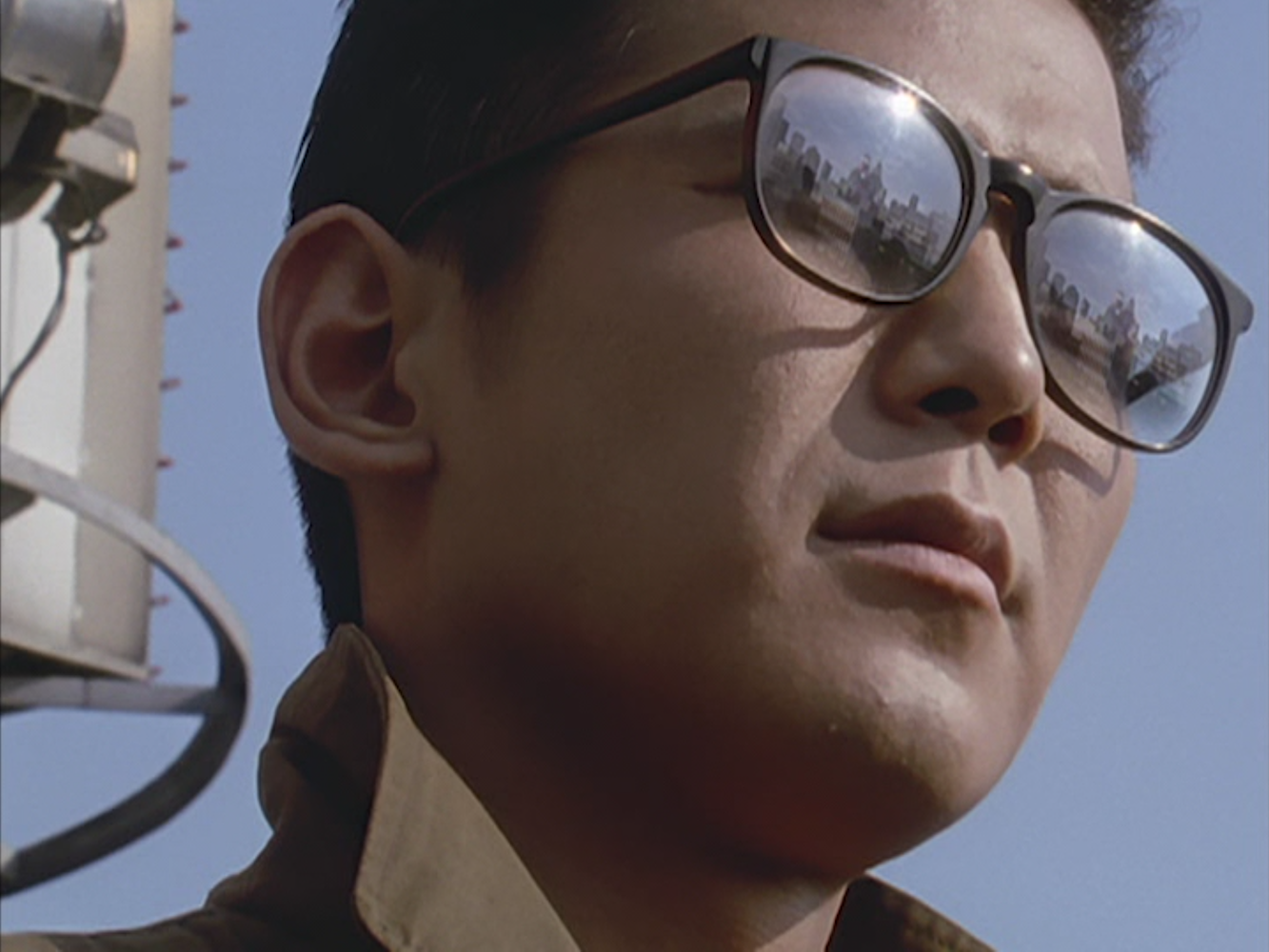
The visual effects go hard. Galra commits extensive urban destruction, and the finale in the middle of the city is a strong one. But the character drama remains at the front. As the battle with Galra unfolds, it’s reflected in Kirino’s sunglasses, which is both a terrific visual and a reminder of “the game” he’s playing and what the outcome may mean to him and to Daigo.
Although Kirino is the central character, this is also a critical episode for Rena and Daigo as a couple. There’s still no kiss, no outward physical display, yet their emotional bond is obviously growing stronger. During a sunset walk (romantic piano music included), Rena opens up toward Daigo and talks about how he’s become kinder. Daigo dances around the idea of telling her his big secret. It’s a simple but sweet scene. Even Captain Iruma is ready to play matchmaker for them.
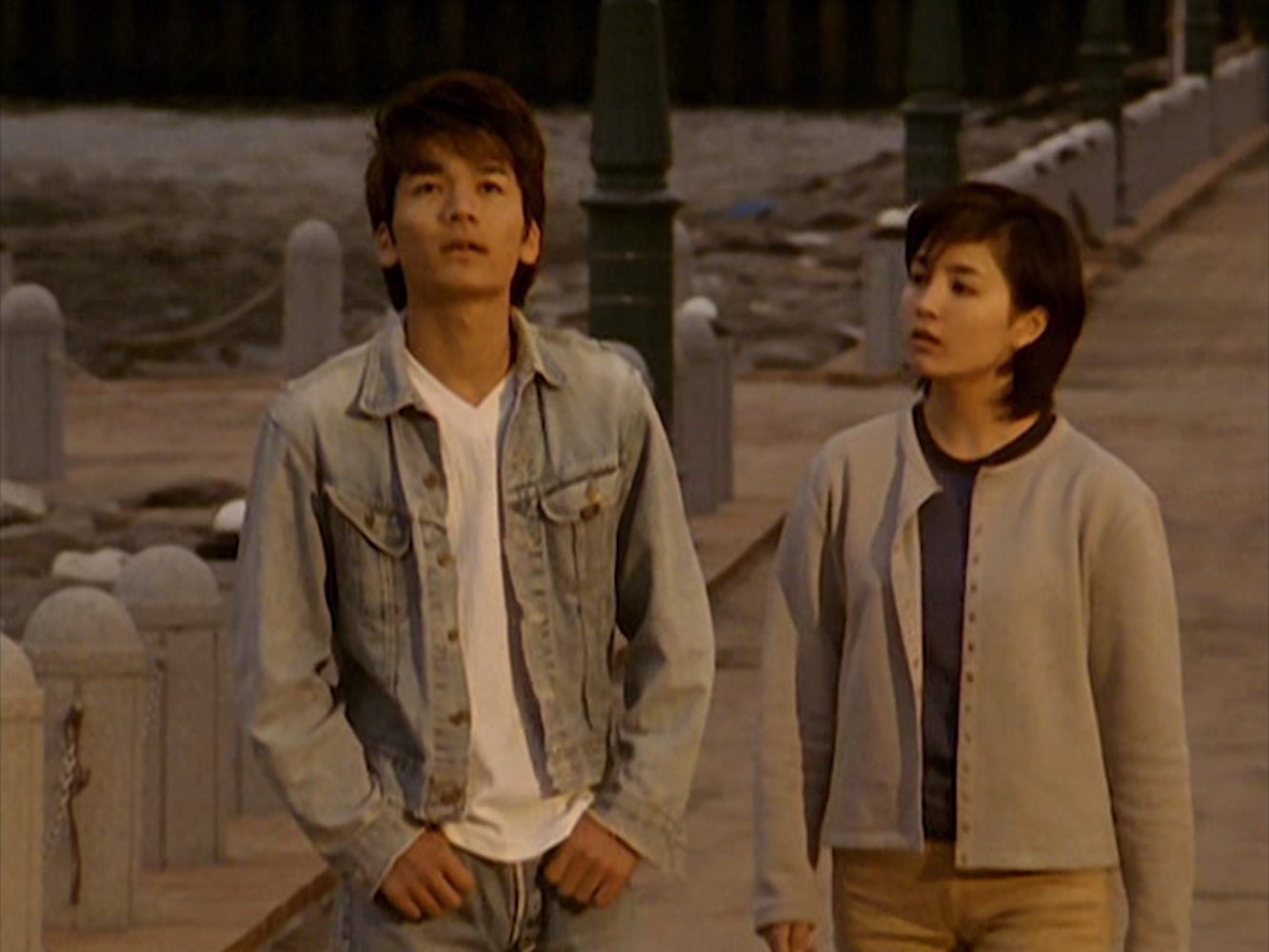
Rena highlights a difference between Daigo and Kirino: Daigo has friends, allies, and people who care about him, while Kirino is rejected and alone. Yet another source of resentment for a man whose life has become a growing heap of resentments.
Kirino factors into Daigo and Rena’s developing relationship with his final email to “Mr. Ultraman.” This coda effectively closes Kirino’s story while passing the character development — Rena and Daigo — back to the main cast to carry on.
“Dear Mr. Ultraman” is another winner from director Kyota Kawasaki, who has an unassailable record of quality on Ultraman Tiga. His artful handling of character-driven drama within the giant-monster formula is exceptional. This is his second consecutive episode featuring a memorable human villain who’s a greater threat than the kaiju. “The Mirage Monster” left us with an unrepentant bad guy. Here, we have a gentler, though still bittersweet, conclusion that affirms goodness without oversentimentality. For me, that’s one of the sweet spots in the Ultra Series.
Rating: Great
Previous: The Mirage Monster
Next: Dream