Directed by Kiyotaka Taguchi. Written by Takao Nakano. Airdate Nov. 18, 2013.
The New Generation Heroes era gets its first genuinely fantastic episode. Recalling some of the great one-off episodes of the series, “Gan-Q’s Tears” steps away from the usual world of defense teams and Ultra warriors. It finds new characters to make into the protagonists of a story that’s both comically weird and quietly heartfelt.
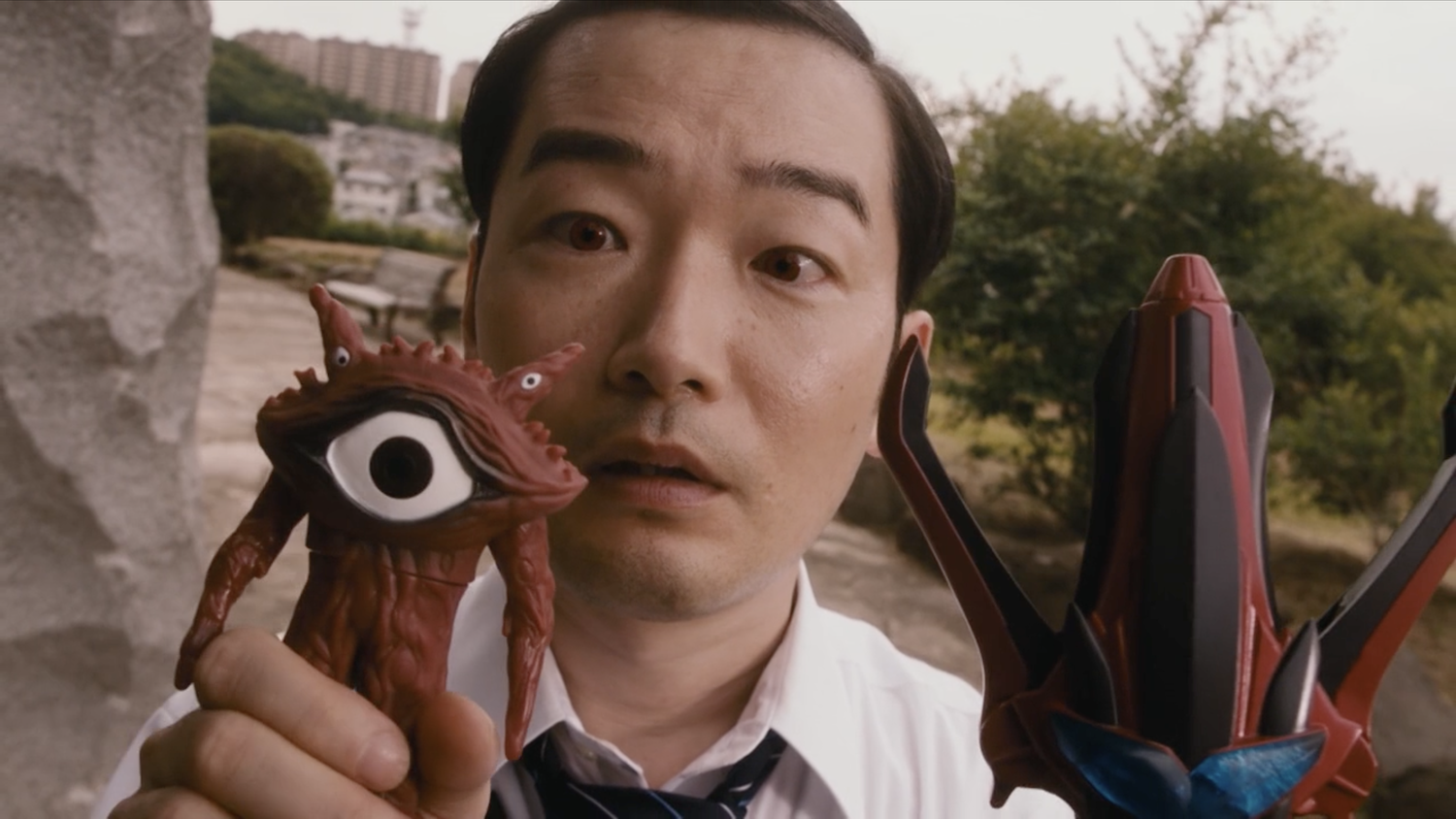
The main character is Yoshida (Yasuhi Nakamura), a prototypical salaryman: a Japanese cultural term for white-collar corporate workers with high company loyalty and predictable lives. In a voiceover, he describes himself as an “ordinary sort of fellow,” although his life looks a bit worse than that. Alien Akumania Muerte (Kiyohiko Ueki), another agent of Alien Chibull, selects Yoshida as the next person to get transformed into a destructive kaiju. We’ve seen this plot before in the two Ginga shows.
This time, however, something goes wrong. Rather than Yoshida transforming into a giant version of the kaiju Gan-Q, he turns into a harmless, human-sized Gan-Q. It’s not what Alien Akumania wanted, but as he explains, “A so-so guy can only become so-so big.”
Hilarity and pain ensue as poor Yoshida flees from Alien Akumania, UPG members who immediately open fire on him, and his vicious landlady, who whacks him with a broom. Yoshida finds a place to hide after he meets Satoru (Raiki Komino), a boy isn’t afraid of Yoshida’s monster form and could really use a friend.
The Ultra Series started heavily indebted to The Twilight Zone, so it’s no surprise to see downtrodden working-class men portrayed throughout the franchise. Rod Serling loved those kinds of characters. Yoshida meets all the salaryman requirements: he’s too intimidated to stand up to a bully who cut ahead of a woman in line, and he genuflects as he apologizes to his boss over the phone.
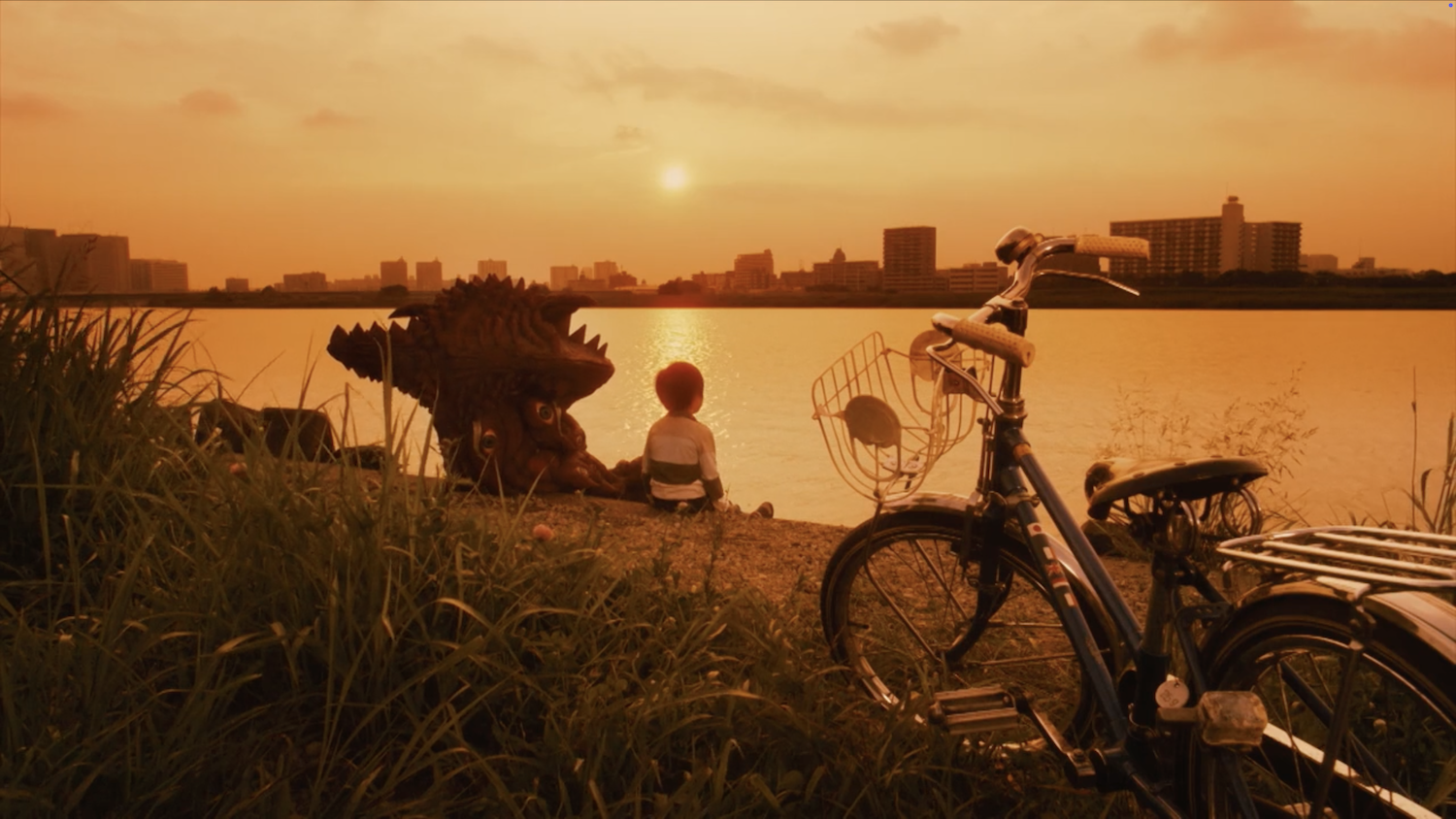
The basic setup has a touch of Franz Kafka: a working-class nobody is metamorphosed into a monster. But it’s mostly a loose homage to the legacy of “Kanegon’s Cocoon.” There’s even a sunset image that directly references a famous shot from the Ultra Q classic. If you’re going to pick a model for your offbeat episode, “Kanegon’s Cocoon” is 100% your top option.
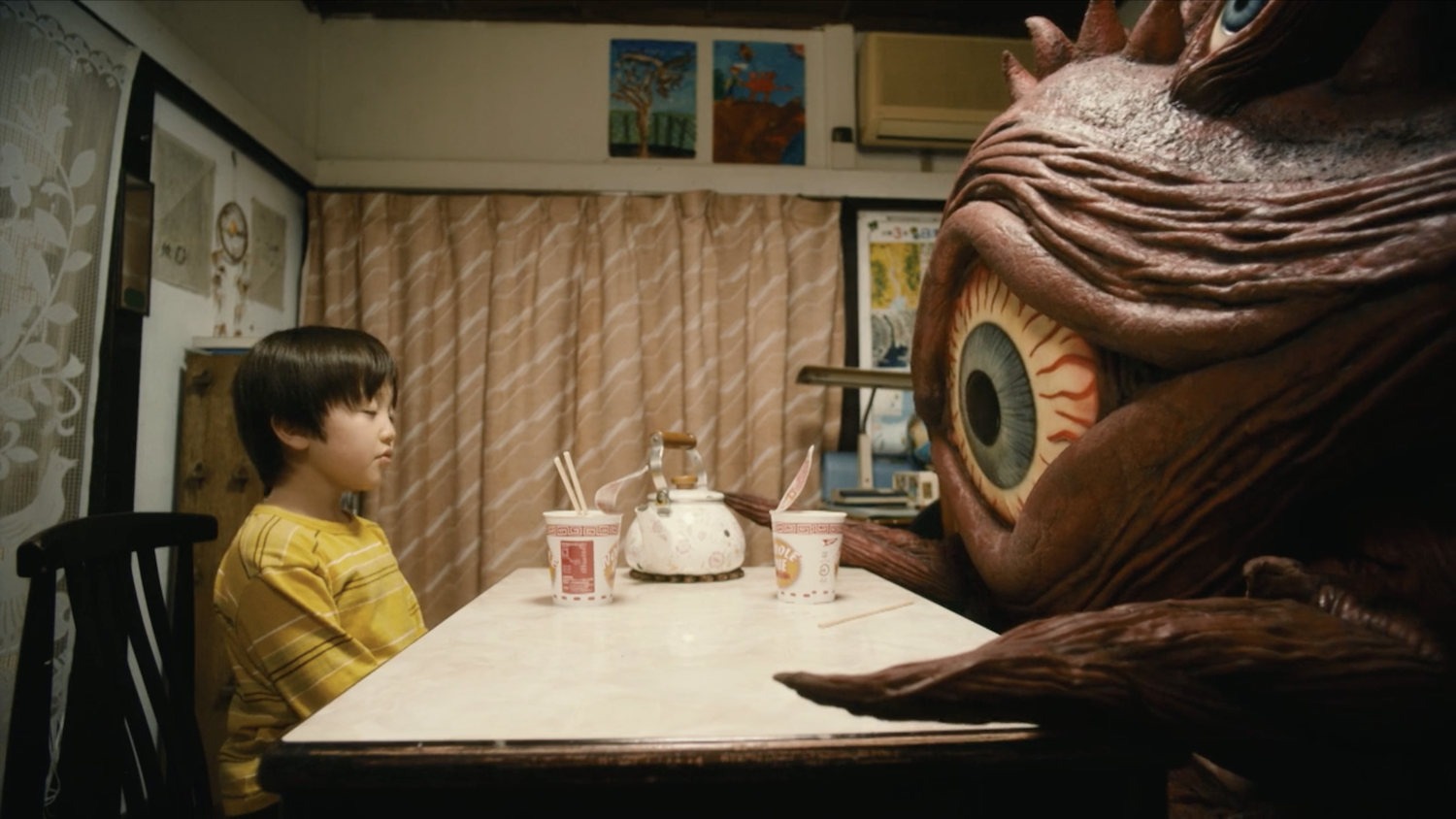
With the UPG and the series leads relegated to minor roles, the heart of the episode is the sweet relationship between Satoru and Gan-Q. The salaryman and the latchkey kid bond over their loneliness. Yoshida sees himself as a useless man, now turned into a useless monster. Satoru is struggling to learn to ride his bicycle after his friends have all mastered it and left him behind. Yoshida helps Satoru learn to ride a bike, and Satoru helps Yoshida feel like he matters. It’s a classic foundation for a children’s story, and it works. There’s terrific humor in Gan-Q’s bumbling, and a sincerity in how the two help each other.
Gan-Q is an inspired choice for the main monster. It’s an easy costume reuse, and Gan-Q appeared only a few episodes earlier in “Activate! Operation Magnewave.” But Gan-Q’s nutty design with its giant eye and enormous head makes it both endearing and pathetic at human size. It looks absurd, not dangerous, making it the perfect kaiju form for poor Yoshida. (Imagine how the episode would’ve played if Yoshida were transformed into a pint-sized Eleking or Gomora. See, doesn’t work.)
Alien Akumania is the ideal foil. He first appeared in the Ultraman Leo episode “The Leo Brothers vs the Space Demon Alien,” and he’s every bit as weird/funny as Gan-Q. The scene of the two monsters chasing each other across a pedestrian bridge while people flee is a riot — I could’ve watched five more minutes of this.
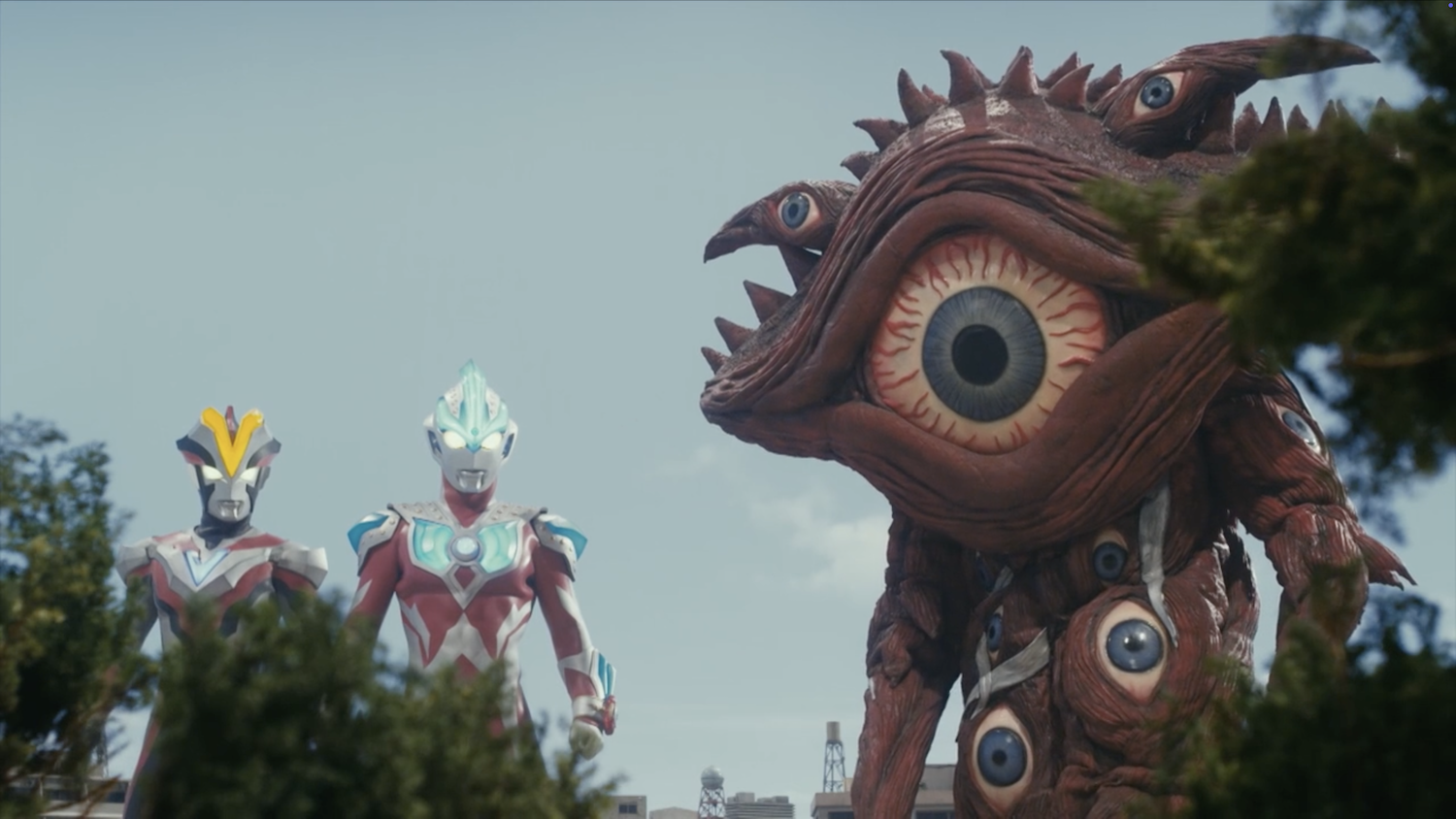
The big challenge for a story of this type is figuring out how to transition from the small, human-scale story to the inevitable giant monster battle that people expect in an Ultra show. This kind of switch is easy to botch, creating a clash between the ending and everything else that came before. But “Gan-Q’s Tears” pulls it off. The VFX finale retains the story’s humor — Yoshida trying to explain to Ultraman Ginga that he’s not a monster while Ginga repeatedly punches him in the eye is a blast — and it brings the plot to its emotional crescendo while also giving viewers a darn good monster fight.
In the previous episode, a major character died — and I felt almost nothing over it. This episode, though, delivers an emotional gut punch with a scene as basic as a mother watching over her sleeping son and starting to sob. And these are characters we’ve never met until this episode! That’s the power of good storytelling. It’s a simple tale, and most viewers will guess where it’s going early on. But that simplicity gives it space for character connection and humor. The ending, though predictable, is the ending it needs.
“Gan-Q’s Tears” is a delight, a wonderful surprise in the New Generation Heroes era. It’s funny, touching, and odd. It features two charming guest characters who form a bond with viewers. It balances a child-friendly approach with a smart story that adults can appreciate. The kaiju finale feels like an organic extension of what came before rather than an obligatory visual effects scene. This is the Ultra franchise in one of its best modes. I wish the New Gen shows had more like it.
Rating: Classic
Previous: The Holy Sword of the Future
Next: To Meet You