Directed by Kiyotaka Taguchi. Written by Sotaro Hayashi. Airdate August 26, 2013.
Ultraman Ginga S ramps up toward its mid-season finale (followed by a two-month hiatus) with an action-filled episode that introduces a seemingly unbeatable kaiju and promises a reveal about the scheme driving Alien Chibull’s theft of Victorium Crystals.
Alien Chibull switches strategy from retrieving Victorium from the ground to draining it from inside Shepardon, the guardian monster of the Victorians. It appears that Shepardon’s crystals have purer power. This is a good way to get audiences invested in the story from the start, since Shepardon is an appealing, friendly monster that no one wants to see get hurt.
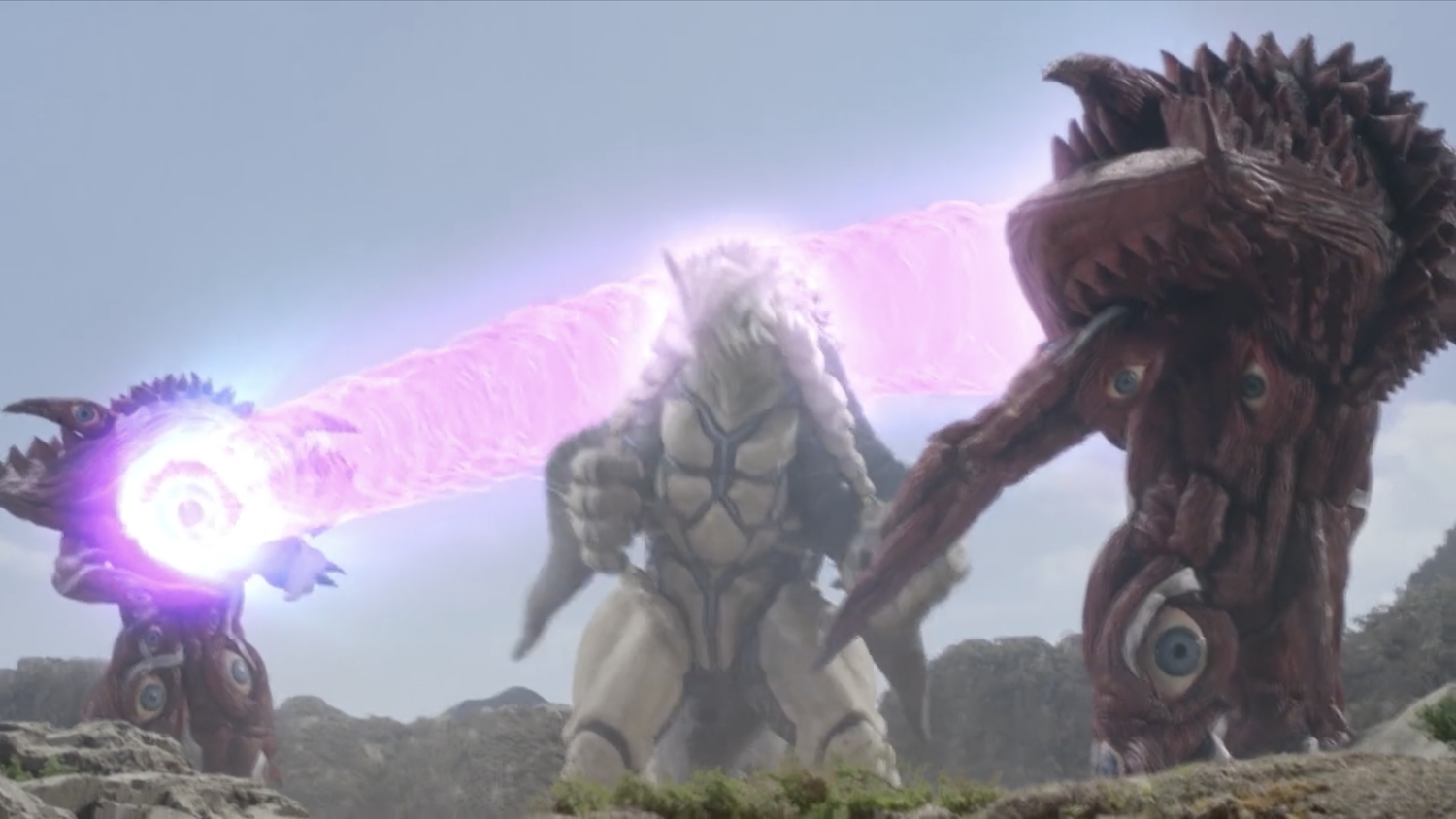
The classic kaiju that Chibull (again acting through Alien Guts) uses for this scheme is Gan-Q, a.k.a. The Big Eye Monster. First introduced in the Ultraman Gaia episode “The Ridiculing Eye,” Gan-Q is a charmingly bonkers kaiju that mixes silliness with a dose of icky horror. The best action in the episode involves Gan-Q: it’s a fun combat opponent thanks to its teleportation and body duplication abilities. Bringing Gan-Q into the show also sets up a later episode, “Gan-Q’s Tears,” one of Ultraman Ginga S’s best.
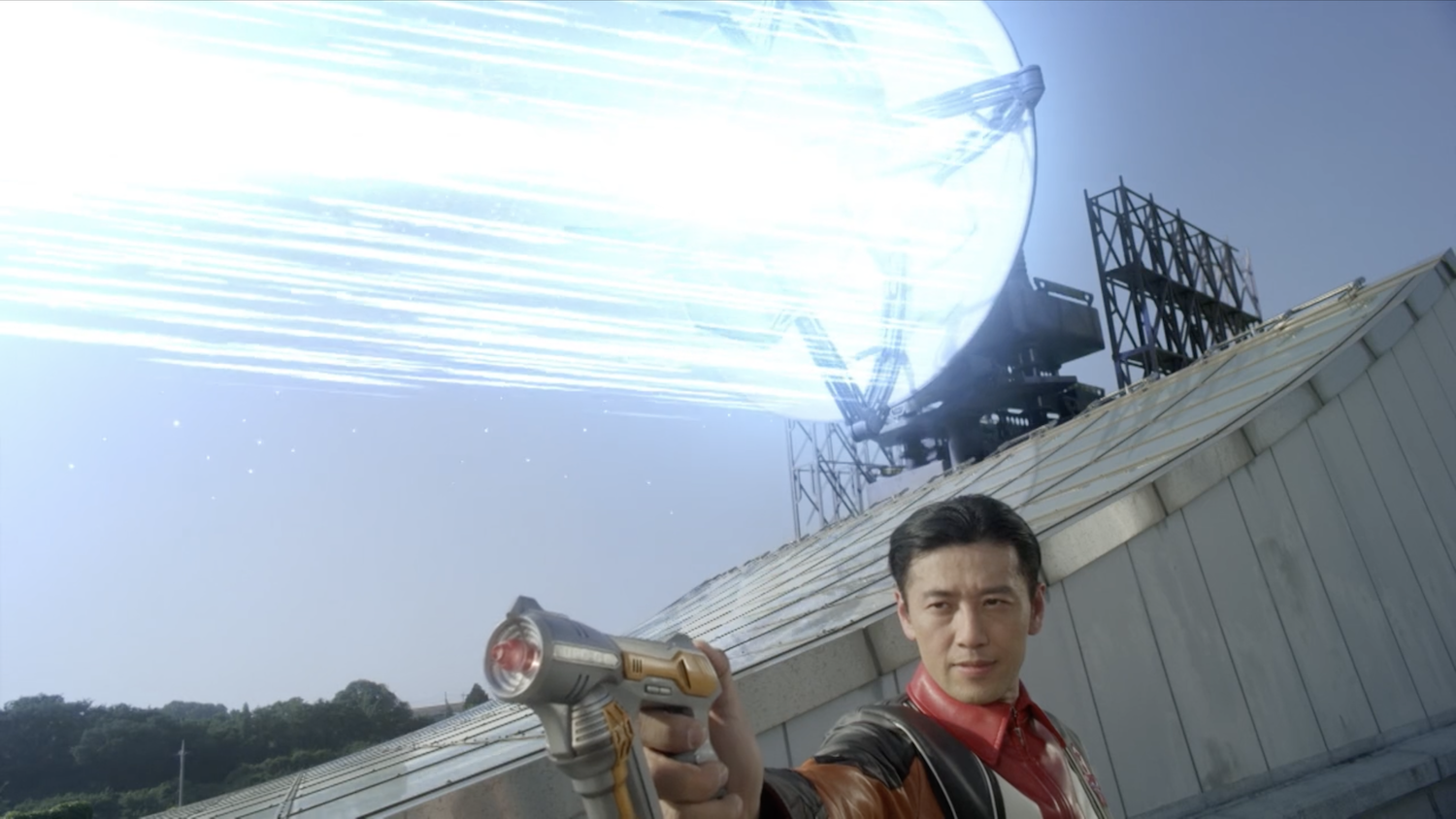
To defeat Gan-Q before it drains Shepardon, the UPG activates plans to fire a magnetic wave that will counteract Gan-Q’s own magnewave. This is the most active role the UPG has played in the show so far. There’s been a weak arc through the early episodes about the UPG having to prove itself with meager resources, and it strengthens here as Captain Jinno finally gets to show his mettle as leader and takes charge of firing the magnewave.
The episode’s first half gives each UPG member plenty to do. The small team has to set up a power cable so one of the radar dishes can unleash the magnewave. At the same time, Android One Zero and her Chiburoids break into the base. Even after the monster fights start to take over as the main focus of the action, there’s still enough going on with the human side of the story to prevent everything from collapsing into repetitive Ultra battling.
Arisa specifically has a strong showing: she confronts Android One Zero as the android attempts to plant a bomb to destroy the base. (The bomb looks like the Lament Configuration from Hellraiser, which is … distracting.) Arisa acquits herself well in the fight against Android One Zero. Tomoya gets to join in on the tension in an effective bomb-defusal scene — it’s the most he’s been able to do so far in the show.
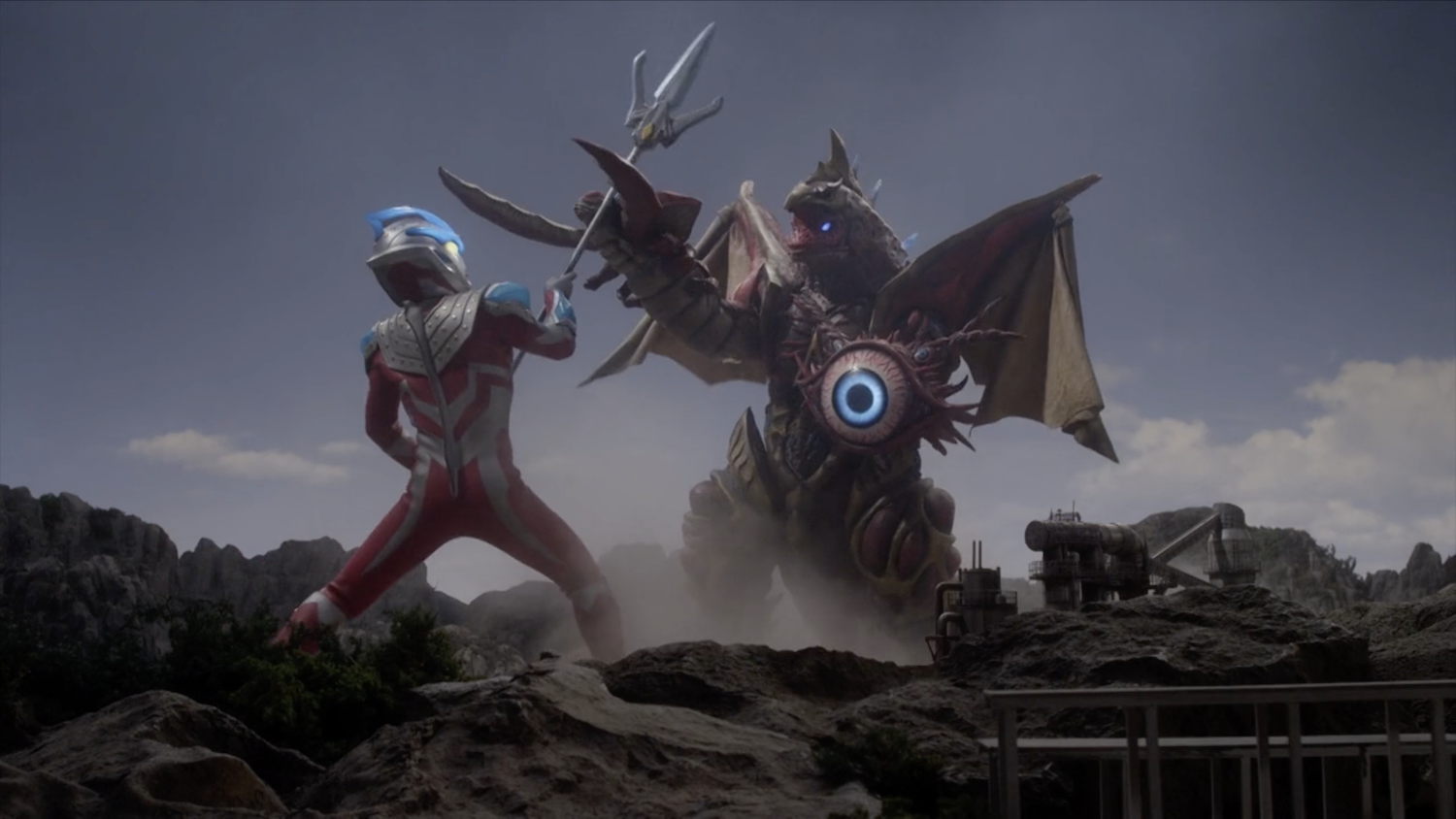
Meanwhile, on the visual effects side of the episode, a bit too much starts to get packed together. Gan-Q could’ve supported the story on its own, but Fire Golza comes back from the previous episode to toss more combatants into the arena (odd choice, since Gan-Q can multiply itself). Fire Golza is less interesting this time. The chimeric monster Five King pops up for essentially a second finale that creates a hook into the next episode.
Like most composite kaiju, Five King is an overly busy, jumbled-looking thing, but it still holds together well enough to be a tough opponent. Big wings always help. Three of its component monsters haven’t appeared in Ultraman Ginga or Ginga S before, so viewers unfamiliar with Ultra lore may feel confused trying to figure out which parts of Five King come from which kaiju. For the record, Five King is composed of kaiju that first appeared in the early trilogy of Heisei shows: Golza, Melba (Ultraman Tiga), Reicubas (Ultraman Dyna), Super C.O.V., and Gan-Q (Ultraman Gaia).
Among all the Ultra fight action, there’s a pleasant, quiet moment between Ginga, Victory, and Shepardon where they all take a breather. Victory then pats Shepardon on the head. It’s a sweet gesture that emphasizes how much Shepardon is essentially a big faithful dog. The episode could very well have concluded here and I would’ve been happy, but it needed that extra climax with Five King to build up to the mid-season finale. Well, let’s go check that out…
Rating: Average
Previous: The Forgotten Past
Next: Desperate Battle in the Sunrise
 The Ultra Project