Directed by Ishiro Honda. Written by Shozo Uehara. Airdate April 2, 1971.
Return of Ultraman explodes onto the scene with one of the best premiere episodes of the Showa era — and possibly of the entire franchise. The episode covers all the necessary setup for a debut: it establishes the defense team, introduces the hero, merges the hero with an Ultra, stages a big kaiju fight, has the hero join the defense team, and generally defines its world. The episode accomplishes all this with a natural flow that never seems rushed or overstuffed. It also features terrific action and a complete emotional journey for its new hero, Hideki Go, race car driver and soon-to-be member of the defense team, establishing the show’s slant toward human drama.
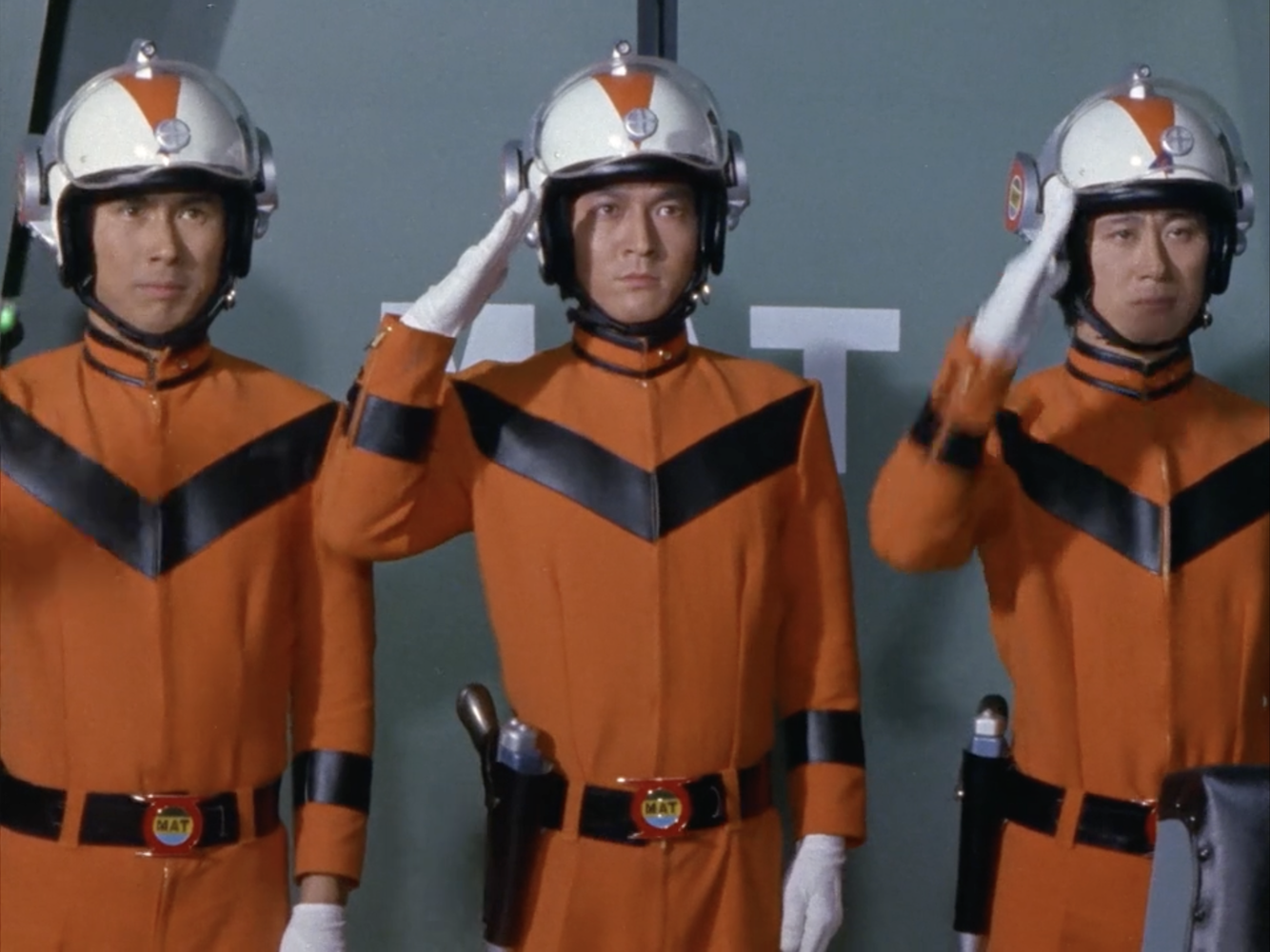
The action starts immediately. The narrator establishes that strange phenomena are occurring around the world, and a string of quakes in Japan indicates a shift in the Earth’s crust. Then — boom! — two kaiju burst from the water in a busy port and start bashing each other and the nearby buildings. The call goes out to the Monster Attack Team (MAT) in their underwater headquarters in Tokyo Bay. We rapidly meet the team as Captain Kato sends them forth in their attack jets, the MAT Arrows 1 and 2, to engage the monsters.
The action sequence of MAT assaulting the kaiju, Takkong and Zazarn, is packed with large-scale special effects that rival anything from the previous shows. The Tsuburaya Pro VFX team shows they still have the skills for spectacle, even after the loss of Eiji Tsuburaya. And all this happens in the first four minutes!
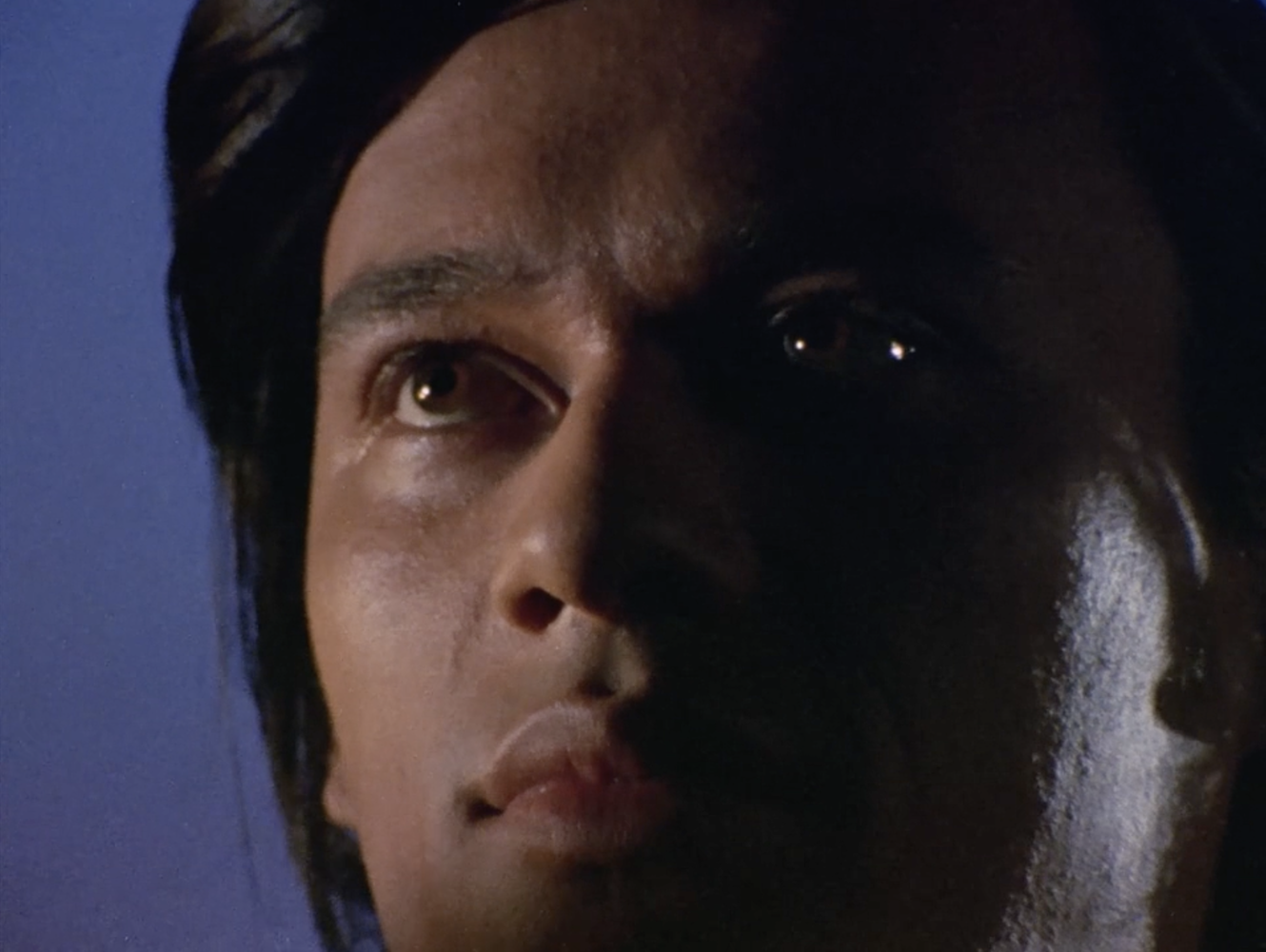
In the middle of this battle, Shozo Uehara’s script seamlessly introduces Hideki Go and his extended “family,” the Sakatas. These characters are the heart of the show. Go is helping Ken Sakata, his girlfriend Aki’s older brother, at his family’s auto repair shop. They’re finishing work on a race car, the Meteor, which Go plans to race. When the news arrives of the monster battle, Aki’s younger sibling, fifth-grader Jiro, dashes off to see the kaiju for himself. Go chases after him, entering the monster demolition zone.
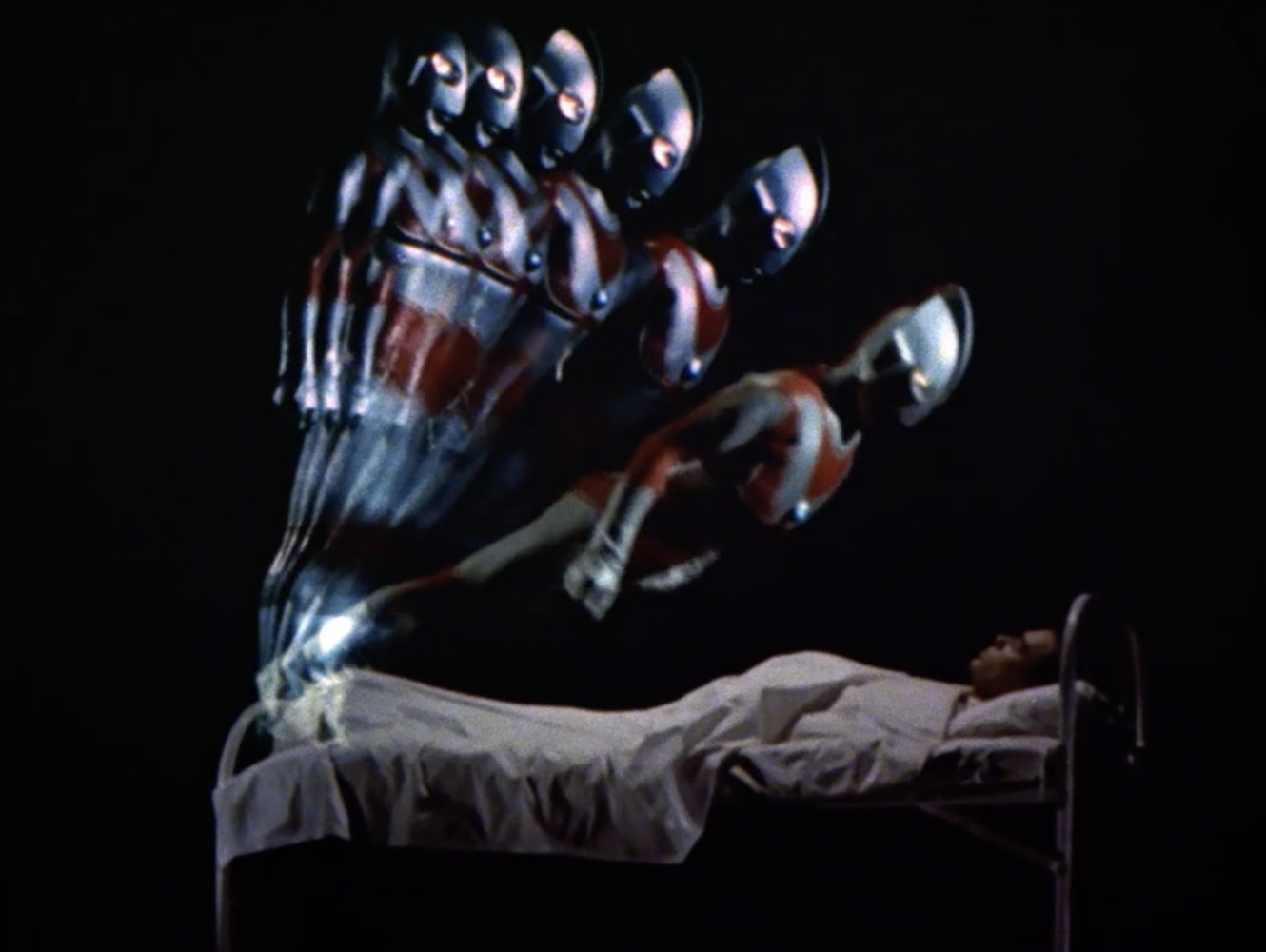
Hideki Go is my favorite Ultra host, and what happens when he throws himself into rescuing a child and a dog from a collapsing building shows how much Return of Ultraman is invested in making him stand out as a hero. He sacrifices his life to save the most helpless, and as a result, Ultraman selects him as his next vessel. He resurrects Go with a famous visual image of the Ultra warrior’s spirit “falling” into Go’s body.
In the interim, the story nails the Sakata family’s closeness and their love of Go as they mourn him. Ken ritually burns the race car he and Go built together, along with memorabilia of his friend and protégé. Ken instantly emerges as the best character in the supporting cast, and the performance of Shin Kishida (who appears in Godzilla vs. Mechagodzilla and was a regular cast member in Tsuburaya’s Operation Mystery) is sterling.
That the drama works so well isn’t a shock when you see the director’s credit: Ishiro Honda, Legend of Legends in tokusatsu cinema. Director of the original Godzilla and most of Toho’s science-fiction output in the late ‘50s and the ‘60s, and Eiji Tsuburaya’s closest creative associate. Honda was in a fallow period in his career at the time, as were many directors during the slowdown in the Japanese film industry in the early ‘70s. He was wary of working in television, but agreed to Hajime Tsuburaya’s request to direct the first two episodes of Return of Ultraman out of respect for Eiji Tsuburaya. He also returned to direct the final episode.
Honda’s special touch is all over the “All Monsters Attack.” His humanistic approach to monster material shows strongest in the scenes with Go and the Sakata family. The family’s grief over Go’s death isn’t the sort of powerhouse emotional material you’d expect from a first episode. Ken burning the race car as a shrine to Go’s memory is the episode’s standout scene. We understand how important the Sakatas and Go are to one another, particularly Ken, who serves as a semi-father figure to Go. Even Aki, who’s rarely given the chance to be more than “the girlfriend,” has a powerful moment at Go’s deathbed that displays the Tsuburaya family’s continued interest in Christian symbolism.
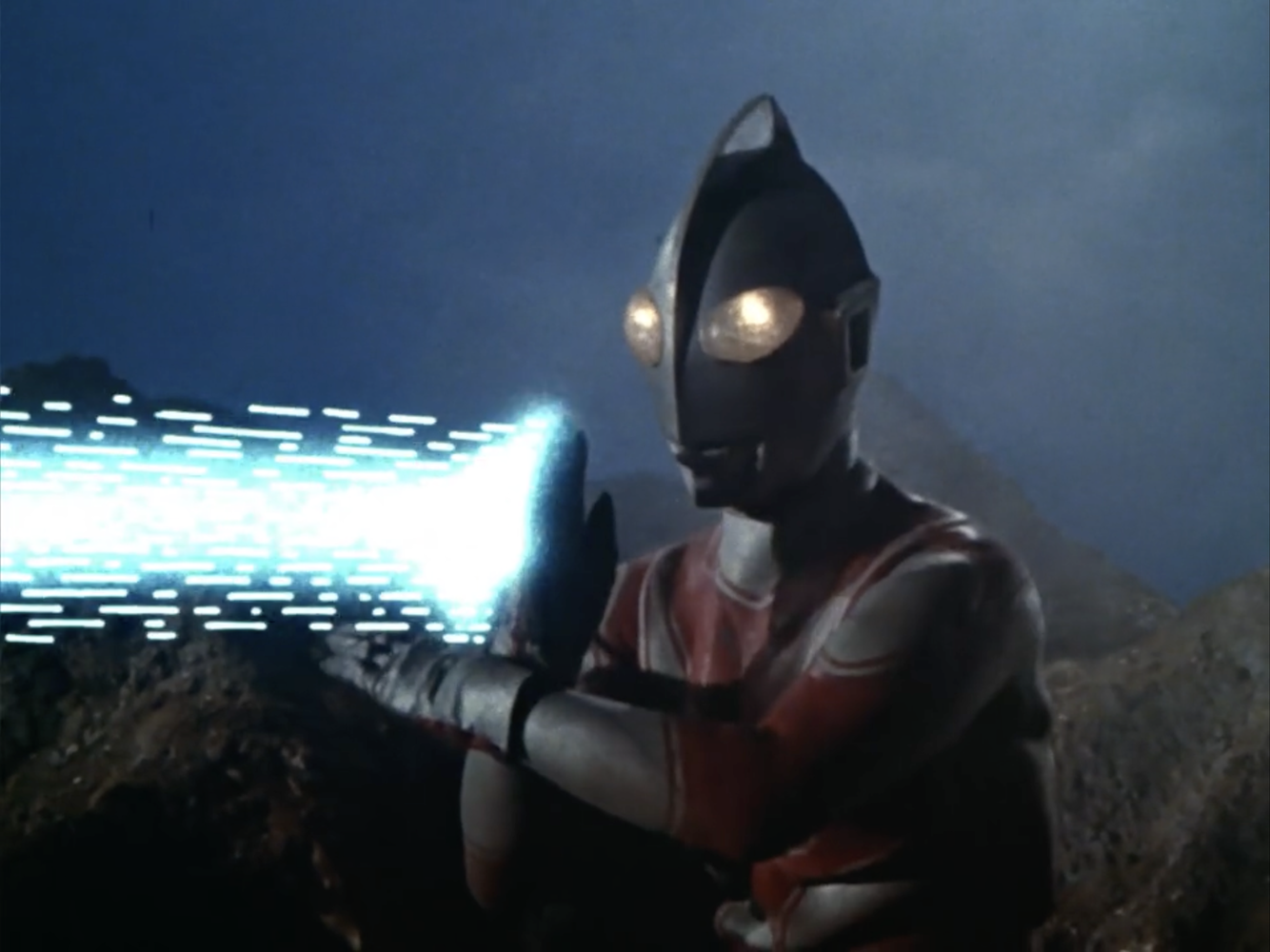
The kaiju don’t receive much focus, since establishing the other elements is more important. That doesn’t mean there’s any less kaiju action — with three kaiju ripping things apart. Arstron is a good choice for the first kaiju the new Ultraman battles; it feels like a classic Toho monster with its dinosaurian features. It’s returned numerous times in future shows. The globular Takkong is also memorable and will come back in the next episode, giving Ultraman a chance to go one-on-one with it. Don’t worry about Zazarn, the monster made of wet green strips. This brief appearance is the only one it’s ever made.
As for MAT, we get snippets of the members’ personalities, such as Ueno’s interest in astrology. Captain Kato makes an impression as a stolid team commander — though don’t get too attached, as Kato leaves both his position and the show midway through. Unfortunately, the series is already treating the one female member of MAT, Oka, dismissively. Go even shoves her aside so that he, a civilian, can go do her job. Oka never has the opportunity to rise to the level of Fuji and Anne from the previous shows.
“All Monsters Attack” drew strong viewership for its initial airing. Return of Ultraman wouldn’t reach that same audience level again until the middle of its run, but many viewers were clearly happy about this first episode. As the show became more and more successful, this premiere rose to the top as one of the best ways to ignite this new tokusatsu boom.
Rating: Classic
Previous: Return of Ultraman: An Introduction
Next: Takkong’s Great Counterattack