Directed by Yoshikazu Ishii. Written by Hisako Kurosawa. Airdate Nov. 4, 2013.
Ultraman Ginga S returns after a two-month break to start its second half, and it has plenty on its agenda. One of the leads from Ultraman Ginga, Misuzu Isurugi (Miyatake Mio), drops in as a guest star. Alien Chibull openly plots to animate and control the corpse of Dark Lugiel on the Moon. Most importantly, Android One Zero is now liberated from Alien Chibull’s control after her master rejected her as a “useless piece.”
Misuzu pops up in the second scene, chatting with Hikaru on an outdoor walk, as if she were one of the regular cast. She drops some info about what Chigusa and Kenta are currently up to. (Chigusa is working on an album, and you don’t remember who Kenta is.) Misuzu then literally trips over the main plot of the episode, Android One Zero, who’s lying in the middle of a field like a discarded action figure. Fitting, because she actually is a discarded tool.
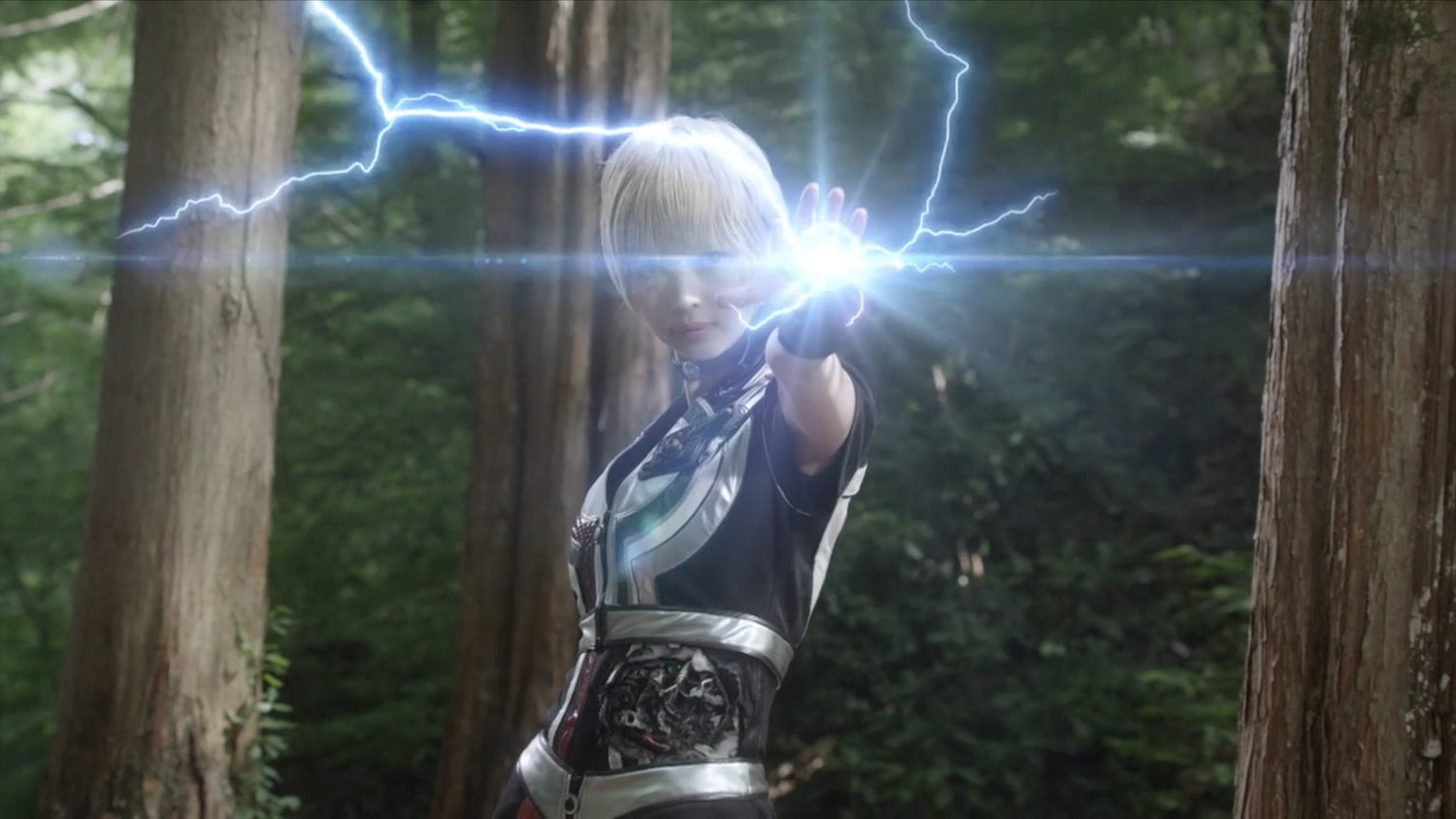
Let’s talk about Android One Zero, who will soon take on a new name. In the first half of Ultraman Ginga S, the character served the role of Action Woman for the villain, handling ground-level enforcement through martial arts and laser blasts. She also served as a, uhm, a … point of visual interest for some of the older viewers who might be watching the show along with the kids.
It’s not like I disagree and don’t see the appeal of Android One Zero and actress Moga Mogami. I want to have the character around more — and not just for visuals, although I won’t lie that that plays a part. Giving Android One Zero a more complex persona and aligning her with the heroes is a shift that makes the second half of the show more appealing.
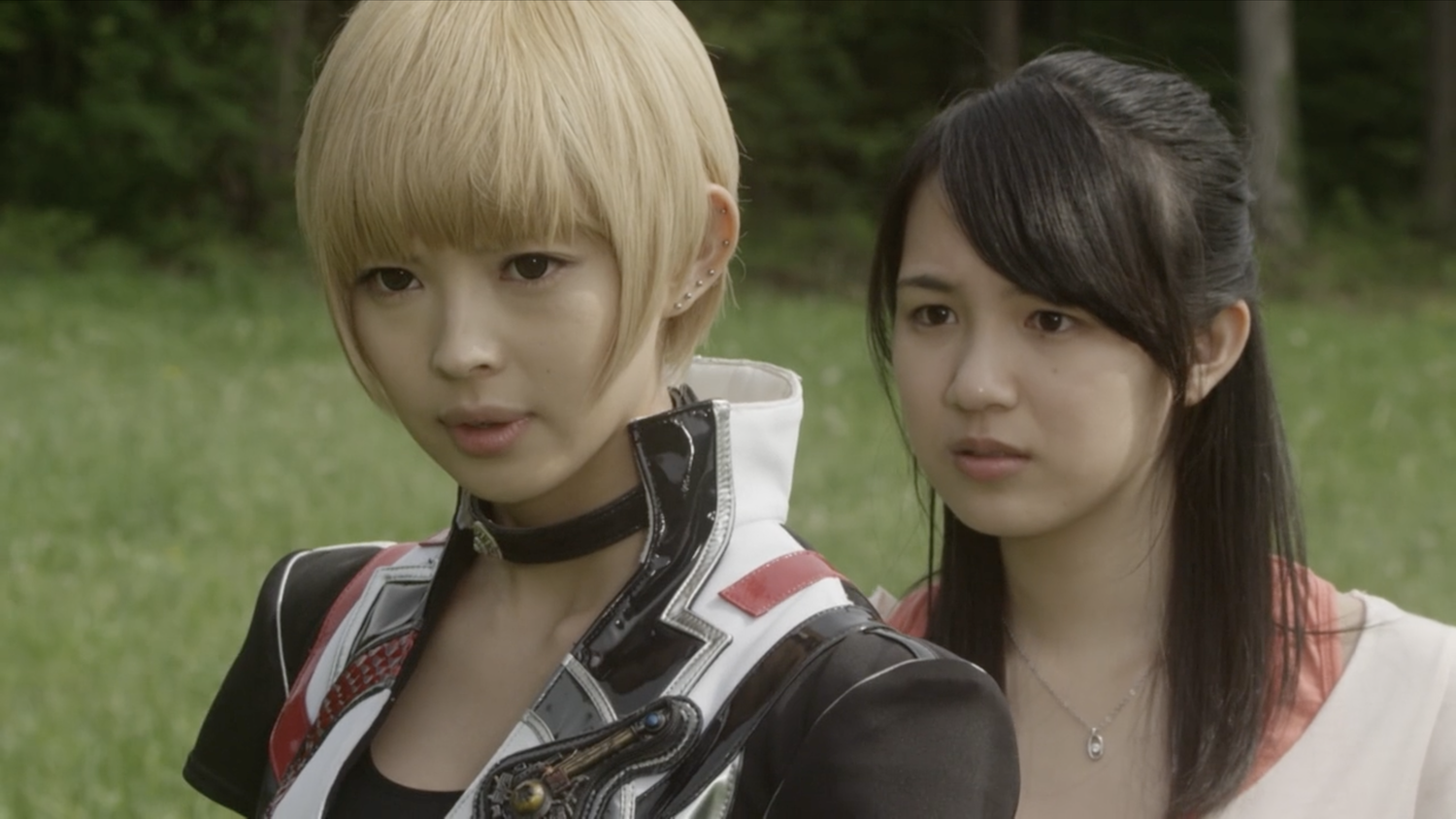
Although she’s abruptly plunked down in the episode, Misuzu has a large part to play as essentially the main character. She claims she’s losing her confidence, probably meaning confidence in her intended career in the pastry business. She came to the city to see Hikaru, hoping that would improve her mood. She still feels strongly about Hikaru, but he’s busy with his UPG job. Misuzu explains all this to Android One Zero after they first meet. A robot with a wiped memory is a perfect sounding board for those deep emotions you aren’t comfortable sharing.
The key role for Misuzu is to bond with Android One Zero and help the robot establish an identity away from being a violent servant. Misuzu is the right character to take on this job. Not only is she gentle and receptive, but all of the series regulars would immediately see the android as a foe, and, rather than stopping for a chat about identity, start firing. That’s exactly what Sho does when he comes across Misuzu and the android.
Misuzu bestows on Android One Zero the name she’ll have for the rest of the series: Mana. Misuzu claims it’s a Hawaiian word whose meaning is both the title of the episode and its theme.1 The android accepts her new moniker almost immediately, declaring herself “Mana” when Sho confronts her. Then Mana, along with Sho, engages in a lot of martial arts thrashing of the cannon-fodder Chiburoids. It’s a good time. I’m glad to see the android didn’t lose her butt-kicking skills when she got a real name.
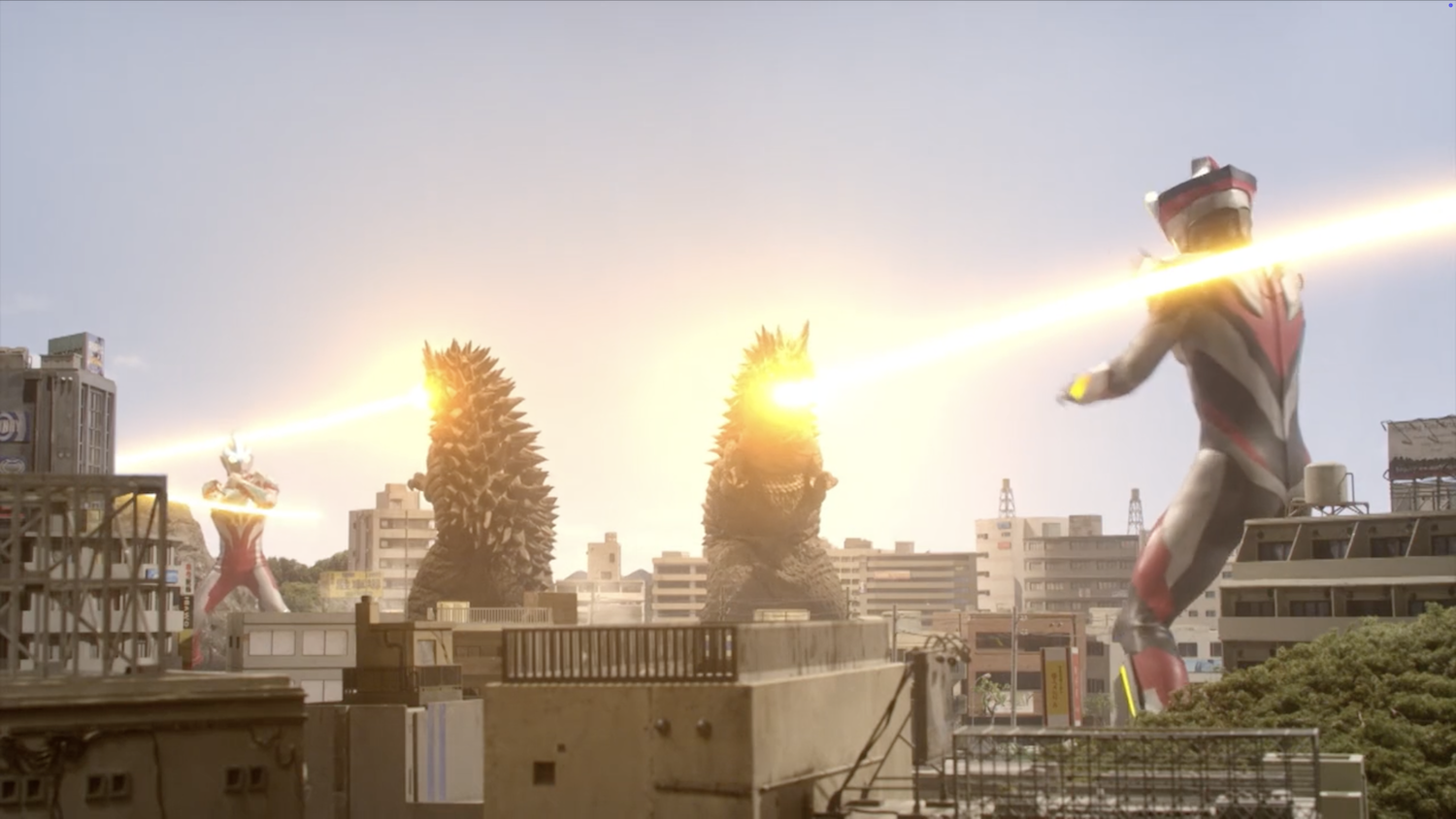
The main action setpiece has Ginga and Victory trying to stop the team of the monsters Bemstar and Bemular from grabbing a chunk of Victorium. It’s the same type of fight we’ve seen in most Ginga S episodes, but it’s pleasantly wacky and not overly busy. Bemstar slaps the tops of buildings around, very much in character, forcing Victory to catch them to save lives. Bemular, the first kaiju any Ultra fought, looks as clunky and awkward as ever, but in this type of battle, it works. Unusually, the human-scale action is better than the monster action, but the main story is happening on the ground, so it works out.
“A Life to Regain” is a charming tale about redemption and defining your own identity that lets Misuzu shine as a guest star. She’s honestly more interesting here than she was in most of Ultraman Ginga. The Ultra action is goofy, but that balances well with the sincerity of the scenes between Misuzu and the newly named Mana. The awakening of Mana brings a welcome level of fresh drama to the show.
Rating: Good
Previous: Desperate Battle in the Sunrise
Next: The Holy Sword of the Future