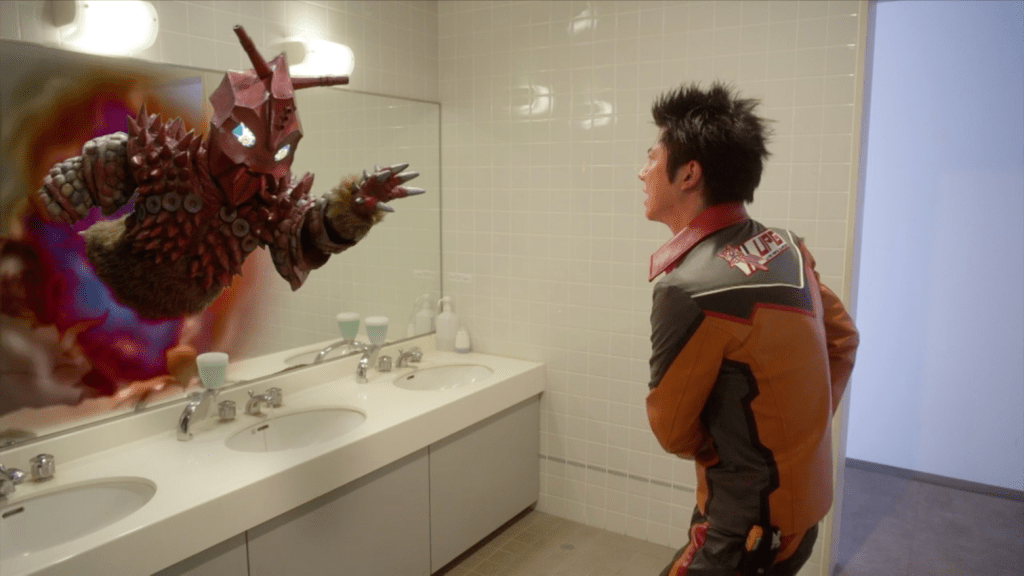
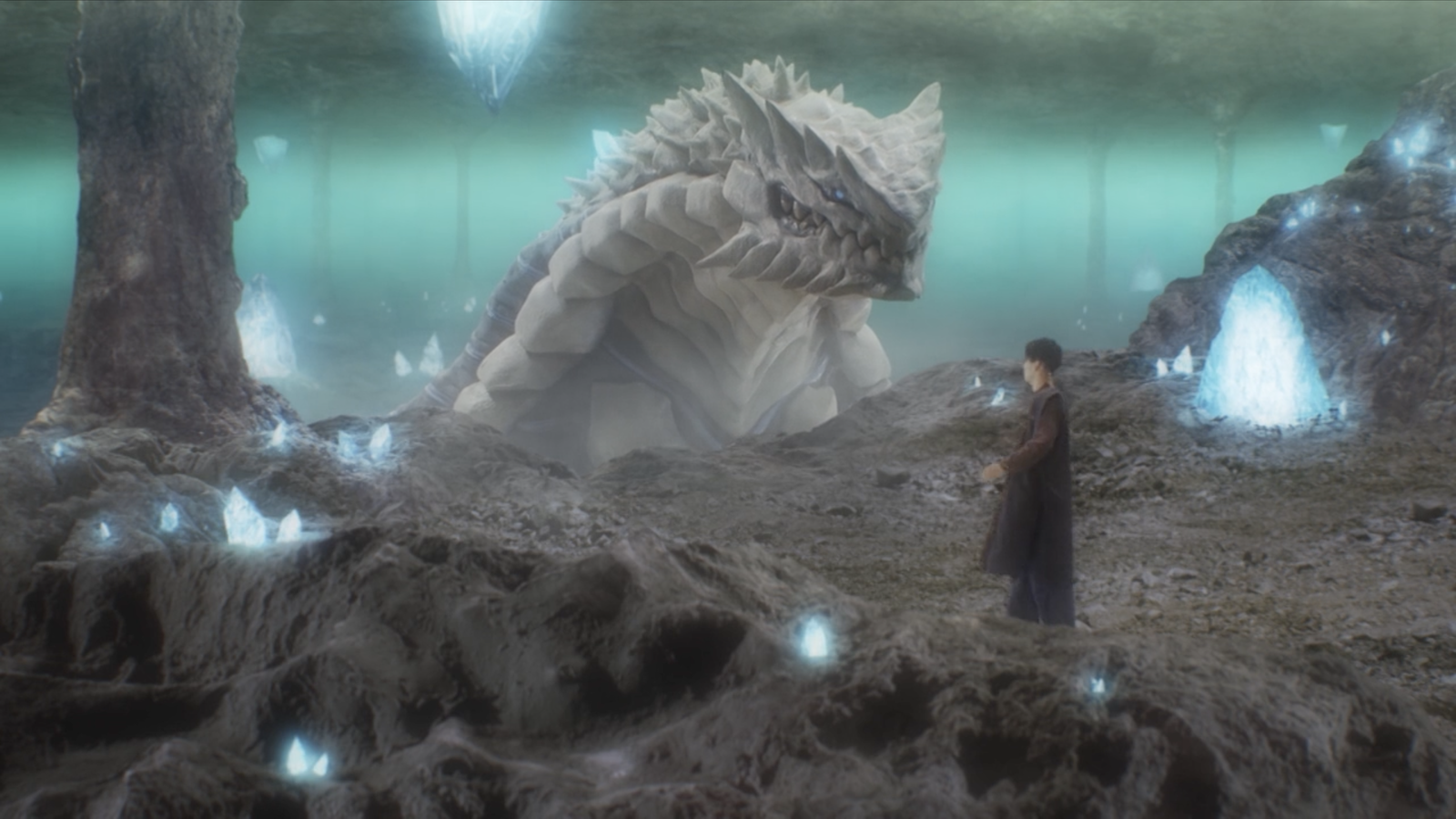
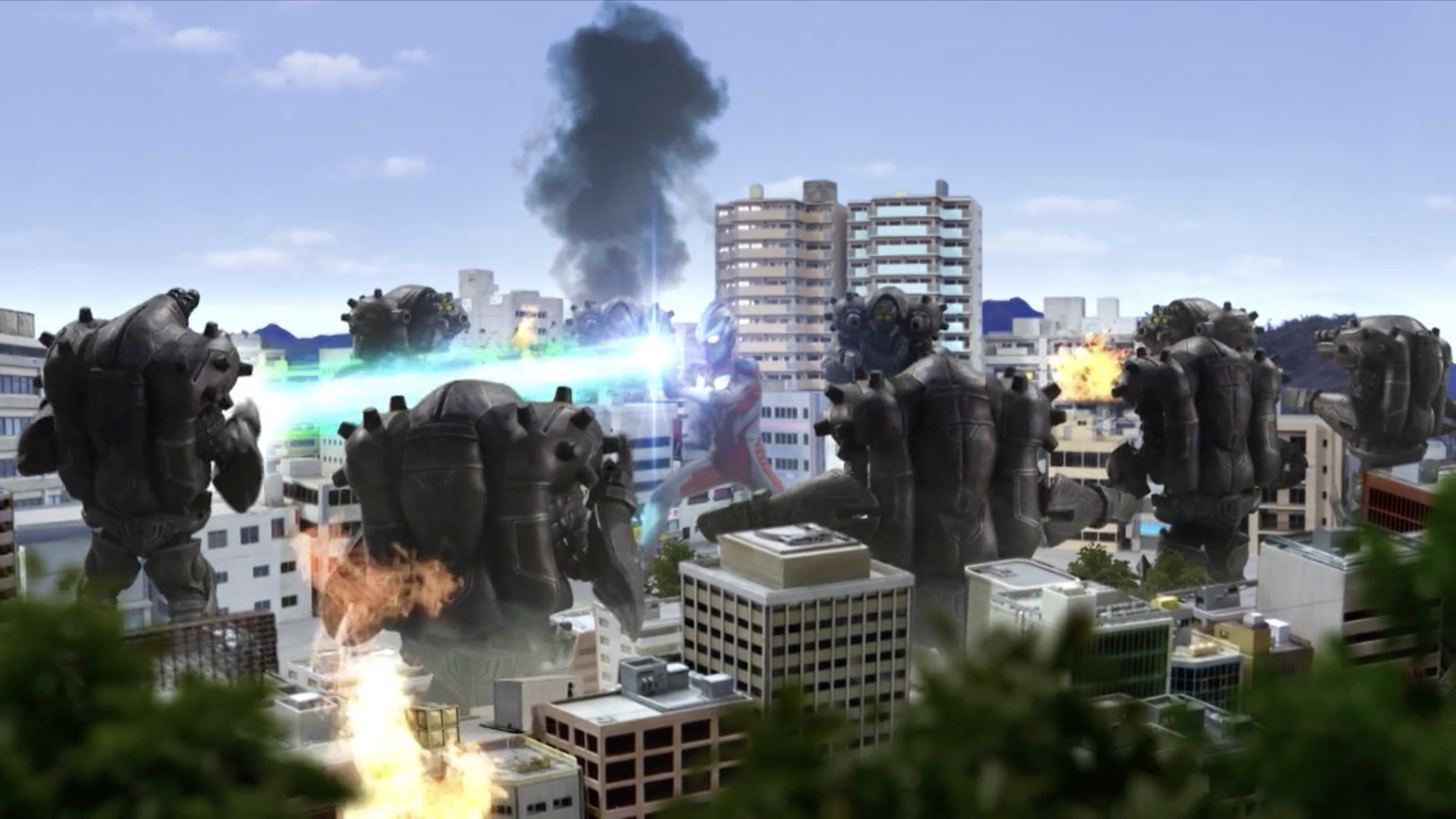
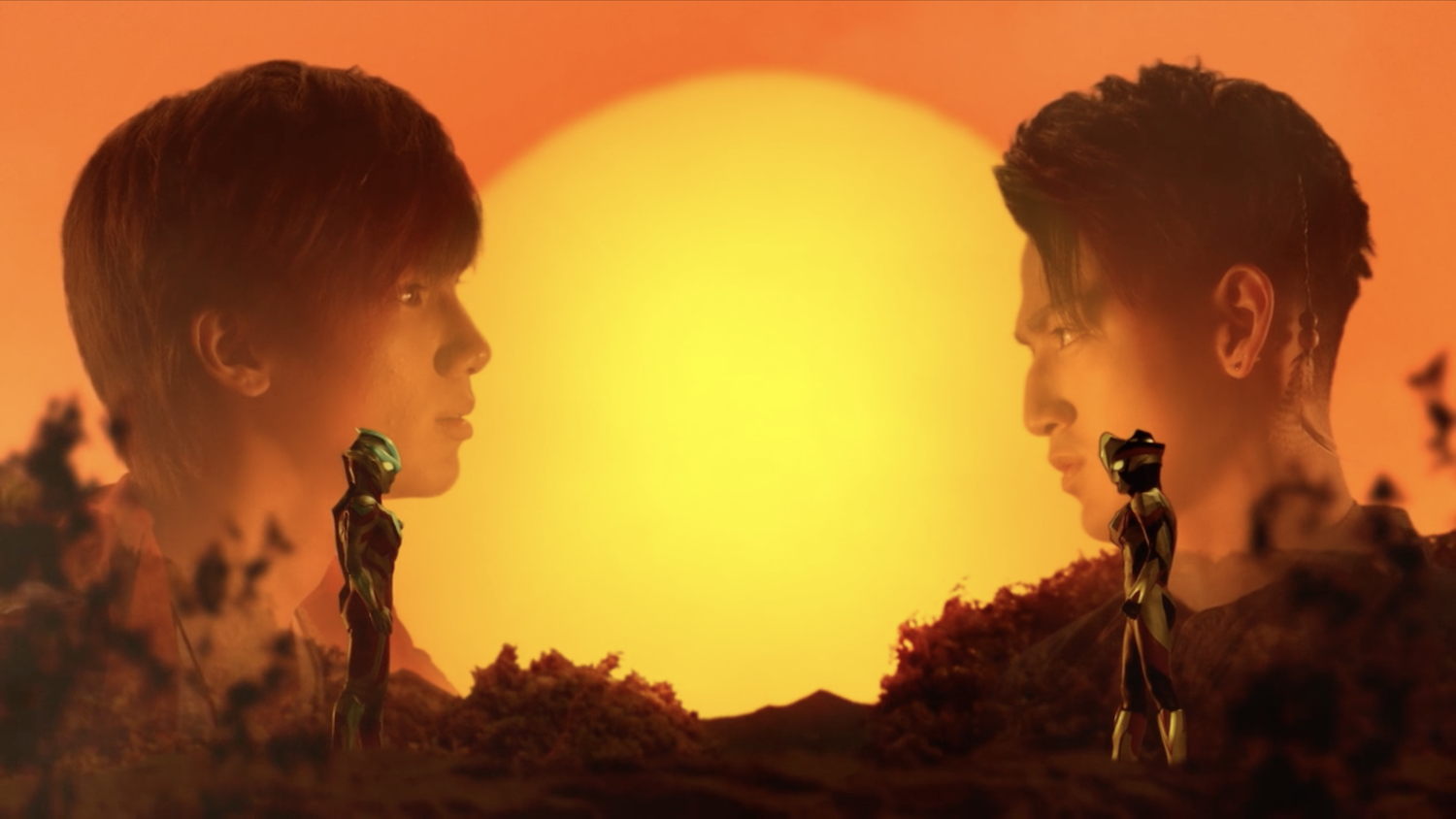
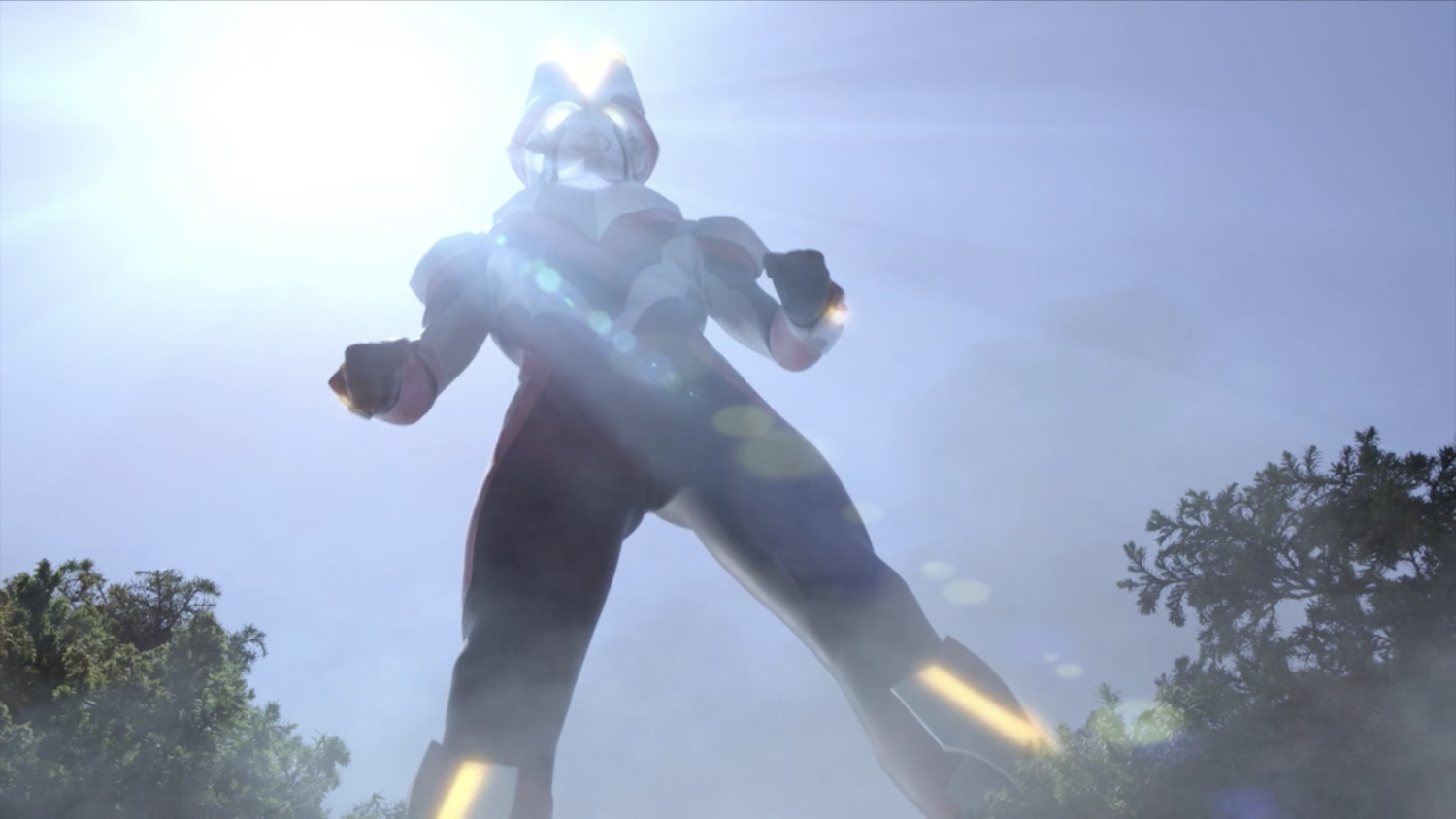
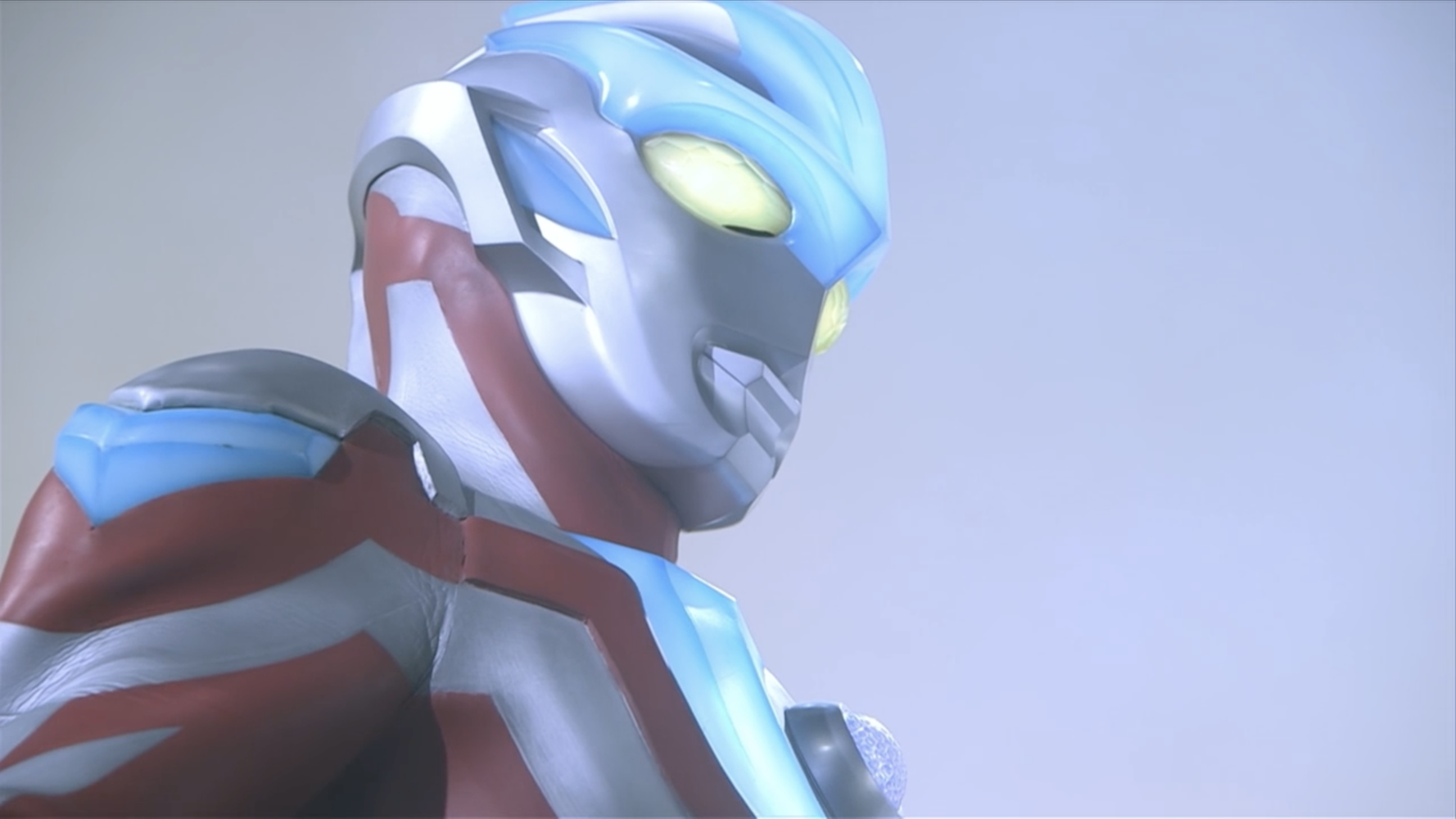
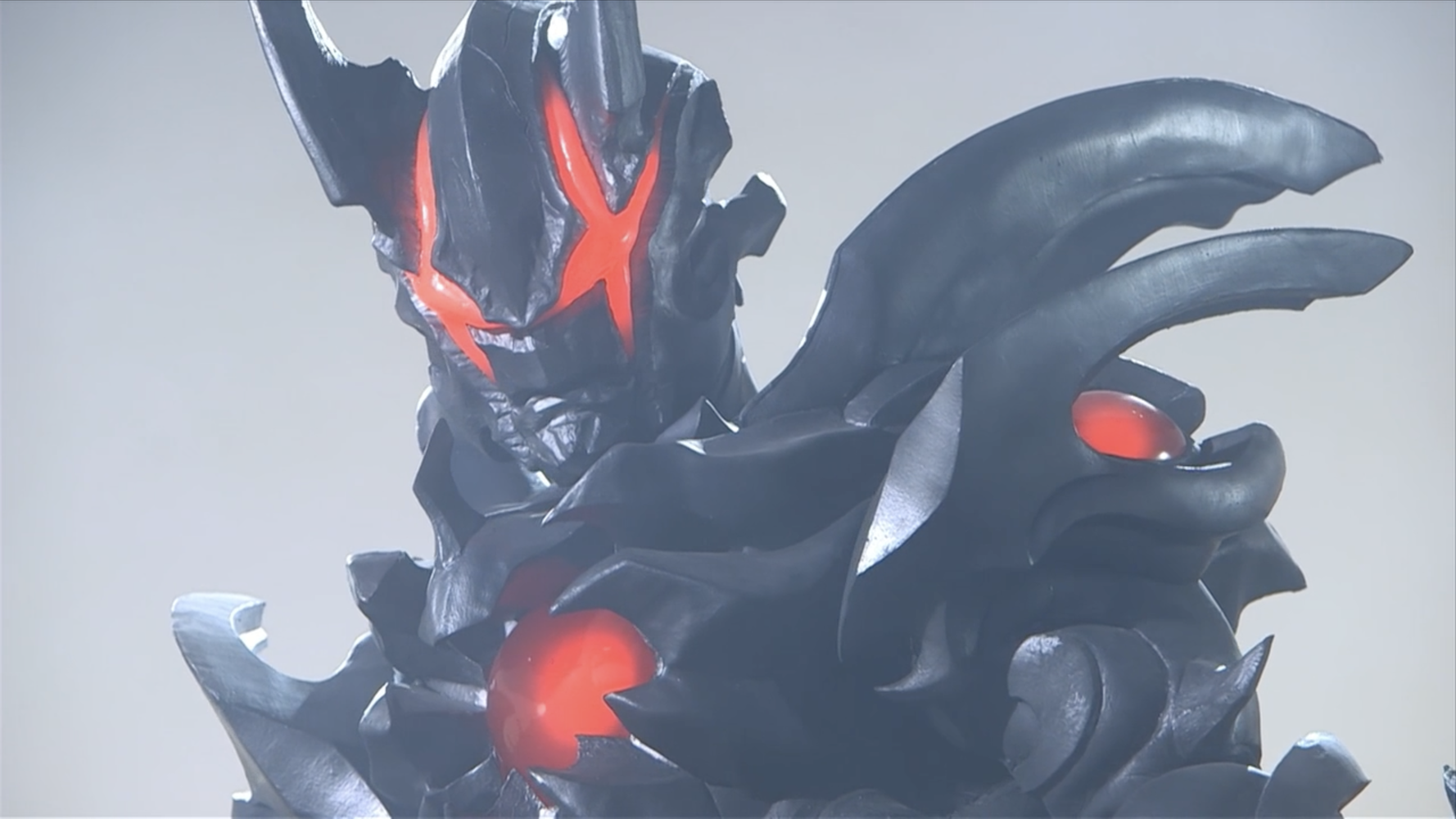
Directed by Yuichi Abe. Written by Akira Tanizaki. Airdate Dec. 11, 2013.
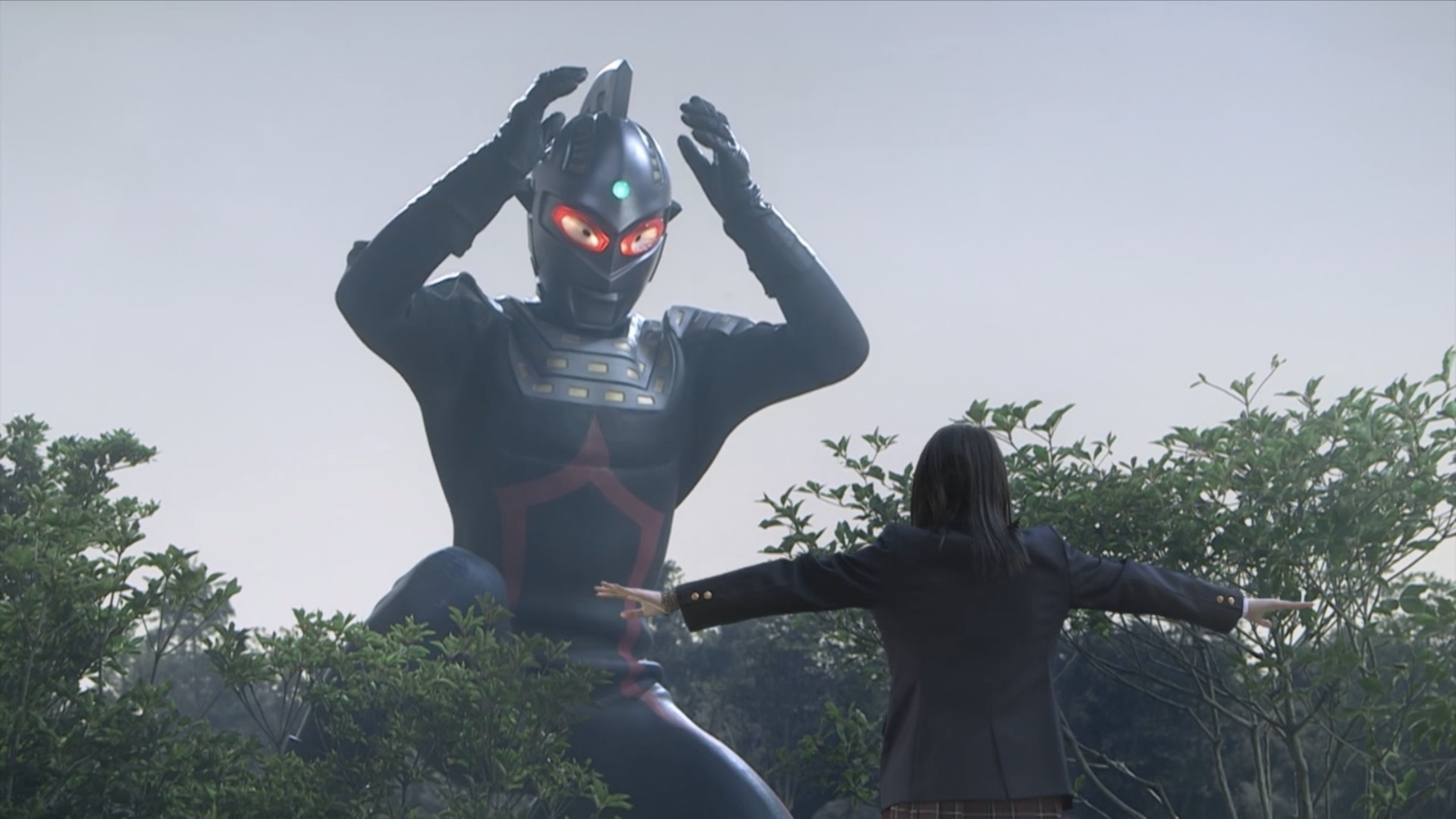
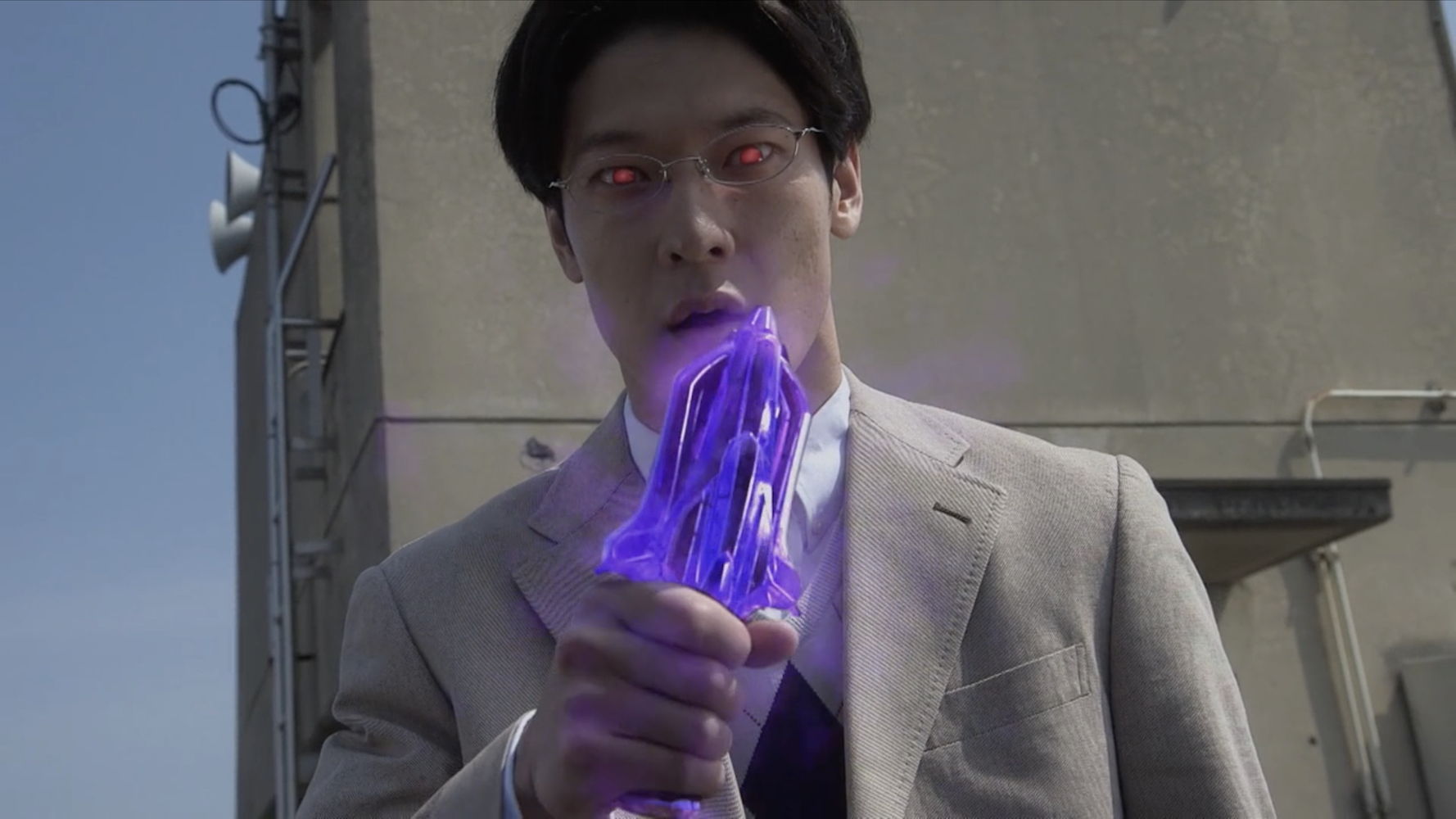
The theme that Ultraman Ginga has prominently played up over its run is the pursuit of personal dreams and how important it is to have a dream and try to live it. That’s a good crowd-tested message for an adventure program, plus it’s effective with younger viewers.
Directed by Yoshikazu Ishii. Written by Kenichi Araki. Airdate Dec. 4, 2013.
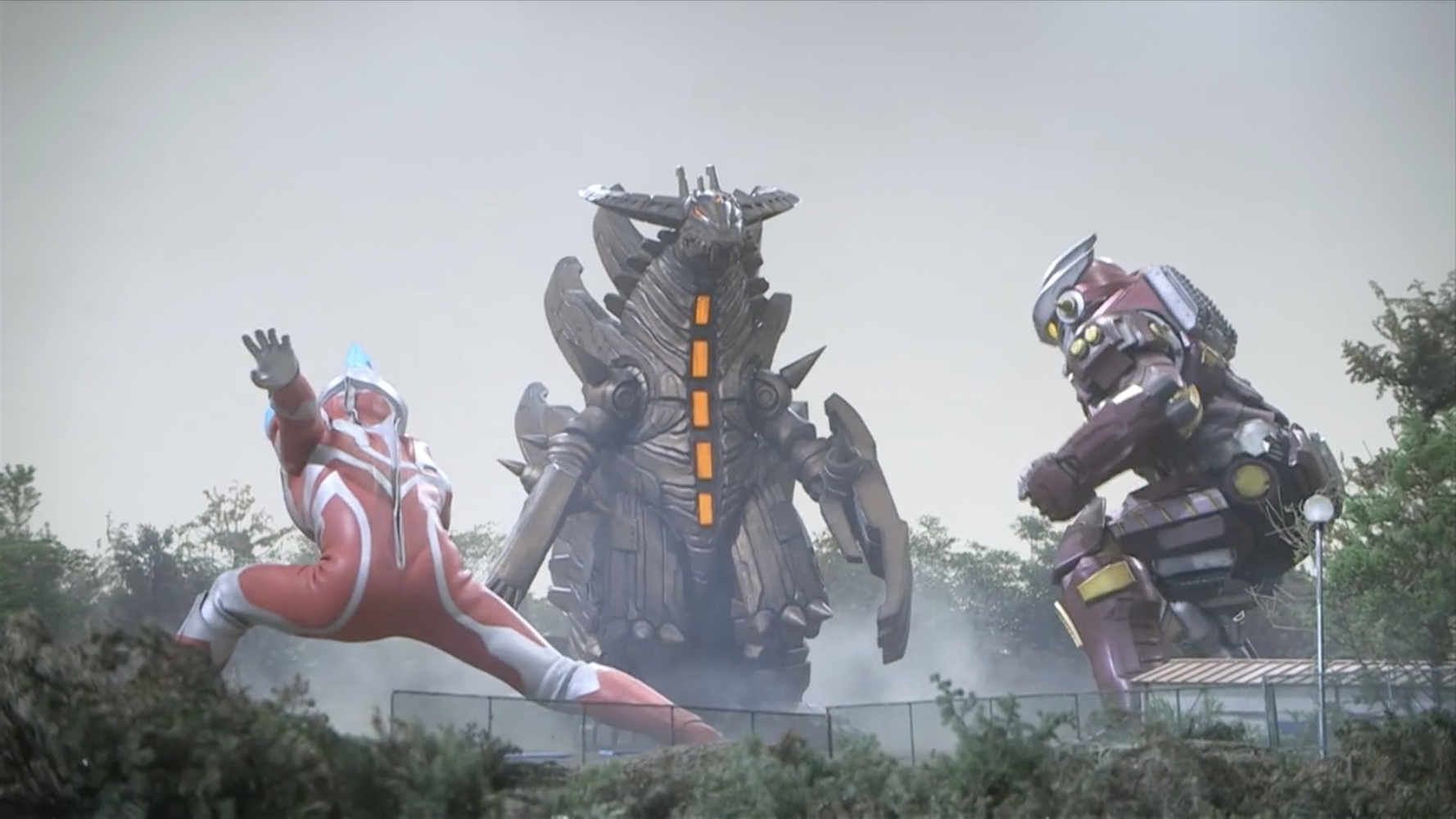
The Ultraman Ginga team, aware they have only a few episodes remaining, goes all-out with an action-crammed half hour. Or as all-out as the budget permits. They also pack in some silly comedy and a few key revelations to set up the finale. It’s a scattershot episode, with six different giant combatants and all the major characters jostling for screen time, but it’s fast-moving and lively. I prefer that to some of the drab earlier outings.
Directed by Yoshikazu Ishii. Written by Keiichi Hasegawa. Airdate Nov. 27, 2013.
Picking up where the previous episode left off, Misuzu’s father, Seiichiro Isurugi (Hironobu Nomura), shows up on the school grounds, accompanied by two people from Ichinotani Construction. Isurugi-San has plans to demolish the elementary school and build a resort complex.
Directed by Tomoo Haraguchi. Written by Keiichi Hasegawa. Airdate Nov. 20, 2013.
After several months on hiatus, Ultraman Ginga returns to the air, ready to reignite interest for its remaining episodes and kick off the arc that will carry it to its conclusion. It does this by having its hero, Hikaru Raido, bravely … sit down in a chair and recount the events of the previous episodes with video clips.
In other words, this is that most feared entity in episodic television: a clip show.
Directed by Yuichi Abe. Written by Akira Tanizaki. Released Sep. 7, 2013.
Ultraman Ginga was planned to start with a six-episode run, followed by a hiatus, and then five more episodes. After airing episode 6, the show wouldn’t return to its regular weekly schedule for three months. In between, Tsuburaya Pro released a 44-minute special to theaters, paired with an animated episode of Mega Monster Battle Ultra Rush to push the running time to feature length. This Ultraman Ginga Theater Special would later be shortened to a 25-minute episode, “Monster Competition,” to slot between episodes 6 and 7 for future broadcasts, streaming, and home video releases. I’m looking at the 25-minute version here, since the theatrical version is padded with recaps and previews of future episodes.
Directed by Kengo Kanji. Written by Masanao Akahoshi. Airdate August 7 & 14, 2013.
We’re at the halfway point of Ultraman Ginga — the ideal time for an epic two-parter that will rewrite the status quo. Except “epic” isn’t something really within the reach of Ginga’s budget.
Directed by Tomoo Haraguchi. Written by Kenichi Araki. Airdate July 24, 2013.
The fourth of the show’s leads, Chigusa Kuno (played by the mononymous Kiara), now gets her own episode to explore her dreams and frustrations. Chigusa wants to be an idol, a type of Japanese popular entertainer. Considering how exploitative and manipulative the Japanese idol system is — it’s basically indentured servitude to a management agency that controls your professional and personal life — this isn’t an ambition I’d wish on anyone. But it’s a dream that makes sense for a teen girl like Chigusa. At several points in the episode, we see her dancing in one of the empty school rooms, practicing and imagining what it might be like to be an idol, and her longing for that lifestyle seems legitimate and heartfelt.
Directed by Tomoo Haraguchi. Written by Akira Tanizaki. Airdate July 24, 2013.
This is the first episode of Ultraman Ginga that manages to tell an effective story despite the show’s severe production limitations. The creative team appears to have figured out, at least for the moment, how to maneuver around corporate restrictions and demands to create something that works as both a YA drama and an Ultra adventure. The scope is still cramped, there’s a distractingly wrongheaded scene, and the monster suits are all reused, but “The Twin-Headed Flame Beast” offers a blueprint for a creative path forward for the show.
Directed by Yuichi Abe. Written by Keiichi Hasegawa. Airdate July 17, 2013.
The second outing for Ultraman Ginga is a minor improvement over the rough first episode. It’s standard for Ultra shows to have stronger second episodes because they need to jam less set-up into a half-hour. “A Midsummer Night’s Dream” gives us more time with our new protagonists, Hikaru and Misuzu, to establish their relationship, and there’s an odd but enjoyable villain. Not a kaiju or alien villain, but a nutball motorcyclist who likes to run people over for committing crimes. Like being too flirtatious.
Directed by Yuichi Abe. Written by Keiichi Hasegawa. Airdate July 10, 2013.
The New Generations Heroes era boldly begins … with a girl stuck in a runaway baby carriage. It looks like a low-budget 2000s Nickelodeon show. It feels like one too. This is a bad omen for what’s ahead.