Directed by Toshihiro Iijima. Written by Keisuke Fujikawa. Airdate June 30 & July 7, 1968.
Alien races have targeted Ultraseven before, both in his giant form and as Dan Moroboshi. But Alien Guts has an elevated kill plan. As monochrome footage plays of Seven battling a kaiju (not stock footage; it’s new, with a monster called Aron), Alien Guts carefully analyzes Seven’s abilities and lays out their plot. Killing Dan isn’t sufficient. They must defeat Ultraseven in a public, humiliating way to break Earth’s resistance. It’s kin to the opening of From Russia With Love, as SPECTRE plots the ultimate defeat and debasement of another “Seven,” 007. The tone is set from the opening scene: this is going to be a major event, a two-parter that will push Seven and the Ultra Guard to their limits. It wildly succeeds.
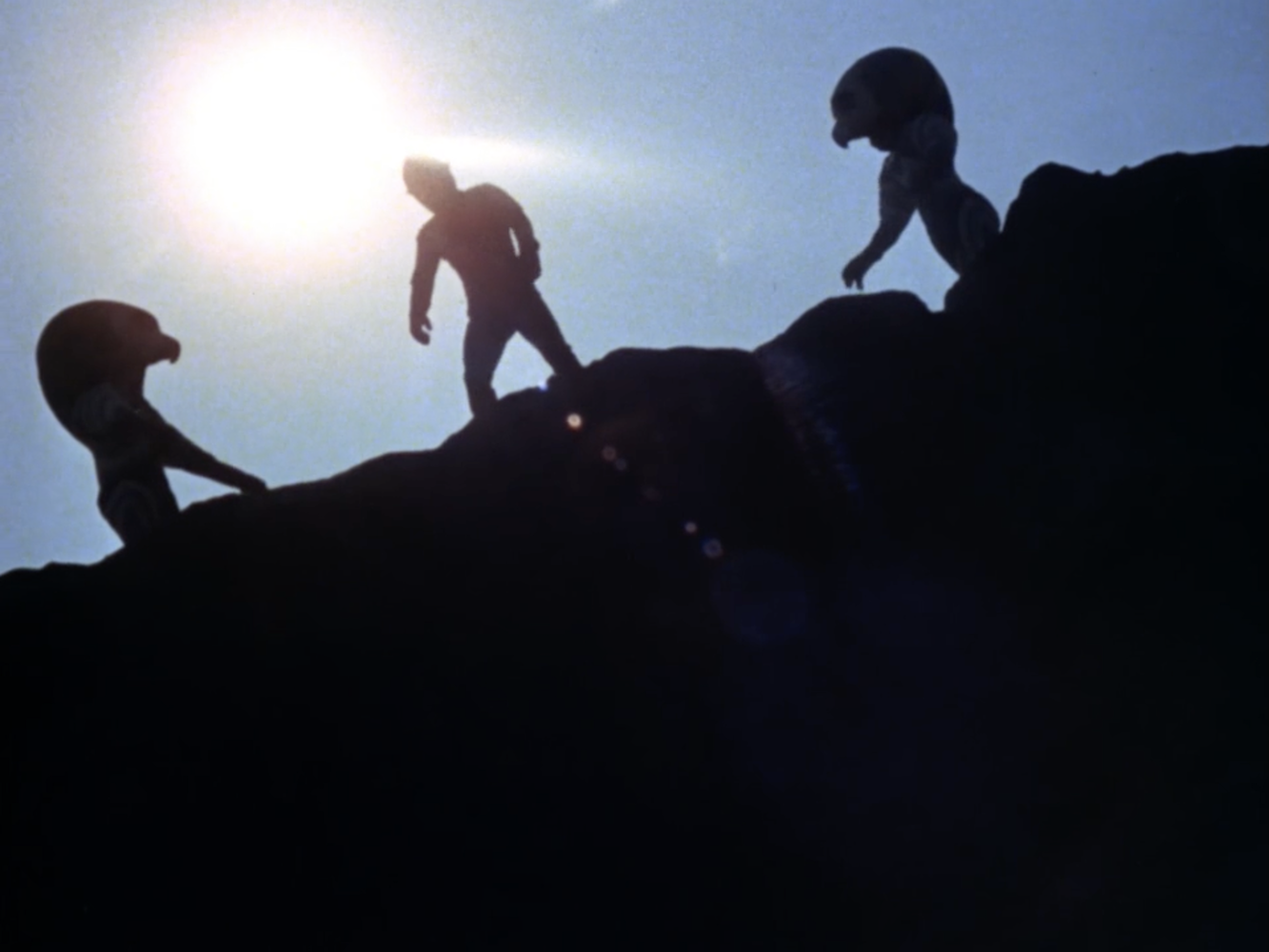
Alien Guts are among the most effective seijin bad guys in Ultraseven and across the franchise. They have a semi-comical look — imagine large-headed parrots wearing clown makeup — and I understand why they’ve mostly worked as comedy characters in later shows. Here, however, the weirdness of their design works in the notorious “creepy clown” way, and the camera often keeps them wrapped in shadows, where they take on a gruesome appearance. What really makes them work is their heavy, strange voices and devious stealth attack methods.
The episode allows Alien Guts to prove their threat early when Anne and Dan confront them in the city at night. Dan summons Windom (we haven’t seen a capsule monster in seven episodes) and … it goes horribly. The climax of this battle is shocking, though there’s never time for the characters to properly dwell on it with everything else that’s going on.
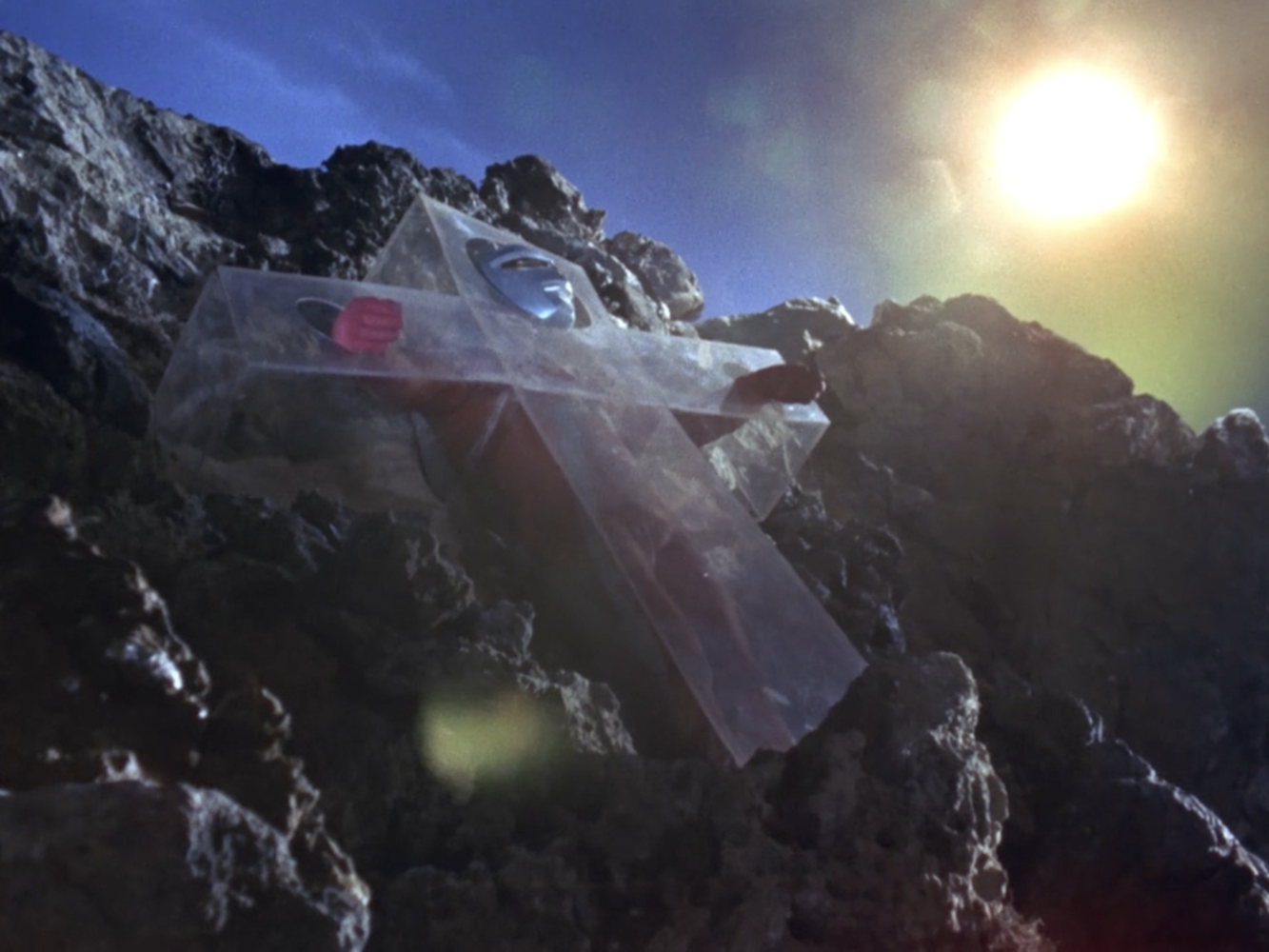
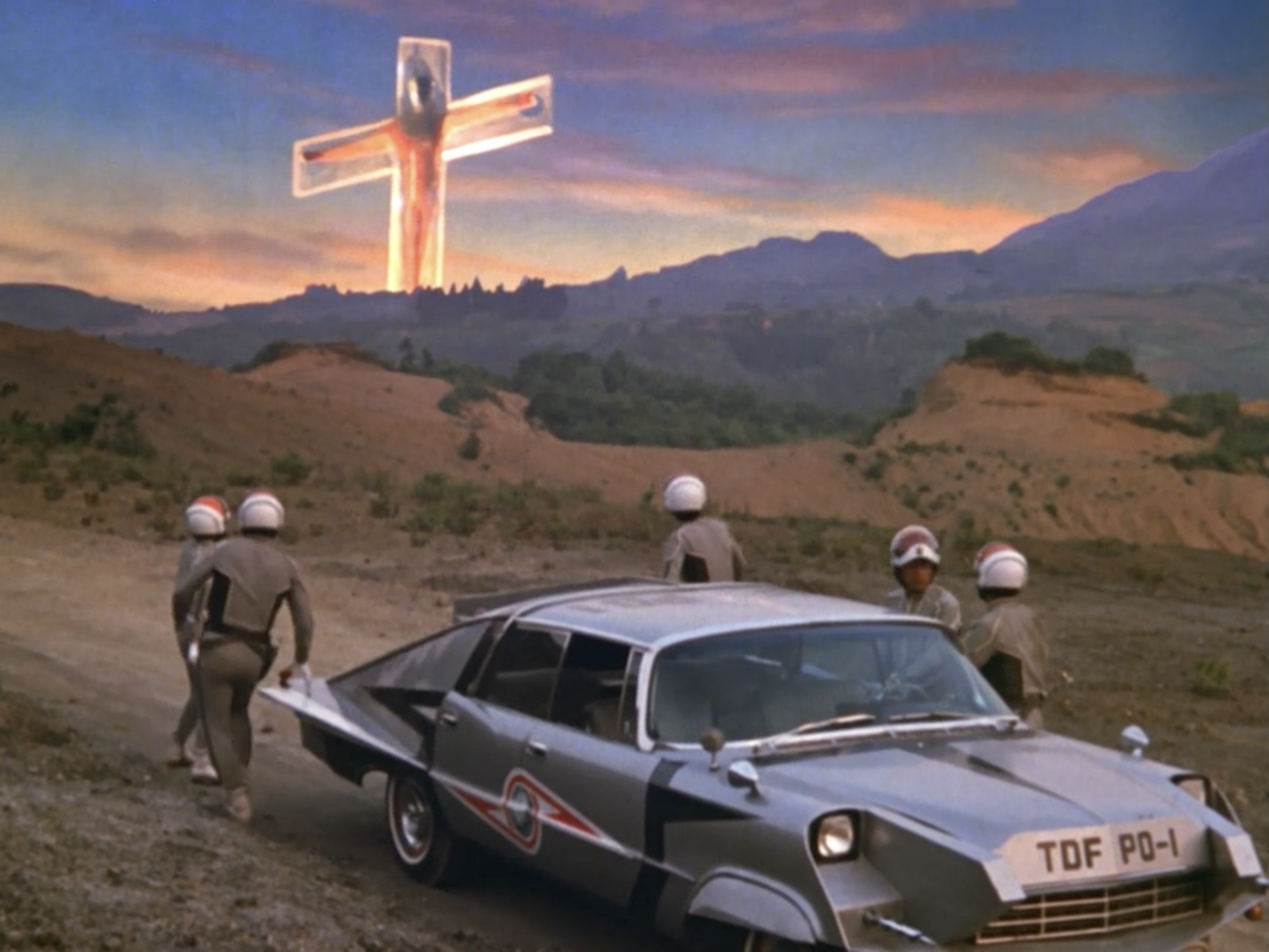
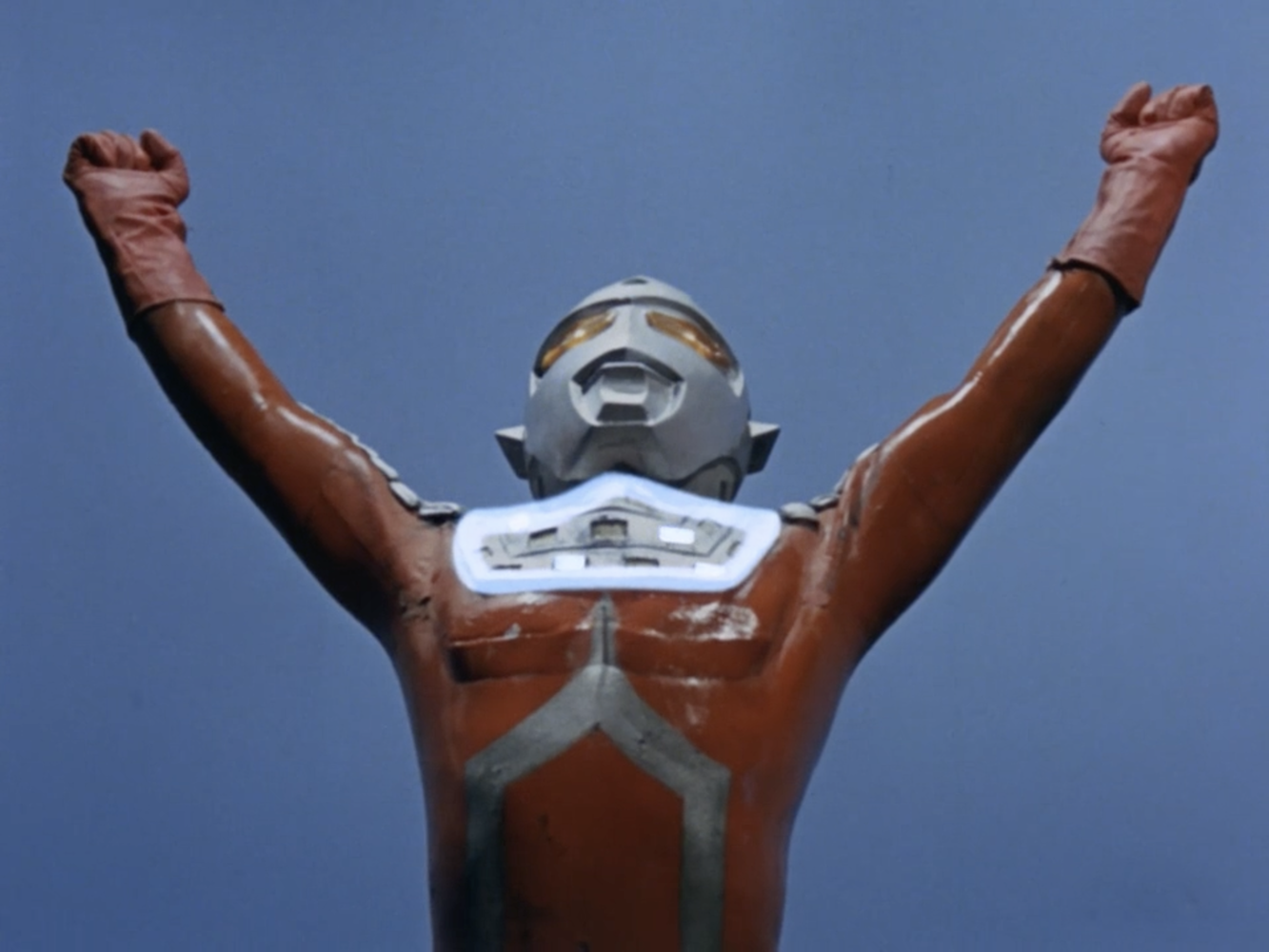
Part 1 concludes with the aliens pulling off their plan by finally coaxing Dan into becoming Seven. As the Ultra Guard watches helplessly, two Alien Guts deliver Seven a seemingly effortless defeat, then trap the energy-drained hero in a transparent crucifix in the sky. (What’s with the crucifix imagery in a Japanese show, you ask? Eiji Tsuburaya was a convert to Roman Catholicism.) Alien Guts announces they will execute Seven at dawn.
The crucified Ultraseven floating in a blood-red sky as the Ultra Guard and citizens look on is one of the indelible images of the franchise. It sets up Part 2 as a story of the Ultra Guard working to free Seven before his execution ignites a global panic that gives Alien Guts the leverage they need for conquest.
Most of Part 2 is suspense-driven. The UG must locate a special ore to create an energy beam that might restore Seven’s depleted power. Oddly, finding this ore hinges on Furuhashi’s love life. (Hey, I’m happy for him. Natsu seems like a nice woman.) This game of subterfuge with Alien Guts is the slowest section of the episodes, likely done to help rein in costs, but it doesn’t significantly hurt the story. It’s clear the Ultra Guard is skirting a major disaster. Soga even suggests attempting a full suicide mission at one point.
When the climax kicks in, it’s one of the show’s most thrilling. The tension ratchets up as the united Ultra Guard dodges attacks from the alien ships while flying the Hawk 1 to the rescue. Even the Magma Riser pops up as the UG goes all out with their counter-offensive and rescue mission. With the help of fast editing and rousing music, the story closes on a huge high.
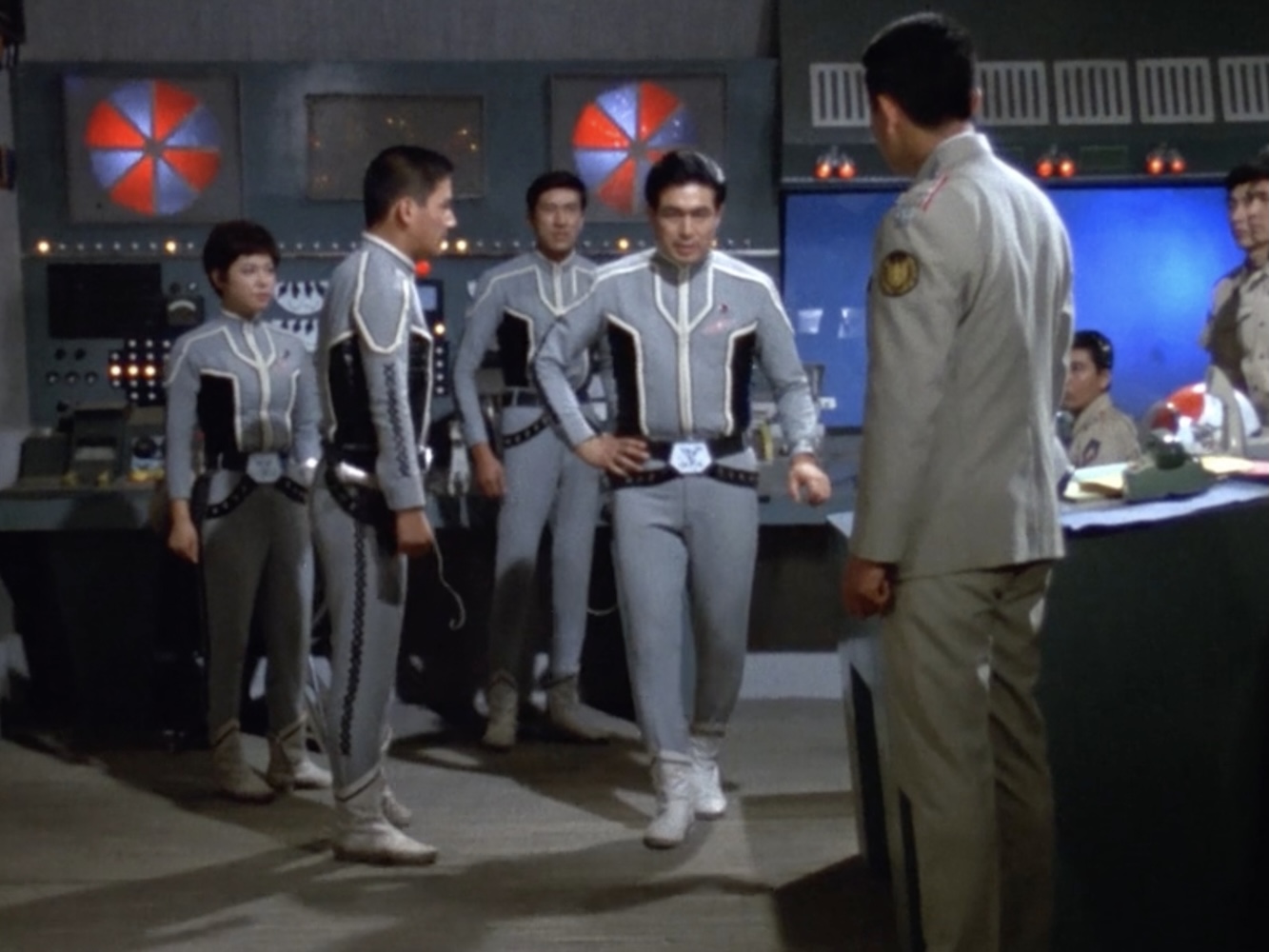
This is the best story about the Ultra Guard as a team, with Staff Officer Takenaka also taking a prominent part; it’s great to have Kenji Sahara back in a major role because of his acting chops. But Anne stands out the most. She’s not the lead of the episode — this is an ensemble piece — but she’s foregrounded numerous times and portrayed as one of the toughest Ultra Guard members. “I’m strong. Don’t underestimate me,” she tells Dan in an early scene, and she proves it.
This episode cinches Anne’s romantic feelings for Dan. She searches desperately for him when he vanishes, and the camera frequently frames her in close-ups to let actress Yuriko Hishimi show that Anne’s concern for Dan goes beyond camaraderie. It’s a terrific way to advance this key character relationship without making it overt or distracting from the rest of the story.
Something I found surprising when I watched the episodes this time is how economical this big multi-part event is. While “The Ultra Guard Goes West” and “The Biggest Invasion in History” feature extensive model scenes and kaiju fights, “The Seven Assassination Plan” keeps its action restrained. The initial confrontation between Seven and Alien Guts occurs on an empty ridge with no models. It’s difficult to even tell whether the combatants are giant or not. Yet it works. The same is true of the suspense-based Part 2, which saves money without losing the feeling we’re watching a world-shaking affair. Even the climax holds back compared to some of the spectacles we’ve seen, but the music, pacing, and the power of the build to this moment ensure viewers won’t leave disappointed.
Director Toshihiro Iijima deserves a great deal of credit. Tsuburaya Productions pulled him off another project to helm these episodes, and it was a wise move. Iijima was one of the main directors (and sometimes writer) of the original trio of shows. His work includes several classics: “The Underground Super Express Goes West” (Ultra Q) and “Mysterious Comet Tsuifon” (Ultraman). The two parts of “The Seven Assassination Plan” were the final episodes of the classic era he directed, although he also wrote the excellent Return of Ultraman episode “Duel Under the Setting Sun.” Decades later, Iijima directed a two-parter for Ultraman Max, “Welcome to Earth!”, which brought back Alien Baltan, the species he introduced (as writer and director) in “Shoot the Invader.” Iijima played an essential part in shaping the franchise, and this fantastic episode pair is his most enduring contribution.
Pour one out for Windom. Alien Guts, you’re jerks.
Rating: Classic
Previous: The Courageous Battle
Next: Challenge From Underwater