Ultraseven Ep. 23: Search for Tomorrow

Directed by Samaji Nonagase. Written by Shozo Uehara and Samaji Nonagase. Airdate March 10, 1968.

Captain Kiriyama takes center stage for an unusual episode that shows the Ultra Guard members acting as more than a stock hero team. Characterization in Ultraseven works differently than in Ultraman and other Ultra shows: scripts often downplay individuality in favor of larger science-fiction themes. It’s good to have a chance to settle in with a personal character drama like “Search for Tomorrow,” where Kiriyama reveals a side that puts him at odds with the rationalist approach of the Terran Defense Force and the Ultra Guard. It’s not a superlative action episode, but it has some crunchy ideas to chew on and a strong use of the ensemble.

Continue reading “Ultraseven Ep. 23: Search for Tomorrow”

Ultraseven Ep. 22: The Human Farm

Directed by Toshitsugu Suzuki. Written by Hiroyasu Yamaura. Airdate March 3, 1968.

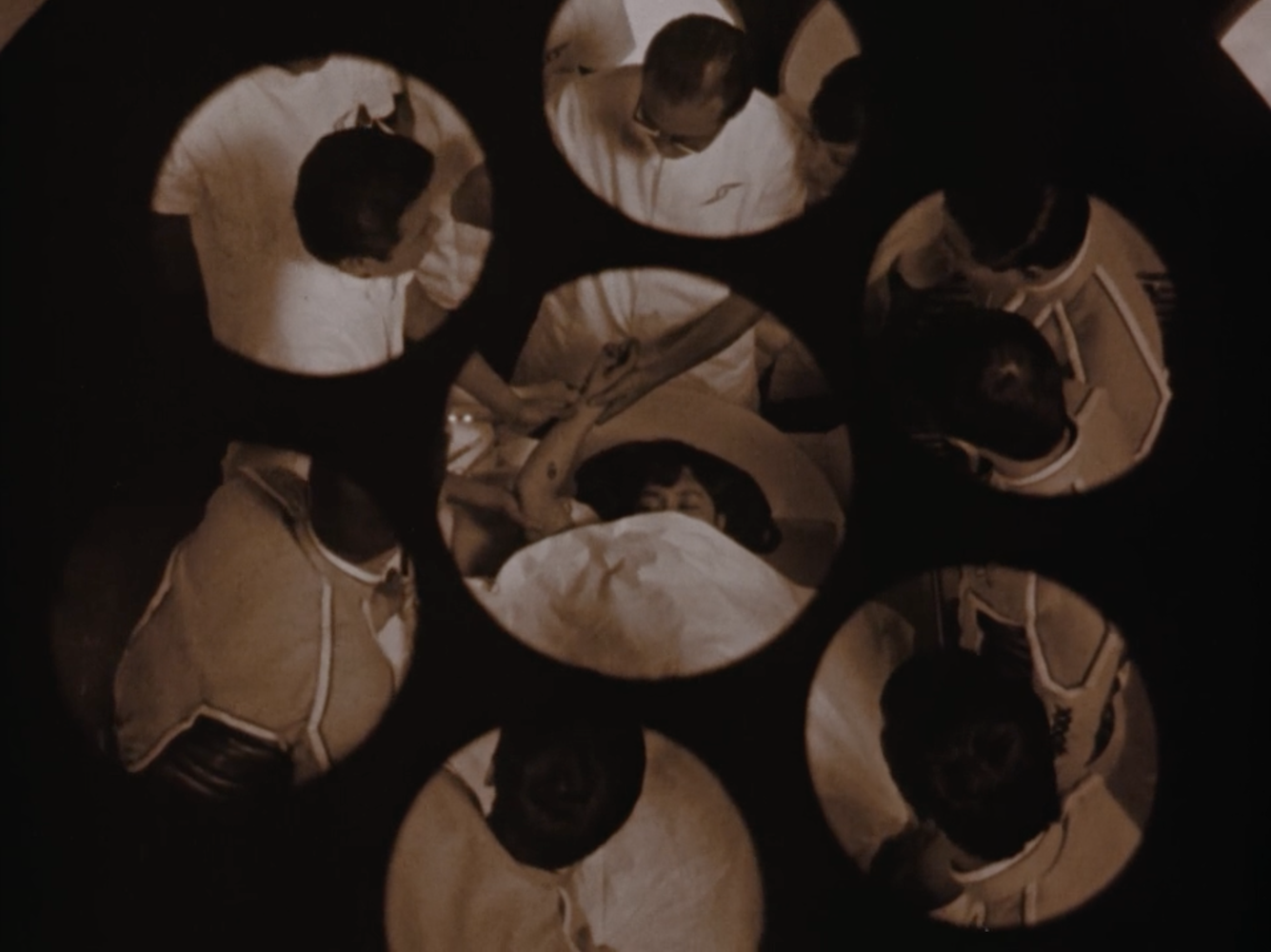
Ultraseven shifts to science-horror with an episode mirroring the more sober stories of Ultra Q. The general mood is subdued foreboding laced with body horror. Several unusual visual choices enhance the quiet dread. It’s ambitious, and the episode almost works — but the climax veers in a different direction that emphasizes big action. The finale may not include a giant monster fight, but it still feels like a conventional wrap-up, and that doesn’t gel with a story about aliens using women’s bodies as cultures for growing their food. 

Continue reading “Ultraseven Ep. 22: The Human Farm”

Ultraseven Ep. 21: Pursue the Undersea Base!

Directed by Toshitsugu Suzuki. Written by Onisuke Akai. Airdate Feb. 25, 1968.

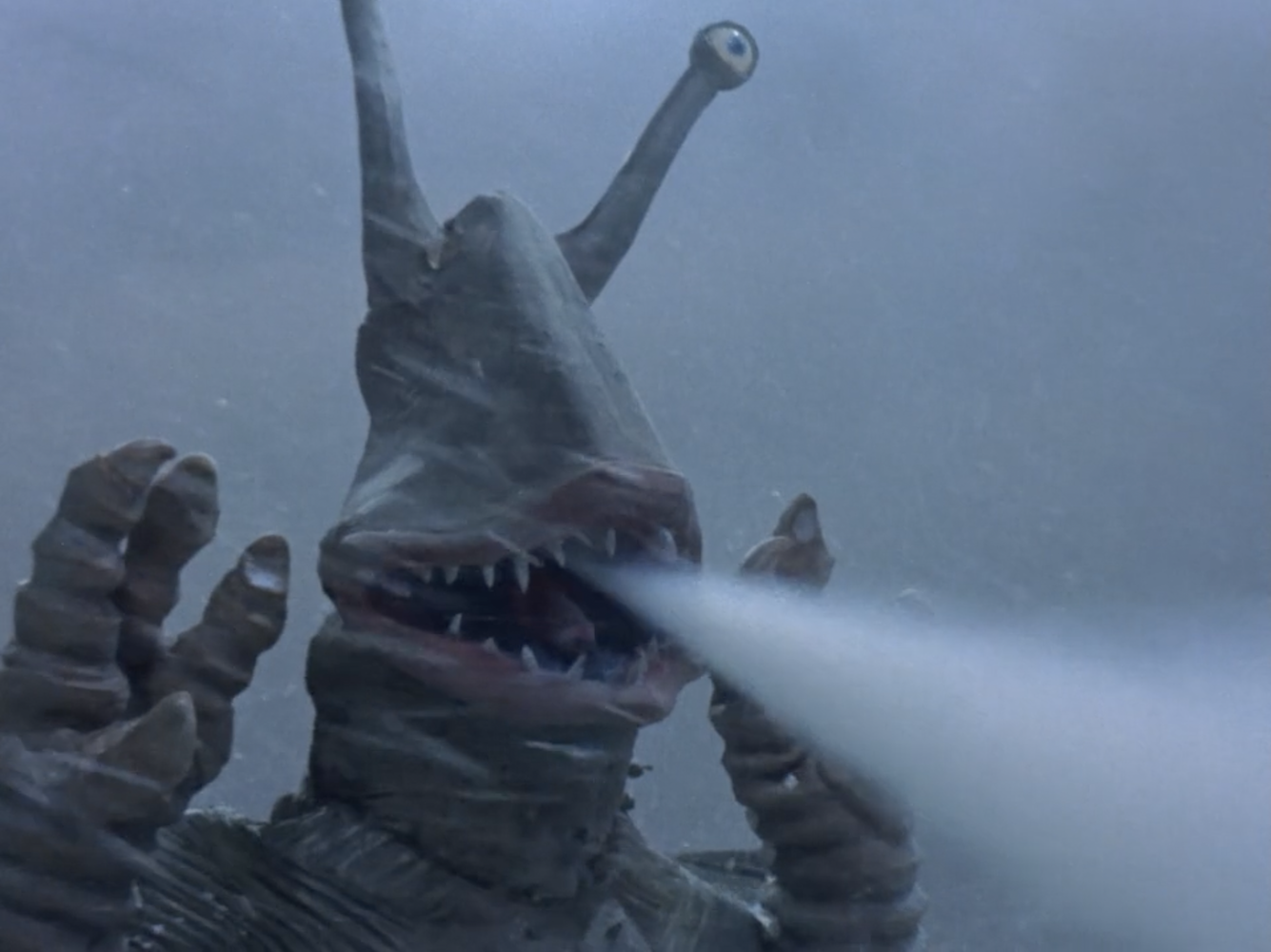
We begin as many giant monster stories have: a ship afloat at night on a calm ocean, the crew relaxed and chatting. Suddenly, a strange light flashes in the water, a frightening sound tears through the air … and the ship explodes and sinks into the sea, the victim of a cryptic leviathan.

Continue reading “Ultraseven Ep. 21: Pursue the Undersea Base!”

Ultraseven Ep. 20: Destroy Earthquake Epicenter X

Directed by Samaji Nonagase. Written by Bunzo Wakatsuki. Airdate Feb. 18, 1968.

There are several Ultraseven episodes that feel as if they were reworked from unused Ultraman scripts (something that did happen with “The Strolling Planet”). “Destroy Earthquake Epicenter X,” from what I can tell, was originally written for Ultraseven, but the Ultraman vibes are strong: an episode focused on a giant monster and high-tech equipment rather than alien schemes or a strange science-fiction twist. Ultraseven’s stories are usually alien-themed, but this episode feels as if the alien invader could easily have been cut and the script left as a terrestrial kaiju story.

Continue reading “Ultraseven Ep. 20: Destroy Earthquake Epicenter X”

Ultraseven Ep. 19: Project Blue

Written and Directed by Samaji Nonagase. Airdate Feb. 11, 1968.

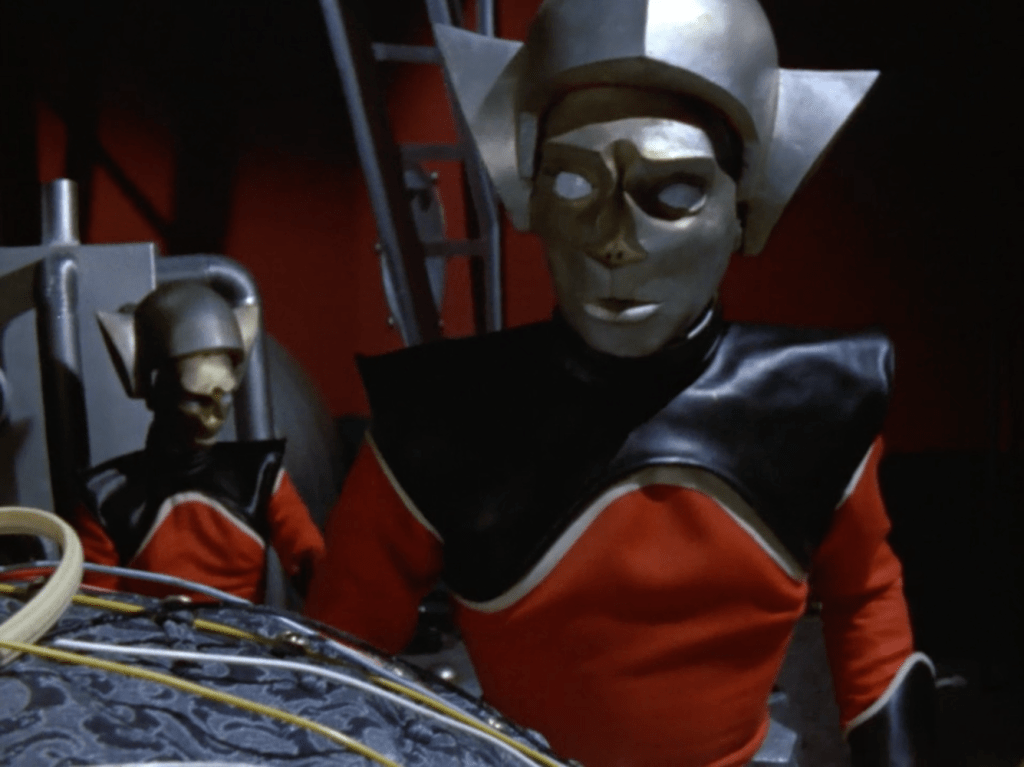
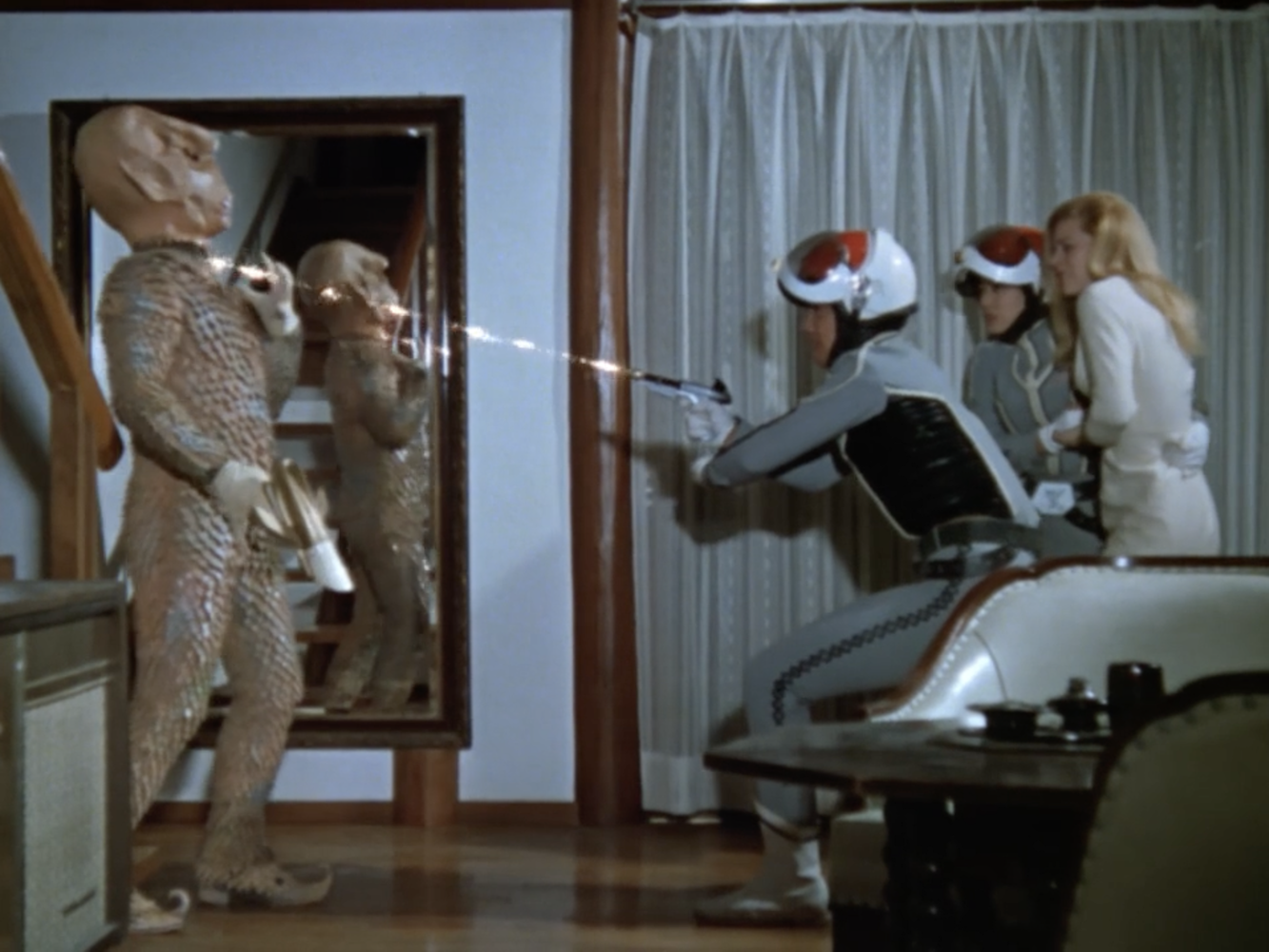
Professor Miyabe (Akiji Nomura) has invented a magnetic defense barrier, Project Blue, that will shield both Earth and the Moon from the barrage of alien invasions happening on a weekly basis. (At this point, the Ultra Guard is so familiar with these invasions that they know the preferred routes aliens take when launching attacks.) But Alien Bado, self-proclaimed “Emperor of the Universe,” is not going to have some Terrestrial Defense Barrier hinder their plot to explode Earth and eradicate the potentially deadly human race. The aliens covertly park their spaceship under Professor Miyabe’s home and kidnap him, threatening to murder his wife Grace (Linda Mabrey) if he doesn’t surrender the plans for Project Blue.

Continue reading “Ultraseven Ep. 19: Project Blue”

Ultraseven Ep. 18: Escape Dimension X

Directed by Hajime Tsuburaya. Written by Testuo Kinjo. Airdate Feb. 4, 1968.

“Escape Dimension X” is Ultraseven’s version of Ultraman’s influential episode “The Monster Anarchy Zone”: a fast-paced monster-packed adventure taking place in a weird wilderness of exotic dangers. Many Ultra shows have their own take on this pulpy Lost World concept. Now we see the darker SF sensibility of Ultraseven at work on the premise. Where “The Monster Anarchy Zone” is a wild, fun rollercoaster with plenty of giant monsters, “Escape Dimension X” is horror-tinged and eerie, with monsters of the more creepy-crawly variety. This “lost world” is also presented as a science-fiction mystery, an artificially created alternate dimension, although the story leaves most of it unexplained.

Continue reading “Ultraseven Ep. 18: Escape Dimension X”

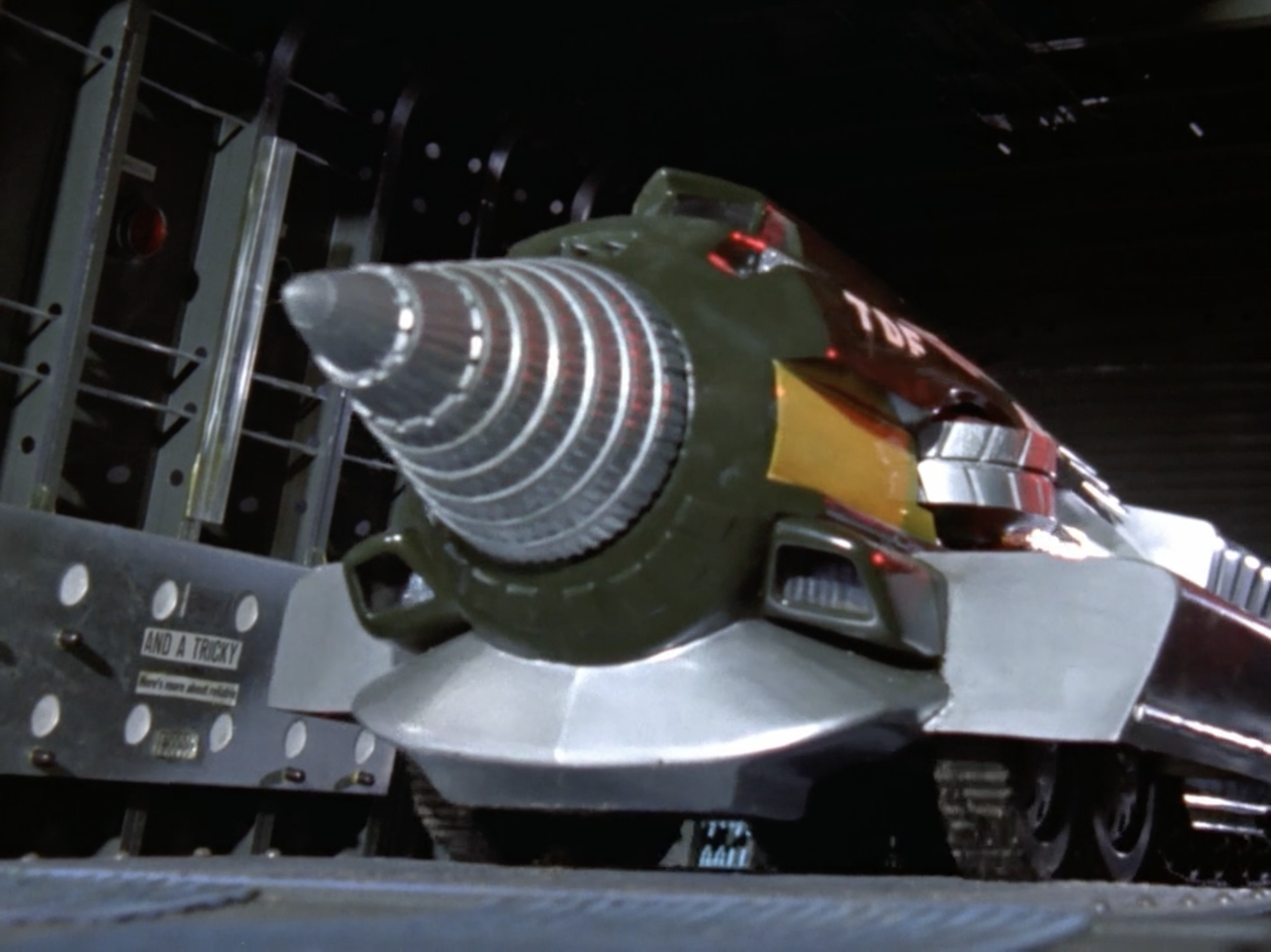
Ultraseven Ep. 17: Underground Go! Go! Go!

Directed by Hajime Tsuburaya. Written by Shozo Uehara. Airdate Jan. 28, 1968.

The standard procedure for Ultra warriors who come to Earth is to merge with a human host, a precedent set in Ultraman and followed throughout most of the shows. Ultraseven is one of the exceptions (Ultraman Leo is another), where the Ultra warrior chooses to adopt a human form and remain 100% alien. But how does an Ultra who takes this route decide on their human “costume”? This episode addresses that question, making it an essential watch for the lore of the show.

Continue reading “Ultraseven Ep. 17: Underground Go! Go! Go!”

Ultraseven Ep. 16: The Eye That Shines in the Darkness

Directed by Toshitsugu Suzuki. Written by Keisuke Fujikawa. Airdate Jan. 21, 1968.

  • An alien race mistakenly interprets an exploratory probe from Earth as a hostile attack and plans to launch a counterstrike.
  • A lost space vessel returns to Earth with a mysterious surprise aboard. 

We’ve seen these story concepts in the Ultra shows before — several times — but “The Eye That Shines in the Darkness” not only uses both, it adds something new to the mix. Not new for the broader franchise, but for Ultraseven specifically: a child character as the lead. 

Continue reading “Ultraseven Ep. 16: The Eye That Shines in the Darkness”

Ultraseven Ep. 14 & 15: The Ultra Guard Goes West

Directed by Kazuho Mitsuta. Written by Tetsuo Kinjo. Airdate Jan. 7 & 14, 1968.

When I looked at “Space Prisoner 303,” I speculated that it was the point where younger viewers started to lose interest in Ultraseven during its initial run. It seems there’s truth to this, as that episode had a 30% drop in viewership. It’s not a good episode, so the decline makes some sense; but the next episode, “The Marked Town,” had the same audience attrition, and that’s one of the greatest episodes in the history of the franchise! Still, it was different and strange, and kids probably weren’t getting the fun they anticipated after watching Ultraman’s weekly monster smackdowns.

Continue reading “Ultraseven Ep. 14 & 15: The Ultra Guard Goes West”

Ultraman Ep. 17: Passport to Infinity

Directed by Toshihiro Iijima. Written by Keisuke Fujikawa. Airdate Nov. 6, 1966.

The most surreal Ultraman episode yet. That still places it below the strangest episodes of Ultra Q or an average episode of Ultraman Taro. Those shows set a high bar for weirdness, but “Passport to Infinity” makes a game effort at trippy and abstract excitement. Best of all, we get one of the Ultra series’ most memorable kaiju, Fourth Dimensional Monster Bullton, which resembles a heart valve as designed by Joan Miró. 

Continue reading “Ultraman Ep. 17: Passport to Infinity”