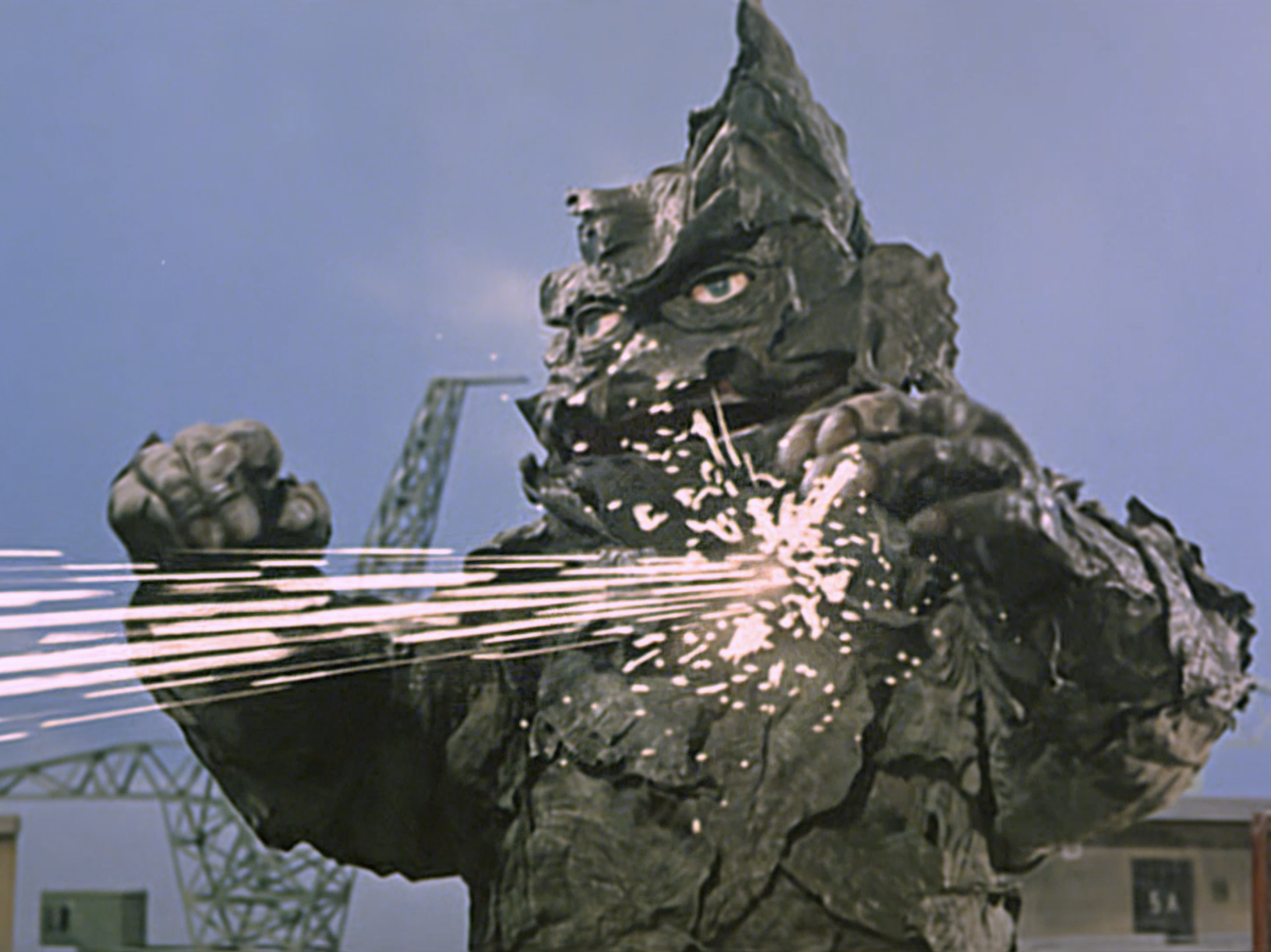
Ultraman Ep. 30: Phantom of the Snow Mountains

Directed by Yuzo Higuchi. Written by Tetsuo Kinjo. Airdate Feb. 5, 1967.

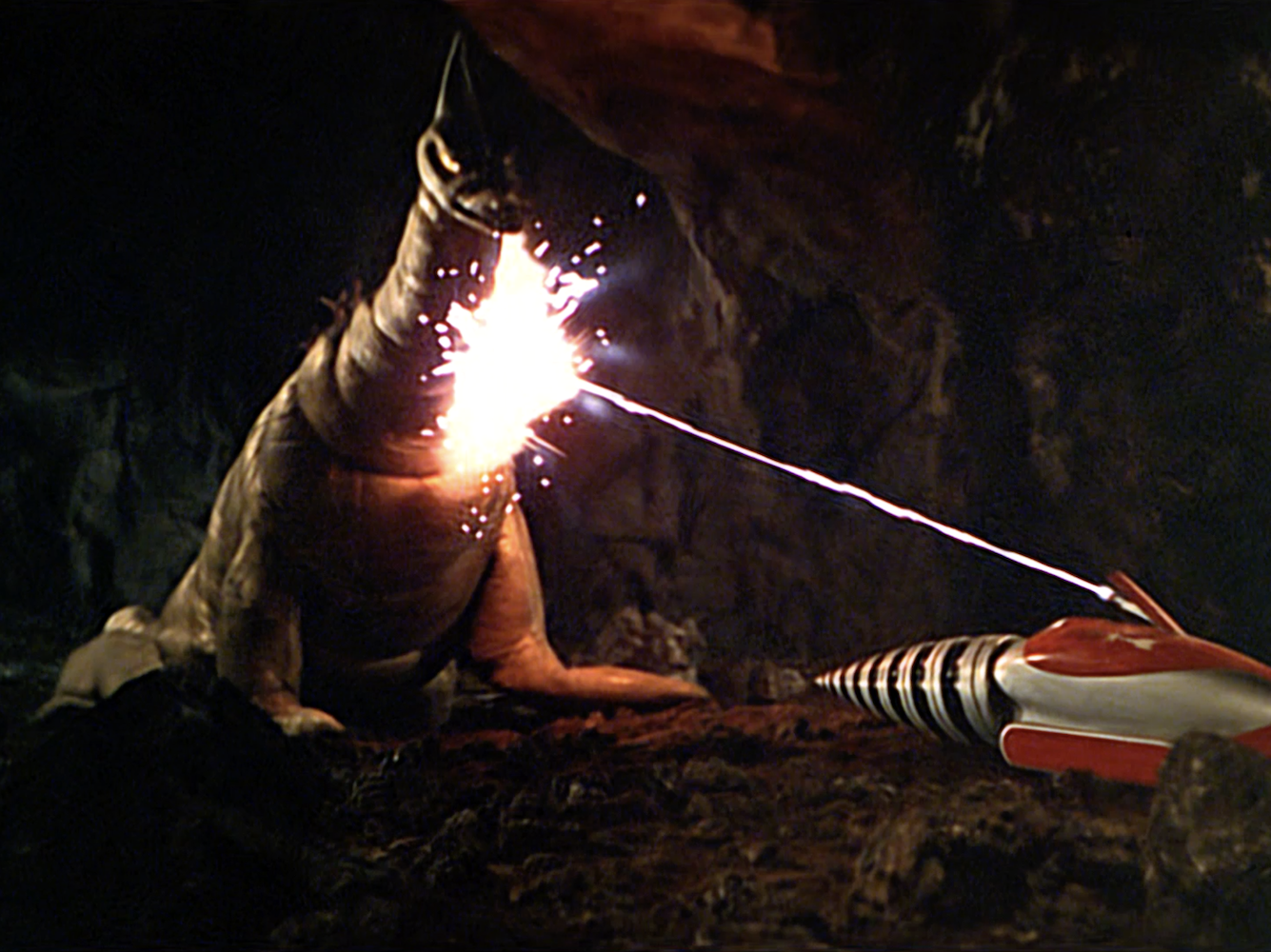
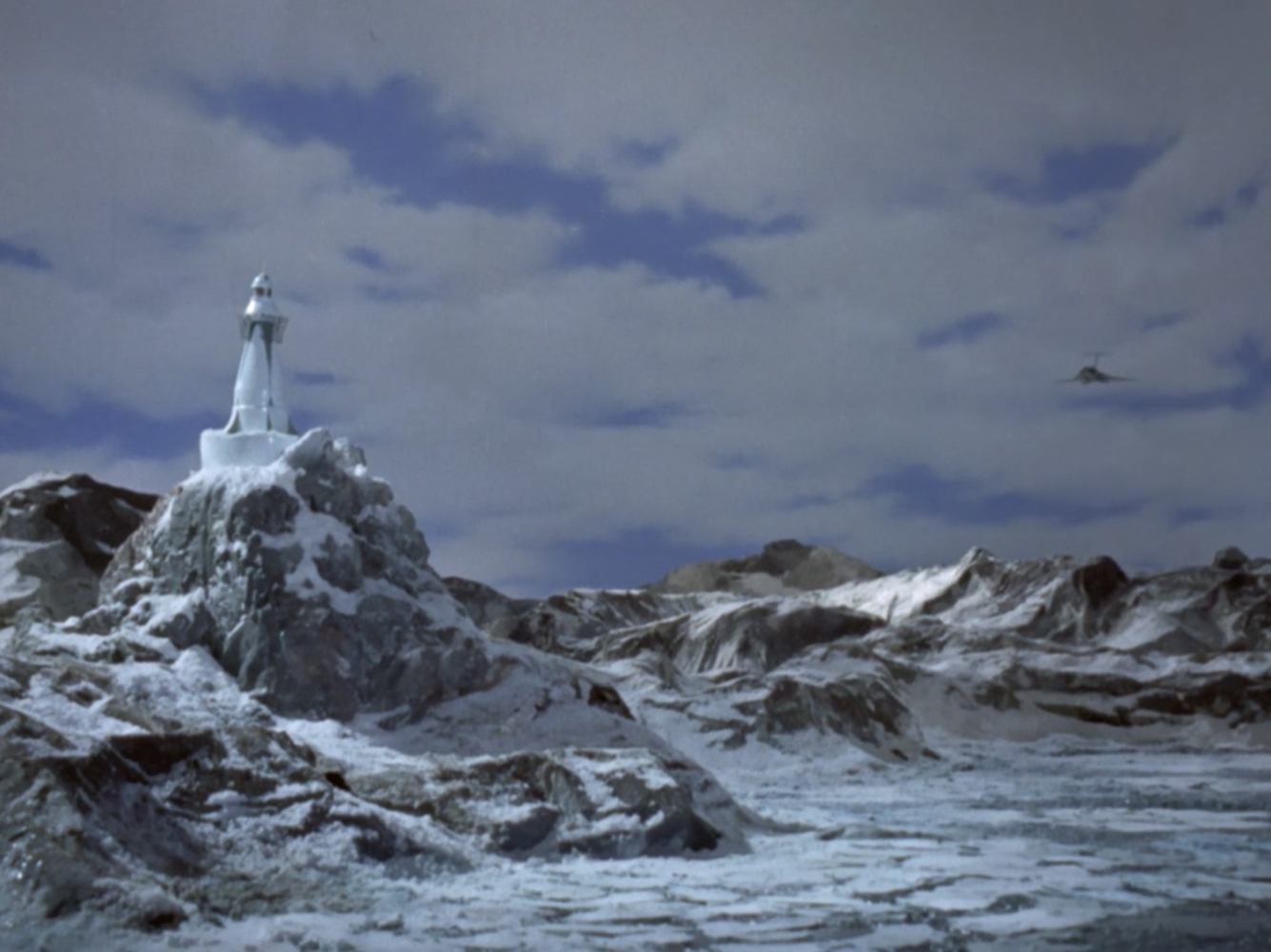
Tetsuo Kinjo contributed numerous excellent scripts to the first three Ultra shows. “Garmon Strikes Back,” “The Blue Stone of Baradhi,” and “The Ultra Guard Goes West” are some of his best straightforward action episodes. But Kinjo is best known for stories drawn from his childhood experience seeing the Japanese Empire’s oppression of the native Okinawans. In these scripts, Kinjo explored outsiders facing prejudice, sprinkling in elements of tragedy and the supernatural. “Phantom of the Snow Mountains” isn’t Kinjo’s finest script (I’d argue that’s Ultraseven’s “Ambassador of the Nonmalt”), but it may be his most representative: a sad, fable-like tale of a shunned girl and her connection to a possibly supernatural snowbeast. 

Continue reading “Ultraman Ep. 30: Phantom of the Snow Mountains”

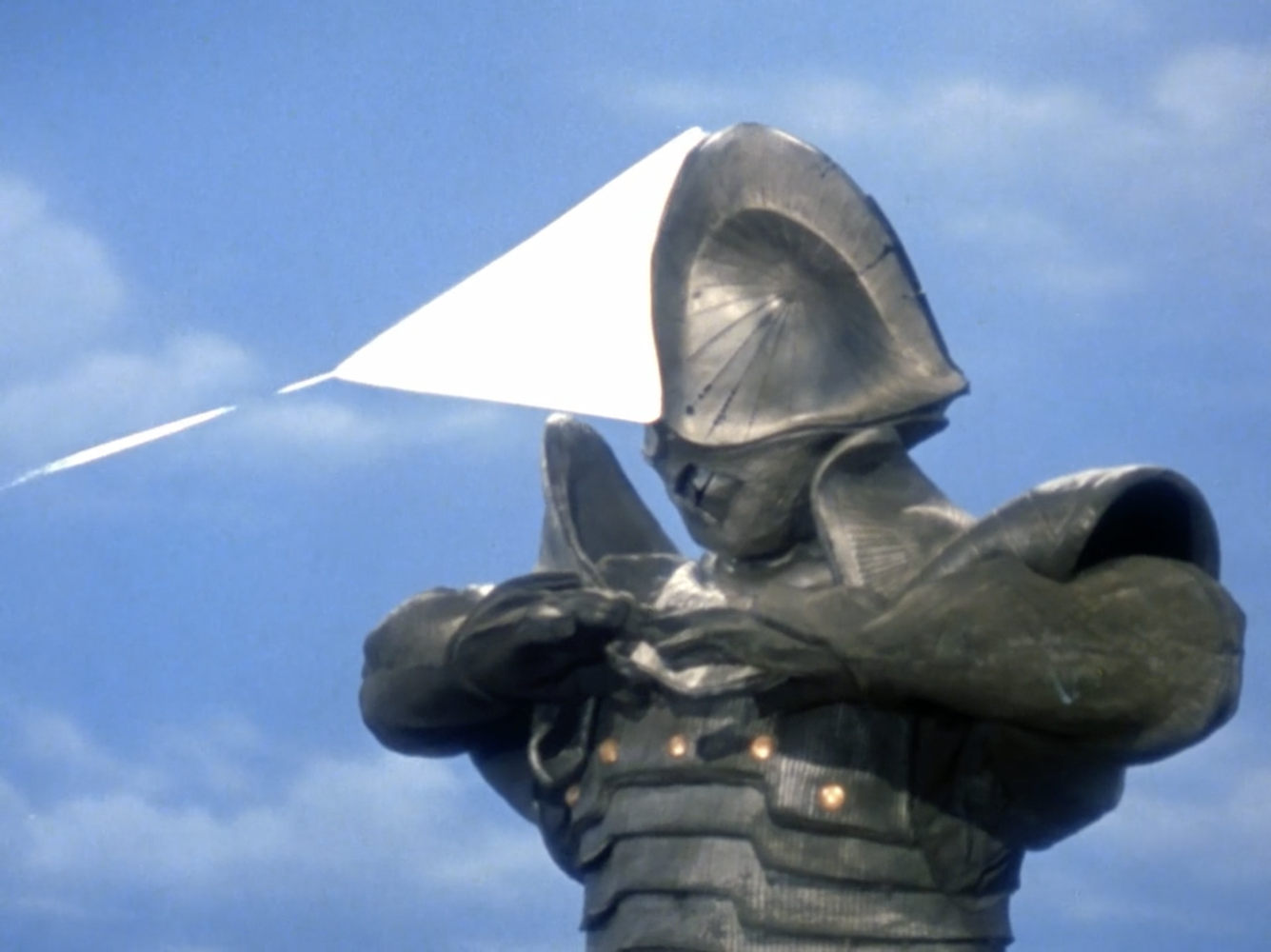
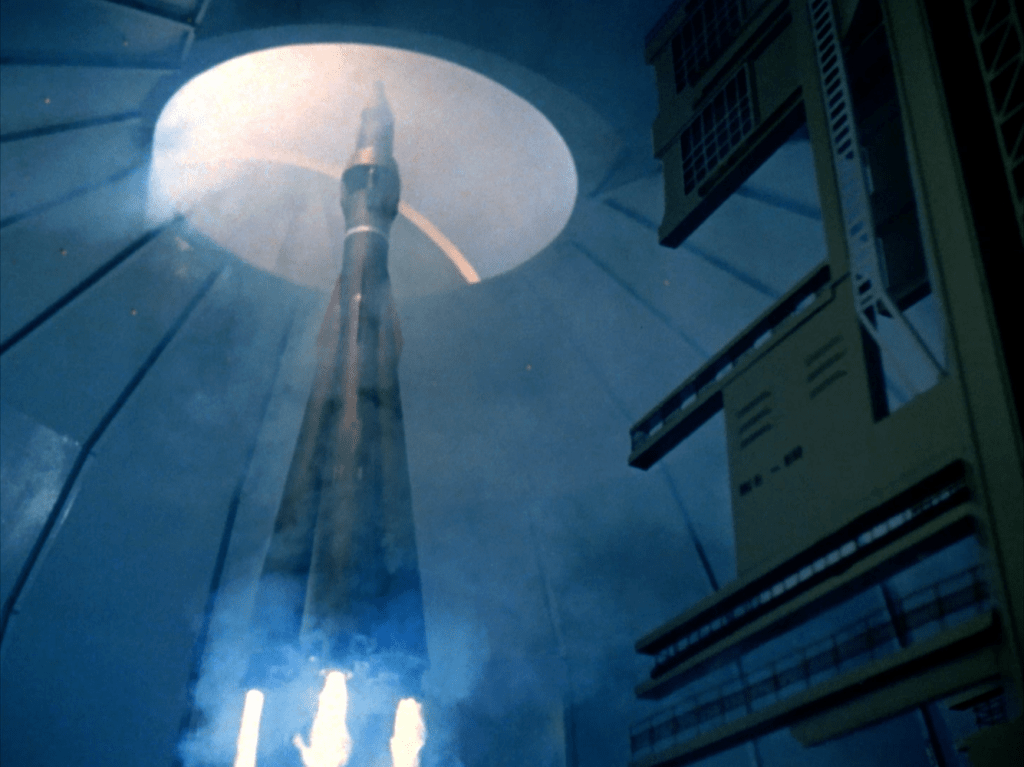
Ultraseven Ep. 26: Super Weapon R1

Directed by Toshitsugu Suzuki. Written by Bunzo Wakatsuki. Airdate March 31, 1968.

The Cold War and fears of nuclear war lurk behind much of tokusatsu, especially in the Showa era. The movie that ignited the tokusatsu genre, Godzilla, is the quintessential cinematic nuclear metaphor, and Japan is the nation most acutely aware of the horrors of nuclear weapons as “deterrents.” The specter of the Cold War haunts many of Ultraseven’s tales of alien invaders. In “Super Weapon R1,” the subtext of the madness of the arms race becomes the text, the explicitly stated theme. This could’ve turned out heavy-handed. Here, it all works, resulting in one of the great and enduring Ultra episodes.

Continue reading “Ultraseven Ep. 26: Super Weapon R1”

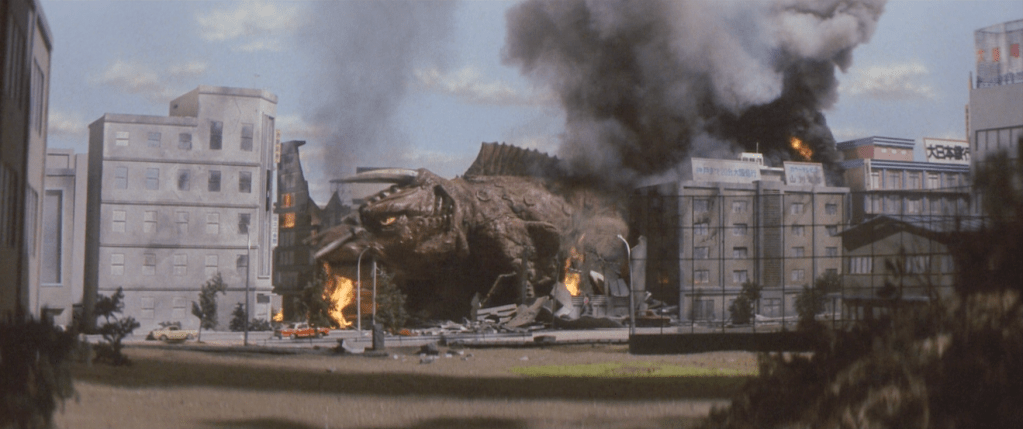
Ultraman Ep. 29: Challenge to the Underground

Directed by Samaji Nonagase. Written by Tetsuo Kinjo and Ryu Minamikawa. Airdate Jan. 29, 1967.

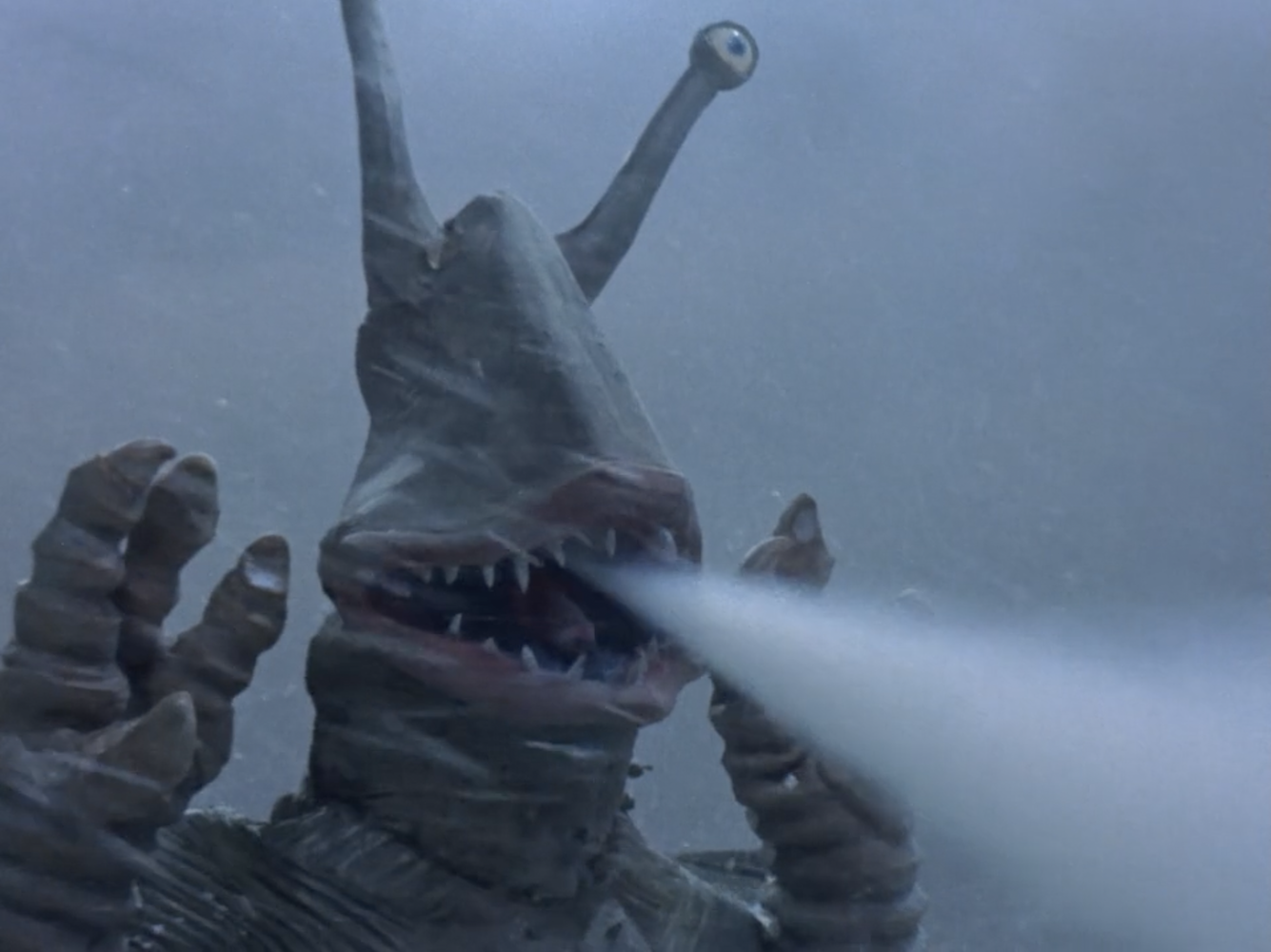
After a string of great episodes, Ultraman was due for something on the routine side. When Goldon, a gold-consuming monster, bursts from the side of Mt. Otayama only seconds into the episode, it signals that “Challenge to the Underground” is going to be fairly standard monster-centric material. Which it is, but the average Ultraman episode is still a decent time.

Continue reading “Ultraman Ep. 29: Challenge to the Underground”

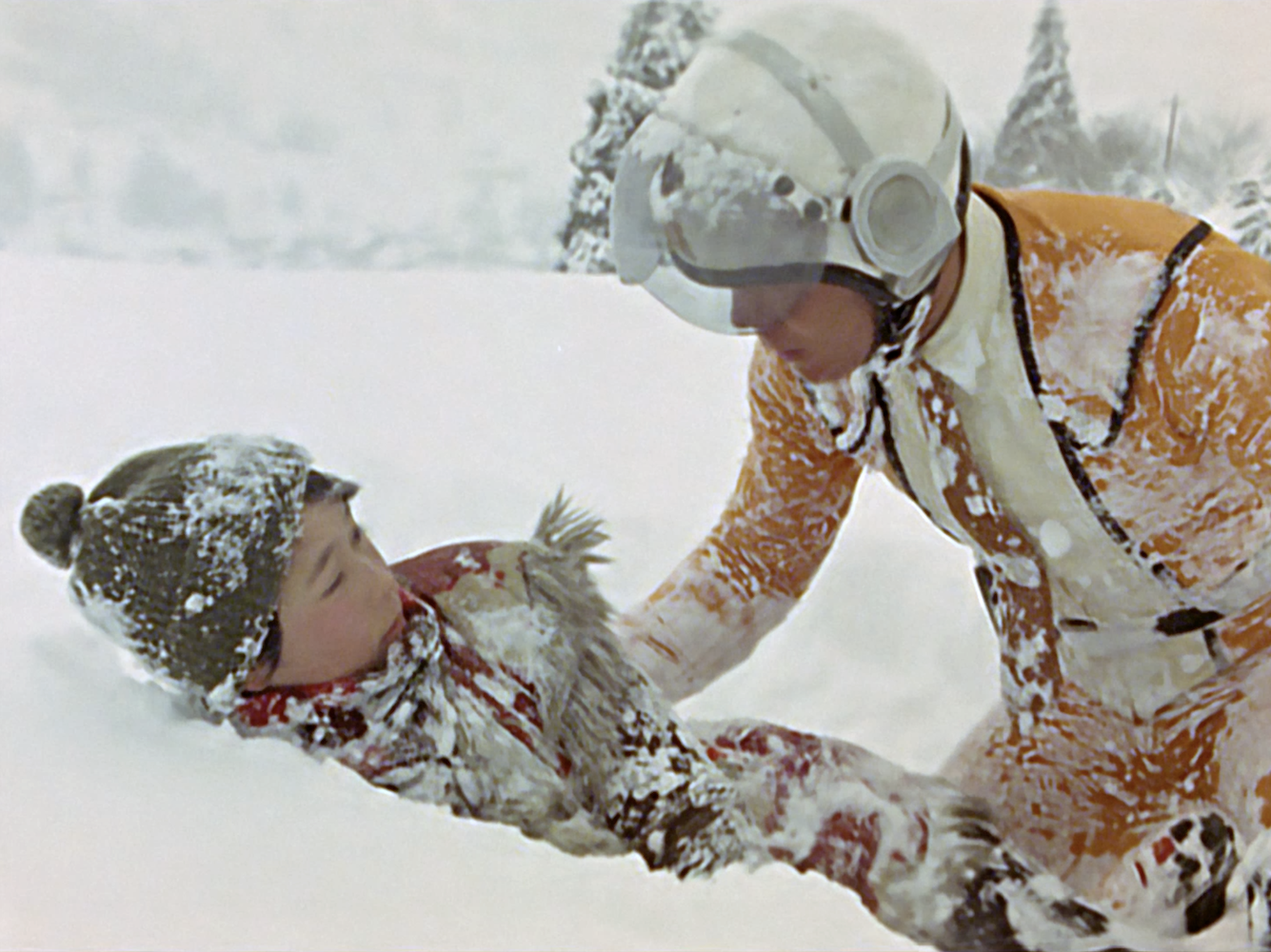
Ultraseven Ep. 25: Showdown at 140 Degrees Below Zero

Directed by Kazuho Mitsuta. Written by Tetsuo Kinjo. Airdate March 24, 1968.

An intense cold snap and snow storm descend on the HQ of the Terran Defense Force. Temperatures plunge below –100°F and keep dropping. Ultra Guard member Soga isn’t concerned at first, talking dismissively as he pours a cup of coffee: “A cold wave zone 114 degrees below zero is nothing to get nervous about. The atomic reactor in the power house 18 floors under is burning red. Praise human technology.” 

The moment Soga says this, viewers know everything is about to go wrong in the worst way. The episode does not disappoint. 

Continue reading “Ultraseven Ep. 25: Showdown at 140 Degrees Below Zero”

Ultraman Ep. 28: Human Specimens 5 & 6

Directed by Samaji Nonagase. Written by Masahiro Yamada. Airdate Jan. 22, 1967.

Samaji Nonagase was one of the more prolific early Ultra directors. While he doesn’t receive as much attention as fan-favorite directors Akio Jissoji and Kazuho Mitsuta, he helmed several classic episodes: “Kanegon’s Cocoon” (Ultra Q), “The Monster Anarchy Zone” (Ultraman), and “The Secret of the Lake” (Ultraseven). He also wrote scripts under the pen name Ryu Minamikawa. He was fascinated by Alfred Hitchcock and liked to add gradually building tension to some of his episodes, such as the home-invasion story of “Project Blue.” “Human Specimen 5 & 6” is Nonagase’s best exploration of the suspense-centered story, and it helped to establish the future tone of Ultraseven and its parade of weird, crafty alien invaders.

Continue reading “Ultraman Ep. 28: Human Specimens 5 & 6”

Ultraseven Ep. 24: Return to the North!

Directed by Kazuho Mitsuta. Written by Shinichi Ichikawa. Airdate March 17, 1968.

It’s rare to have an Ultraseven episode focused on a drama about an individual Ultra Guard member. There are occasional shows that let a particular character take the spotlight, such as “Search for Tomorrow,” which put Captain Kiriyama in conflict with his own team. But “Return to the North!” goes further: it examines the personal life of a member outside of the Ultra Guard. Surprisingly, the UG member picked for the starring role is Shigeru Furuhashi, the team’s “shoot first” action guy. 

Continue reading “Ultraseven Ep. 24: Return to the North!”

Ultraman Ep. 26 & 27: The Monster Highness

Directed by Hajime Tsuburaya. Written by Tetsuo Kinjo and Bunzo Wakatsuki. Airdate Jan. 8 & 15, 1967.

The unofficial promise Ultraman makes to viewers is that it will deliver the thrills of giant monster movies in a TV-sized package. No episodes achieve this better than the first two-parter* in Ultra Series history. “The Monster Highness” is a VFX extravaganza that introduces the most famous kaiju in the franchise and smashes the thrill button as hard as it can with kinetic fights, heavy military action, and mass-scale urban destruction. Children all over Japan were on edge after the cliffhanger of Part 1 where Ultraman suffered a true defeat, ensuring that Part 2 would become one of the most viewed episodes of any Ultra show. 

Continue reading “Ultraman Ep. 26 & 27: The Monster Highness”

Ultraseven Ep. 23: Search for Tomorrow

Directed by Samaji Nonagase. Written by Shozo Uehara and Samaji Nonagase. Airdate March 10, 1968.

Captain Kiriyama takes center stage for an unusual episode that shows the Ultra Guard members acting as more than a stock hero team. Characterization in Ultraseven works differently than in Ultraman and other Ultra shows: scripts often downplay individuality in favor of larger science-fiction themes. It’s good to have a chance to settle in with a personal character drama like “Search for Tomorrow,” where Kiriyama reveals a side that puts him at odds with the rationalist approach of the Terran Defense Force and the Ultra Guard. It’s not a superlative action episode, but it has some crunchy ideas to chew on and a strong use of the ensemble.

Continue reading “Ultraseven Ep. 23: Search for Tomorrow”

Ultraman Ep. 25: Mysterious Comet Tsuifon

Directed by Toshihiro Iijima. Written by Bunzo Wakatsuki. Airdate Jan. 1, 1967.

In a scenario inspired by Ishiro Honda’s science-fiction epic Gorath (1962), a comet is hurtling toward Earth on a near-miss course. A near-miss is still too close: Comet Tsuifon’s cosmic rays may cause several missing older hydrogen bombs to detonate and annihilate life on the planet. After the comet makes its pass without causing an apocalypse, the Science Patrol determines there is still one missing bomb in danger of exploding. And that bomb was swallowed by a monster. And that monster is Red King. Oh dear gods, we’re all doomed…

Continue reading “Ultraman Ep. 25: Mysterious Comet Tsuifon”

Ultraseven Ep. 22: The Human Farm

Directed by Toshitsugu Suzuki. Written by Hiroyasu Yamaura. Airdate March 3, 1968.

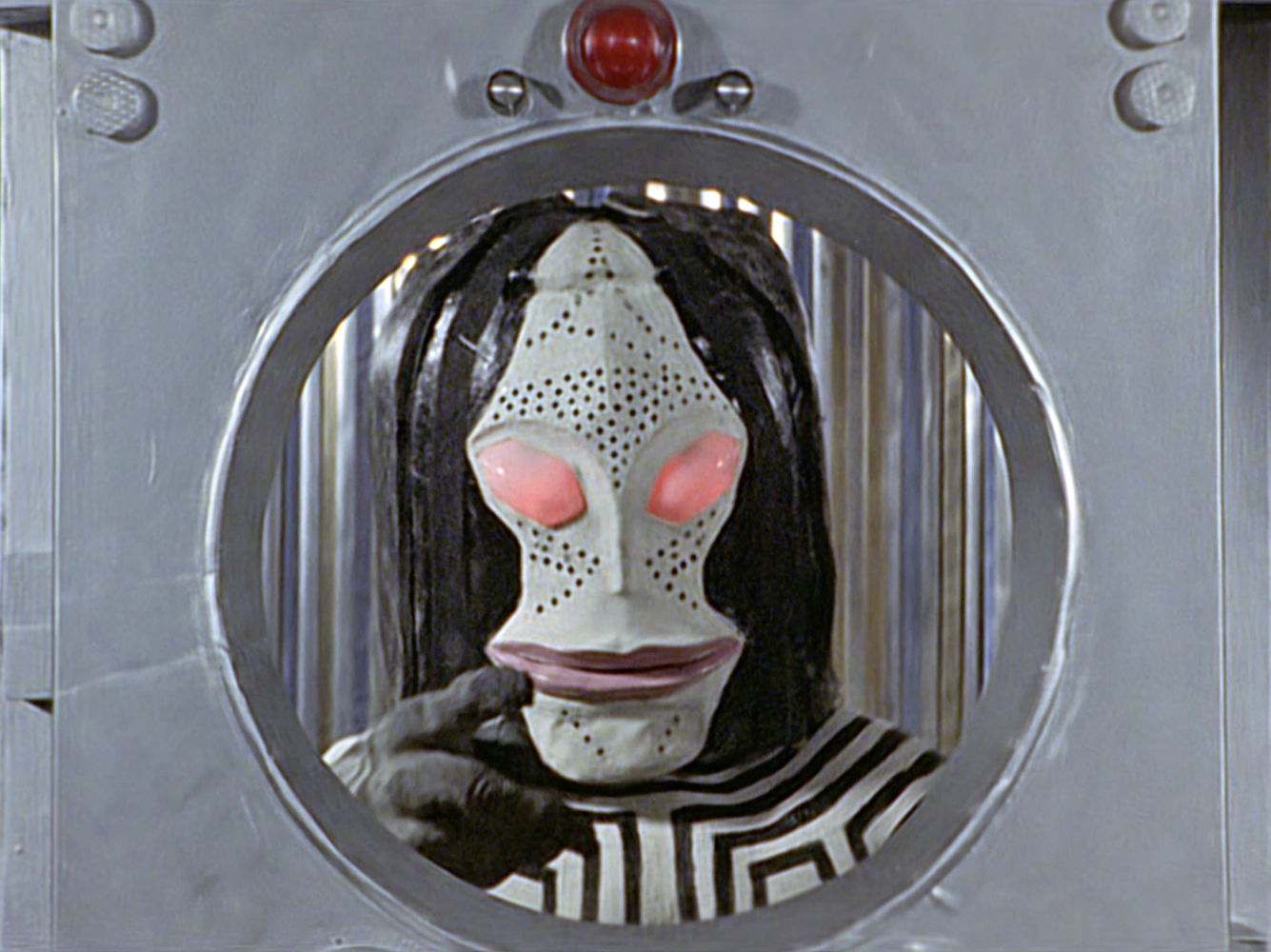
Ultraseven shifts to science-horror with an episode mirroring the more sober stories of Ultra Q. The general mood is subdued foreboding laced with body horror. Several unusual visual choices enhance the quiet dread. It’s ambitious, and the episode almost works — but the climax veers in a different direction that emphasizes big action. The finale may not include a giant monster fight, but it still feels like a conventional wrap-up, and that doesn’t gel with a story about aliens using women’s bodies as cultures for growing their food. 

Continue reading “Ultraseven Ep. 22: The Human Farm”