Directed by Yasushi Okada. Written by Junki Takegami. Airdate Feb. 8, 1997.
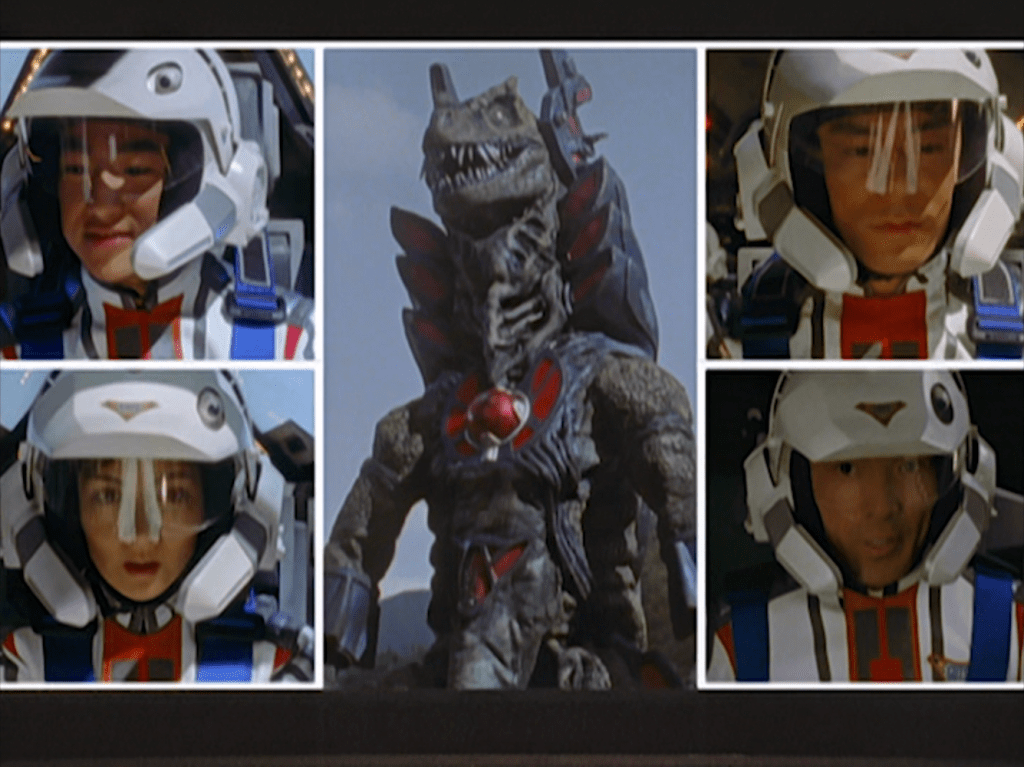
Wow, Yazumi actually got to go out in the field with the rest of the GUTS team! Aruma told him to go, he didn’t even need to ask. He looked so happy! A momentous occasion.
Directed by Toshitsugu Suzuki. Written by Tesuo Kinjo. Airdate Feb. 26, 1967.
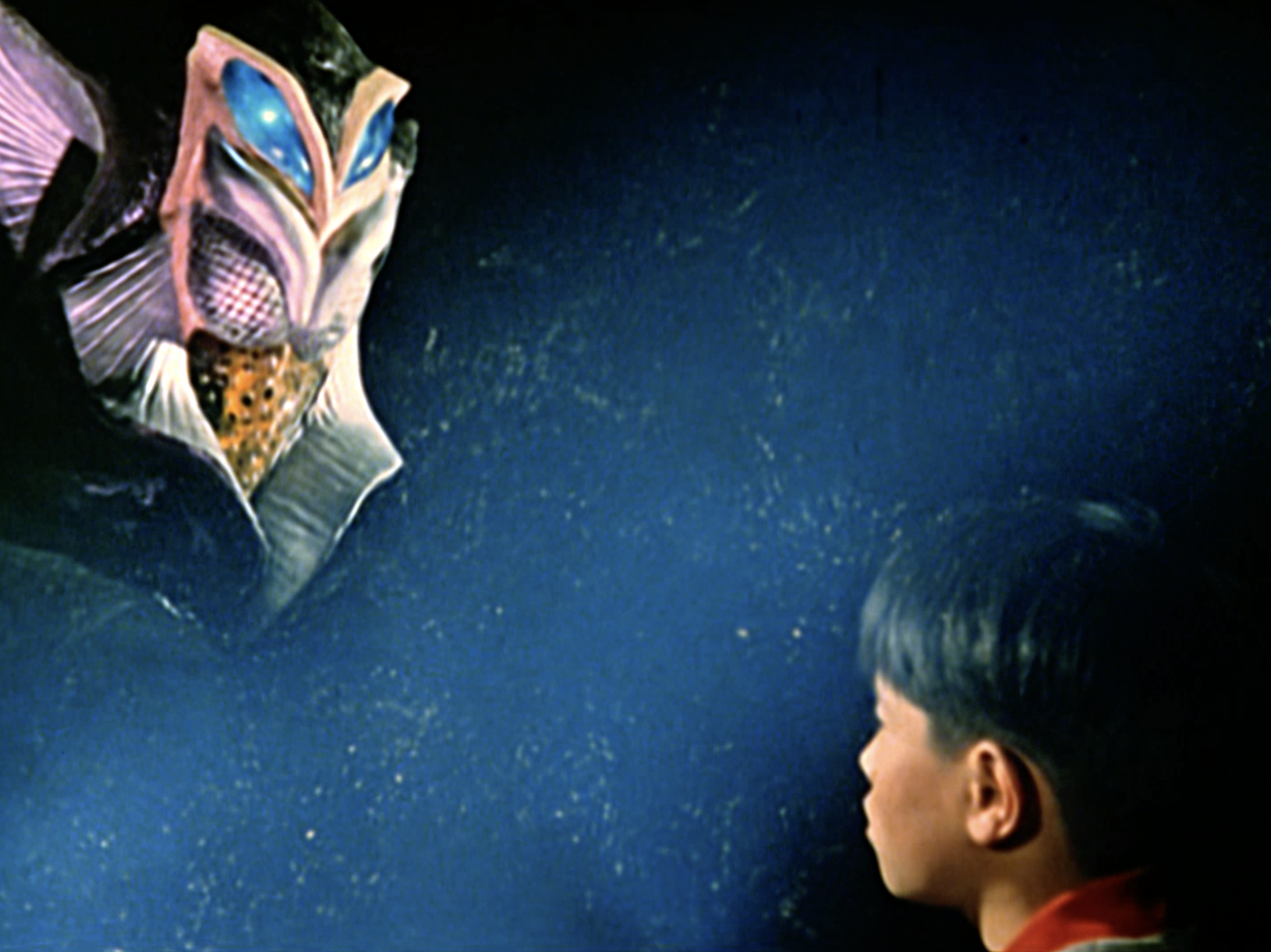
Meet the third of the great trio of Ultraman alien villains: Alien Mefilas. Not as famous as Alien Baltan. Not as tricky as Alien Zarab. But he’s the top of the heap: a baddie who’s the Ultra Universe’s hybrid of Mister Mxyzptlk and Galactus. He’s here to play word games, tempt humans with power, and crush the spirit of an entire planet — and brute force may not be enough to stop him.
Directed by Kazuho Mitsuta. Written by Shinichi Ichikawa. Airdate April 21, 1968.
Similar to “Return to the North!”, this episode looks at the life of an Ultra Guard member outside of the day-to-day work of defending Earth from invaders. We learn that Soga is engaged; his fiancée, Saeko Nambu (Sanae Kitabayashi), is a sophomore at Kyonan University. The other UG members tease Soga by calling him Soga-kun, the familiar form of address that Saeko uses with him. This is a welcome touch of humor and lightness among the Ultra Guard, who rarely have the easy camaraderie of the Science Patrol in Ultraman.
Directed by Tomoo Haraguchi. Written by Akira Tanizaki. Airdate July 24, 2013.
This is the first episode of Ultraman Ginga that manages to tell an effective story despite the show’s severe production limitations. The creative team appears to have figured out, at least for the moment, how to maneuver around corporate restrictions and demands to create something that works as both a YA drama and an Ultra adventure. The scope is still cramped, there’s a distractingly wrongheaded scene, and the monster suits are all reused, but “The Twin-Headed Flame Beast” offers a blueprint for a creative path forward for the show.
Directed by Tsugumi Kitaura. Written by Keiichi Hasegawa. Airdate Feb. 2, 1997.
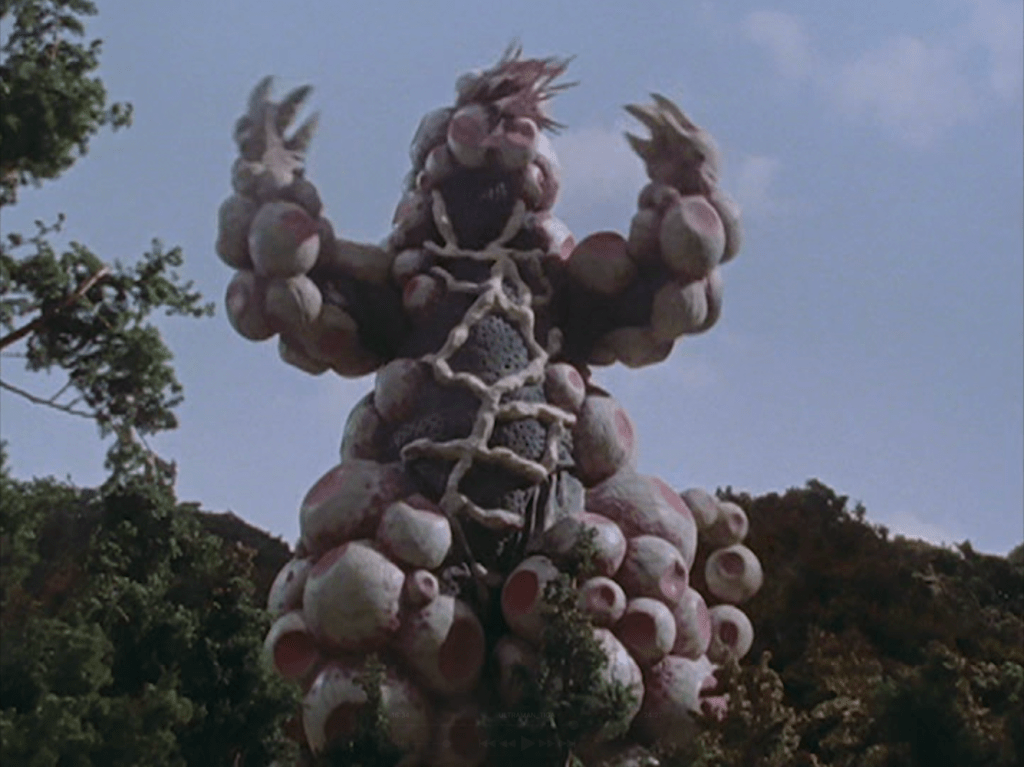
Ultraman Tiga was intended to appeal to both adults and children. But sometimes there’s an episode that leans so far to the horror side of the franchise that I can’t recommend it for young children at all.
Directed by Leslie Norman. Written by Jimmy Sangster. Starring Dean Jagger, Edward Chapman, Leo McKern, Michael Ripper, Anthony Newley.
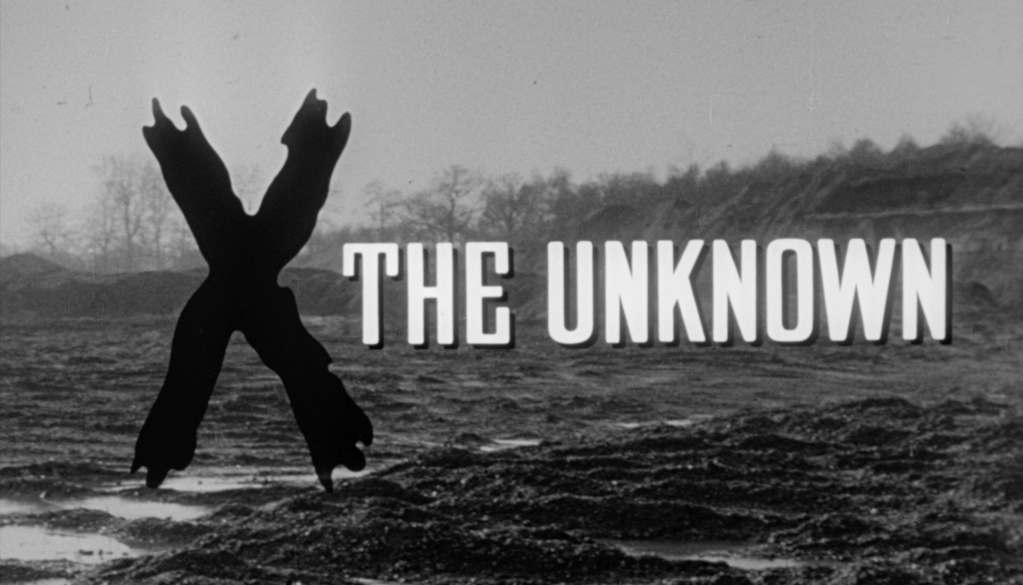
I’d love to offer a Halloween-themed review of an Ultra episode like last year. But the calendar didn’t align this time, and I had to use up the review of Ultraman Tiga’s Halloween episode in March. So to celebrate horror season this year, I’m returning to Hammer Films and the second of their influential Quatermass Films. The one that isn’t actually a Quatermass film but is trying to pass itself off as one — and doing a decent job of it. X the Unknown doesn’t have the intensity, pacing, or paranoia of the three true Quatermass films, but it’s still above average Atomic Age horror with intelligence, several strong performances, and a few genuinely chilling sequences.
Directed by Toshitsugu Suzuki. Written by Keisuke Fujikawa. Airdate Feb. 19, 1967.
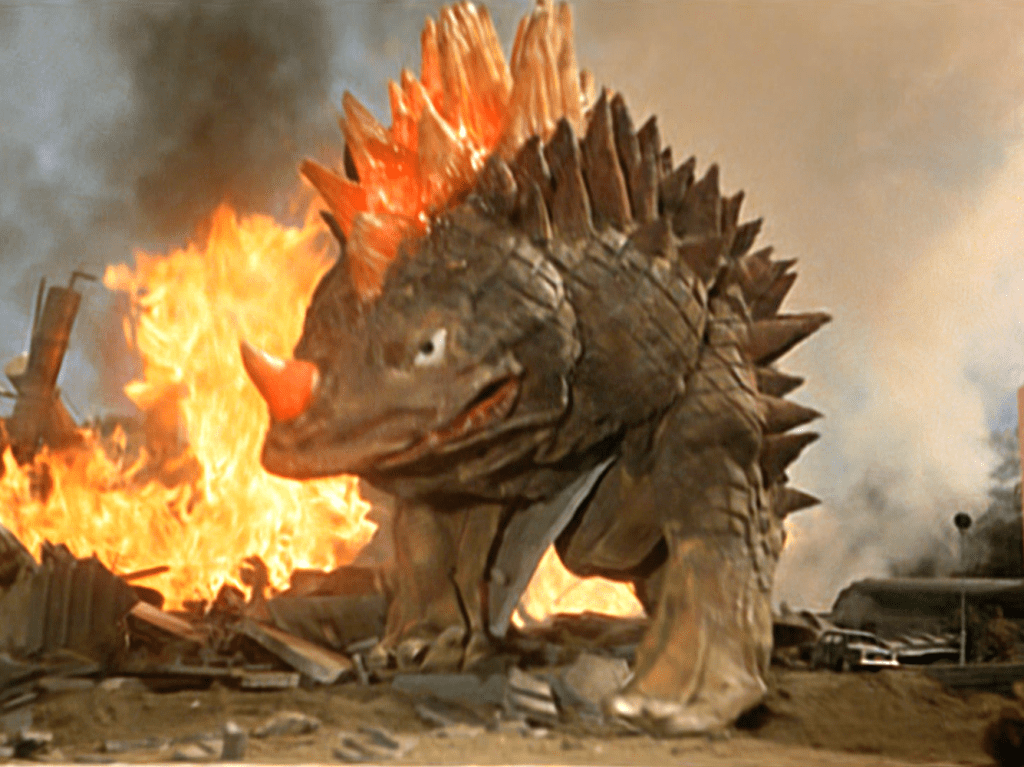
In what feels like a flashback to the earliest episodes, “Endless Counterattack” is a formulaic rampaging monster story with a structure similar to middle-of-the-road episodes like “Science Patrol, Move Out” and “Lightning Operation.” Giant monster Zumbolar appears in the wilds and causes massive destruction with its fiery powers. The Science Parol must find a way to stop it as it trundles toward Tokyo. Ide comes up with an invention, Hayata changes into Ultraman, and the problem is solved after a whole bunch of stuff goes kablooie.
Directed by Kazuho Mitsuta. Written by Shozo Uehara. Airdate April 14, 1968.
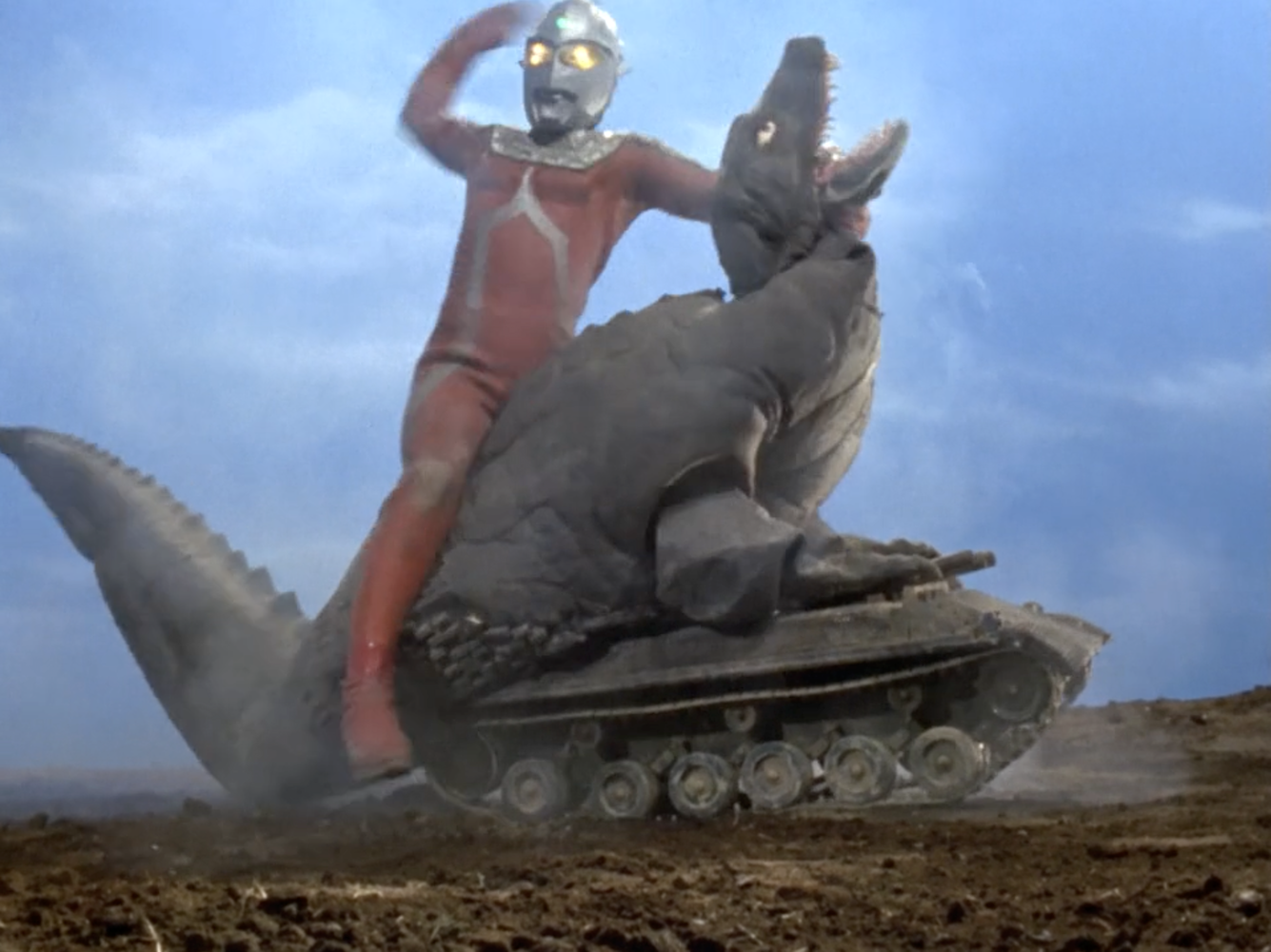
We have something special for you today, Ultra fans! My distinguished regular readers and guests, children of all ages, please direct your attention to the starting line of Day One of a 700 kilometer race. (That’s 435 miles for all my US-based readers.) I present to you … Dino Tank!
Directed by Yuichi Abe. Written by Keiichi Hasegawa. Airdate July 17, 2013.
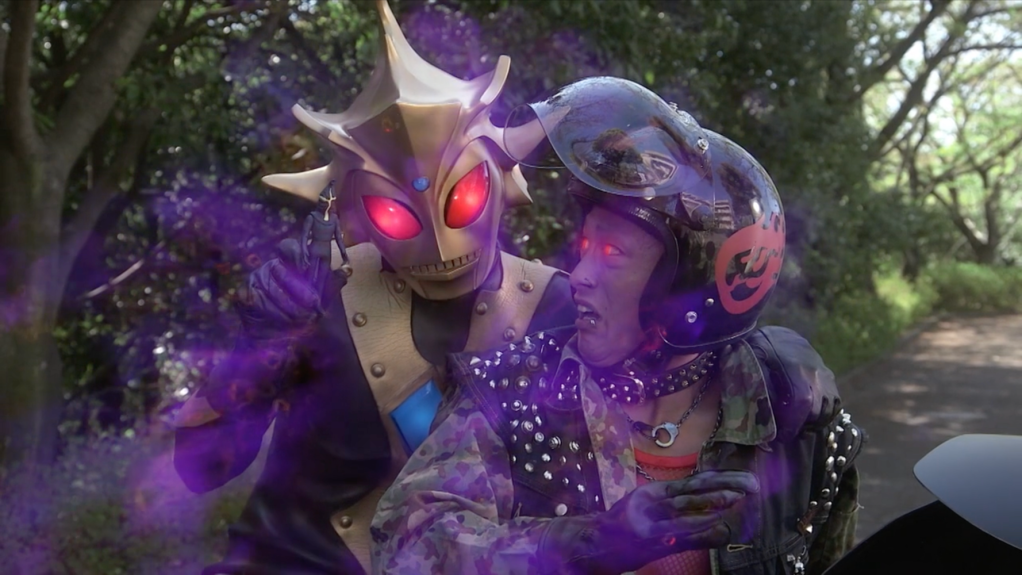
The second outing for Ultraman Ginga is a minor improvement over the rough first episode. It’s standard for Ultra shows to have stronger second episodes because they need to jam less set-up into a half-hour. “A Midsummer Night’s Dream” gives us more time with our new protagonists, Hikaru and Misuzu, to establish their relationship, and there’s an odd but enjoyable villain. Not a kaiju or alien villain, but a nutball motorcyclist who likes to run people over for committing crimes. Like being too flirtatious.
Directed by Tsugumi Kitaura. Written by Ai Ota. Airdate Jan. 25, 1997.
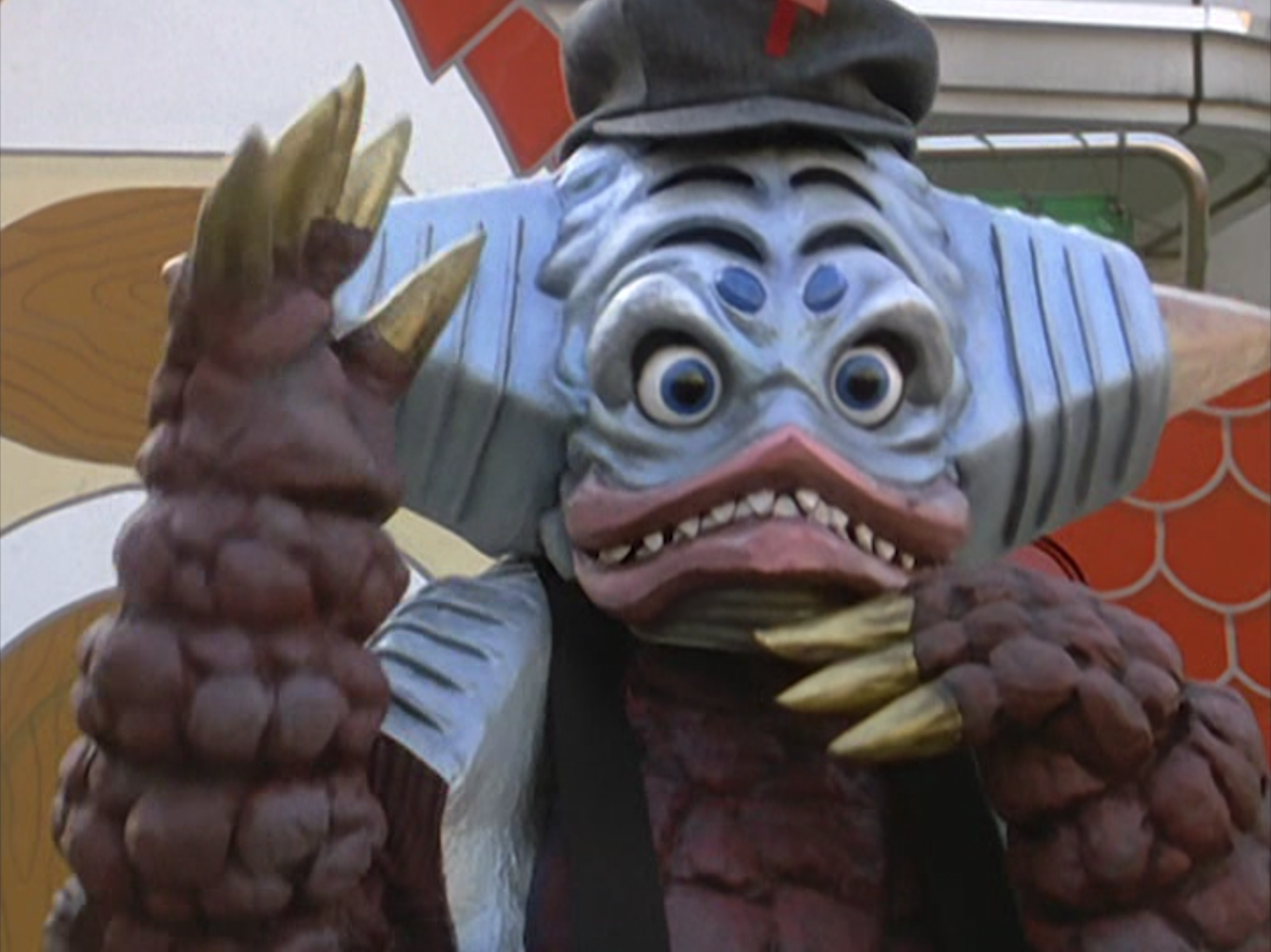
Are you ready for a “cute mascot monster” episode? The same way that many Ultra shows seek their own version of Ultraman’s “My Home Is Earth,” they also try to come up with their own “Kanegon’s Cocoon” or “A Little Hero.” How well does “Deban’s Turn” meet the goals of the cute monster tale? Extremely well. Deban doesn’t reach the heights of Kanegon or Pigmon, or even Hanejiro from Ultraman Dyna. But this story of a monster who finds acceptance among a troupe of clowns and can defeat the rage powers of a demon beast is charming and heartwarming.

 The Ultra Project