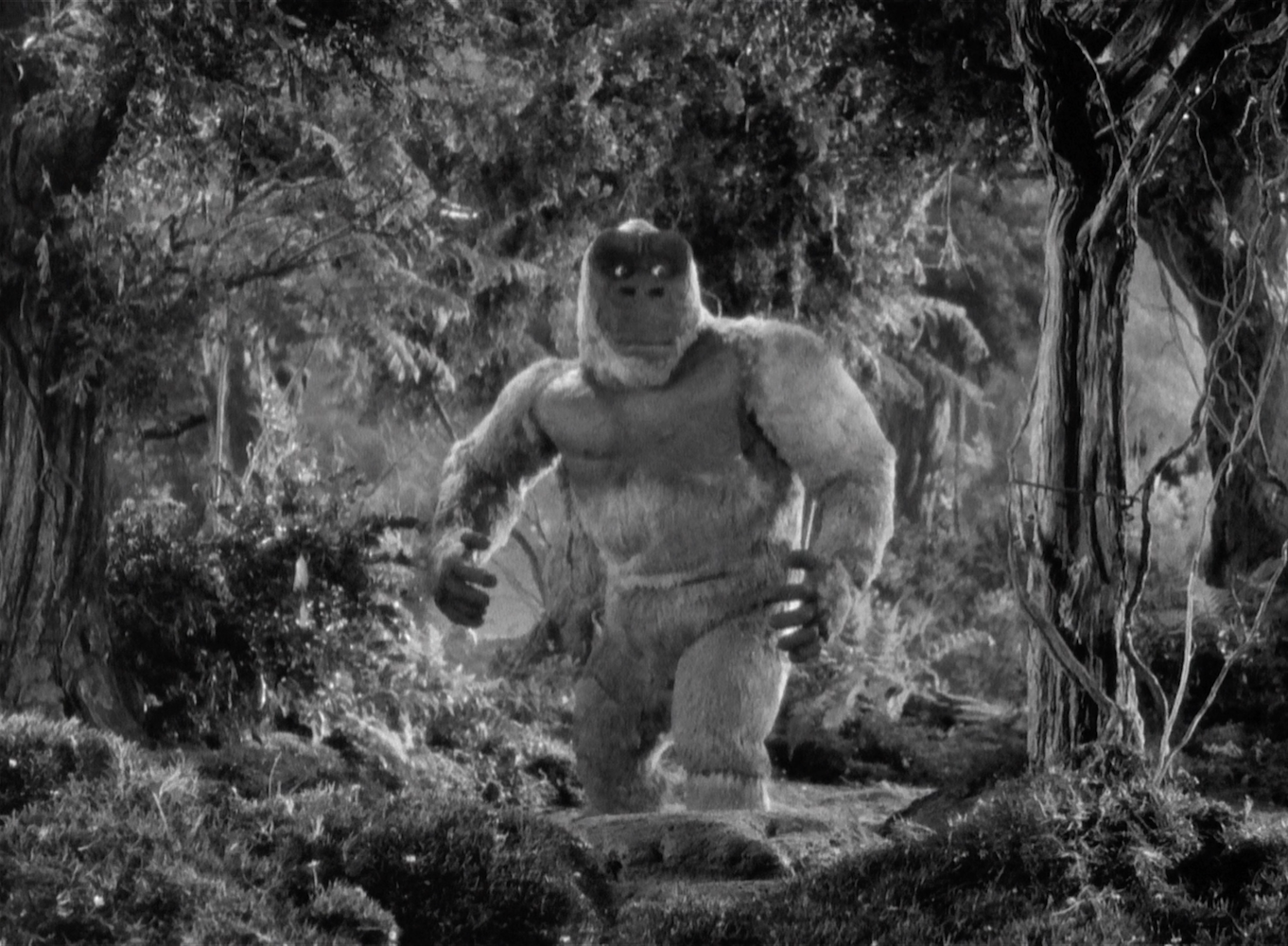
Monster Theater: X the Unknown (1956)

Directed by Leslie Norman. Written by Jimmy Sangster. Starring Dean Jagger, Edward Chapman, Leo McKern, Michael Ripper, Anthony Newley.

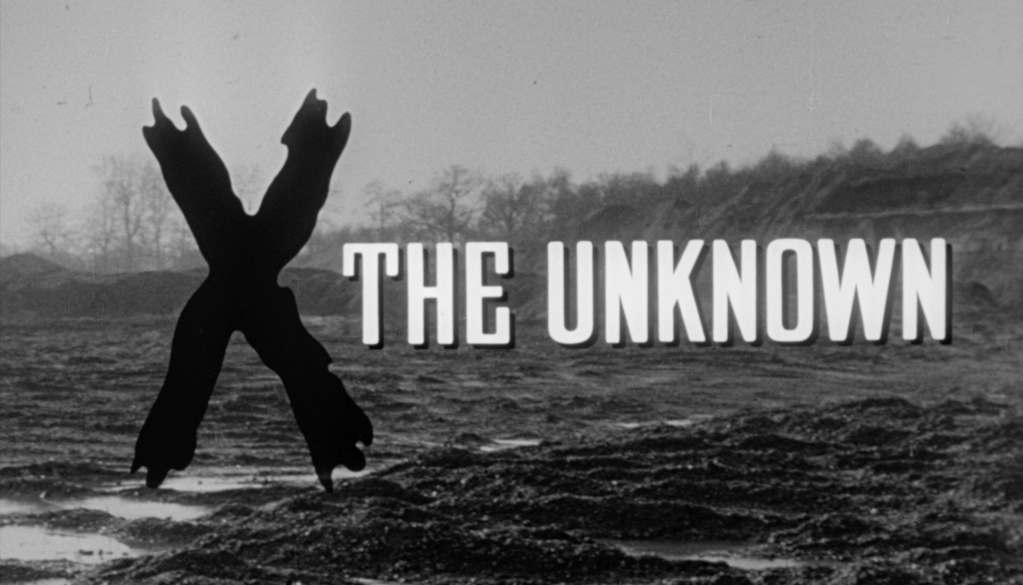
I’d love to offer a Halloween-themed review of an Ultra episode like last year. But the calendar didn’t align this time, and I had to use up the review of Ultraman Tiga’s Halloween episode in March. So to celebrate horror season this year, I’m returning to Hammer Films and the second of their influential Quatermass Films. The one that isn’t actually a Quatermass film but is trying to pass itself off as one — and doing a decent job of it. X the Unknown doesn’t have the intensity, pacing, or paranoia of the three true Quatermass films, but it’s still above average Atomic Age horror with intelligence, several strong performances, and a few genuinely chilling sequences. 

Continue reading “Monster Theater: X the Unknown (1956)”

Toku Theater: Gamera vs. Jiger (1970)

Directed by Noriaki Yuasa. Written by Niisan Takahashi.

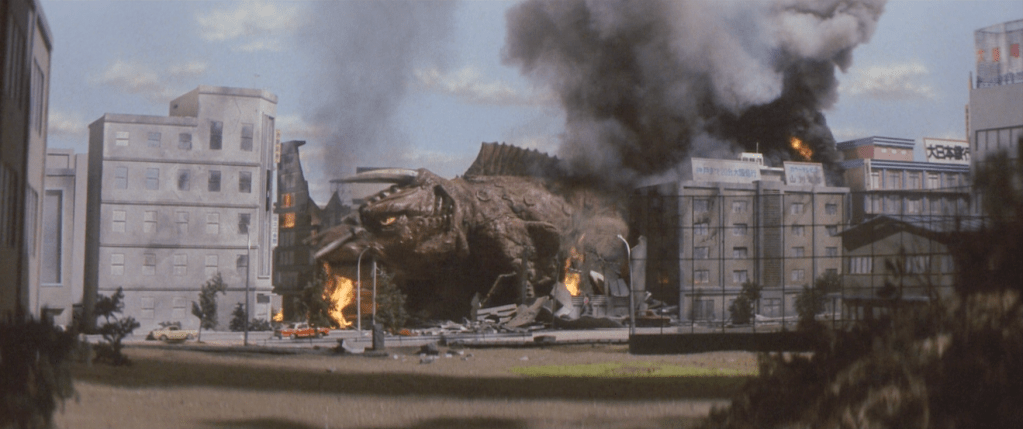
The progression of the classic Gamera series doesn’t follow conventional movie franchise logic. This logic says that once a series completes the transformation into children’s entertainment, it will enter a period of steady decline — if it hasn’t already. Although Gamera vs. Guiron was psychedelic fun with little in the way of story to interfere with kids’ enjoyment, it should have signaled an irreversible trend toward lower budgets and sillier, simpler plots.

Continue reading “Toku Theater: Gamera vs. Jiger (1970)”

Monster Theater: The Giant Claw (1957)

Directed by Fred F. Sears. Written by Paul Gangelin and Sam Newman. Starring Jeff Morrow, Mara Corday, Morris Ankrum.

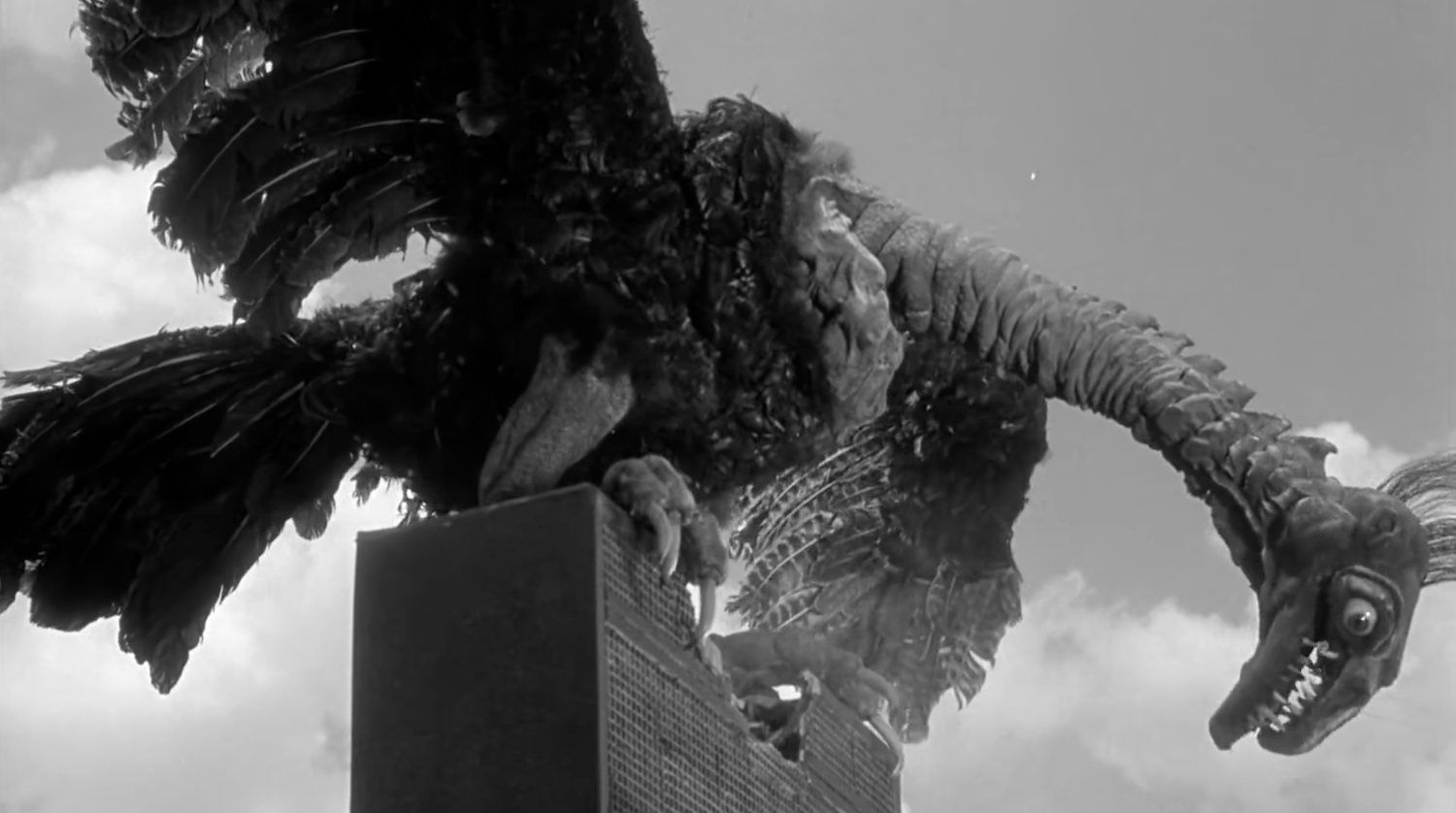
In these movie breaks, I’ve so far looked at monster films from Japan and the UK. It’s time to pay a visit to the B-movie factories of 1950s Hollywood, the original laboratories where the giant monster craze was spawned and mutated. I grew up on these movies on Saturday and Sunday afternoons, seeing many of them before I saw my first Godzilla movie. I still have immense love for them, their often corny earnestness, and their peculiar cultural zeitgeist of the anxiety-ridden 1950s.

Continue reading “Monster Theater: The Giant Claw (1957)”

Toku Theater: Gamera vs. Guiron (1969)

Directed by Noriaki Yuasa. Written by Niisan Takahashi.

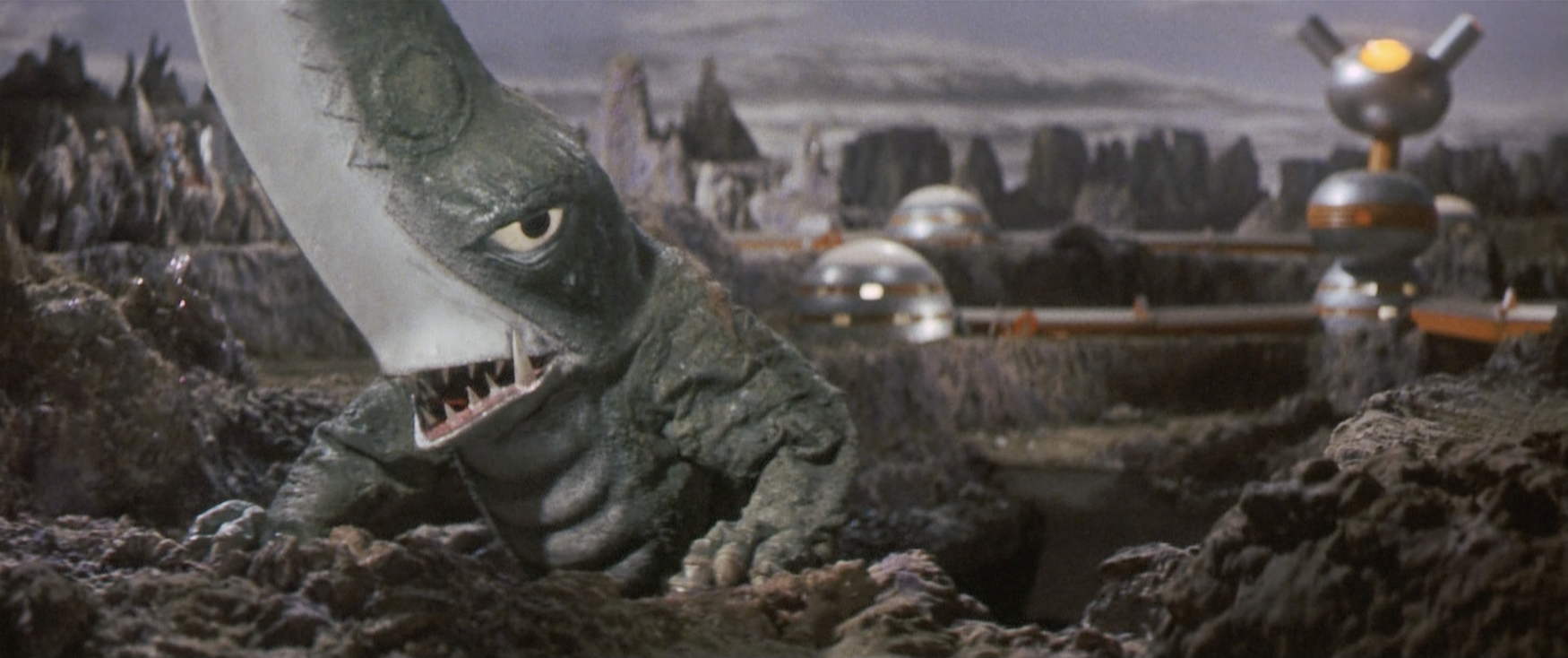
This is the Gamera movie with the alien women who shave a kid’s head so they can eat his brains, Gamera performing a men’s gymnastics routine, and a monster that looks like a letter opener. It’s also the Gamera movie that decides plot is optional when all it needs is kids wandering around science-fiction sets watching monsters have outlandish battles. Gamera vs. Viras did something similar, and Gamera vs. Guiron takes the next step of stretching out the “kids wandering around spaceship” section to fill most of the movie.

Continue reading “Toku Theater: Gamera vs. Guiron (1969)”

Toku Theater: Rodan (1956)

Directed by Ishiro Honda. Written by Takeshi Kimura and Takeo Murata. Starring Kenji Sahara, Yumi Shirakawa, Akihiko Hirata.

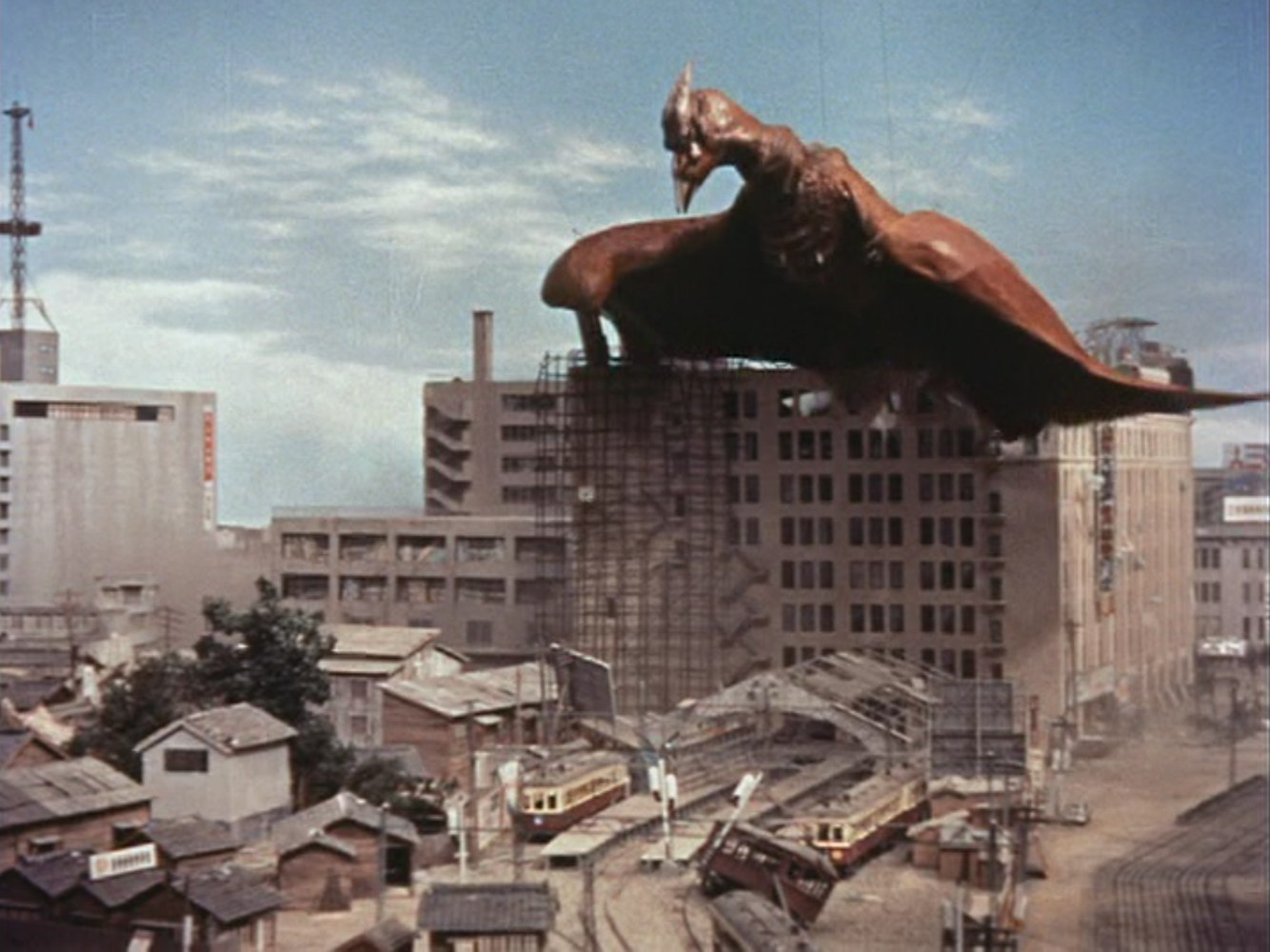
Rodan is where Toho Studios’ science-fiction boom truly takes flight. The original 1954 Godzilla was an enormous success, but the rushed and less imaginative sequel, Godzilla Raids Again (1955), made money without leaving much of an impression on audiences or the Japanese film industry. Godzilla wouldn’t return to movie screens for seven years.

Continue reading “Toku Theater: Rodan (1956)”

Toku Theater: Gamera vs. Viras (1968)

Directed by Noriaki Yuasa. Written by Niisan Takahashi.

The fourth Gamera film adds the finishing touches, the final trio of elements that director Noriaki Yuasa and producer Hidemasa Nagata needed to complete the Gamera style: a Caucasian second child actor, Gamera’s catchy kiddie chant theme, and stock footage. The last of these isn’t a benefit.

Continue reading “Toku Theater: Gamera vs. Viras (1968)”

Ultraman Zearth 2 (1997)

Directed by Kazuya Konaka. Written by Kazunori Saito.

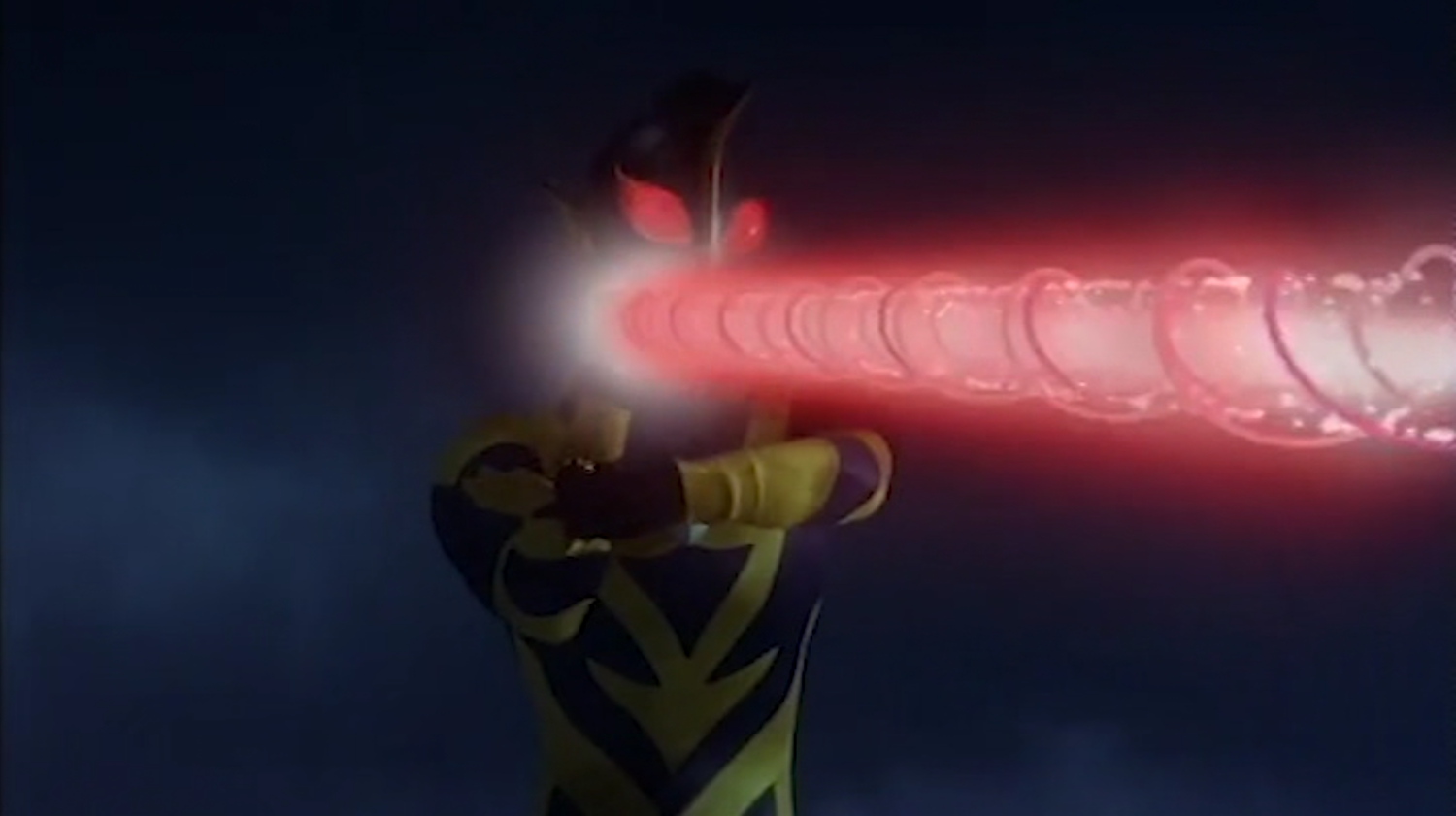
I’m glad to report that Ultraman Zearth 2 (in full, Ultraman Zearth 2: Superhuman Big Battle—Light and Shadow) is a significant improvement over its predecessor. The first Ultraman Zearth was a joke, a parody played for kids and nobody else. I found it often painful to watch as its comedy flopped on its face over and over again. Ultraman Zearth 2 takes itself more seriously — although it’s still featherweight entertainment — and it pulls off one basic trick that elevates the entire movie: it gives the hero a legitimate obstacle to overcome, not a gag one. Zearth is no longer terrified of dirt and mud. He’s broken from a failed battle with an evil Ultraman and must regain his confidence so he can save the world from an alien invader.

Continue reading “Ultraman Zearth 2 (1997)”

Toku Theater: Gamera vs. Gyaos (1967)

Directed by Noriaki Yuasa. Written by Niisan Takahashi.

After two bland movies, the Gamera series at last discovers its niche and breaks out the good rubber-suited monster times. 

Fans generally consider Gamera vs. Gyaos the best movie of the series. I won’t argue with that. The pacing, the monster battles, the cast, the blend of the human story with the big beastie action … it all comes together for an entertaining monster vs. monster show, and one of the best kaiju films of the Showa Era outside of Toho Studios’ output.

Continue reading “Toku Theater: Gamera vs. Gyaos (1967)”

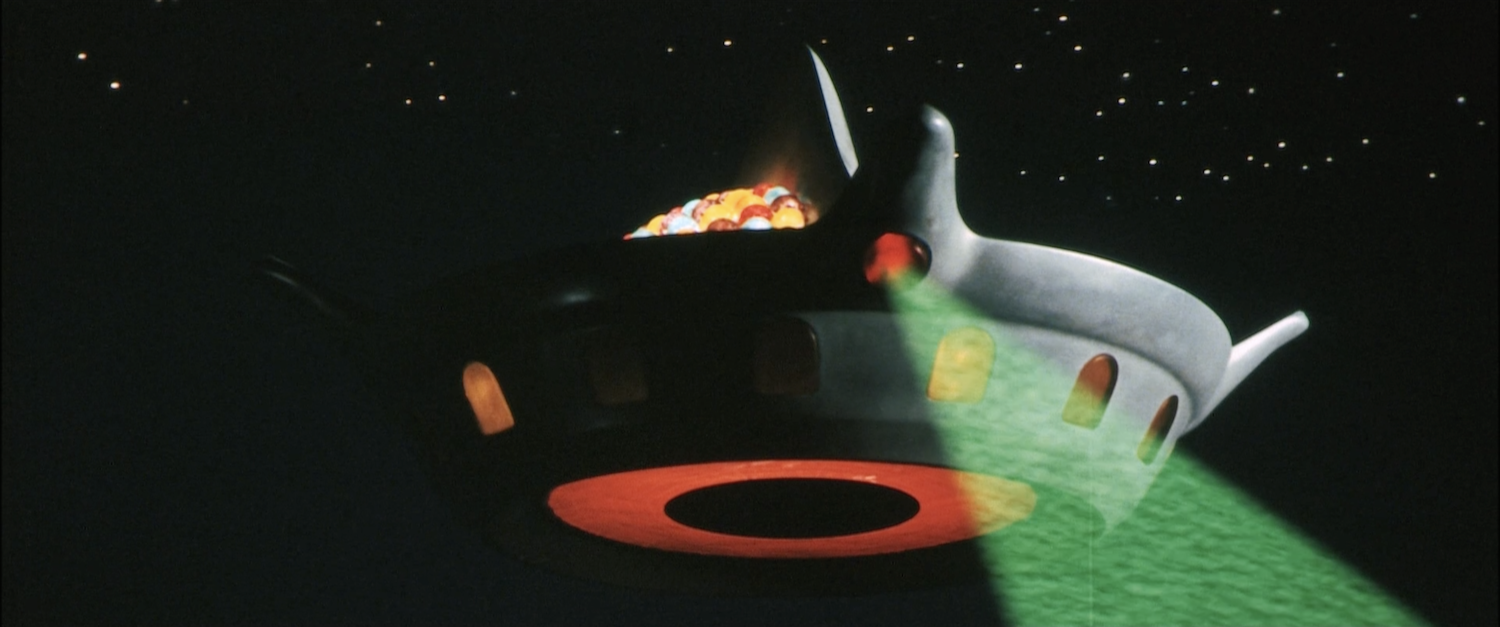
Toku Theater: Latitude Zero (1969)

Directed by Ishiro Honda. Written by Ted Sherdeman and Shinichi Sekizawa. Starring Joseph Cotten, César Romero, Richard Jaeckel, Akira Takarada, Patricia Medina.

Latitude Zero is best known as the last science-fiction film that special effects wizard Eiji Tsuburaya worked on before his death. As final bows for a VFX artist go, it’s quite the spectacle: a science-fantasy epic with super-submarine duels, an underwater utopian city, giant rats and bats, a winged lion, laser-firing gloves, jet packs, massive pyrotechnics that blow up entire islands, and large matte painting vistas. Most of the effects are fantastic, and there are so many of them. The film is wall-to-wall with Tsuburaya’s trademark style. 

Continue reading “Toku Theater: Latitude Zero (1969)”