Directed by Koichi Sakamoto. Written by Yuji Kobayashi. Airdate July 15, 2014.
It’s time for a refresh of Ultraman Ginga that takes the renewed public interest in the Ultra Series and boosts it. The new creative team — showrunners Yuji Kobayashi and Takao Nakano, series director Koichi Sakamoto — has the important job of impressing the viewers who came from the previous show with something bigger, wilder, and better-budgeted.
Which they do. As first episodes go, “The Power to Open the Way” isn’t among the franchise’s most amazing, but it is 100% bigger, wilder, and better-budgeted than anything in Ultraman Ginga. It has a lot of ground to cover, and covers it well.
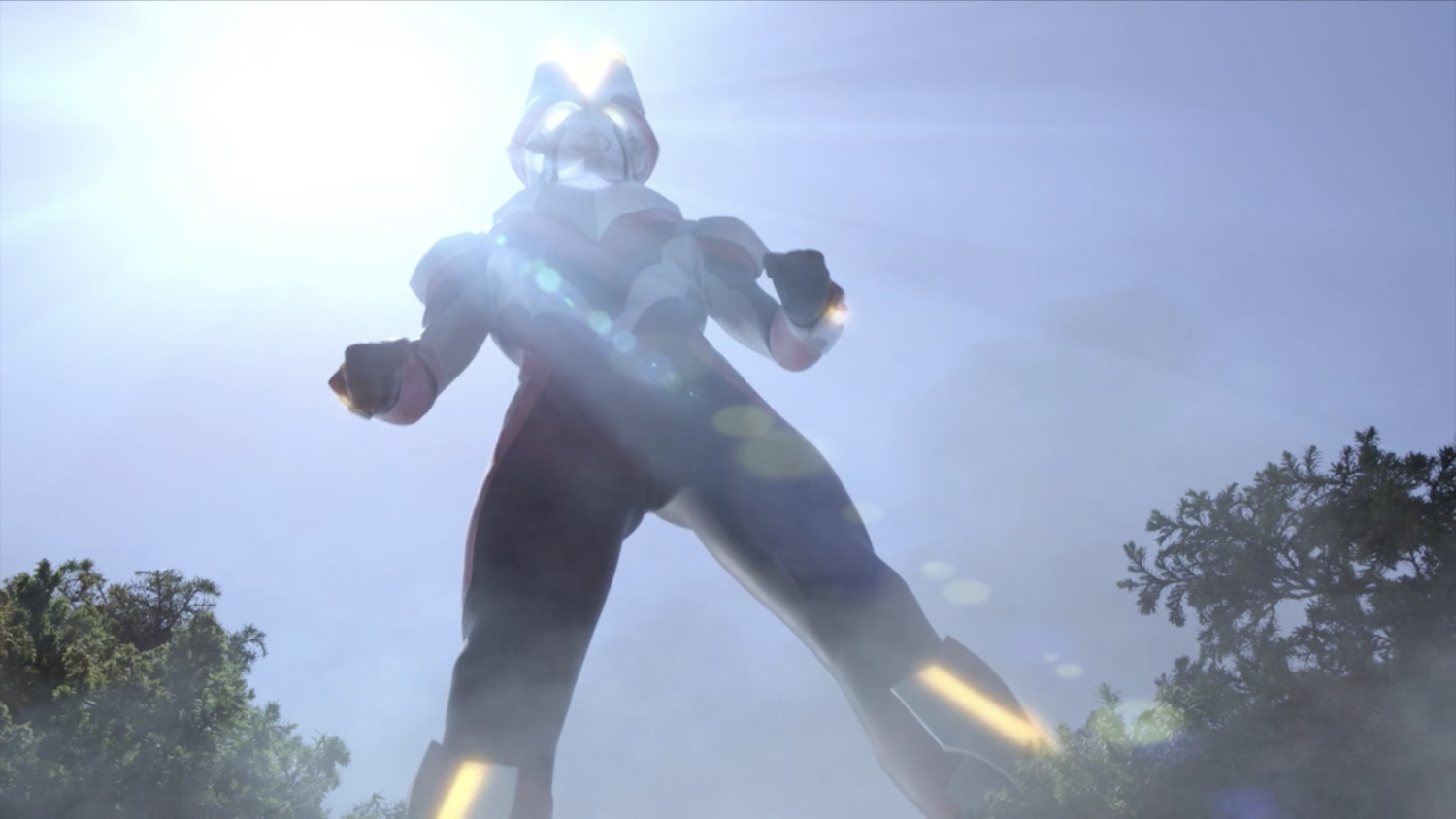
Two years have passed since the conclusion of Ultraman Ginga. Hikaru Raido (the returning Takuya Negishi) has been traveling the world. He no longer has the ability to summon Ginga, though he still has the Sparklence. After a strange encounter in the Yucatan with a giant crystal, Hikaru is drawn back to Japan and the city of Shizugaoka. There, he meets a neophyte defense team, the Ultra Party Guardians (UPG), and Ultraman Victory, an Ultra warrior from a subterranean culture known as the Victorians.
The episode’s slender story serves primarily as a framework to get the key pieces in place and deliver plenty of action. But the pacing and balanced presentation of the new elements keep events chugging along.
The episode has three major strands to establish:
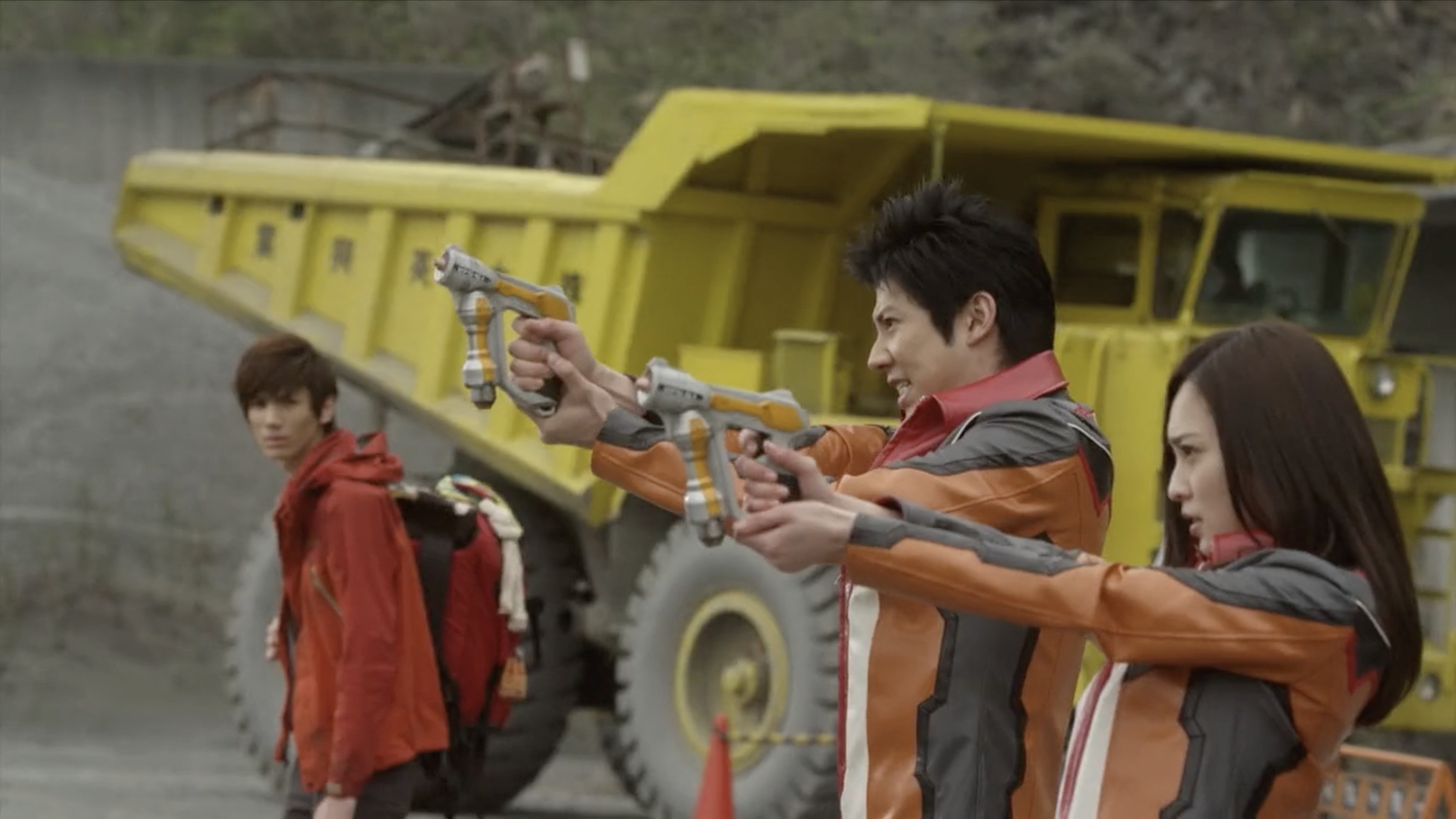
First, there’s the UPG and positioning Hikaru to join their ranks. The UPG is the most understaffed defense team in history. It comprises the tea-sipping, relaxed Captain Yoshiaki Jinno (Ryuichi Ohura); members Arisa Sugita (Yukari Taki) and Gouki Matsumoto (Takahiro Katou), who are ready to blast their laser guns at anything; and Tomoya Ichijouji (Takuya Kusakawa, the only other returning cast member from Ginga) handling the science stuff.
Yes, a defense team with only two field members. To be fair, UPG is portrayed as just getting underway. They don’t know how to handle kaiju or massive supernormal events, which gives the group room to grow in the future. GUYS in Ultraman Mebius was in a similar position.
Hikaru doesn’t come across well in his first meeting with Arisa and Gouki. He’s more smug than we’ve seen before, and that’s not a wise approach when he can’t yet change into Ginga. The two UPG members are correct to be cautious when he barges onto the scene.
The second strand is the underground civilization, the Victorians. The name Victorian is awkward, making me think they should all wear greatcoats and ride in hansom cabs. The Victorians are a standard “Lost Ancient Race,” presented as extravagantly as the budget can, which means a lot of green screen and a few modest costumes and wall sets.
Prince Sho (Kiyotaka Uji) of the Victorians receives the Victory Lancer, which allows him to transform into Ultraman Victory. Queen Kisara (Mirai Yamamoto) sends him on a mission above ground to stop the theft of their vital Victorium Crystals. The Victorians also have a “pet” kaiju, Shepardon. Shepardon is one of the biggest successes of Ultraman Ginga S: it’s both a fierce-looking creature and adorable in a friendly dog way.
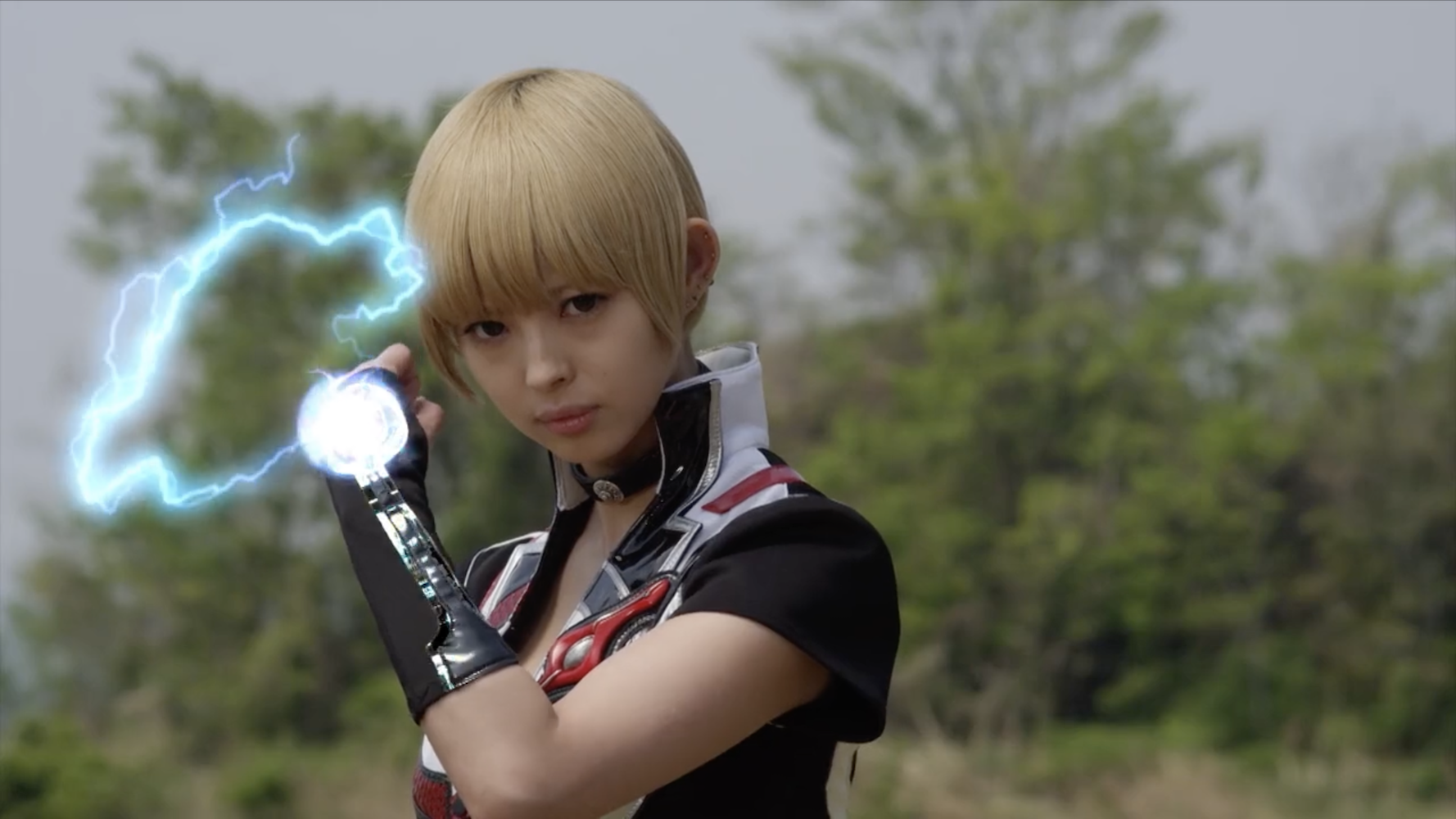
This brings us to the third strand, the villains: Alien Chibull and his head lackey, the scantily clad martial-arts-programmed robot Android One Zero (Moga Mogami), both drawn from the Ultraseven episode “Operation Android Zero.” Alien Chibull is out to steal the Victorium Crystals, which is what sets events in motion. First Shepardon and then Ultraman Victory attempt to stop the theft, and eventually Hikaru regains the ability to become Ginga and join the fight.
Director Koichi Sakamoto has an extensive background in tokusatsu, having worked on Kamen Rider and Super Sentai programs before his first Ultra assignment, directing 2009’s impressive Mega Monster Battle Ultra Galaxy: The Movie. His sense of action keeps things ripping along. Sakamoto is a fan of Chinese action films, and you can tell. There’s a martial-arts fight between Sho and a pack of Chiburoids, Chibull’s cannon-fodder androids, which also has the feeling of a Super Sentai show. Android One Zero is also an ideal vessel for martial-arts battles.
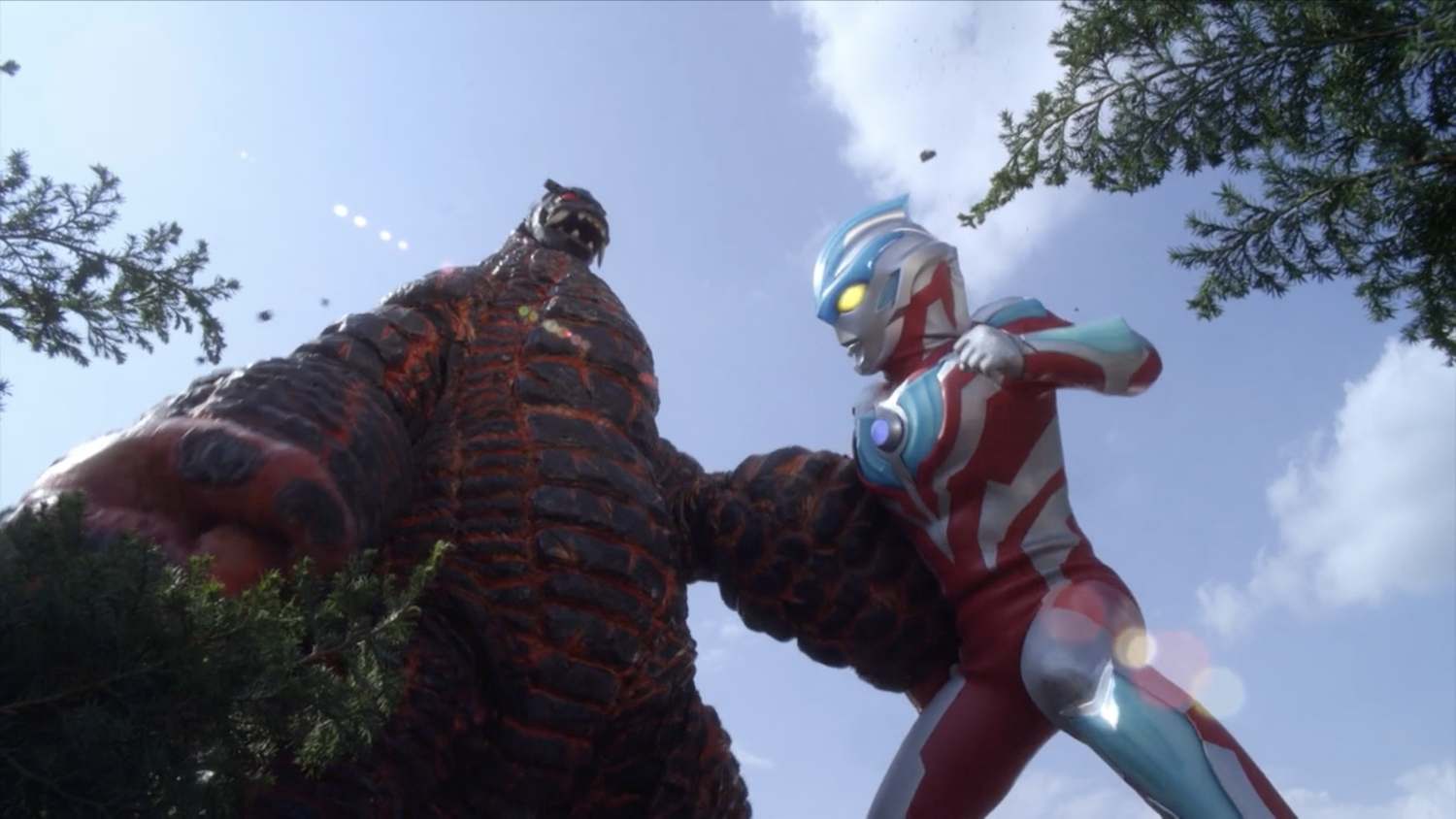
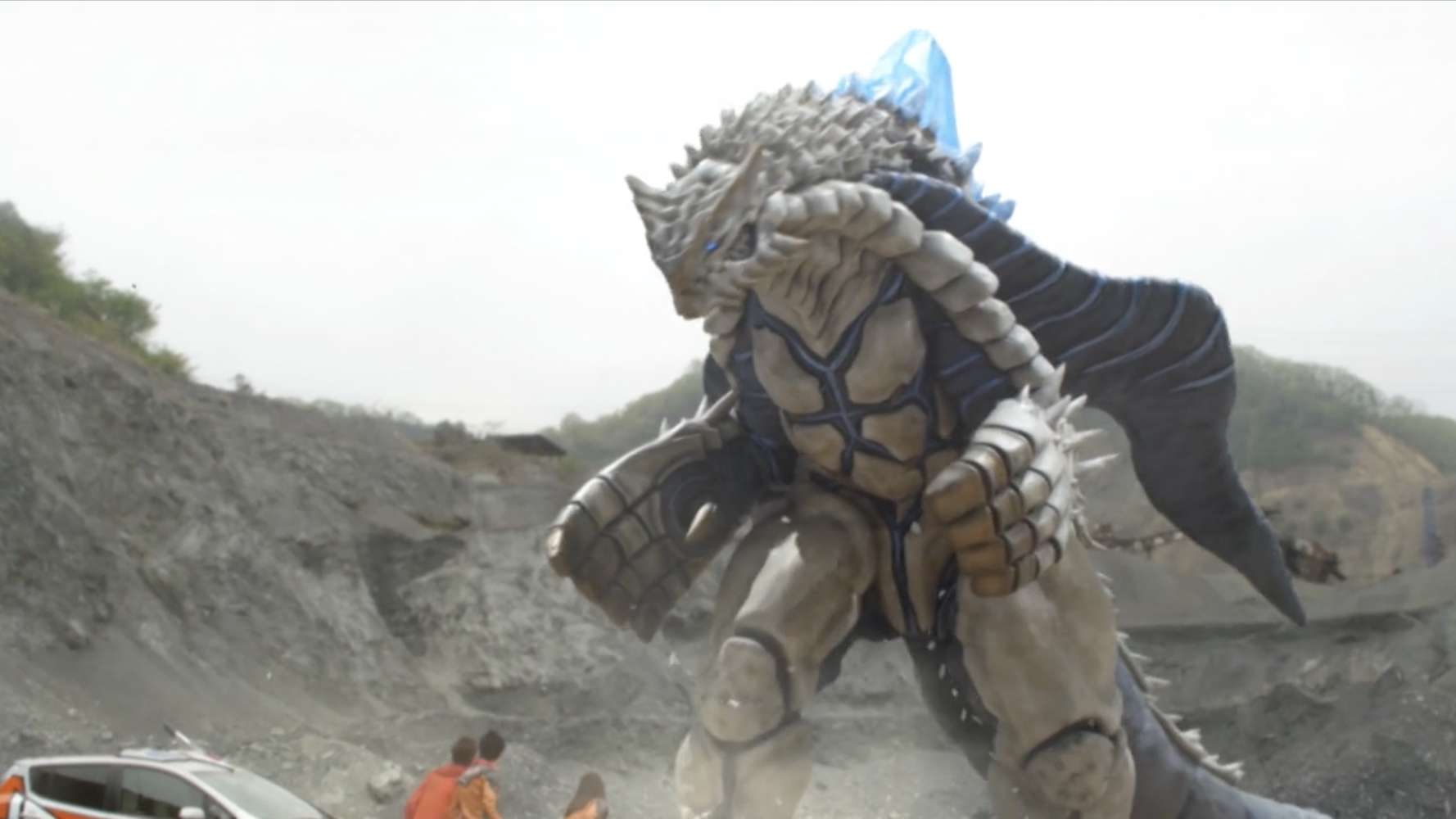
The kaiju and Ultra action is solid. Victory makes a strong first impression, and the show establishes that he’s not here just to be pals with Hikaru and the UPG: Sho has his own agenda of protecting the Victorians. His relationship with Hikaru is immediately prickly. The featured bad-guy kaiju is EX Red King, a darker Red King with massive Popeye forearms and some actual red in its design. EX Red King first appeared in the final episode of Ultra Galaxy Mega Monster Battle: Never Ending Odyssey. It’s a cost-saving reuse of a suit, but if you want to pick a detestable villain monster for an opening episode, Red King is the way to go.
The episode isn’t all sunny good times. Sorry to report, but … the Spark Dolls are still around. Android One Zero summons EX Red King using a Spark Doll. I don’t see why the show couldn’t have devised a new method to manifest monsters, but Bandai must’ve still had a warehouse of these things they needed to sell.
There’s a new gimmick with a toy-selling slant: Victory can absorb the abilities of monsters he’s defeated and use them to “power up,” such as morphing one of his arms into Red King’s monster arm. Unfortunately, this trick will lead to extra transformation sequences that eat up time.
The best achievement of “The Power to Open the Way” is that it combines a back-to-basics approach (an Ultra working with a high-tech defense team) with fresh elements (the Victorians, a friendly kaiju, a slinky combat android). The franchise needed a return to familiar territory after wandering the empty and cheap wilds of Ultraman Ginga. But it also needed variety to invigorate it. Ultraman Ginga S has both from the start. At the very least, viewers will come back next week to see what sort of larger story develops from this initial collage of elements.
Rating: Good
Previous: Ultraman Ginga Intermission—First Season Wrap-Up
Next: Ginga vs Victory
 The Ultra Project