
Directed by Samaji Nonagase. Written by Hiroyasu Yamaura. Airdate June 9, 1968.
Samaji Nonagase is back directing a suspense-filled episode that goes full ‘60s spy-fi. This is as close as Ultraseven gets to turning into a straightforward action show. There’s a special effects finale where Seven battles an alien ship, but the actual peak of the action is the lethal fraction of a second in the title — and it’s a duel of human vs. human, revolver vs. revolver.
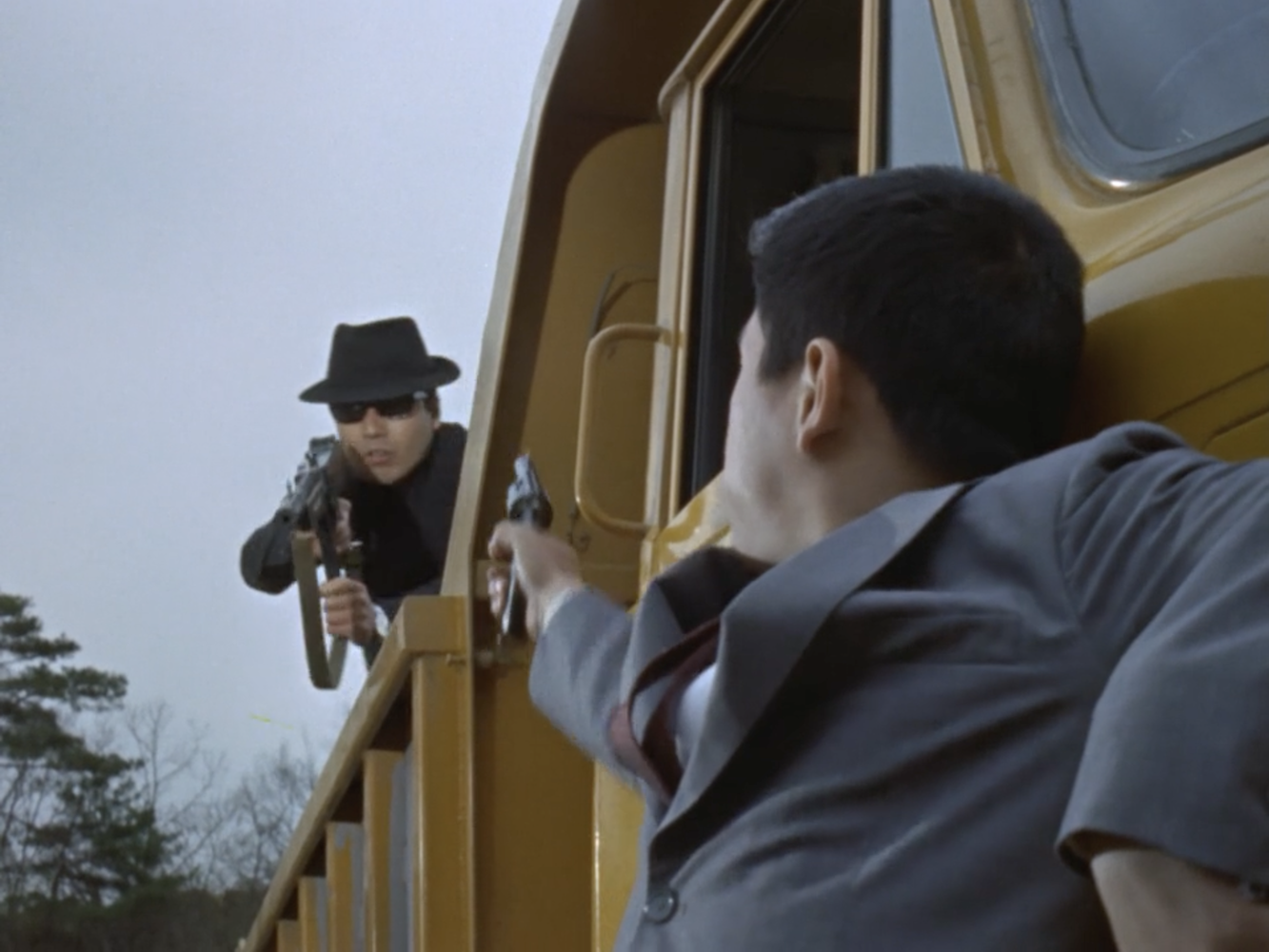
This is probably the most adult-oriented episode of the show in terms of action, with a focus on tense showdowns with scant science-fiction content. The plot wouldn’t need much tweaking to take place in the real world. Swap out the extraterrestrial mastermind, Alien Pega, and the story is still a solid spy thriller about brainwashed double agents in the TDF attempting to sabotage an advanced scientific project by assassinating key researchers. We’re treated to a souped-up car chase, shootouts, spy gizmos, and just enough alien tech and laser blasts to add a tangy zest.
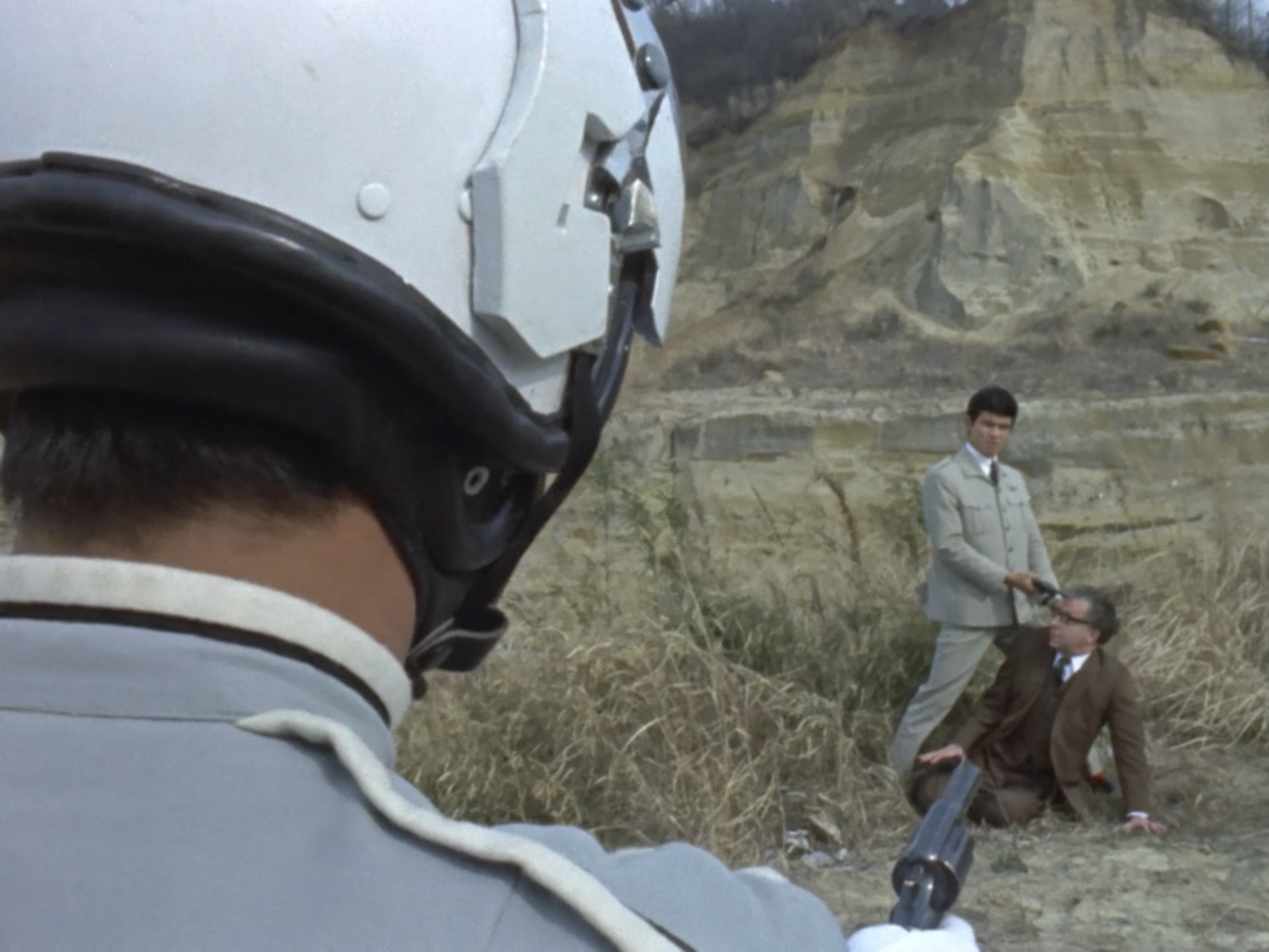
The spy action starts right away, with Soga competing against Hirota (Kazumoto Ohashi), a TDF Staff Officer, in a target shooting tournament. Soga loses out on the trophy by a small fraction due to a stumble. Hirota is a touch rude about his victory, but Soga is a cool professional about it.
The TDF has a current worry: several scientists involved in a secret “artificial sun” research project have been murdered. Dr. Richter, the project head, will soon visit Japan, and Soga and Hirota are assigned to protect him. However, an ambush and shootout ends with Dr. Richter apparently dead and Soga seriously wounded. Hirota claims that a TDF agent he shot and killed was the spy who betrayed them. Soga, however, suspects that the figure who shot him and then retreated may have been Hirota, whose behavior has been strange recently. Soga must find a way to approach his old classmate and uncover the truth.
There are shades of “Glory for Whom?” in the story. That episode also featured a TDF member pompously showing off his shooting skills as a prelude to becoming the episode villain. Hirota, it turns out, only won his victory thanks to the intercession of Alien Pega. The alien wants something in return from Hirota: his assistance in sabotaging the artificial sun project.
This is one of the best episodes for Soga. As with “Fly to Devil Mountain,” he is the true hero of the story from first to last. Dan is around to help break the alien hypnosis and then transform into Seven to mop up Alien Pega’s flying saucer in the last few minutes. The real climax happens just before the spaceship battle, where Soga has his showdown with Hirota that ties the story back to the opening shooting contest. The coda also belongs to Soga, and it’s a powerful one. Shinsuke Achiha delivers another excellent performance as Soga, who has emerged as the most multi-layered member of the Ultra Guard.
Major credit to director Nonagase for how well he handles everything. The episode could feel disappointingly small-scale, but Nonagase clearly enjoys directing human tension and staging action-movie encounters. He even ventures into the territory of the classic Western.
The alien hypnosis is a minor weak point. The audience learns early that Hirota is working with Alien Pega, though it initially appears that Hirota made a conscious pact with the alien in exchange for his victory in the shooting competition. At some point after that, Alien Pega uses its brainwashing technique Hirota, as well as several other TDF agents we don’t see. Dramatically, I’d prefer to have Hirota betray the TDF willingly for his own benefit; it would add a sharper edge to his conflict with Soga. It’s a minor point, however. The episode essentially treats Hirota as a purposeful traitor during his tense face-offs with Soga, and those scenes fully work.
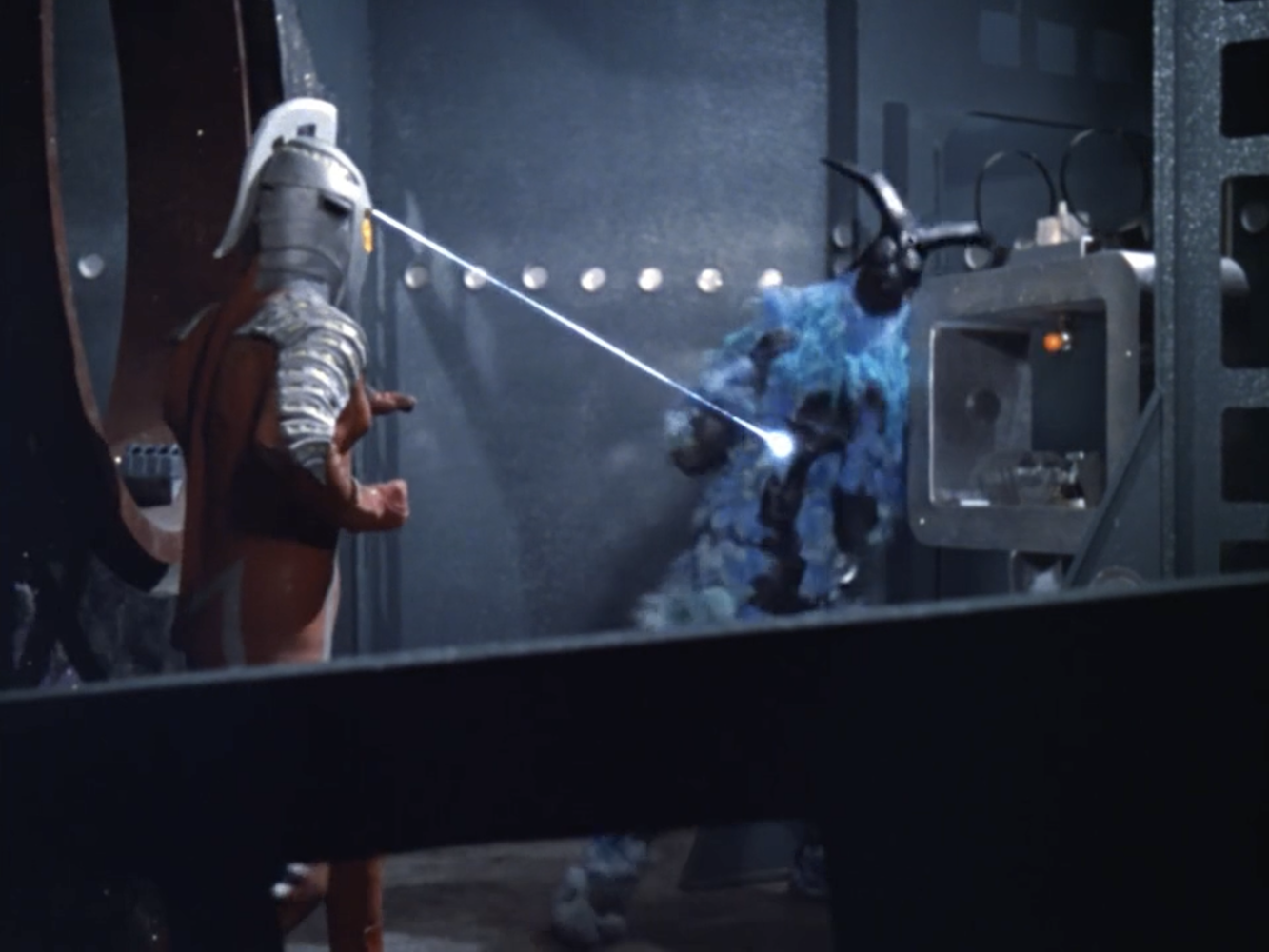
Although not strictly necessary, there’s nothing wrong with the major VFX scene of Seven fighting Alien Pega’s saucer. The pyrotechnics and staging are exciting, and I don’t mind the occasional lack of a giant monster in an Ultraseven episode. Seven has a human-sized encounter with Alien Pega that’s a tad silly — Alien Pega is a bit silly-looking itself, like a Muppet who got the wrong head — but this doesn’t harm the rest of the episode. The kids watching in 1968 may have felt let down, but by now it feels like the show is okay with surrendering its dwindling children’s audience. That feeling will increase as we hit some dark episodes ahead.
Ultra Q’s “The Statue of Goga” still holds the title of the best espionage episode of the Ultra shows, with its classic mid-‘60s Bondmania cool. Ultraseven’s “The 700 Kilometer Run” comes close, edging out “A Lethal 0.1 Seconds” thanks to its kinetic action and, of course, Dino-Tank! This episode remains a memorable outing for a show interested in variety and for a director with a knack for the subdued thrills possible within the Ultra formula.
Rating: Good
Previous: Terror on the Moon
Next: The Stolen Ultra Eye
 The Ultra Project