
Directed by Kyota Kawasaki. Written by Ai Ota. Airdate March 8, 1997.
“I Saw Obiko!” starts like another horror outing for Ultraman Tiga, this time with a traditional Japanese folklore approach. The demon Obiko — an actual demon, not an alien pretending to be one — has been frightening people in the area of Hikono City for several months with his sudden appearances. When Obiko actually attacks a young man and leaves physical evidence behind (the man’s hair goes white), GUTS comes to investigate. They soon discover Obiko’s disguise as a noodle vendor who haunts the streets of the town at night.
After GUTS’s encounter with Obiko and his “shadow puppet” (a poorly CGI’d black tentacle), the story shifts from horror to a blend of comedy and pathos. You can feel the style of writer Ai Ota in this change; her previous script was for the childlike tale “Deban’s Turn,” and there’s a similar compassion for the outsider in this episode. Obiko isn’t really scary, and until the finale, he doesn’t pose any serious threat or do anything overtly wrong. He’s a bit of a prankster, but mostly he’s sad. He wants to have the old village back, from the days before it became overdeveloped and its bright lights drove him back to his familiar shadows.
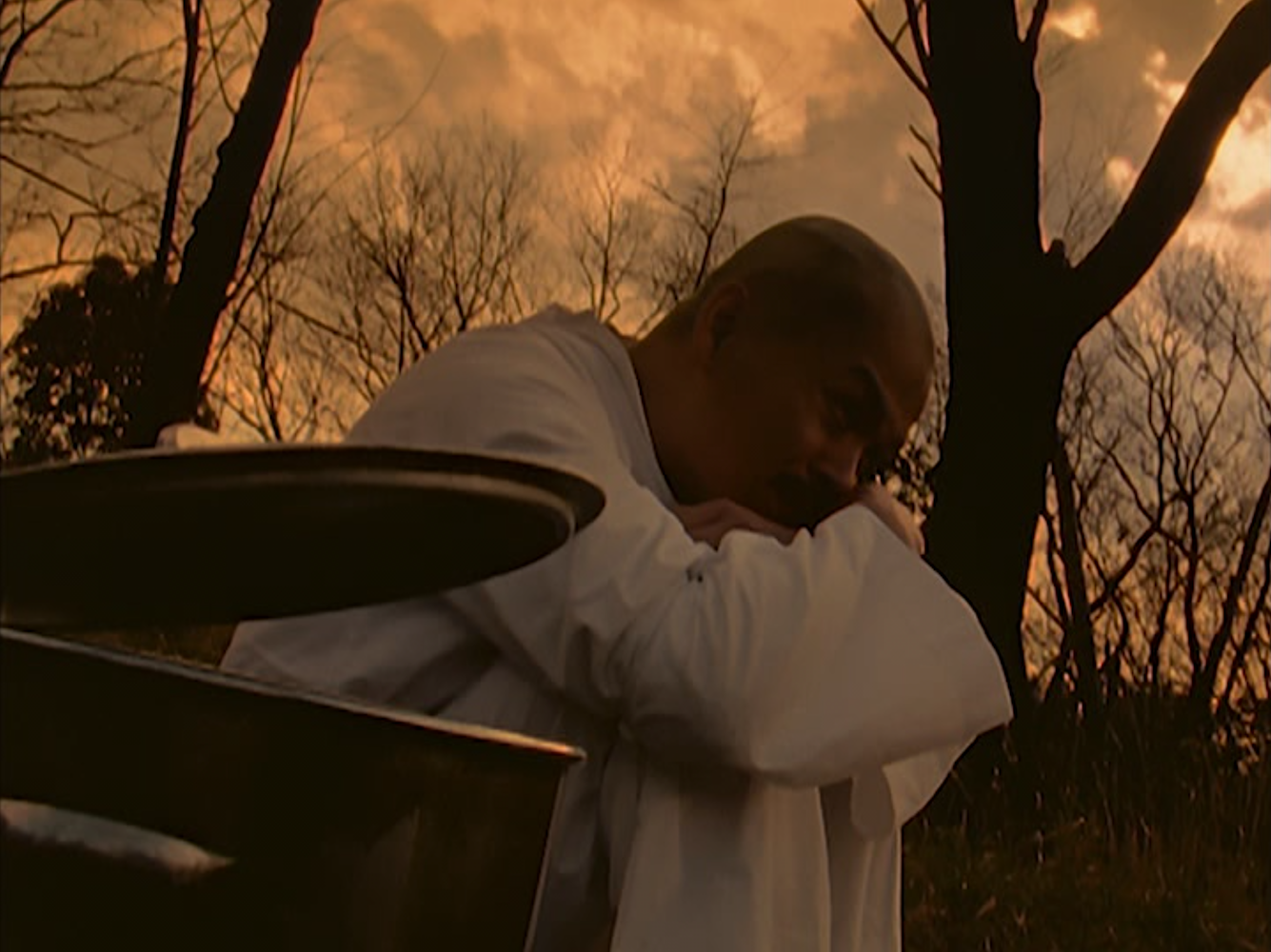
The episode is well-intentioned, with a theme of sorrow at losing the old world to “progress.” Shoichiro Akaboshi’s performance as Obiko is a good mix of comical villain and wistful loner. The best scene has him perched on a hillside above Hikono at sunset, talking to the noodle pot that holds the shadow puppet and reminiscing about how the town and countryside once looked. It’s a sweet moment, beautifully shot, and it gives viewers insight into the mind of this old demon who’s lived long enough to see tradition slip away.
Good intentions can’t carry the whole show, however. The uneven tone and the generally mechanical roles the main cast plays keep “I Saw Obiko!” from hitting the way it wants to. The episode should have held onto the eeriness of the demon’s appearances and attacks longer. Instead, GUTS almost immediately discovers Obiko’s identity, which drains away most of the initial spooky atmosphere. When GUTS spreads out across the town to try to hunt down Obiko in any patch of shadow they can find, the comedy comes out in full force. Then, right after, another shift occurs, and the episode goes for melancholy before it has to leap into the obligatory giant monster fight. It never quite gels, although Akaboshi’s performance creates some cohesion — as Obiko, he adjusts to feel at home no matter the tone.
The GUTS team doesn’t seem too invested in Obiko’s story, even though Daigo gives the requisite speech about how the demon can’t stop the passage of time or restore things to the way they used to be. This is the only strong character moment for any of the regulars. Shinjoh, oddly, turns into a superstitious coward during the early search for Obiko, which doesn’t fit his established personality at all.
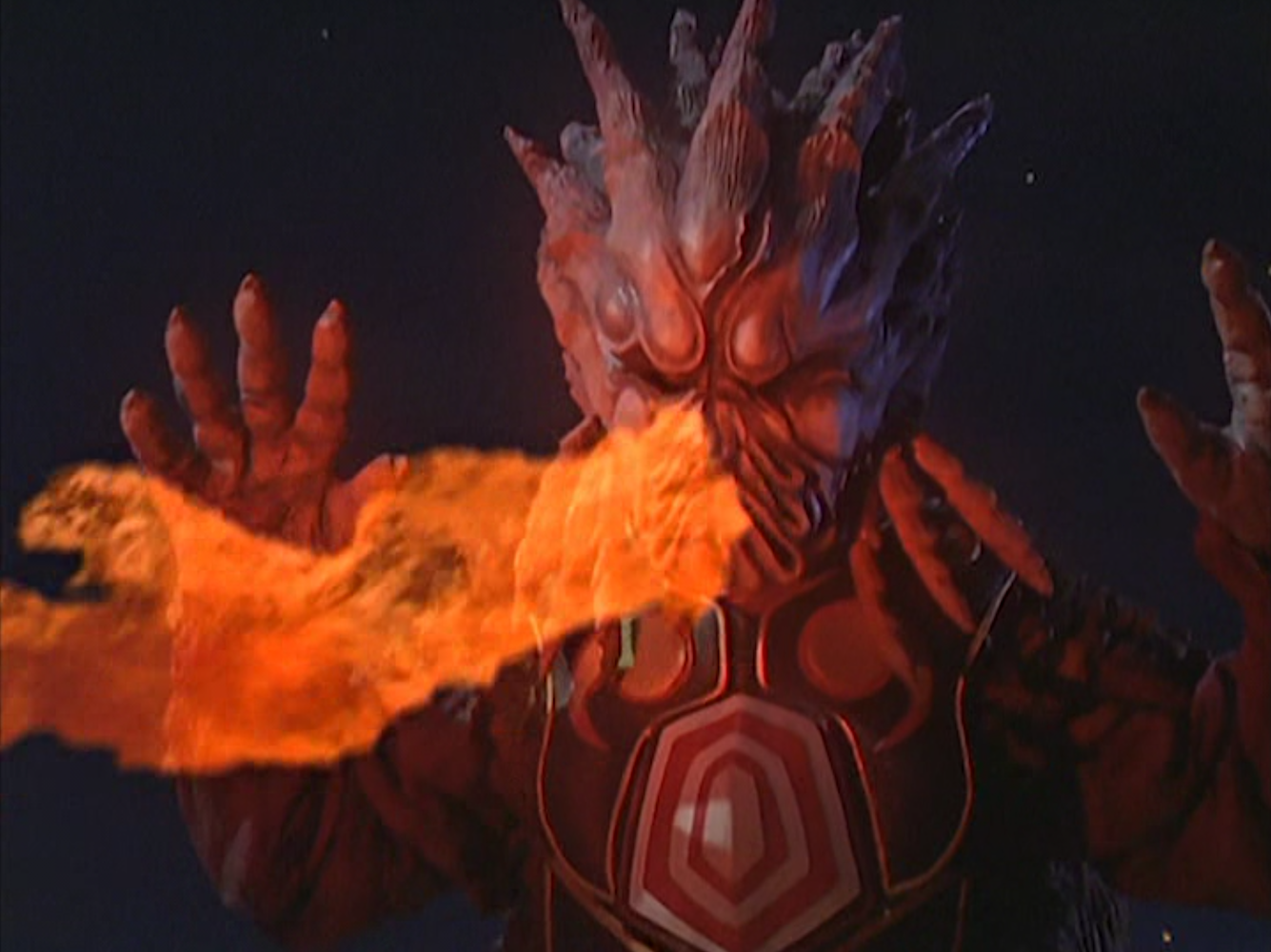
The finale must have Tiga fighting a giant creature — this is Ultraman Tiga; it’s the premise of the show — but the standard kaiju fight is an awkward fit compared to the rest of the episode. Obiko decides to just wipe out the town by growing into a tree-like kaiju. The battle isn’t anything remarkable, though Obiko’s childish fighting style fits the character, and the outcome has some genuine heart to it.
“I Saw Obiko!” is a lesser piece of work for the Tiga team and the show’s top director, Kyota Kawasaki, but it has enough positives and an aura of sincerity that I don’t mind revisiting it.
Rating: Average
Previous: The Rainbow Monsterland
Next: One Vanishing Moment
 The Ultra Project