

Directed by Junji Kurata. Written by Masaru Igami, Isao Matsumoto, and Ichiro Otsu.
Let’s close out 2025 with a big heap of trash, shall we? Feels like cleaning out the house for a new year.
We have Jaws to blame for Legend of Dinosaurs & Monster Birds (Kyoryu Kaicho no Densetsu, more accurately translated as “The Legend of the Dinosaur and the Ominous Bird”). Toei president Shigeru Okada proposed making an imitation of Jaws even before the movie opened in Japanese theaters in December 1975. He saw the potential to create not only a big domestic success, but also a film he could sell worldwide.
Okada did achieve a bit of success in the international market: for some reason, Legend of Dinosaurs & Monster Birds was a hit in the Soviet Union. Elsewhere, it did feeble business, and it didn’t reach the US until a television release in 1987.
The USSR aside, I understand why nobody showed up for this attempt at a kaiju revival via Jaws copycat. This is a tedious movie with scant entertainment for either kaiju fans or casual viewers. The story and characters are thin, the plot goes through lifeless imitations of parts of Jaws, the music is incongruous pop, and the finale with two giant monsters battling it out at the foot of an erupting Mount Fuji is clunky and shockingly boring.

The film starts with a hint of promise, as the first thing we see is Aokigahara, “The Sea of Trees,” near the base of Mount Fuji. This is the legendary “suicide forest” that’s appeared in quite a few Japanese (and Western) media, including Ultra Q’s “S.O.S. Mount Fuji,” and carries with it an aura of the sinister and supernatural. We see a woman treading barefoot through the woods, a bottle of pills in her hand, probably looking to end her life. She falls into a pit, where she sees a giant egg hatching, the event that will spur the rest of the film. It’s a decent, eerie prologue.
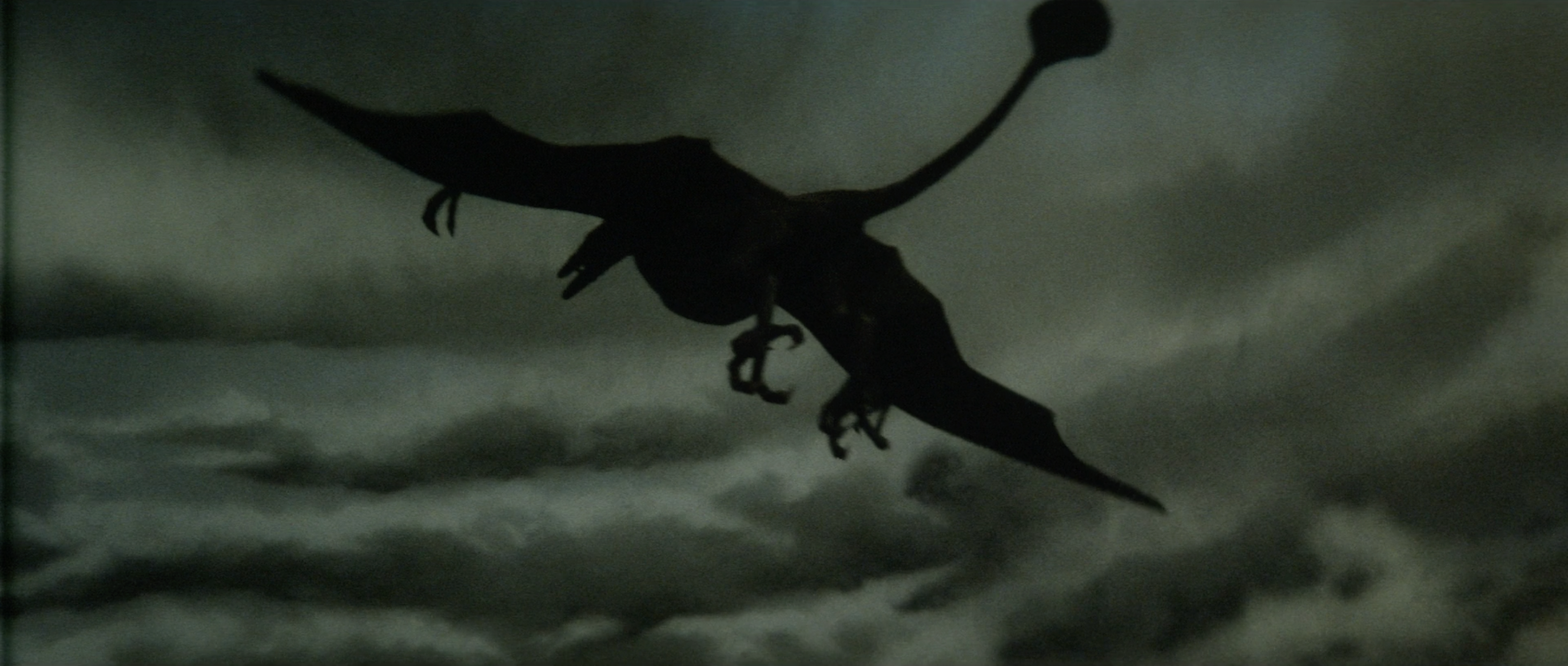
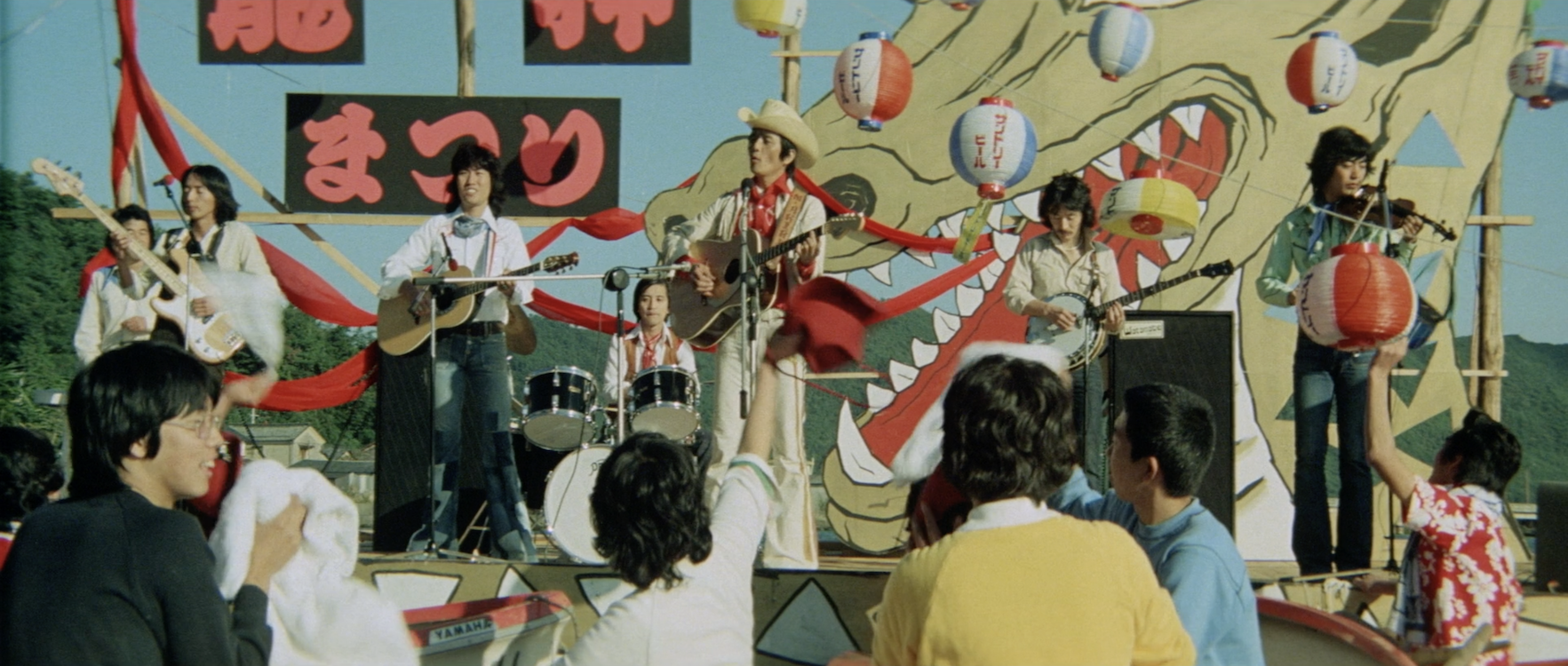
There are other occasional nods to legends sprinkled throughout the film. A few images evoke a sense of the uncanny, such as a shot of a straw dragon used for a festival set against billowing storm clouds. When the giant Rhamphorhynchus first attacks a gathering of people on a lakeshore, there are several striking shots of it flying against a gray sky that have genuine otherworldliness. These are the best visual effects in the movie.
None of these atmospheric touches lead anywhere meaningful or do much to enliven the dull “monster on the loose at a tourist site” plot. The “Legend” of the title is dross, nothing more. The constant cuts to images of Mount Fuji might be an attempt to add a greater element of mysticism — or they might just be lazy scene transitions for when the movie can’t figure out what else to do.
The actual sub-standard monster story follows geologist Takashi Ashizawa (Tsunehiko Watase). Ashizawa is trying to prove the existence of a Plesiosaur in Lake Sai, either to justify his dead father’s research, or to get a lot of money, or both. He’s not interesting enough for me to care much about his real goals. He comes to the lakes of Mount Fuji during the Dragon Festival to follow up on the reports of the dinosaur egg. He reconnects with Akiko Osano (Nobiko Sawa), a professional diver and photographer with whom he may have romantic history, but this is also vague and poorly developed.
The Dragon Festival has drawn a crowd, and this shoves us into standard Jaws territory: an aquatic monster begins attacking and killing vacationers. Eventually, scientists claim there’s no evidence for such a monster, while the hero is sure there is one, and therefore more people are in danger. A second monster abruptly leaps into the story in the finale because we need to have two monsters so they can fight each other.
It’s all as exciting as this dry recitation of events makes it sound. There’s almost no tension throughout the hour-plus when the giant Plesiosaur is supposed to be causing havoc. There’s one fake-out lifted directly from Jaws (pranksters with a plastic fin) and a few modest attack scenes, and all of it is lifeless. The key monster attack in the middle of the film, which kills off a major character, is photographed in a slow, ponderous style that feels like it’s aiming for something artistic or dreamlike. Well, it gets near to dreamlike: the scene is positively somnambulant.

The score is either a lowlight or a highlight, depending on what you’re looking for in entertainment: all lush pop orchestrations appropriate for a 1970s light romantic movie, but comically out of place for a monster film or a suspense sequence. The one musical exception is a performance by a Japanese country band at the Dragon Festival. Honestly, pretty good band.
The final 15 minutes are when the tedium overwhelms everything. This is the point when something fun should finally happen. At least let the film close in a way that audiences feel they got a bit of kaiju energy. The movie appears to have the goods: the Plesiosaur battles the giant Rhamphorhynchus, and then Mount Fuji erupts because this is all tied to some environmental catastrophe.
But the fight between the two monsters is staged in a cramped miniature forest set where it’s difficult to see the creatures at all. You get a lot more foliage than you do a dinosaur and a monster bird. The quarter-scale puppets never move convincingly, or even look enjoyably unconvincing — they just look amateur. The Plesiosaur slowly sways its neck back and forth, the Rhamphorhynchus jangles loosely on wires, and nothing about it is exciting.
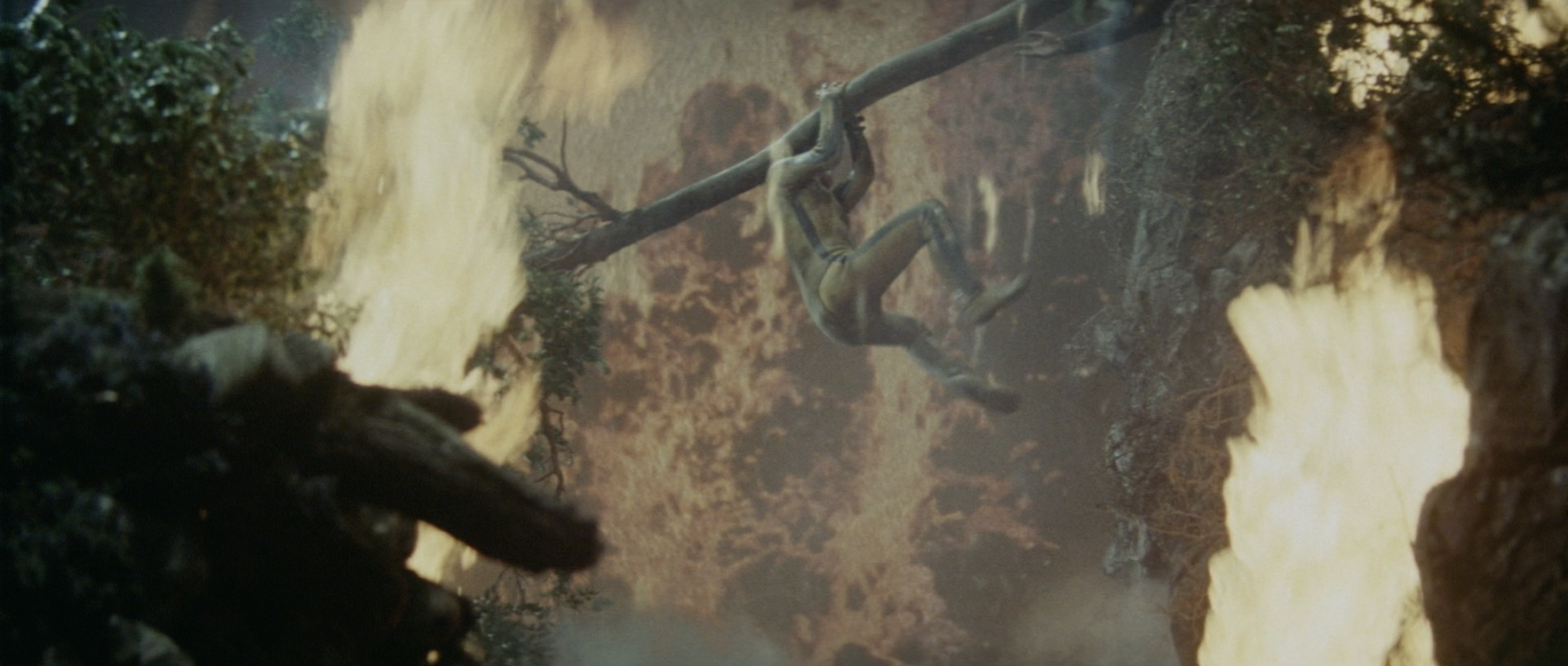
The eruption of Mount Fuji feels like a desperate move to save the ending with some disaster movie spectacle. It doesn’t work either, since it plays out to a pop ballad about nature — the crowning blunder of the mismatched film score. Modest chaos breaks out to the crooning tune (“La, la, la, the tide is pouring in like the sand…”), and a hero we never cared much about tries to save his sort of girlfriend from falling into a crevasse. As with almost everything else in the film meant to be thrilling, the execution is lethargic and missing any reason to care.
Director Junji Kurata helmed several samurai films for Toei during the 1960s, but like many studio contract directors he was stuck in television for much of the ‘70s. This was his first feature film since 1969, and he shows no special passion or aptitude for horror, suspense, or giant monsters. To be fair, it appears few of the people who worked on the movie thought much of it: they were doing it because Shigeru Okada of the company wanted a Jaws copy. You didn’t argue with the orders of the company president. But maybe you don’t try that hard either.
That I could feel this bored watching two dinosaurs fight during a volcanic apocalypse is all you need to know about how much Legend of Dinosaurs & Monster Birds fails. This is not a fun-bad movie — it’s just bad. If you want a risibly enjoyable Jaws imitation in a similar setting, I recommend The Crater Lake Monster from the same year. It’s cheesy-amusing and has stop-motion effects by Phil Tippett for its Nessie creature.
Anyway, let’s hope our next year is better than Legend of Dinosaurs & Monster Birds.
Rating: Poor
 The Ultra Project