
Directed by Yuichi Abe. Written by Akira Tanizaki. Released Sep. 7, 2013.
Ultraman Ginga was planned to start with a six-episode run, followed by a hiatus, and then five more episodes. After airing episode 6, the show wouldn’t return to its regular weekly schedule for three months. In between, Tsuburaya Pro released a 44-minute special to theaters, paired with an animated episode of Mega Monster Battle Ultra Rush to push the running time to feature length. This Ultraman Ginga Theater Special would later be shortened to a 25-minute episode, “Monster Competition,” to slot between episodes 6 and 7 for future broadcasts, streaming, and home video releases. I’m looking at the 25-minute version here, since the theatrical version is padded with recaps and previews of future episodes.
The episode looks marginally more expensive, with an extended battle scene that takes up the entire second half. It’s not epic the way you might expect from something meant to be shown in cinemas, but it’s also more fun than the previous episodes. It shows the full cast of characters working together for the first time now that Tomoya is semi-accepted as part of the pack of young protagonists at Furuhoshi Elementary School.
The group of friends (without Tomoya; he joins later) goes on a quest to search Mt. Furuhoshiyama for several kaiju Spark Dolls that Taro perceives are spread across it. They’re unaware that Dark Lugiel’s newest goofy agent, Alien Icarus, is also trying to retrieve the dolls to execute a plan to destroy Ultraman Ginga.
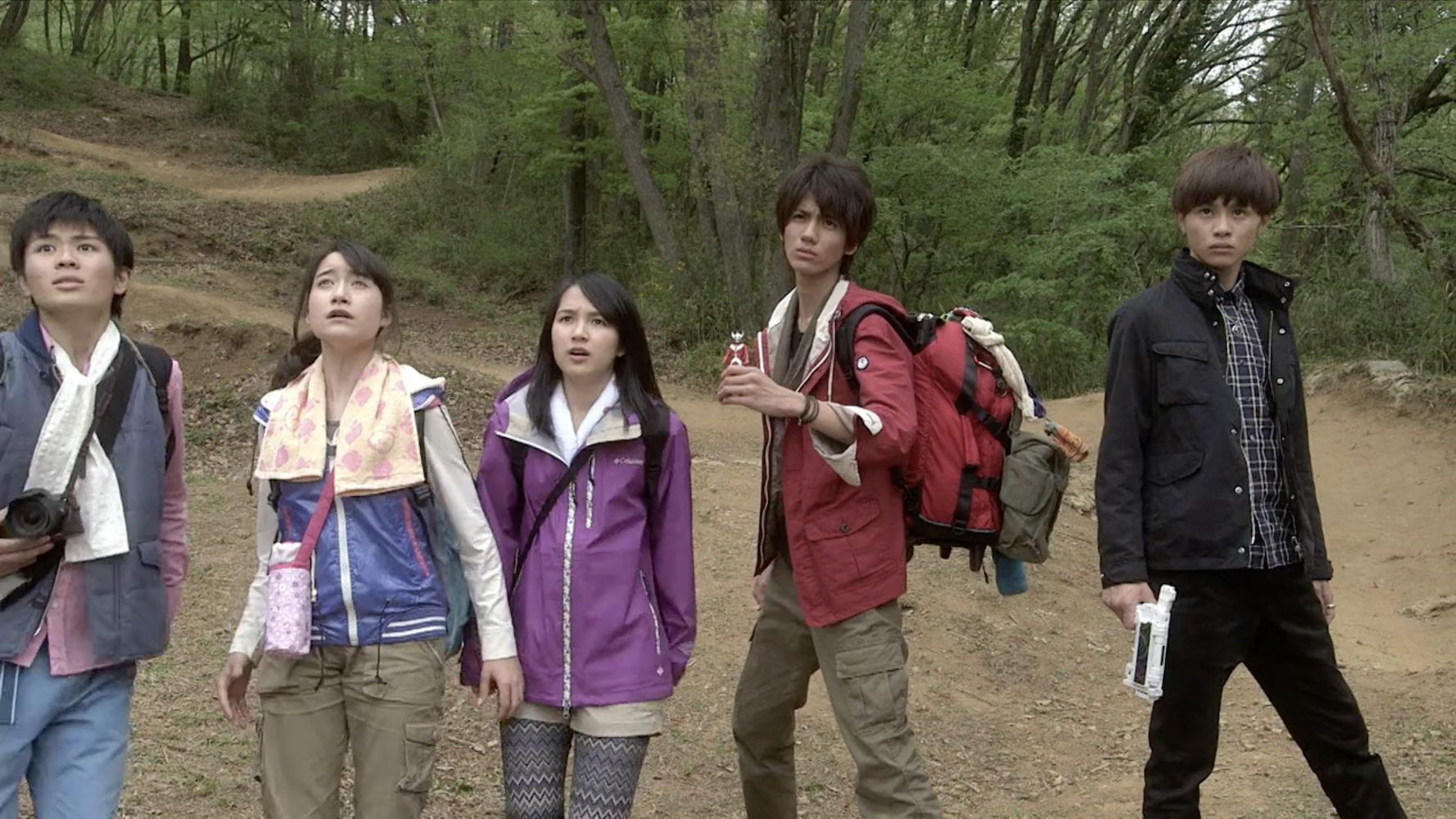
The casual interactions between the cast feel natural at this point, so even if a scavenger hunt on the mountain isn’t the most thrilling idea, it lets us enjoy some character bits and see Tomoya adjusting to working with the others. The scenes where Alien Icarus tries to disguise itself as Misuzu to steal some of the Spark Dolls are cute and funny, and they help to excuse yet another random appearance by an alien species who is only here because the production team didn’t have the budget to create a new alien costume.
One of the draws of the Theater Special is the inclusion of Ultraman Tiga and a famous kaiju, Tyrant. Tiga’s appearance is nothing momentous: Hikaru simply Utlives himself into the Ultraman Tiga Spark Doll he retrieved from the previous episode. But Tiga is such a popular Ultra warrior that young viewers would’ve enjoyed seeing him battle Tyrant.
Tyrant, on the other hand, is a rare successful use of a pre-existing monster that doesn’t feel like it was drawn at random from the costume warehouse. Tyrant is a major adversary from Ultraman Taro, first appearing in the episode “Surpass the Ultra Brothers!”, where it defeated multiple Ultra warriors one after the other. Tyrant fuses the abilities and appearance of seven kaiju, choju, and seijin: Red King, Baraba, Seagoras, Bemstar, Hanzagrian, King Crab, and Alien Icarus. (Now you know why Alien Icarus replaced Alien Valky as Dark Lugiel’s agent for this episode: Icarus is an established component of Tyrant.)
This type of composite kaiju, known as a chimeric monster in Ultra lingo, is a popular show trope, and Tyrant is the chimera who’s popped up the most throughout the series. Making the hunt for multiple Spark Dolls lead directly into the fusion of the dolls into Tyrant gives the monster an in-story reason to be present.
The episode could have worked well with just Tyrant vs. Ultraman Tiga and then Ultraman Ginga, with Jean-Nine popping in to help out. But another adversary makes an appearance: Dark Zagi, a major villain from Ultraman Nexus. Dark Zagi is a great “evil Ultra” design, but there’s no explanation for what he’s doing here or what he is. Nobody even gives him a name. And no, we won’t see him again in the show.

I have to give “Monster Competition” credit for its action, which is the best so far in Ultraman Ginga, even though most of it remains stuck in the same uninteresting field. Tyrant is a fun kaiju, and the inclusion of Tiga, Jean-Nine, and even the random Dark Zagi keeps the lengthy fight from dragging. The finale goes to some different locations through teleportation. These new spots are achieved through inexpensive backgrounds rather than sets, but I’m thankful for any scenery variety at this point.
Tomoya goes through mild character development to transition him into his role in the second half of the series. He’s willing to help Hikaru, but he hasn’t turned into a full friend yet. He’s still cocky and tries to hide his altruism when he helps Tiga during the initial fight with Tyrant (“I just wanted to get square with you.”) and is surprised when Ginga protects him later against Dark Zagi. Unfortunately, Tomoya pretty much ceases character development after this.
The episode cuts out fast, jumping to the end credits the moment the last kaiju fight concludes. The Theater Special has a brief coda after this with the main cast helping the injured Tomoya. This is the one place where the longer version is an improvement. The TV version ends too abruptly, but if you were only here for some mildly enjoyable action (by Ultraman Ginga standards), you won’t mind.
Rating: Average
Previous: The Hater of Dreams / The Battle for Dreams
Next: The Closed World

 The Ultra Project