Directed by Kengo Kanji. Written by Masanao Akahoshi. Airdate August 7 & 14, 2013.
We’re at the halfway point of Ultraman Ginga — the ideal time for an epic two-parter that will rewrite the status quo. Except “epic” isn’t something really within the reach of Ginga’s budget.
The episodes mildly enliven the show’s direction by developing the character of Tomoya. After brief appearances in episodes 1–3, Tomoya now comes to the forefront as a tragic adversary who deepens the show’s superficial theme of “pursuit of dreams.” It’s not much, but it’s something. That’s a good encapsulation of the entire operating philosophy of Ultraman Ginga: not much, but something.
There’s not enough story here for two episodes. Part 1, “The Hater of Dreams,” ends up mostly unnecessary. To stretch out its running time, the episode opens with a lengthy recap of the show’s premise, much longer than the usual 30 seconds of “Previously On…” Maybe the filmmakers lacked confidence that viewers were tuning in to Ultraman Ginga and felt they needed to get everybody up to speed. Part 1 fills up more time with a plot detour where Kenta gets angry that his friends are keeping secrets from him (which they are, since Chigusa now also knows Hikaru is Ultraman Ginga), leading to them mistakenly believing Kenta is the one behind the dangerous robot, Jean-Killer.
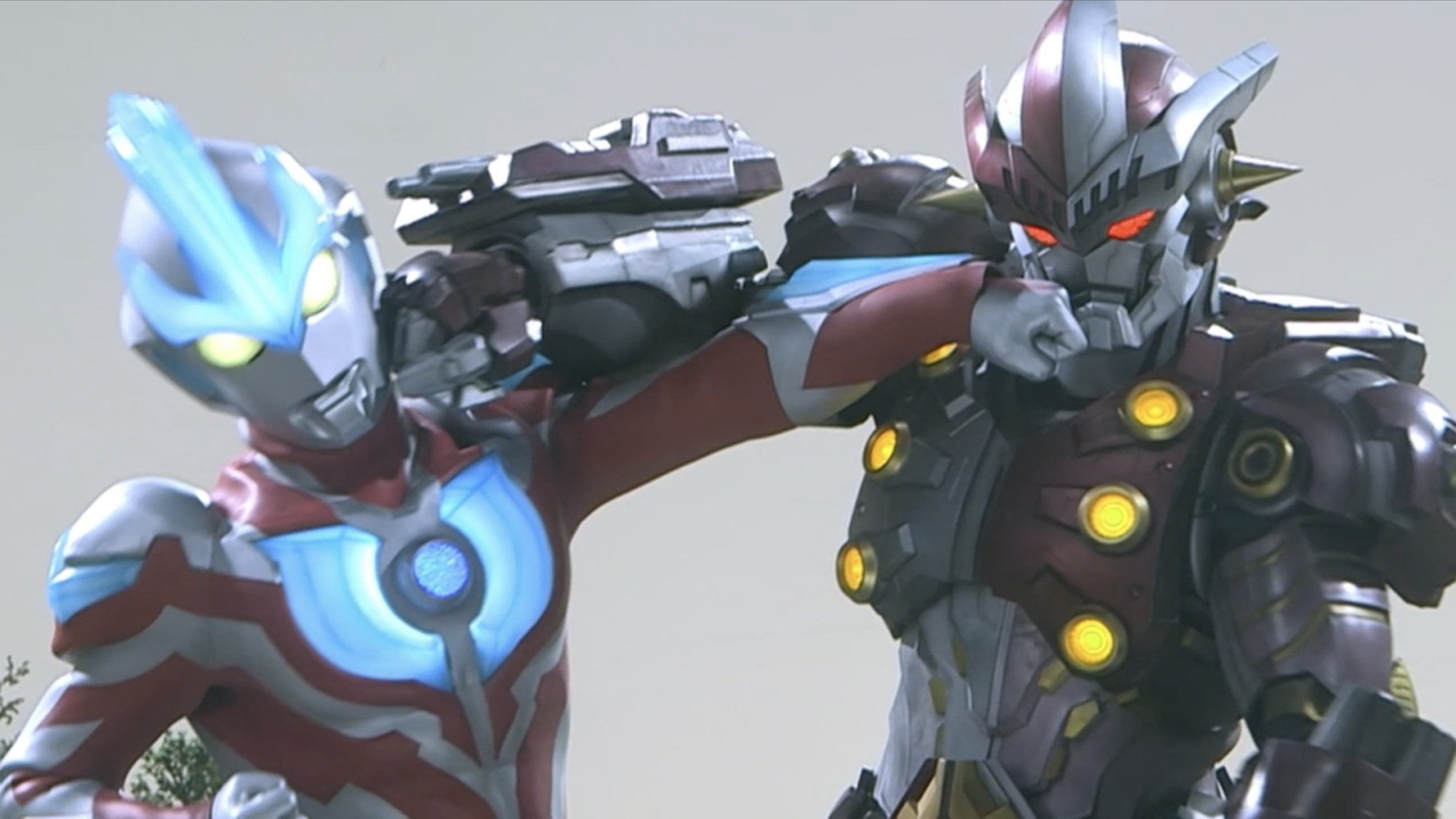
Viewers already know from previous episodes that Jean-Killer’s real master is Tomoya Ichijoji (Takuya Kusakawa), the sulky youth who’s lurked in the edges of the show. Alien Valky corrupted Tomoya with the Dark Spark at some indeterminate time in the past because Tomoya is a boy who has no dreams. The heir of the mega-wealthy Ichijoji Group, Tomoya has never needed to achieve anything or have any ambitions in life. This has left him as a shell of a person who yearns for anything to fill that dream-void. It’s Hikaru who at last discovers a dream for the disaffected Tomoya: defeat Ultraman Ginga.

This is the core drama of the two-parter — Hikaru/Ginga vs. Tomoya/Jean-Killer — but it only starts to matter in Part 2, “The Battle for Dreams.” We didn’t need a Kenta subplot that gets quickly discarded, or Hikaru again changing into Alien Kemur. All that Part 1 achieves is getting the captive Ultraman Taro doll out of Jean-Killer’s grasp and throwing in some fight variety when Ginga and Jean-Killer have a brief tussle in outer space. I appreciate this change in the style of the action — anything to get us away from that same drab field with its beige soundstage sky. But it would’ve worked far better as a single episode where the space battle was a key part of the actual climax.
Tomoya is the show’s most interesting character: his conflict, a lack of a dream and need to fill it with something negative, sets him apart from the four main friends, all of whom have uplifting goals to drive them. Unfortunately, doing so little with Tomoya in the first several episodes places too great a burden on him here. A bit of tweaking in the first few scripts to give Tomoya more setup and encounters with the other characters would’ve made it easier to deliver a single strong episode rather than two diluted average ones. It feels like Ultraman Ginga wants to earn the feeling of an epic story simply by spreading that story across two parts. But greater length doesn’t automatically mean greater impact.
Jean-Killer is the most epic element. This cool-looking robot with an alt-spaceship form first appeared in Ultraman Zero Side Story: Killer the Beatstar, a 2011 direct-to-video release. The version here is unrelated to the earlier one, although it goes through a similar transformation into the more heroic Jean-Nine. The change to Jean-Nine and the introduction of the Gunpad are more blatant additions of merchandisable toys, but I’ll cut the robot some slack. It looks good, far better than most of the reused costumes seen so far.
The episode’s other “new” villain is Tiga Dark, which is just an Ultraman Tiga costume spray-painted charcoal. Tiga Dark pops up so Ginga and Jean-Killer have a reason to team up during the finale. This is another undercooked element that could’ve been tossed or reworked to create a streamlined single episode.
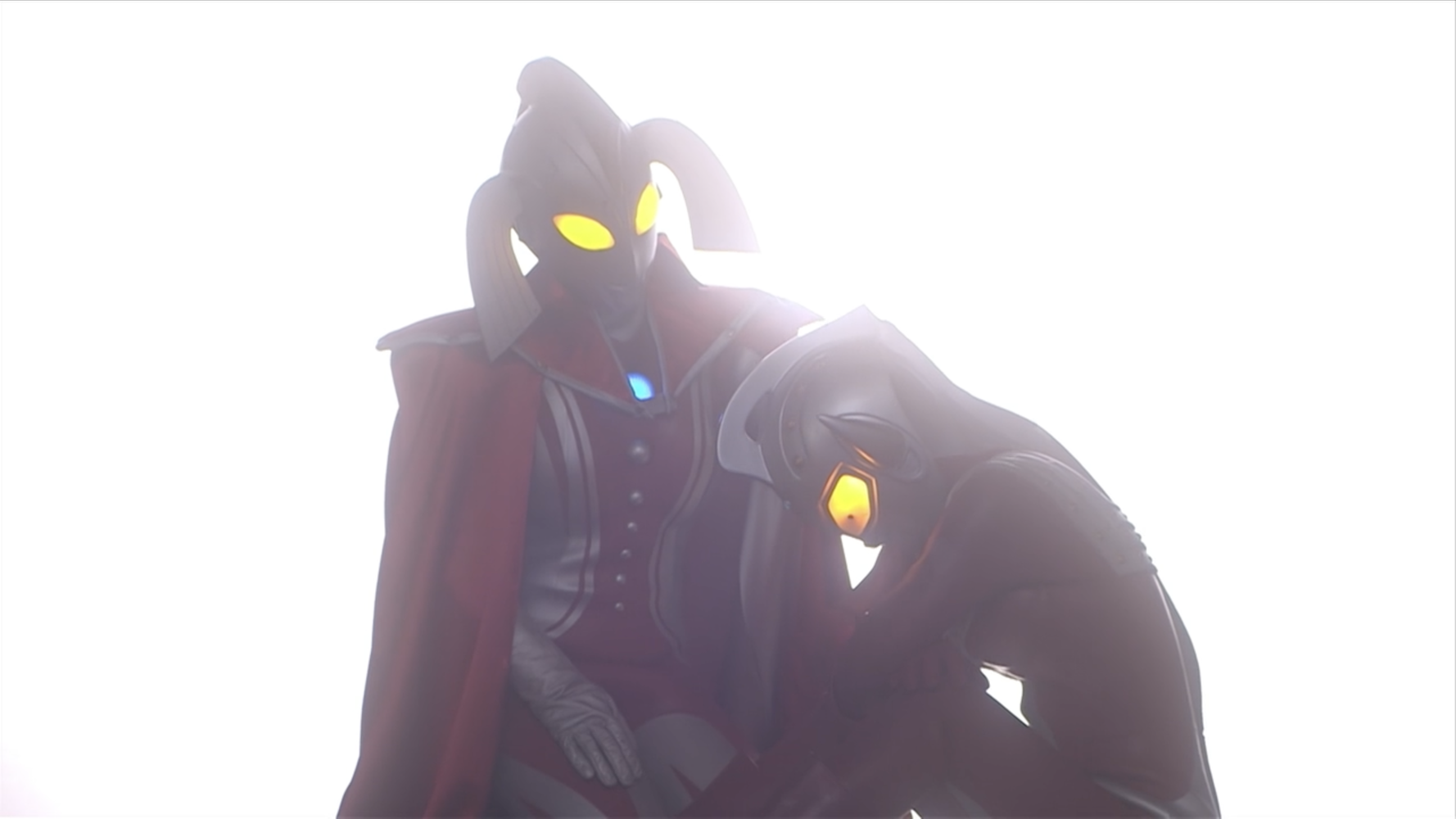
Hikaru also briefly transforms into Doragory, a famous choju from Ultraman Ace, during the first episode to fight Jean-Killer. It’s more needless space-filling, and Doragory doesn’t visually fit the episode at all. Choju generally look too bizarre for the designs of the New Generation Hero shows.
Ms. Shirai, the school principal, has a slightly larger role since mostly vanishing after her introduction in “Town of Falling Stars.” She’ll have a key part at the end of the season, but right now it’s unclear why she’s still hanging around except to remind viewers she exists. Her main job is to drop exposition about Tomoya’s family that triggers a flashback between him and his wealthy father. The rest of the cast continues to acquit themselves well, even if Chigusa and Misuzu have nothing much to do except cheer from the sidelines.
The two-parter offers something like a redemption arc for Tomoya, but it doesn’t go all the way, leaving open the possibility of further antagonism between Tomoya and Hikaru, which never really emerges. There’s a mild wrap-up at the end to prepare for the show to go on hiatus for several months, but it only comes down to “We still haven’t figured out who’s behind the Dark Spark attacks.” It was enough to get people to tune back in when the show returned in November, so the two-parter did the minimum it needed to do. That’s worth something, I guess. Not much, but something.
Rating: Average
Previous: The Idol Is Ragon
Next: Mid-Season Special: Monster Competition

 The Ultra Project