
Directed by Akio Jissoji. Written by Mamoru Sasaki. Airdate March 12, 1967.
As soon as large numbers of children started to watch Ultra Q — a development TBS and Tsuburaya Productions didn’t predict — this episode was inevitable. Kids love monsters, and when Ultra Q changed into Ultraman, the kids got even more monsters. But as the youngsters rooted for Ultraman to defeat the monsters of the week, they also started to feel affection for those monsters. The show developed along with its young viewers, showing empathy toward these strange creatures in episodes like “Terrifying Cosmic Rays” and “Phantom of the Snow Mountains.” At last came “The Monster Graveyard,” a heartfelt and humorous memorial for all the innocent beasts who gave their lives in battle with Ultraman so children could be entertained.
Furuhashi and Ide are on regular space patrol when they discover the titular graveyard: a place where the spectral forms of monsters Ultraman has defeated and banished into the sky float for eternity. The two SSSP members spot several familiar monsters (Kemular, Antlar, Neronga) plus one they don’t recognize. Possibly it’s an earlier denizen sent into space after a battle on another planet.
When Ide and Furuhashi return to Earth, they convince the Science Patrol to honor the monsters’ spirits with a Buddhist ceremony wishing them peace. Memorial photos of Gamakugira, Gomora, and Red King line the table where the Patrol members show their respects. (Red King feels out of place, since that monster is portrayed as cruel and mean, while the others were just trying to live their lives as big creatures.)
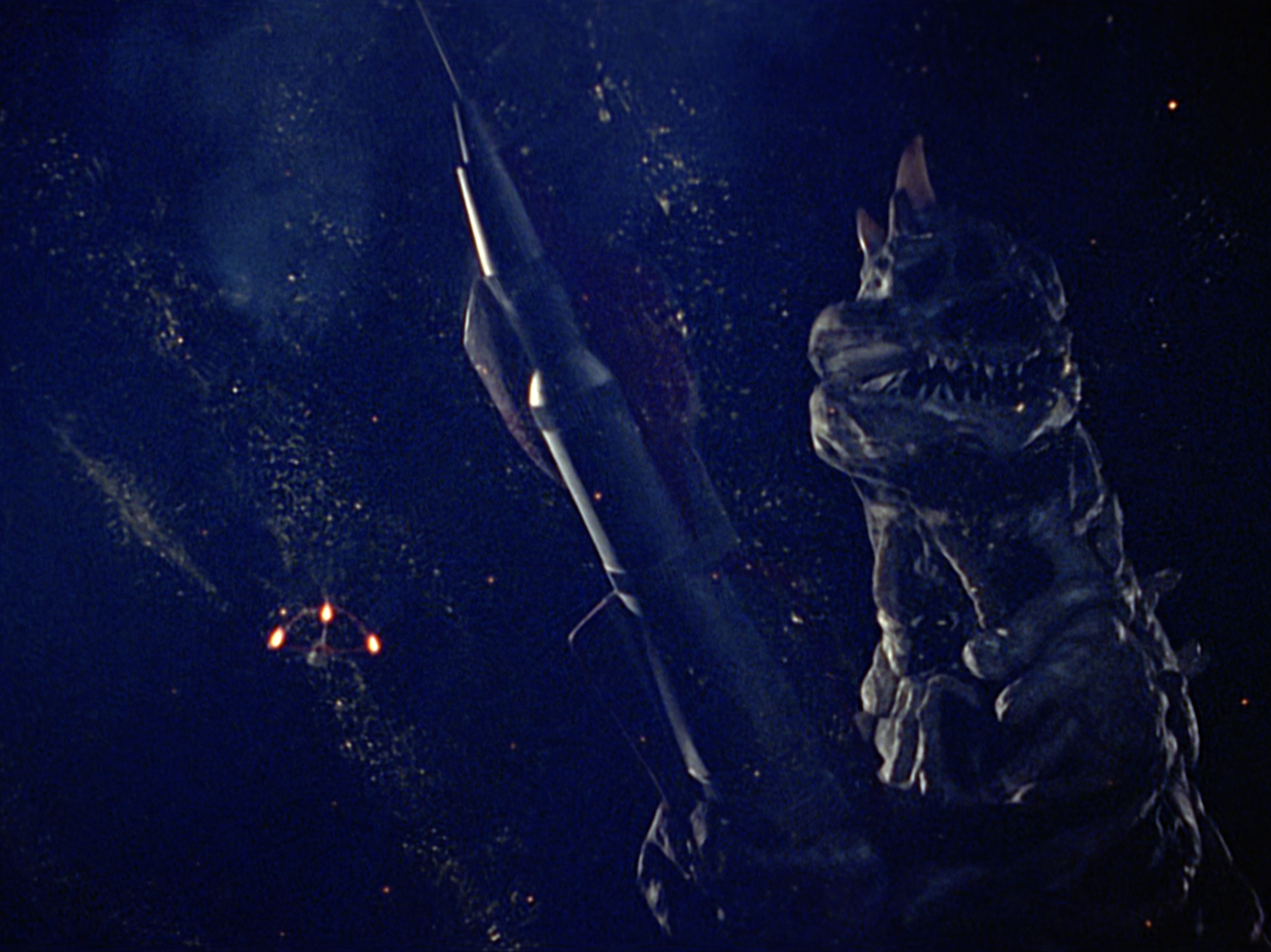
The Monster Graveyard isn’t fully at peace after the ceremony, however. The mystery kaiju, Seabozu, accidentally gets attached to a lunar rocket that forces it down to earth. The skeletal kaiju then starts a “rampage” of gloomy wandering. Seabozu shuffles around aimlessly, weighted by existential gloom from being ripped from its eternal rest. The SSSP and Ultraman abandon their normal monster-fighting methods to find a way to return the outcast kaiju to the heavenly cradle of its afterlife.
Handling direction for this monster requiem is Akio Jissoji. Jissoji’s quirky approach fits the material, which is both funny and sad. It’s humorous to see the Science Patrol treat dead monsters with the solemnity of human funerals. It’s sad to hear them talk about regret for killing the monsters, even if it’s part of their job of protecting the Earth. Jissoji brings his usual visual ingenuity to match this fusion of funereal and farcical.
What truly makes “The Monster Graveyard” a classic rather than merely an interesting exploration is Seabozu itself, the Monster That Fell to Earth. Unlike the humorous lug that dropped from the sky in the last episode (which Jissoji also directed), Seabozu is a full-fledged character and one of the best kaiju to appear on any Ultra show.
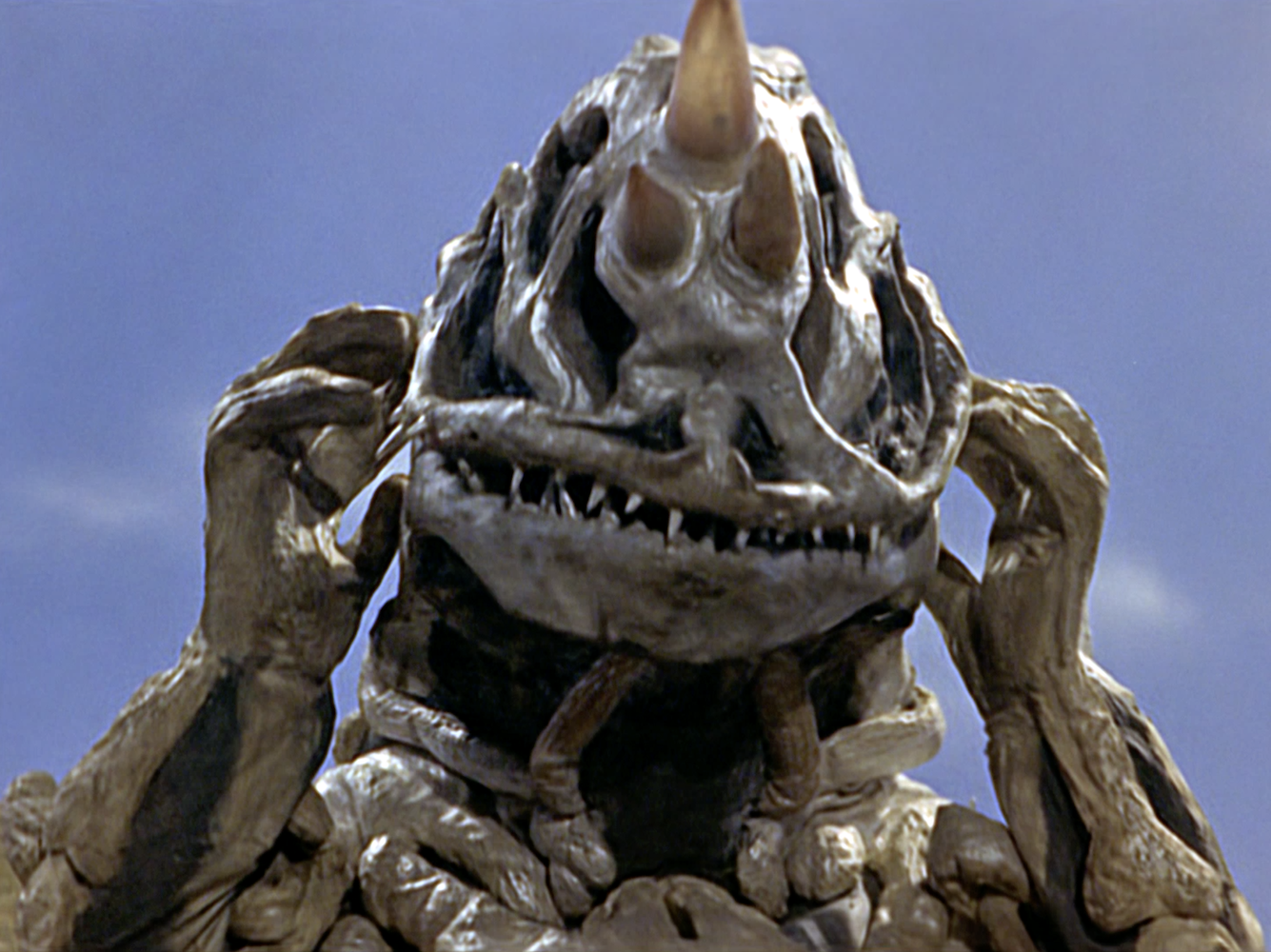
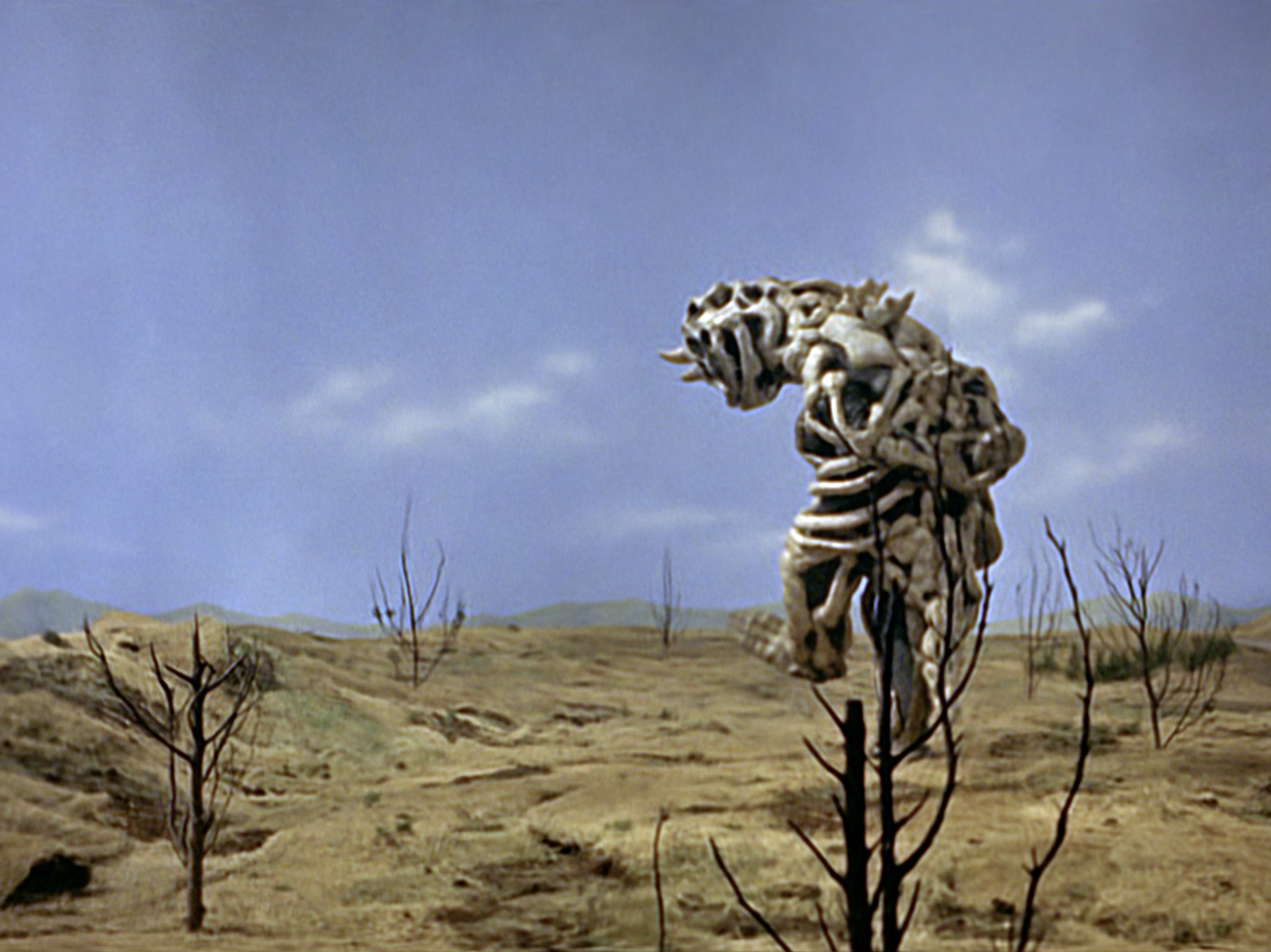
First, Seabozu looks amazing. The original concept was to build a mobile skeleton, but that would’ve required a marionette without much expressive ability. The design team instead built a full-body costume with bones over black fabric, suggesting a skeleton but allowing costume performer Kunio Suzuki (who played Gomora and the second Red King) full range to create emotion. It’s a striking look, and in another story Seabozu might have come across as a sinister beast.
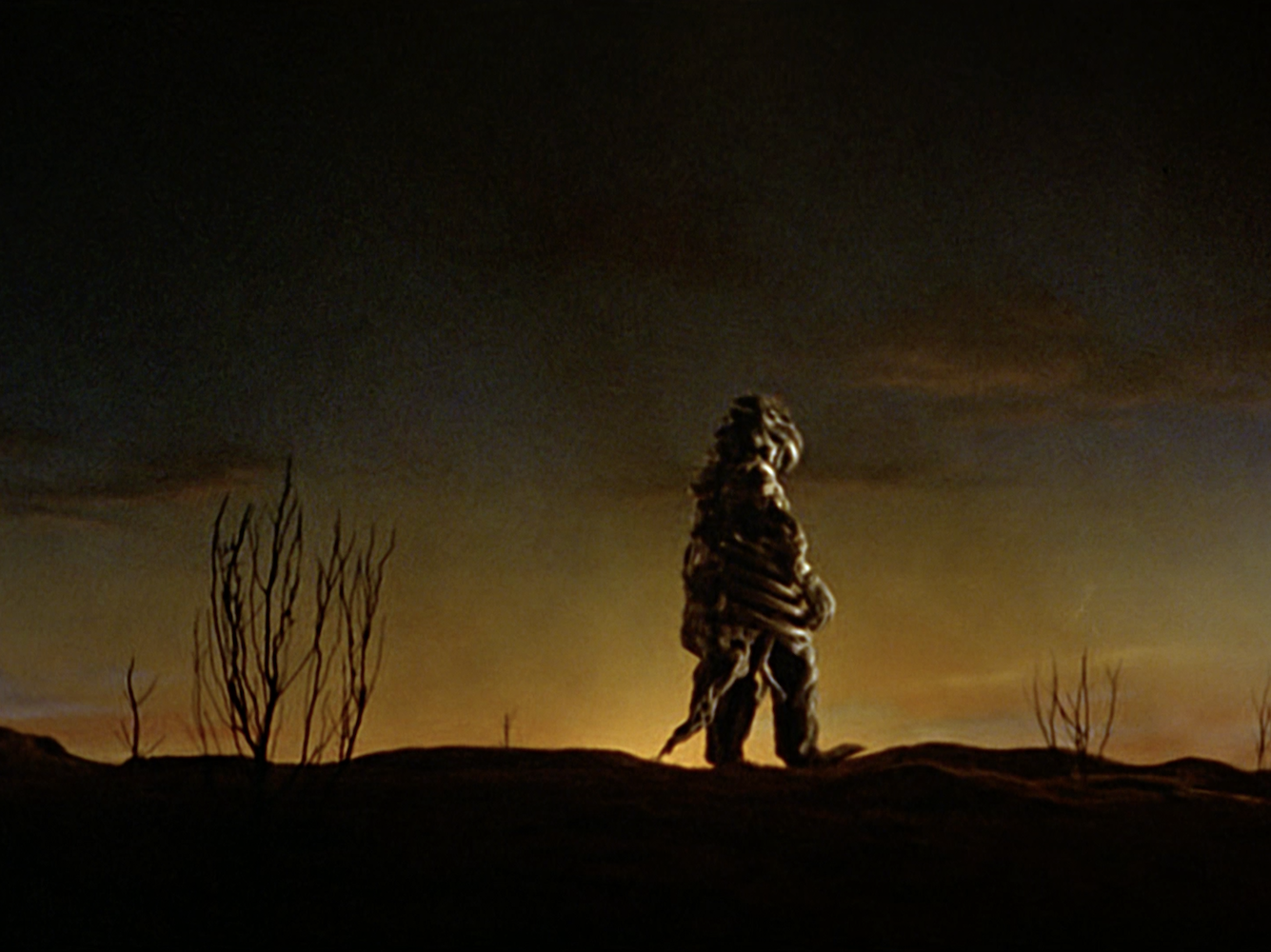
But in this story, Seabozu is a lost soul. From the moment it first appears in a city, shuffling about and roaring forlornly up at the sky, it’s impossible not to love this monster. If Charlie Brown were a giant monster, he’d be Seabozu. The poor ghost kaiju wanders around as if in a perpetual state of “Oh, good grief” after losing yet another baseball game or having the football pulled away at the last minute. Seabozu is often shown plodding along against a sunset sky: a lonesome vagrant with no place to go. It’s the perfect combination of humor and tragedy.
Suzuki’s acting as Seabozu is one of the great suitmation performances. He adds numerous sparkling touches to the monster: Seabozu walking with its hands clasped behind its back, making a “phooey” motion with its hand, or kicking at dirt and accidentally falling on its rear. Seabozu doesn’t even cause much damage; the worst it does is climb up a building because the poor beast just wants to get closer to the sky it misses so much.
When Ultraman confronts Seabozu, Jissoji compresses the fight with multiple freeze frames. He uses this technique in several of his Ultra show episodes (notably in Ultraseven’s “The Marked Town”), but it serves a specific purpose here: it prevents Ultraman from looking like a bully toward poor Seabozu. Ultraman doesn’t even get his usual heroic theme music. Once it’s clear Seabozu has no intention of fighting, Ultraman has to switch tactics.
This is the most emotional acting that Bin Furuya gets to do as Ultraman. He backs off the heroism and instead tries to corral Seabozu like a strict parent. Suzuki keeps up his superb work, playing Seabozu as a chastised child or pet who doesn’t know what to do. It’s one of the most indelible moments of the entire show, a bittersweet comedy and comical tragedy. Monsters are people too!
Seabozu’s origin remains a mystery. All the other monsters in the Monster Graveyard are kaiju Ultraman defeated during the show. Seabozu must come from an earlier time, hinting at a deeper Ultra lore. I could imagine Ultraman Noa, the warrior figure worshiped in Baradhi, as responsible for Seabozu’s fate centuries ago.
Seabozu has rarely shown up in other Ultra shows, and that’s for the best. This isn’t a monster you want to see get into an actual fight or threaten anyone. The Monster Graveyard, however, has continued to appear and became an essential part of Ultra series mythology.
“The Monster Graveyard” is the last of the episodes Akio Jissoji directed for Ultraman, and I think it’s the best of the bunch. Good journey to you, Seabozu.
Rating: Classic
Previous: A Gift From the Sky
Next: Don’t Shoot, Arashi!
 The Ultra Project