
Directed by Noriaki Yuasa. Written by Niisan Takahashi.
If you ever wanted to know what it looks like when a major studio perches on the verge of going under, allow me to present Exhibit A: Gamera vs. Zigra. You can feel the Japanese film industry of the early 1970s collapsing all around you as you watch.
Daiei Film Co. Ltd.’s impending bankruptcy goes a long way toward explaining why the Gamera movies took such a precipitous plunge in quality from Gamera vs. Jiger to this movie, which is easily the worst of the original seven Gamera films. The steepness of the fall is stunning: this is what all Japanese monster movies must look like to people who dislike Japanese monster movies, and one of the reasons fans like myself feel we have to constantly defend the genre.
Gamera vs. Zigra is painful viewing: rock-bottom production values, an aggravating non-story, unbearable child heroes, and a thrill level approaching zero. Even kid viewers will have a hard time trudging through it — and English-speaking kids will have to watch it via the atrocious Sandy Frank dub, which makes the film even worse.
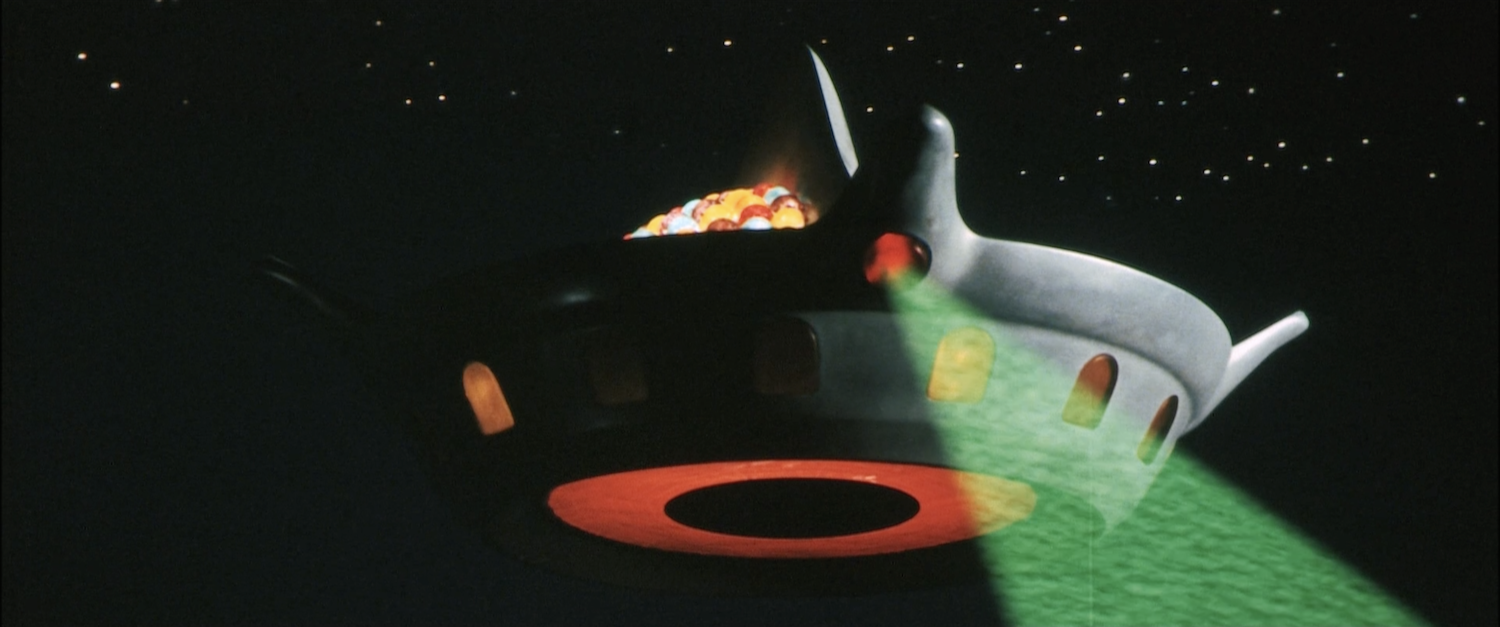
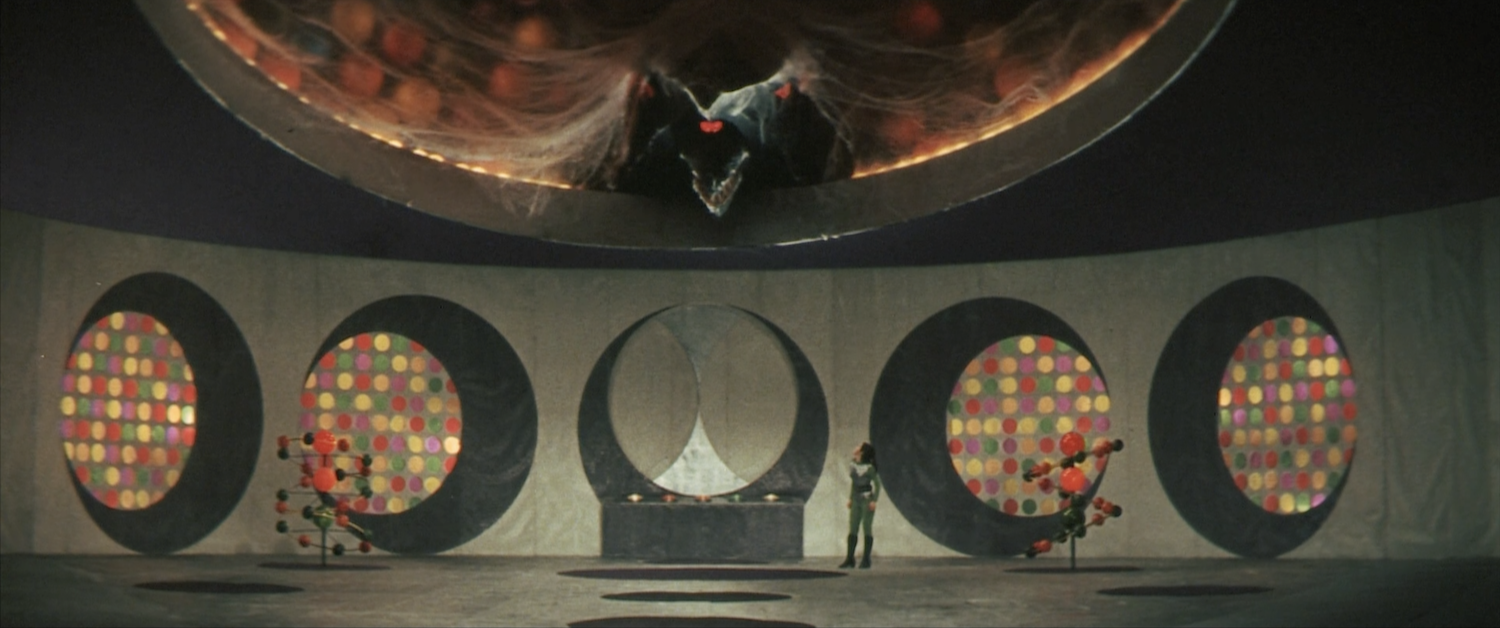
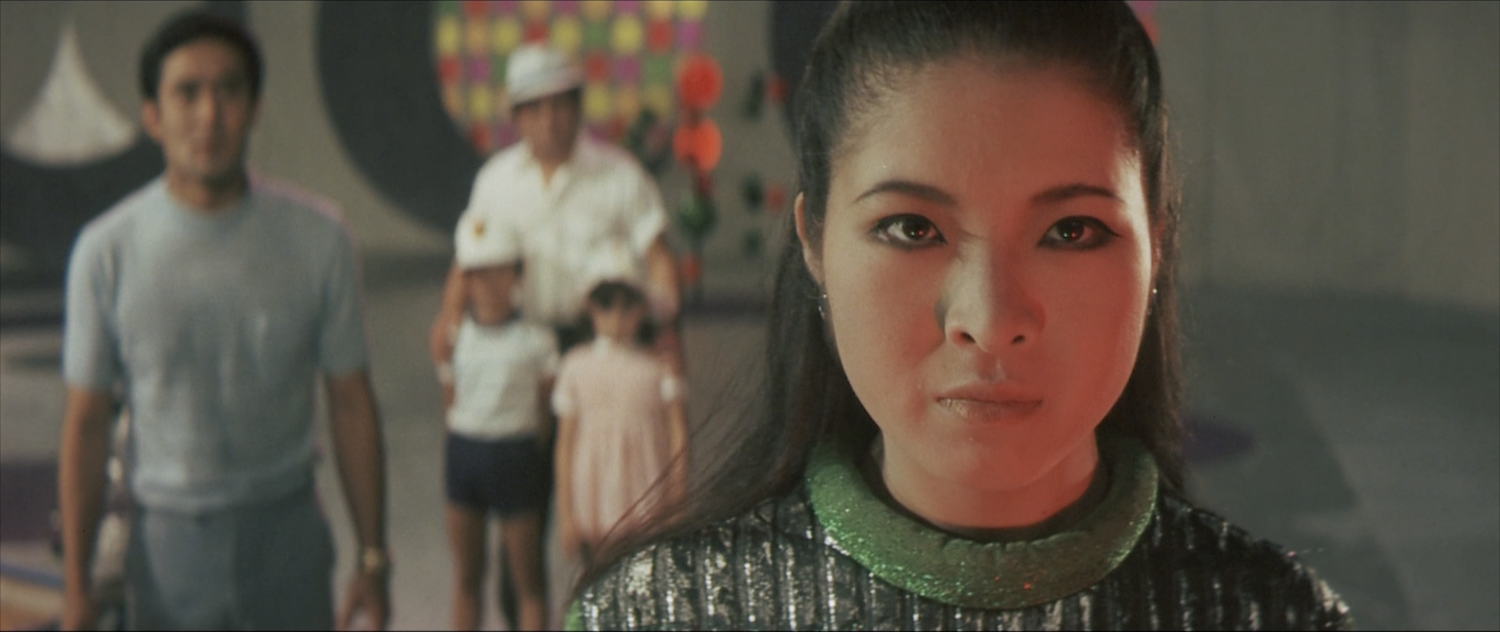
The story plays the same tune as the earlier movies, but monotonously and out-of-tune. Alien creature Zigra comes to Earth — in an admittedly cool ship that looks like a bowl of jellybeans — to conquer the planet with its supposedly superior technology and turn humans into its food. But first, it must defeat Gamera and two pesky little kids, an order of operations I don’t understand. Zigra uses a mind-controlled human woman to carry out its incompetent scheme with even greater incompetence. Gamera faces Zigra’s giant monster form, gets defeated, then sits out the middle of the movie while the adults do nothing and the kids bother everyone. Gamera revives, defeats Zigra, the Gamera theme plays, the end.
The classic Gamera movies were always lower-budgeted affairs, even compared to the lesser Godzilla entries of the time. But the filmmakers managed to make the most of the funds available to craft colorful adventure stories. They couldn’t pull that trick off here: Gamera vs. Zigra drowns in cheapness, making for a cramped, ugly, flaccid experience.
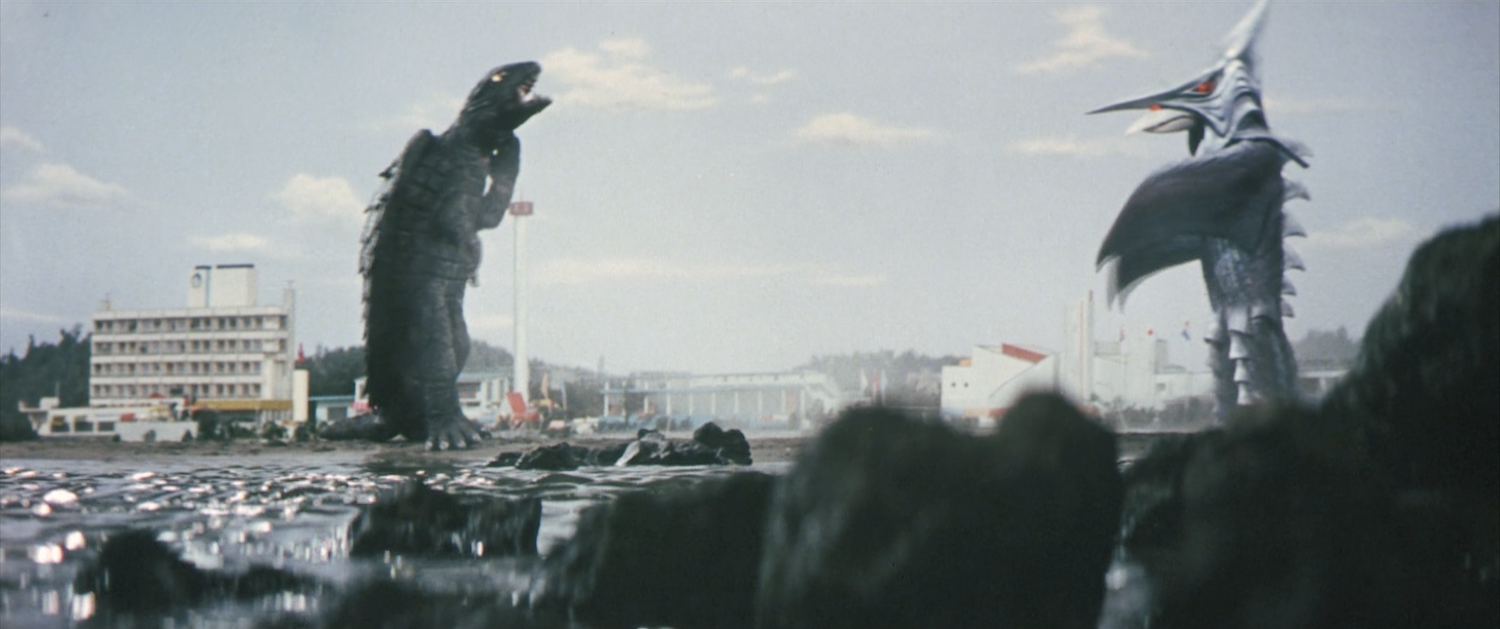
The low budget gets deeply depressing. Most of the story is locked in the same location, Kamogawa Seaworld, a decrepit-looking aquatic-themed amusement park. The running time is padded with footage of orca and sea lion shows at the park, plus the infamous “fish argument sketch” between a dolphin trainer and a Seaworld hotel owner over who gets the only catch of fish from the day.
There’s no urban destruction and little in the way of model work for the VFX scenes. The most extensive models appear on the Moon base in the opening scene, which gives false hope for the effects for the rest of the movie. When Zigra triggers an earthquake in Tokyo, devastating the city, we only hear talk of it and a few shots of some wreckage on a viewscreen. That’s how bare-bones things have gotten. (Nobody hanging around Seaworld seems too upset about the thousands of deaths the Tokyo quake must have caused.)
The biggest mistake the movie makes has nothing to do with the budget. It’s the casting of the two child leads. I have nothing against actors Yasushi Sakagami as Kenichi and Gloria Zoellner as Helen. They’re little kids, and they do as much as you can expect from children too young to carry a special effects picture. It’s the filmmakers’ fault for deciding to target the Gamera series even younger and aiming toward the under-eight set with their “stars.” That’s simply too young for the leads.
Kenichi and Helen are portrayed as twerps who are annoying in every scene, doing all they can to irritate the adults (and viewers) without advancing the story. Kenichi is the poster child for the “Kenny” of Japanese monster films: the monster-kid brat you start to loathe after only a few scenes. Poor Gloria Zoellner is out of her depth, and it feels like any child of comparable age (six? seven?) could’ve pulled off the part as well.
It’s exasperating that it’s taken this long for the Gamera movies to make a girl one of the two child heroes, only to botch it with a character as young and useless as Helen. Looking back at Gamera vs. Jiger, it was a missed opportunity not to make the character of Tommy a girl. By Gamera vs. Zigra, it’s too late to turn into the skid with a female lead when the characters are too young to make effective heroes.
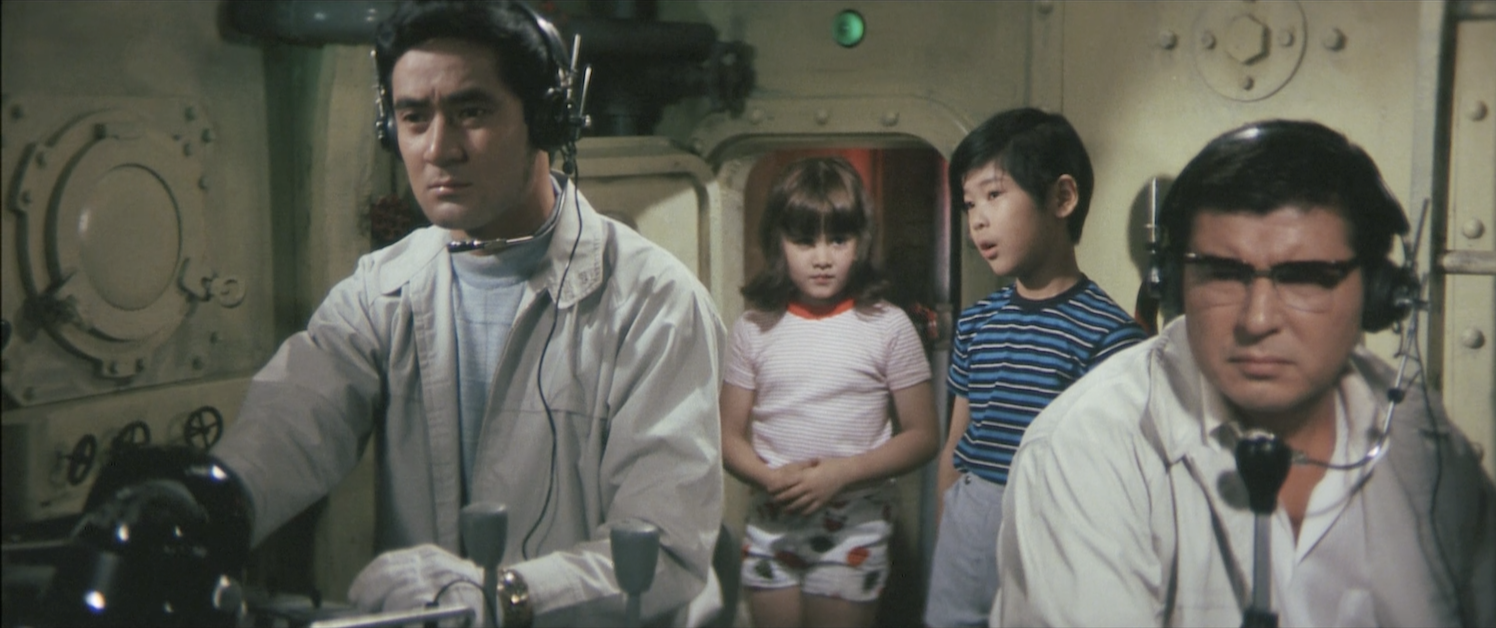
What the film tries to pass off as “thrills” are embarrassing. The UN makes a single half-hearted attack on Zigra’s starship, and then the whole world collectively gives up. A large chunk of the film, before Gamera and Zigra even have their first encounter, has Zigra’s hapless agent (Eiko Yanami) dashing around an empty Seaworld trying to catch two kids who keep outwitting her with subpar Scooby-Doo antics. It’s the low point of the Gamera series, no doubt. The draggy scene with a trapped bathyscaphe that eats up most of the second half is hardly an improvement, and it’s a perfect example of how useless Kenichi and Helen are. Of course, their fathers are useless in this scene as well. Uselessness all around!
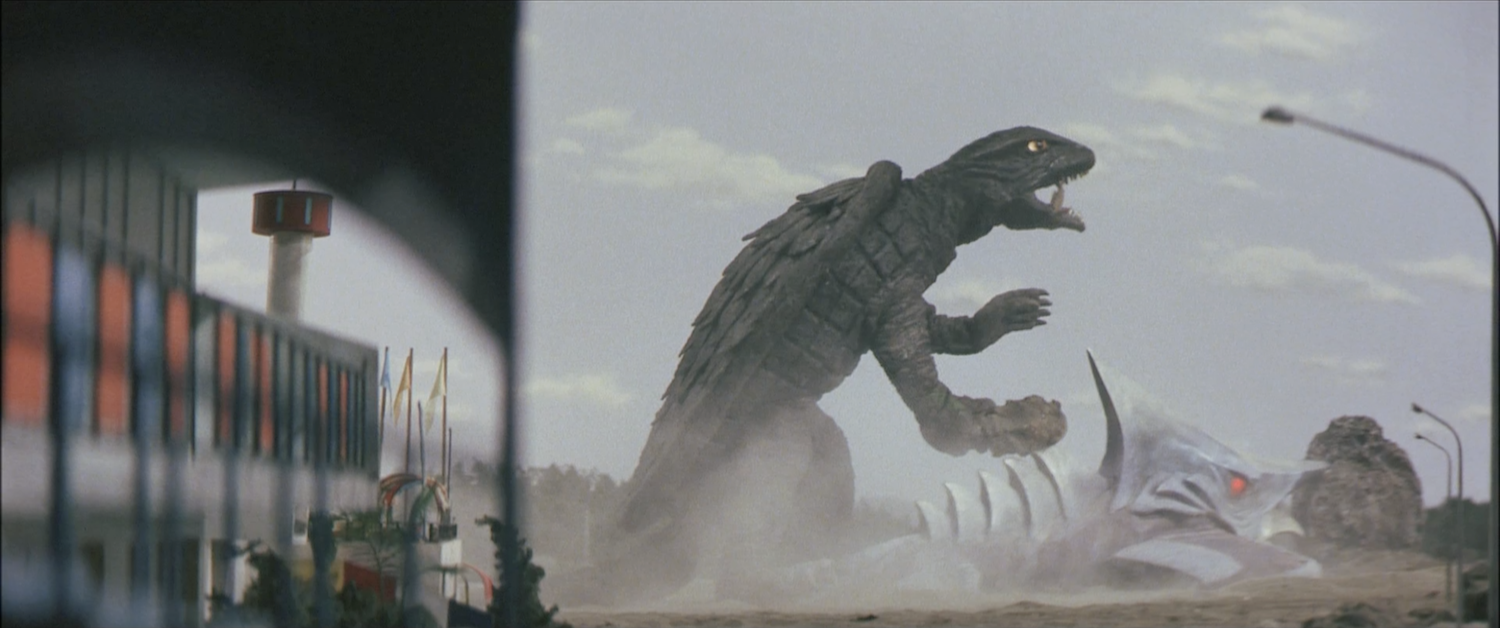
The monster action can’t save the movie. Zigra and Gamera spend most of their time “underwater” — i.e. a blank set with a few rocks. Gamera doesn’t encounter Zigra until 45 minutes into the movie, first attacking Zigra while it’s in jellybean spaceship form. They engage in a lifeless fight that puts Gamera into another long coma. Zigra makes threats toward the Earth it can’t possibly back up: this is an alien that has only one human tool, and she isn’t even capable of dodging thrown stuffed animals. Gamera finally wakes up due to a random lightning strike (again, the human characters contribute nothing) and gets into a tedious underwater fight that concludes with a few minutes of a land engagement.
And — it’s — all — so — boring!
As a final insult, the film takes a preachy stance on the environment, letting the Seaworld marine biologists spout about pollution and science ruining the planet. This type of sledgehammer messaging makes the same year’s Godzilla vs. Hedorah feel like a model of restraint.
There are a few minor positives. Until reduced to scrambling around Seaworld dressed in a bikini, Eiko Yanami makes an intimidating figure as Zigra’s human pawn. Zigra’s design, based on the goblin shark, is better than the film deserves, although the upright suit during the brief surface scenes looks clumsy. It’s silly and amusing to see Gamera play Zigra’s dorsal spines like a xylophone. It’s the only stupid-fun moment in the dull monster action.
Gamera vs. Zigra is the only of the original seven Gamera films not to get a US release of any sort soon after its Japanese debut. AIP didn’t pick up the film for TV distribution (probably because they actually watched it), so it never appeared on television in the ‘70s and early ‘80s. It didn’t have its US premiere until it turned up on the USA Network in 1987 as part of the package from distributor Sandy Frank. The horrendous dub makes the movie almost unwatchable. MST3K rescued it in the early ’90s, and the film’s endless faults make it one of the finest of their Gamera-riffing episodes.
Although Gamera vs. Zigra feels like a death knell, director Noriaki Yuasa and producer Hidemasa Nagata did have plans for another film, which would pit Gamera against a two-headed monster. Daiei collapsed before it could happen.
There’s technically one more film in the Showa Gamera series: Gamera Super Monster. I’ve decided not to review it here. It contains only a few minutes of new special effects footage; the rest is old Gamera footage stitched together with a new story. You can read my opinion of it on my Letterboxd review, and that’s longer than the film deserves.
Rating: Poor
Previous: Gamera vs. Jiger
 The Ultra Project