Directed by Tomoo Haraguchi. Written by Kenichi Araki. Airdate July 24, 2013.
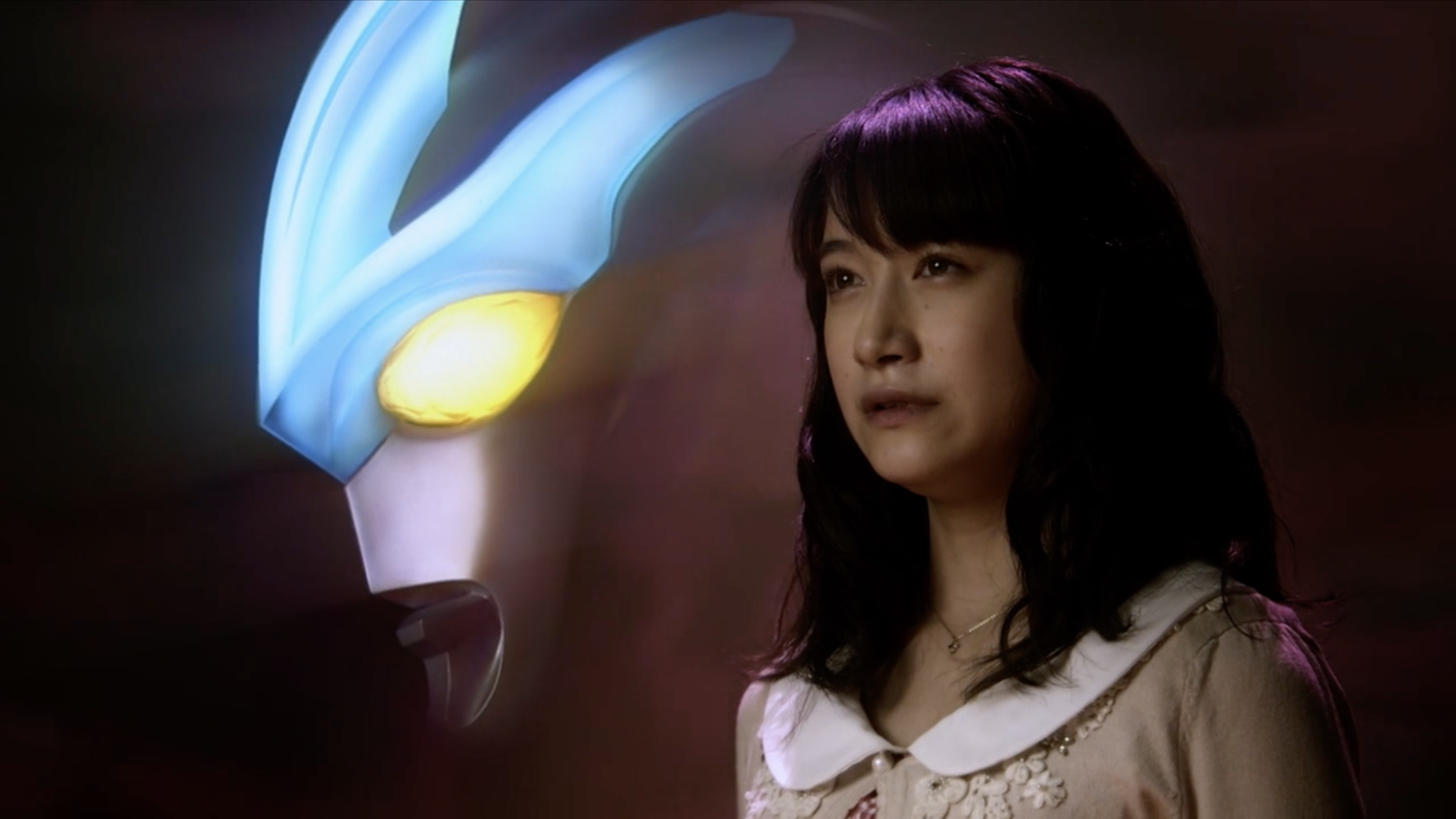
The fourth of the show’s leads, Chigusa Kuno (played by the mononymous Kiara), now gets her own episode to explore her dreams and frustrations. Chigusa wants to be an idol, a type of Japanese popular entertainer. Considering how exploitative and manipulative the Japanese idol system is — it’s basically indentured servitude to a management agency that controls your professional and personal life — this isn’t an ambition I’d wish on anyone. But it’s a dream that makes sense for a teen girl like Chigusa. At several points in the episode, we see her dancing in one of the empty school rooms, practicing and imagining what it might be like to be an idol, and her longing for that lifestyle seems legitimate and heartfelt.
Two photographers arrive at the school for a model shoot, but their model abruptly cancels on them. They pick Misuzu to replace her. Misuzu has zero interest in modeling, and Chigusa starts to stew with jealousy as the photographers snap photos of Misuzu around the school. (Pretty dull images. I’m not surprised their first model canceled.)
You’ll sniff out where this is heading if you’ve seen the previous episodes. Chigusa’s envious, angry thoughts about Misuzu will make her the next victim of Alien Valky and the Dark Spark. This is a good natural development for the show, as it moves the Dark Spark victim, the episode’s “dark soul,” from an outsider and into the main circle of friends. That pushes the stakes higher than before.
If only the writers had picked a different kaiju for Chigusa to turn into. Ragon, the big-eyed mouth-breathing amphibian, is all wrong for the story. Although a famous monster in the Ultra franchise, Ragon has never worked for me outside of its first appearance in Ultra Q, where it was a horror creature often kept in the dark. Maybe the writers thought Ragon’s established weakness for music could tie into Chigusa’s idol aims. Or maybe it was the only old suit from the warehouse they had available that week.
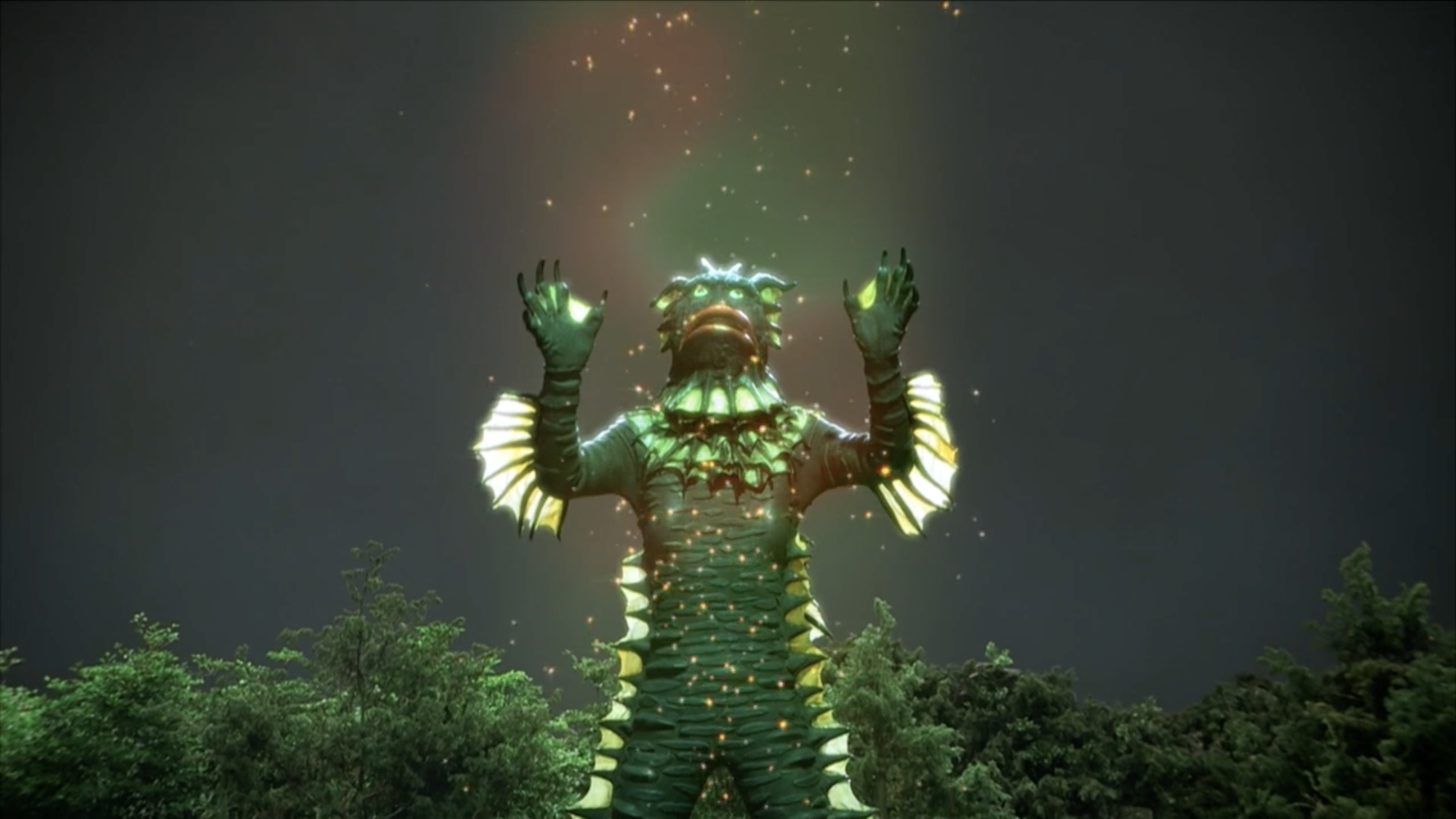
Whatever the reason for picking Ragon, it looks silly. The scenes with Ragon, especially when it changes into giant form for another boring special effects scene in a field next to the school, harm the drama elsewhere with Chigusa. The episode hints briefly that maybe Ragon isn’t Chigusa, and I wish the writers had gone with this twist rather than the straightforward reveal.
I’m only four episodes in, and already I am so tired of this same field and patch of trees where an identical fight pattern gets repeated over and over. It’s clockwork: the new Dark Spark monster appears, Hikaru turns into the Dark Spark kaiju from the previous episode (King Pandon in this case), and then into Ultraman Ginga, and an uninteresting fight ensues.
Calling what happens with Ragon a “fight” is pushing it, however. Hikaru isn’t going to beat up his friend Chigusa, even if she’s currently trapped in a grotesque fish monster body. Instead, Hikaru tries some Ultraman Cosmos-style soothing powers and reaches out to appeal to Chigusa’s true nature. It’s maudlin. Chigusa’s story deserved something a bit deeper.
The confrontation with Ragon isn’t the end of the fight. The writers must have known they didn’t have an exciting closer for the episode. To add some fireworks, they tacked on Ginga’s first encounter with Jean-Killer, a robot under Tomoya’s control who’ll play a major part in the rest of the show. This switch to a brief fight with Jean-Killer is jarring, but without it the ending would’ve deflated to nothing. It creates a hook to the next episode, when Tomoya will finally move from the shadows to take up a main adversary role.
Despite my criticism of “The Idol Is Ragon,” I think Chigusa’s story is handled with enough acting and writing skill to keep the episode afloat. We haven’t seen much from Chigusa until now, and she shows promise as an energetic presence in the show. Her jealousy of Misuzu is a good focal point for the Dark Spark, and her dreams have passion regardless of what I may think of the idol system. This is as effective as Ultraman Ginga’s YA drama has been so far. If the creative team couldn’t afford anything else, at least they got this part right.
Rating: Mediocre
Previous: The Twin-Headed Flame Beast
Next: The Hater of Dreams / The Battle for Dreams

 The Ultra Project