
Directed by Leslie Norman. Written by Jimmy Sangster. Starring Dean Jagger, Edward Chapman, Leo McKern, Michael Ripper, Anthony Newley.
I’d love to offer a Halloween-themed review of an Ultra episode like last year. But the calendar didn’t align this time, and I had to use up the review of Ultraman Tiga’s Halloween episode in March. So to celebrate horror season this year, I’m returning to Hammer Films and the second of their influential Quatermass Films. The one that isn’t actually a Quatermass film but is trying to pass itself off as one — and doing a decent job of it. X the Unknown doesn’t have the intensity, pacing, or paranoia of the three true Quatermass films, but it’s still above average Atomic Age horror with intelligence, several strong performances, and a few genuinely chilling sequences.
X the Unknown came about after the massive success of The Quatermass Xperiment. Hammer wanted a sequel, but original writer Nigel Kneale refused to let them use his character Dr. Bernard Quatermass. Hammer would have to wait until the next Quatermass television serial before they could make an official sequel, Quatermass 2. In the meantime, they moved forward with a Quatermass-alike film. They hired Jimmy Sangster, an experienced production manager at the studio, to write the screenplay.
Although Sangster had never written a script before, Hammer trusted him with the job because his production experience gave him an important advantage: he knew how to write a script that could be filmed on a tight budget. X the Unknown was budgeted lower than The Quatermass Xperiment, which was already an exercise in economy.
Sangster had a knack for structure and keeping stories lean, focused, and filmable. He also was a good idea man, and X the Unknown has a visceral concept at its core that would become a horror movie staple: the blob monster. This was almost two years before The Blob glooped its way through US theaters.
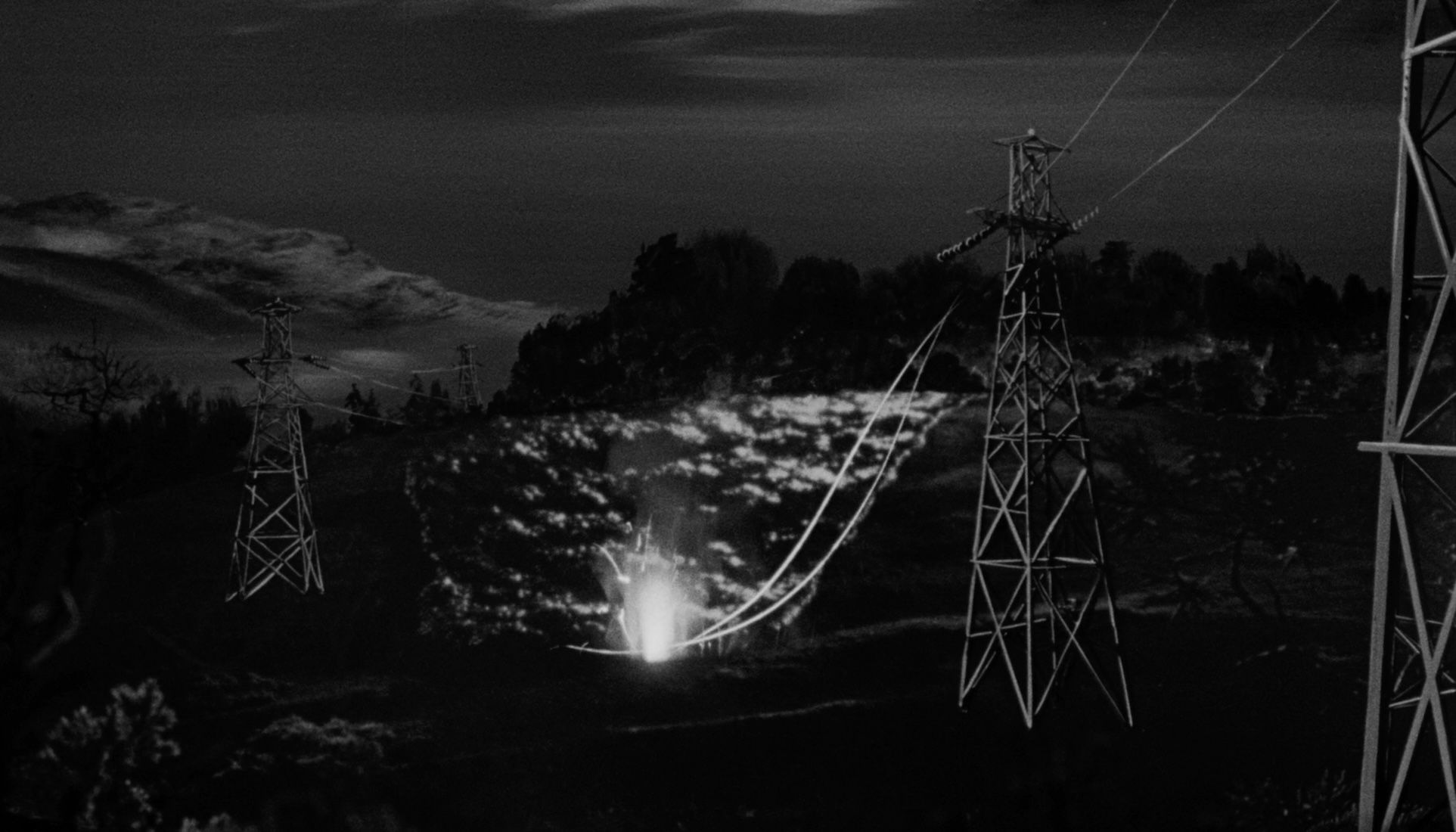
The story takes place in Scotland, with its primary location a cost-saving empty gravel and mud pit. While the Royal Army is conducting radiation detection exercises in the pit, they come across an abnormal spike in radiation. A huge fissure rips open in the ground, and one soldier dies from radiation burns and another is seriously scarred. This is the start of a slate of mysterious radiation deaths in the area and a mystifying theft of radioactive material from the Atomic Energy Establishment at Lochmont by an intruder who seems able to bypass normal barriers.
American scientist Dr. Adam Royston (Dean Jagger, the Hollywood “star” cast as the pseudo-Quatermass) is called in to look into the strange occurrences. He’s assisted by Mac McGill (Leo McKern), a representative from the United Kingdom Atomic Energy Commission who serves as the movie’s police detective figure. They both face resistance from the stuffy head of the Establishment, John Elliott (Edward Chapman), who doesn’t believe there’s a serious threat.
Dr. Royston eventually hypothesizes — correctly, of course — that they’re dealing with an organism from the deep layers of the Earth that burst up through the fissure to seek radioactive energy to feed on. Essentially, intelligent radioactive mud. It’s a weird concept, and the movie doesn’t explore the specifics of the entity in any depth. But this mystery works in the movie’s favor — especially when the killer mud is kept mostly off screen. (The visual effects aren’t terrible, but the tiny budget doesn’t allow for the scope they really need.) There’s a Lovecraftian nightmare touch to this fully inhuman and incomprehensible danger from Earth’s primordial past.
The director initially hired to oversee X the Unknown was Joseph Losey, a leftist American filmmaker who was blacklisted in Hollywood. Losey was an exciting choice, but he only worked on the movie for a few days before departing, ostensibly for health reasons. Sangster, however, has hinted that Losey was dismissed because Dean Jagger objected to working with a blacklisted director.
Losey’s replacement was Ealing Studios regular Leslie Norman. Norman brought technical expertise to the job, but nobody on the film had anything positive to say about him. According to camera operator Len Harris, Norman was terrible at directing the actors. Jagger in particular disliked him and probably was wishing to have Losey back. “The thing we disliked the most [about Norman],” Harris said, “was his using abusive language through a loud hailer for all to hear. That simply wasn’t done at Hammer!” Unsurprisingly, Norman never directed another film for the studio.
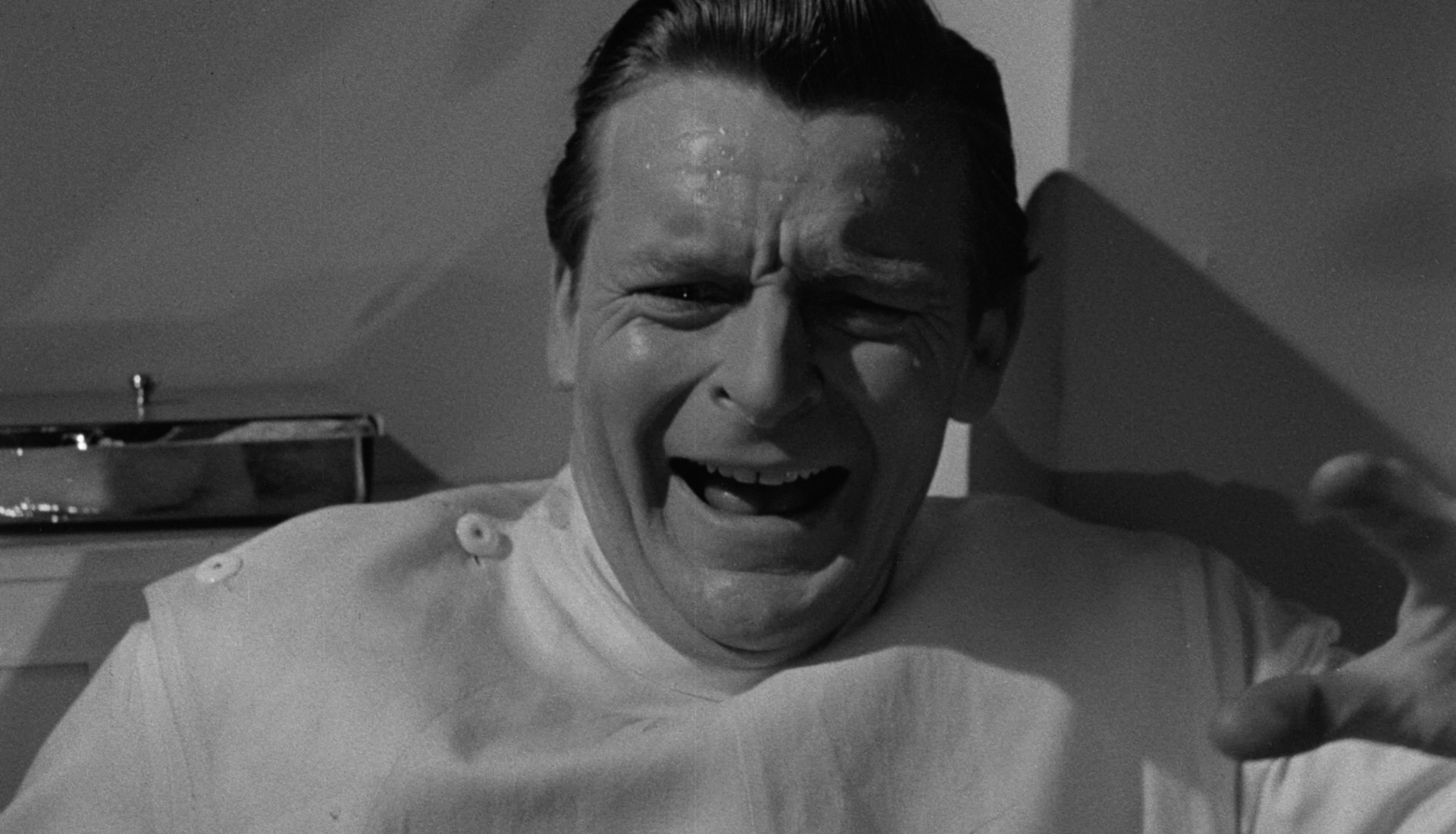
Forgetting for the moment Norman’s rancid reputation with the crew and actors, he does ably handle the suspense and technical aspects of the movie. The early attacks when the creature is hidden from the audience are eerie and shocking, with striking lighting and a creepy “static” sound effect to indicate the monster’s proximity. One of the best sequences has a doctor and a nurse fooling around in an x-ray room — a moment that might have come from a slasher film except it’s so resolutely British — when the killer mud comes to snack on radioactive material in a vault. The scene is not only intensely staged, it has grisly make-up effects. This is the scene where X the Unknown comes the closest to reaching the terror levels of The Quatermass Xperiment.
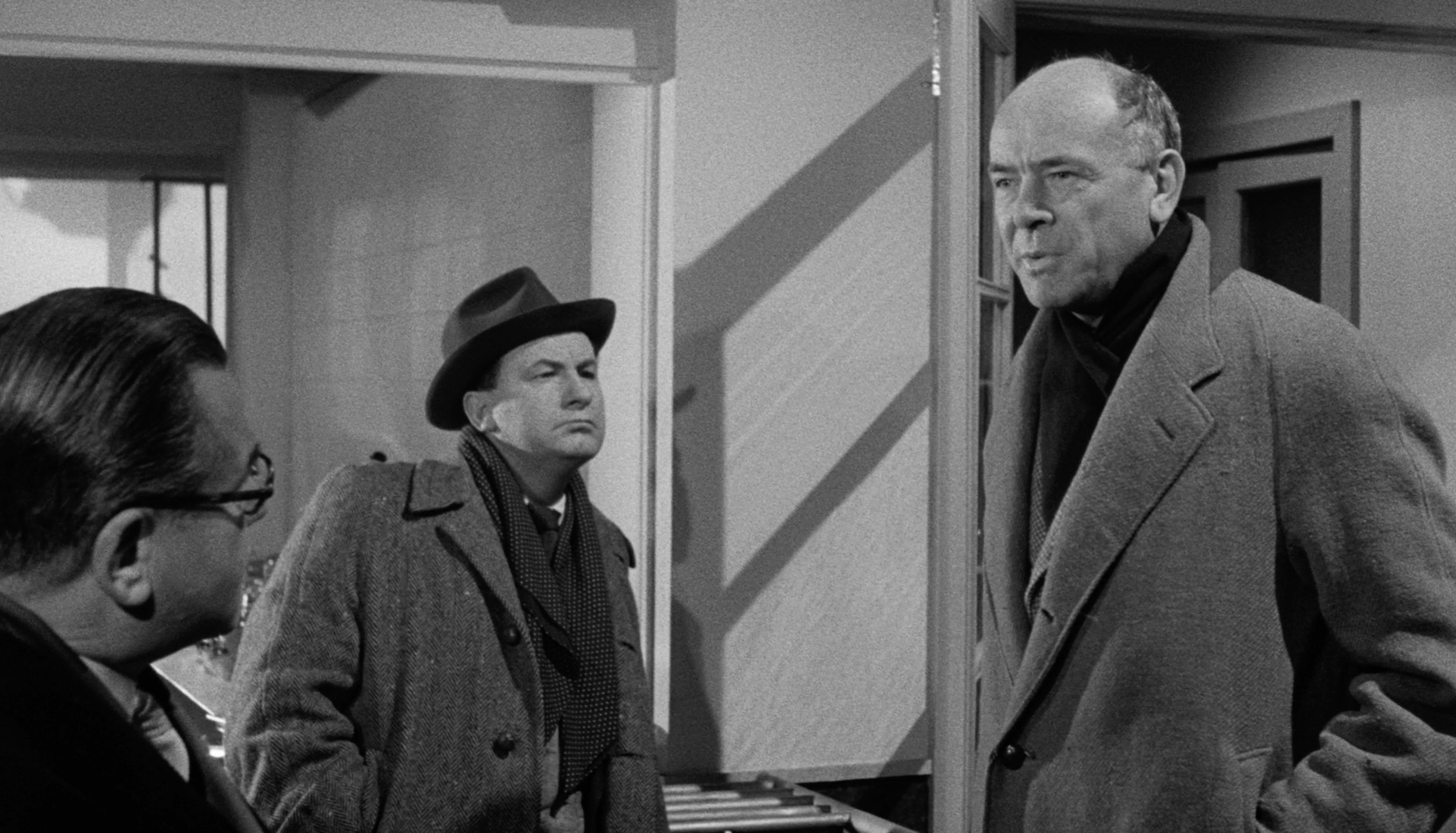
In general with Hammer’s early science-fiction films, there’s a sense of authenticity to the action that’s often absent from similar Hollywood productions. A downside of this naturalistic approach is that the movie sometimes gets a bit dry. The pacing and urgency are nowhere near that of the Quatermass films, and this is probably due to the direction and the smaller scope. Val Guest was a better director than Leslie Norman (it helps when you get along with the actors), and he was able to shoot scenes in real London locations. Meanwhile, X the Unknown is often just hanging out in a mud pit at night.
After the promise of a larger confrontation with the radioactive mudslick, the climax sort of sputters out, and it all ends up back at the same old gravel pit. Most of the energy in these closing scenes comes from James Bernard’s score: he again uses the same propulsive all-strings approach from The Quatermass Xperiment to create twitchy panic.
The performances from top-tier British actors are a huge boost in keeping the story moving through some of the rougher patches. Leo McKern as McGill is the standout: although third-billed, he’s more the hero of the story than Dr. Royston. McGill is the balance point between Royston and the stubbornly by-the-book John Elliott, meditating between their clash and pushing the action toward confronting the mud creature.
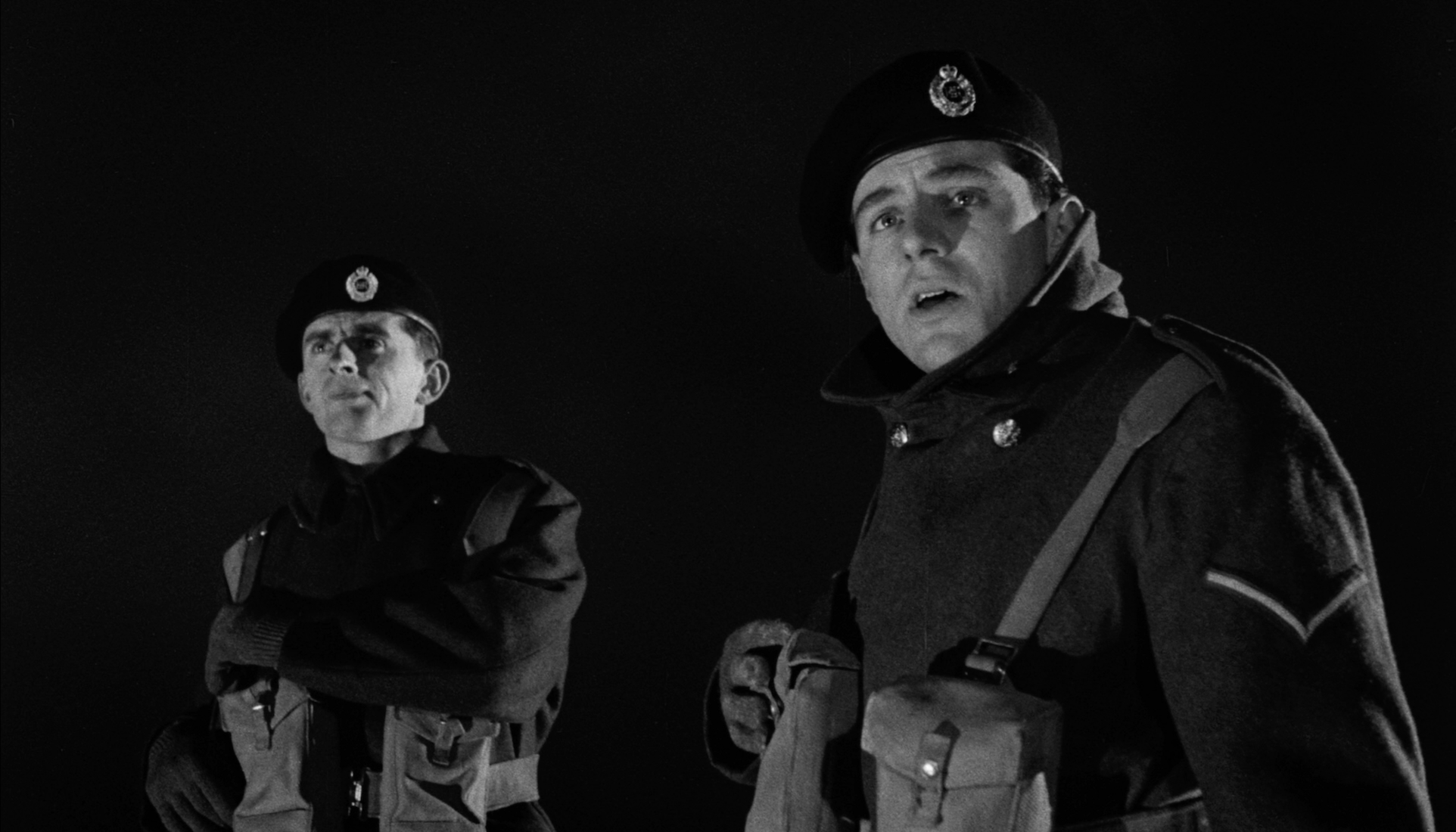
Adding some welcome humor are actors Anthony Newley and Ian MacNaughton, who form a comic duo as soldiers Spider and Haggis. They aren’t annoying comic relief, they’re just funny, doing a riff on the “Pat and Mike” stock characters from British musical hall. They don’t make it past the mid-point, and sadly there’s nothing to replace them. Both went on to successful careers in different parts of the entertainment world: Haggis as the director/producer for Monty Python’s Flying Circus and Newley as a pop singer and songwriter most famous for writing the songs for Willy Wonka and the Chocolate Factory.
As for the American side of the cast … well, Dean Jagger is no Brian Donlevy. Donlevy was strange casting for the titular scientist in The Quatermass Xperiment, but he gave the character explosive energy and aggression. Jagger, on the other hand, delivers the baseline performance necessary for Dr. Royston and nothing more. A typical ‘50s scientist with no surprises. It’s not a bad performance, just an ordinary one.
X the Unknown may not have had the same thrills and intensity as The Quatermass Xperiment, but it was still a major hit in the UK and Europe, ensuring Hammer would continue along the horror trail. It was also, no surprise, a smash in Japan, where it influenced several Japanese SF films, notably The H-Man. It still stands out in the “blob movie” subgenre.
Review: Good
 The Ultra Project