
Directed by Hirochika Muraishi. Written by Chiaki J. Konaka. Airdate Jan. 11 & 18, 1997.
Ultraman Tiga and its sequel series Ultraman Dyna take place in the “World of Neo Frontier Space” timeline. Space travel and planetary colonization are key themes in these shows, although they usually occur in the background or serve as catalysts for episodes that are otherwise Earthbound. “GUTS Into Space,” Tiga’s first two-parter, finally sends the GUTS team into the Neo Frontier using a new piece of space-travel technology.
Despite the grandiose title, GUTS doesn’t travel that far into space. They only reach a “mechanical island,” a large alien fortress, that’s floating over Earth. But the two-parter has an epic feel that packed with space opera action: laser gun fights, a robot army, spaceship battles. It’s never a dull time, although the script is a bit undercooked with its themes, and the space action requires an excess of flat digital effects.
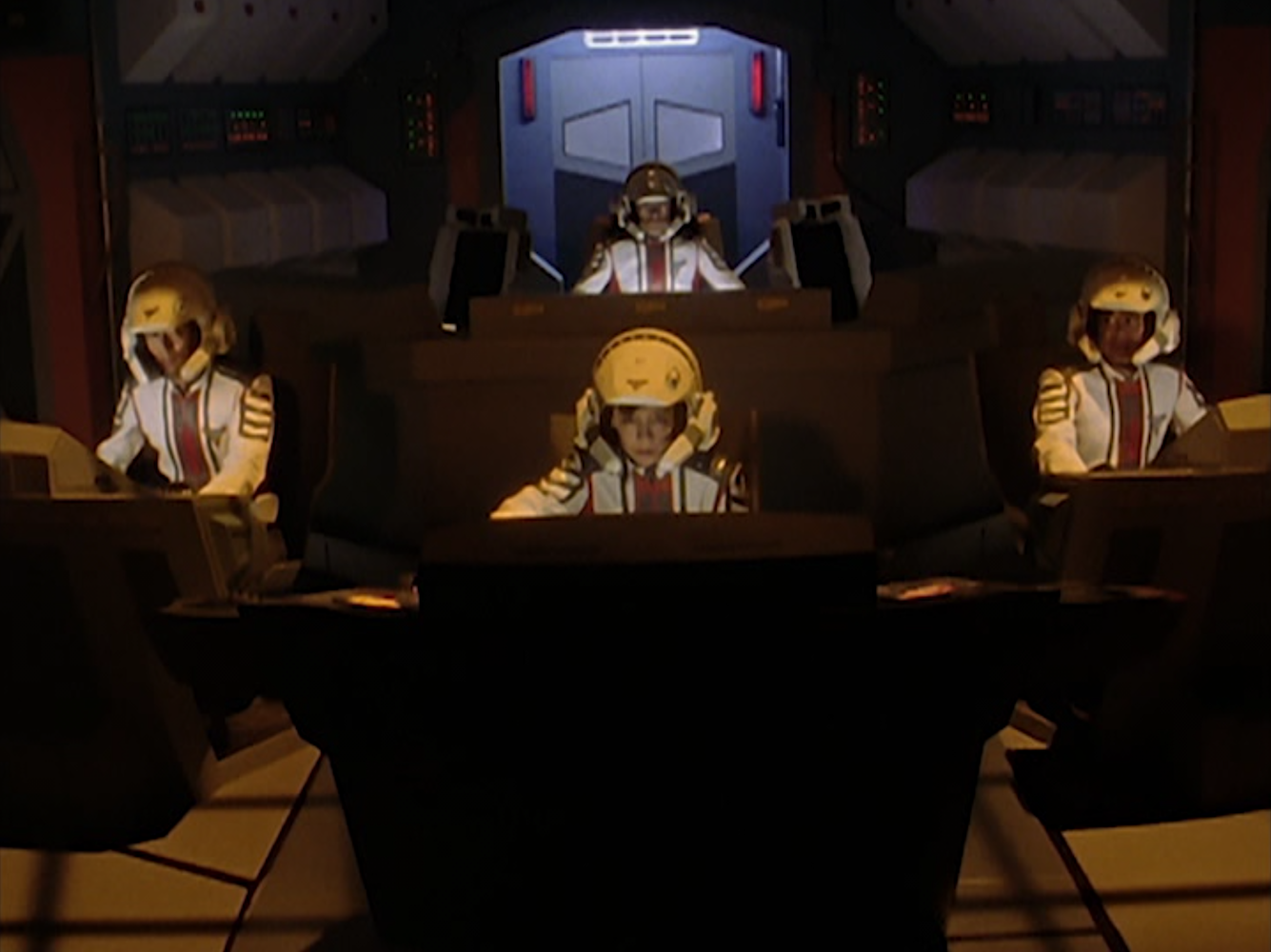
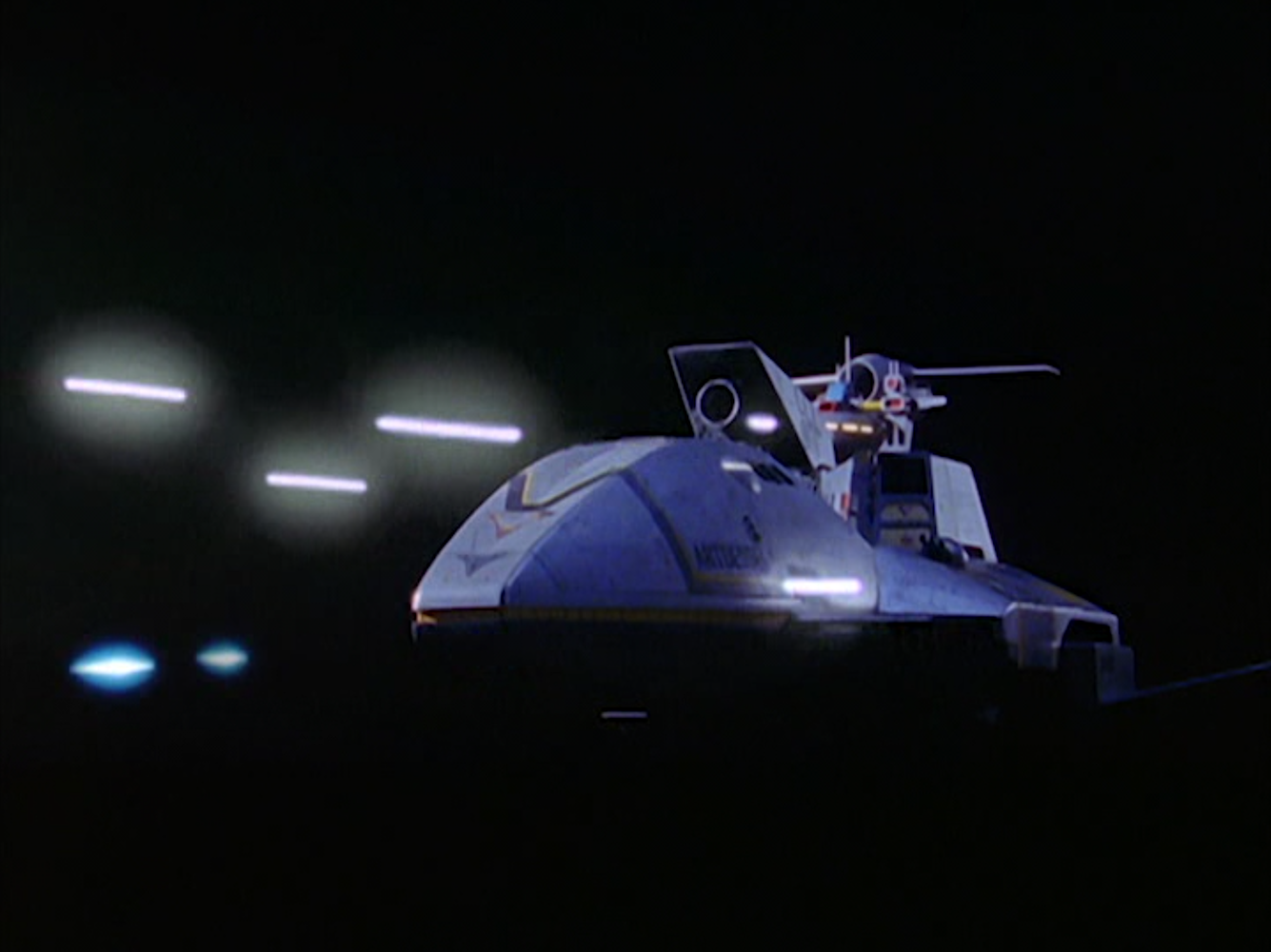
The TPC is in the middle of testing a new energy type, Maxima Overdrive, when an alien base arrives over the planet. TPC high command grants GUTS permission to use the top-secret battleship Artdessei in an assault. (Even GUTS was unaware of the ship’s existence until Daigo stumbled onto it in the base’s lowest hangar.) The Artdessei has a Maxima Overdrive engine, but it’s incomplete, and the effects of this new power haven’t undergone sufficient safety testing.
The ethical questions around the Maxima Overdrive are the core of Part 1. Unfortunately, it’s an underdeveloped conflict that soon sputters out. It’s unclear what this energy source is supposed to actually do beyond a vague explanation that it’s derived from collisions of protons and antiprotons that generate power through light. (I’m not a physicist; I have no idea if this makes sense.)
The inventor of the Maxima Overdrive, Dr. Yao (Ichiro Ogura) has invested 20 years of his life in the Artdessei, and he initially bristles at the challenge that the energy might not be ready for use. Horii snaps at Yao for what he sees as the doctor’s unscientific attitude: driving headlong into using the power source before understanding its effect on humans. However, Dr. Yao rapidly pivots to being a decent chap. Yao explains that his real reason for building the Artdessei was his lifelong dream of creating a really big ship, and that’s something that Horii understands.
This exchange is a good character moment for Horii, showing his childlike enthusiasm for science. But it fails to humanize Dr. Yao, who now sounds even more cavalier about human lives. Yet everyone in GUTS is abruptly all-in on using the Artdessei despite their earlier doubts. It’s a rocky story progression, but the episode quickly drops the ethical questions and goes right into the big action: stopping a relentless army of murder-bots and then trying to blow up their space base.
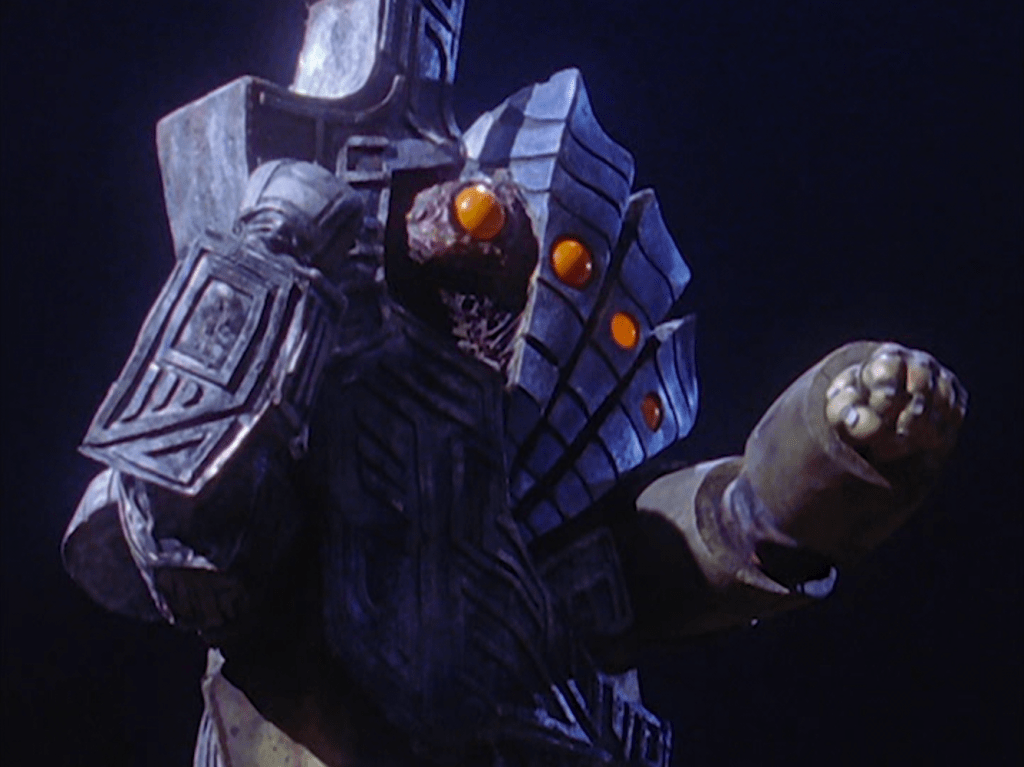
These automatons, the Gobnu, are what viewers will take away from “GUTS Into Space.” They’re freakish things, as if a Bronze Age culture discovered robotics 2,500 years ago. When they first appear on Earth, the Gobnu seem absurdly easy to take down. GUTS demolishes a slew of them around the city, then foolishly piles the pieces in the Artdessei’s hangar. Anyone with SF experience knows what’s going to happen, but no one in GUTS anticipated that the Gobnu would rebuild themselves inside the hangar and launch an attack. The Gobnu can also conglomerate into giant versions — because Tiga has to fight something big.
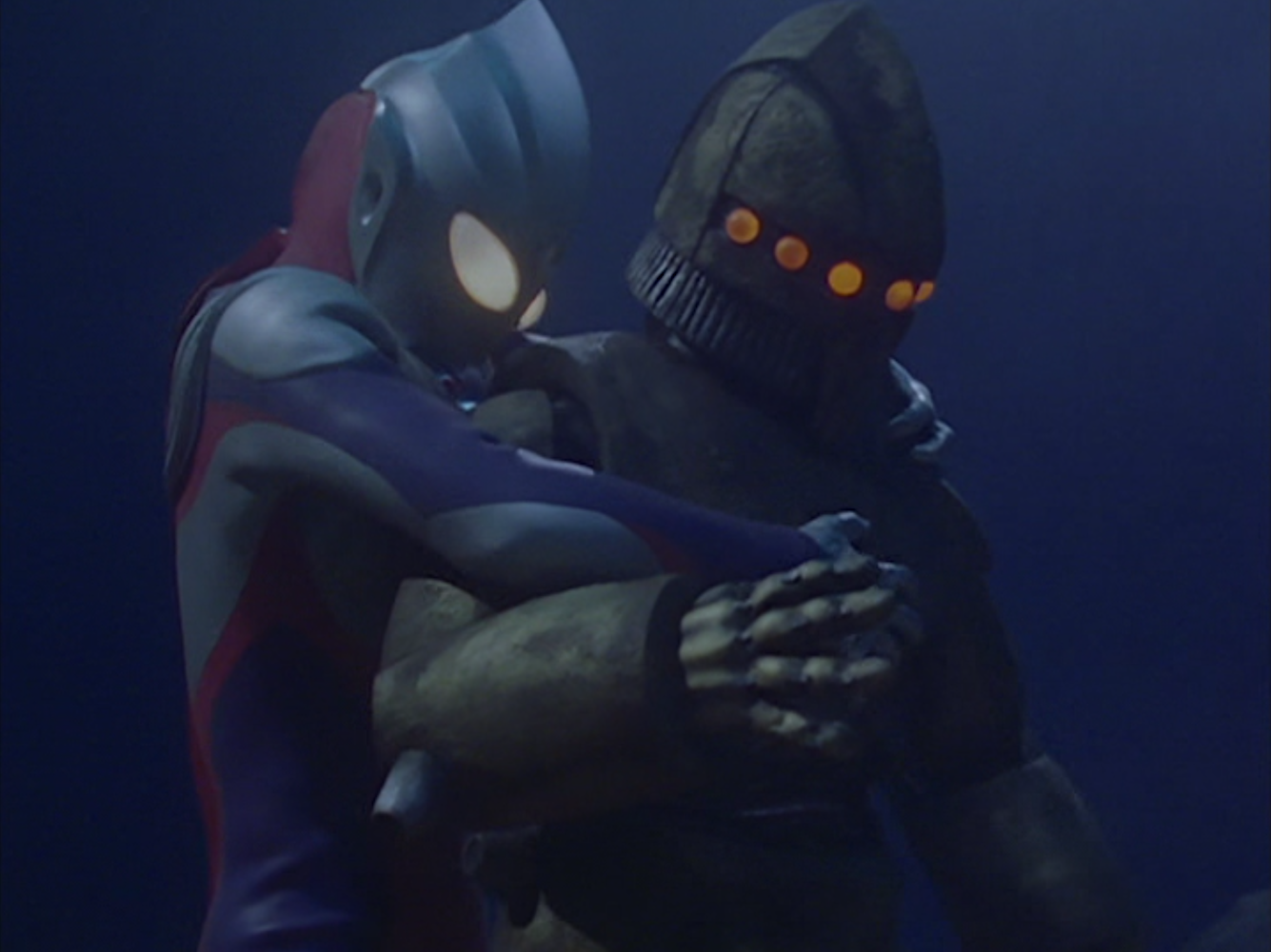
The Gobnu are powerful opponents, both as a horde of human-sized robots and as two different metallic giants (Gobnu Giga and Gobnu Ogma) that both come close to defeating Tiga. What makes the Gobnu most interesting is their background: they’re an alien-built security system programmed to “take action whenever a forbidden power is about to be used,” i.e., any technology of other civilizations that the creators of the Gobnu deem a threat. The robots don’t know who created them and don’t have the ability to care. It’s a very Star Trek concept: an amoral weapon executing the violent ultimatum of its creators in perpetuity. I suspect the Gobnu’s masters went extinct centuries ago, like the builders of the titular device from the classic Trek episode “The Doomsday Machine.”
There’s an odd throwaway scene where Daigo, after Tiga’s first defeat, finds himself in a white void. Yuzare, the ancient hologram messenger not seen since the second episode, returns to give Daigo a pep talk about working with others for the common good. It’s a stock Ultraman Tiga moral that could’ve teleported in from any episode — and should not have teleported into this one. Yuzare doesn’t fit here.
The coda of Part 2 returns to Dr. Yao to lightly explore the cost of progress. Yao is humbled to learn that others in the universe anticipated his discovery and planned for its destruction as a “forbidden power.” The story takes a simple moral stance that progress is necessary and humans must make sure they put advances to their best uses. It’s a touch trite, and Dr. Yao isn’t a strong enough character to make it more interesting. The Gobnu attacks do more to support the theme of the price of technology than any character or dialogue.
Rocky plotting and undercooked themes aside, “GUTS Into Space” is a good time with memorable adversaries and a fast pace. Starting with the Gobnu attack on the hangar, the action and tension are continuous and inventive. The underwater fight that concludes Part 1 is one of the better examples of aquatic combat in the Ultra Series, and the showdown between Tiga and the giant Gobnu Ogma on the lunar-like surface of mechanical island is a terrific closer. The scope of the space action isn’t something the janky digital effects handle elegantly, but I can ignore this if it gets us the other epic space opera set-pieces. It’s worth it for introducing the Artdessei, which will reappear throughout the rest of the show.
Rating: Good
Previous: Golza Strikes Back!
Next: Deban’s Turn
 The Ultra Project