
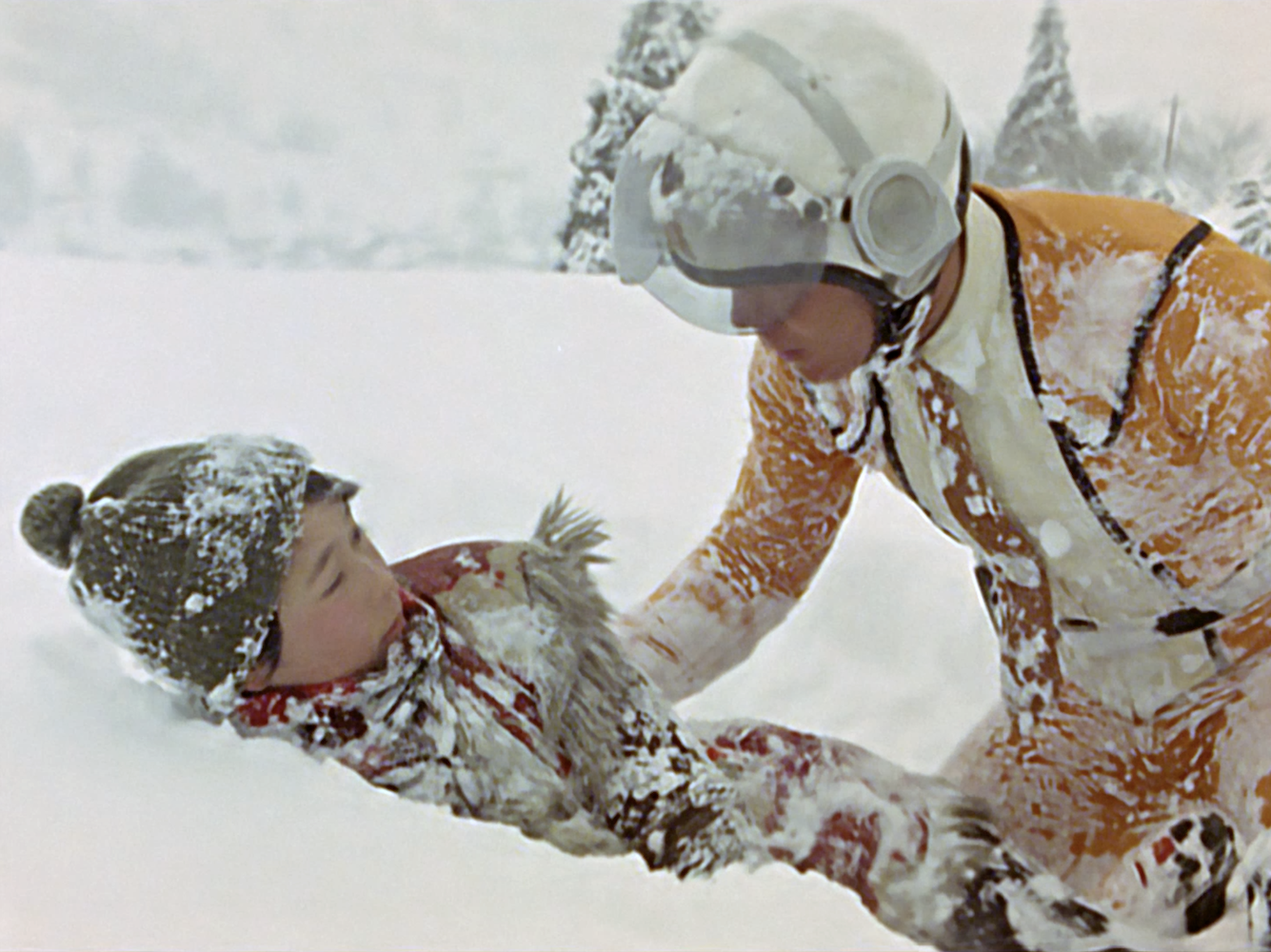
Directed by Yuzo Higuchi. Written by Tetsuo Kinjo. Airdate Feb. 5, 1967.
Tetsuo Kinjo contributed numerous excellent scripts to the first three Ultra shows. “Garmon Strikes Back,” “The Blue Stone of Baradhi,” and “The Ultra Guard Goes West” are some of his best straightforward action episodes. But Kinjo is best known for stories drawn from his childhood experience seeing the Japanese Empire’s oppression of the native Okinawans. In these scripts, Kinjo explored outsiders facing prejudice, sprinkling in elements of tragedy and the supernatural. “Phantom of the Snow Mountains” isn’t Kinjo’s finest script (I’d argue that’s Ultraseven’s “Ambassador of the Nonmalt”), but it may be his most representative: a sad, fable-like tale of a shunned girl and her connection to a possibly supernatural snowbeast.
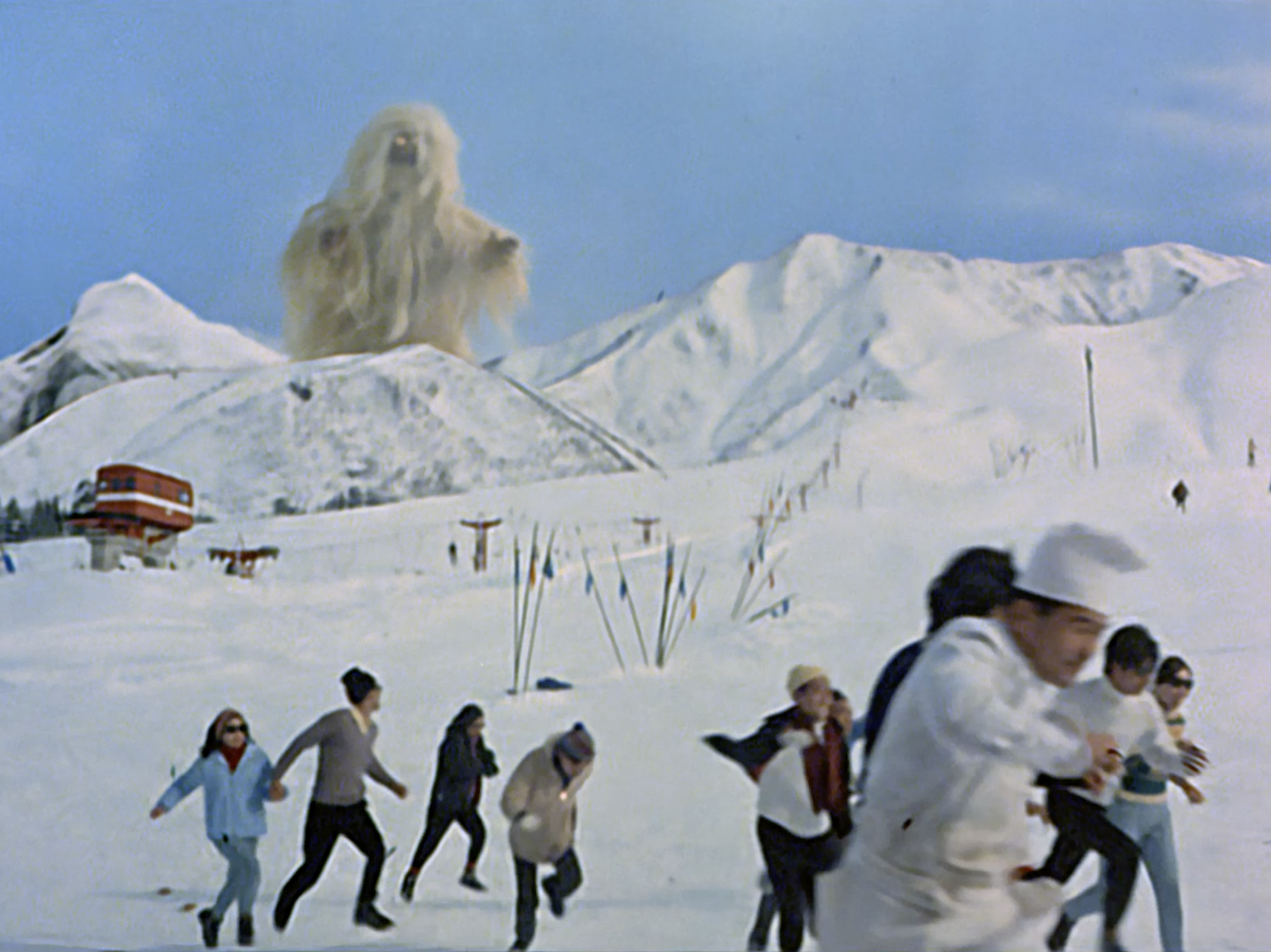
The locals near a new ski resort contact the Science Patrol after a hunter (Ren Yamamoto from “The Rascal From Outer Space”) has a run-in with Woo,1 the legendary snow creature of Mt. Iida. The locals worry that Woo may frighten away the resort tourists — an understandable concern with a 165-foot-tall yeti. Hayata, Arashi, and Ide fly out to the resort to investigate, leaving Captain Muramatsu and Fuji behind to not appear in the episode.
The Science Patrol team soon encounters Yuki the “Snow Girl” (Sachiko Tominaga). Fifteen years ago, Yuki and her mother emerged out of a storm, and her mother froze to death. The villagers feared the woman was a malevolent snow spirit, and passed that fear on to her child. A charcoal maker raised Yuki as his daughter, but now she’s on her own — and the locals still fear her. She is connected to Woo in some way — they appear to mutually protect each other — which further feeds people’s hatred of her as the creature starts to threaten the resort.
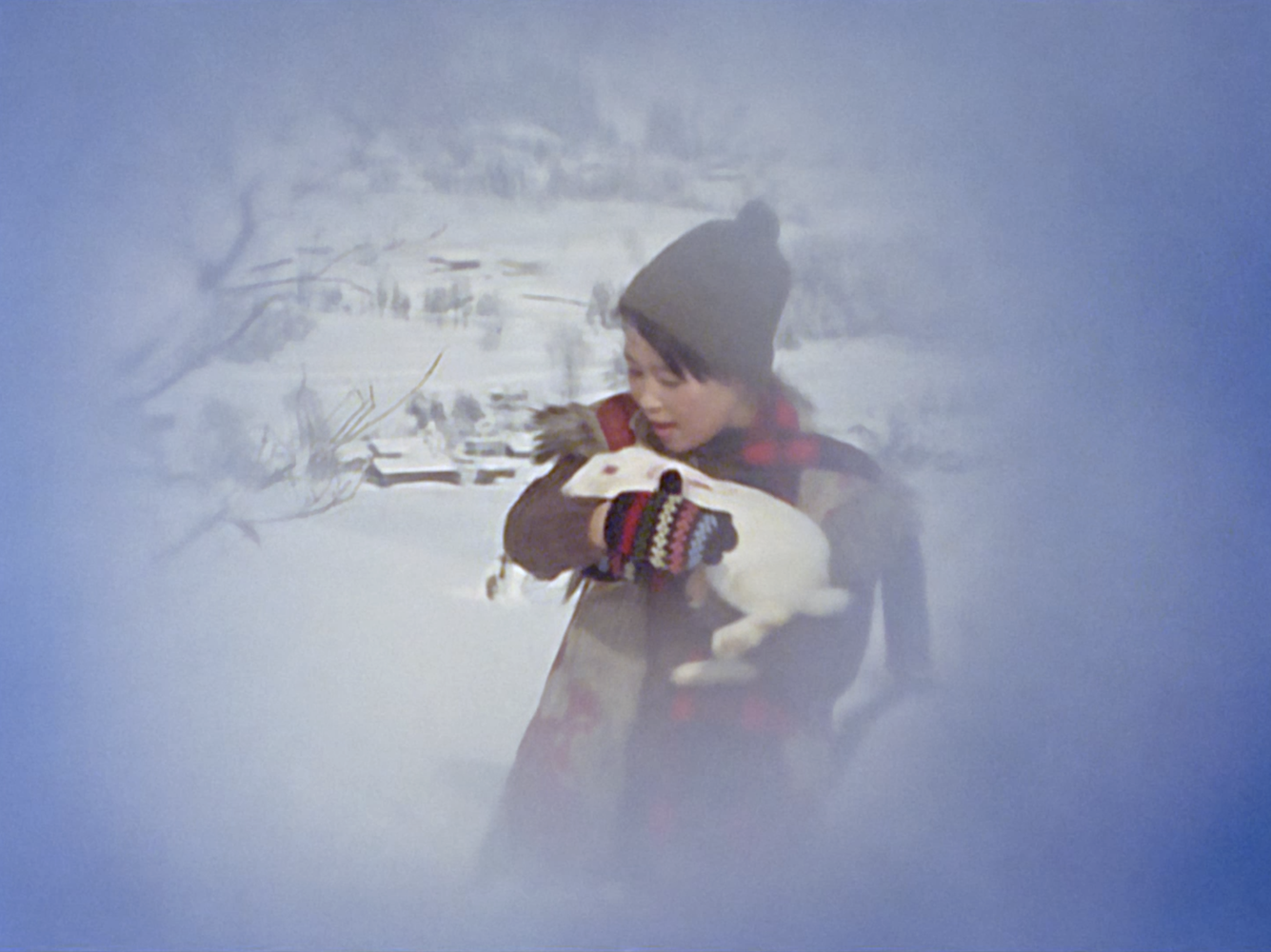
The torment the episode piles on Yuki is often viscerally cruel, ranging from the petulant bullying of kids to mobs attempting to murder her after she’s wrongfully accused of killing a hunter. Actress Sachiko Tominaga does a fantastic job expressing Yuki’s plight. She makes each moment of bullying hit harder, and the scene of her begging Woo to leave so the villagers will not hate her even more is heartbreaking. Yuki is among the most memorable supporting characters in the series, and the perfect Tetsuo Kinjo tragic outsider figure. You can sense his childhood pain in Okinawa coming through in Yuki.
There’s one person fully on Yuki’s side. It’s Ide, of course, who again acts as the moral center of the Science Patrol. Ide lost his mother when he was a child, so he sympathizes with Yuki’s isolation. He also begins to identify with Woo, which he guesses might be the spirit of Yuki’s mysterious mother. It stings Ide when Yuki calls the SSSP “monster killers,” leading him to tell Arashi that he doesn’t feel right about their mission and wishes they could simply leave Woo alone.
This isn’t the first time Ide has resisted the Science Patrol’s job of destroying monsters. It was a pivotal part of “My Home Is Earth.” A general sympathy toward kaiju has developed over the show’s run, moving toward its culmination in “The Monster Graveyard.”
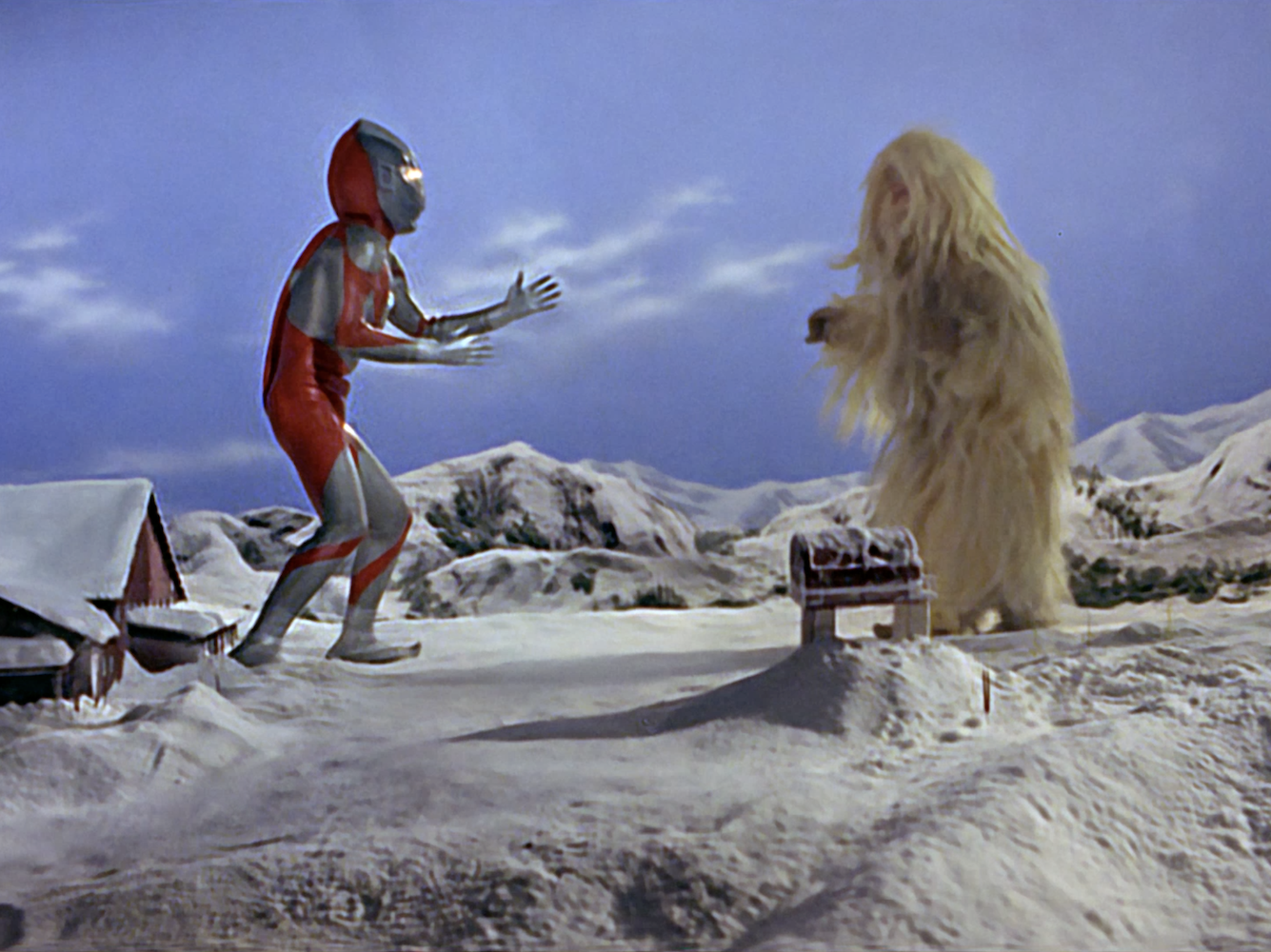
Woo is the right tragic monster for the story: whatever its true identity, it reacts out of a sense of defending Yuki. Woo has an expressive design, one that’s easy to dismiss as a bit “Muppety,” but it grows on viewers during the episode. The visual effects put Woo in more shots with humans than we often see in Ultraman, which helps to build fear of the monster in the locals and its link to Yuki.
When the battle between Ultraman and Woo arrives, it’s thankfully restrained. If Ultraman unleashed his full power of beams and rough tackles on the snow monster, he’d come across as yet another bully. Interestingly, Hayata doesn’t know much of Yuki’s story since he spends most of the mission stuck in the ski lodge with an injured leg. This suggests that Ultraman has an empathetic sense that tells him Woo isn’t an evil beast.
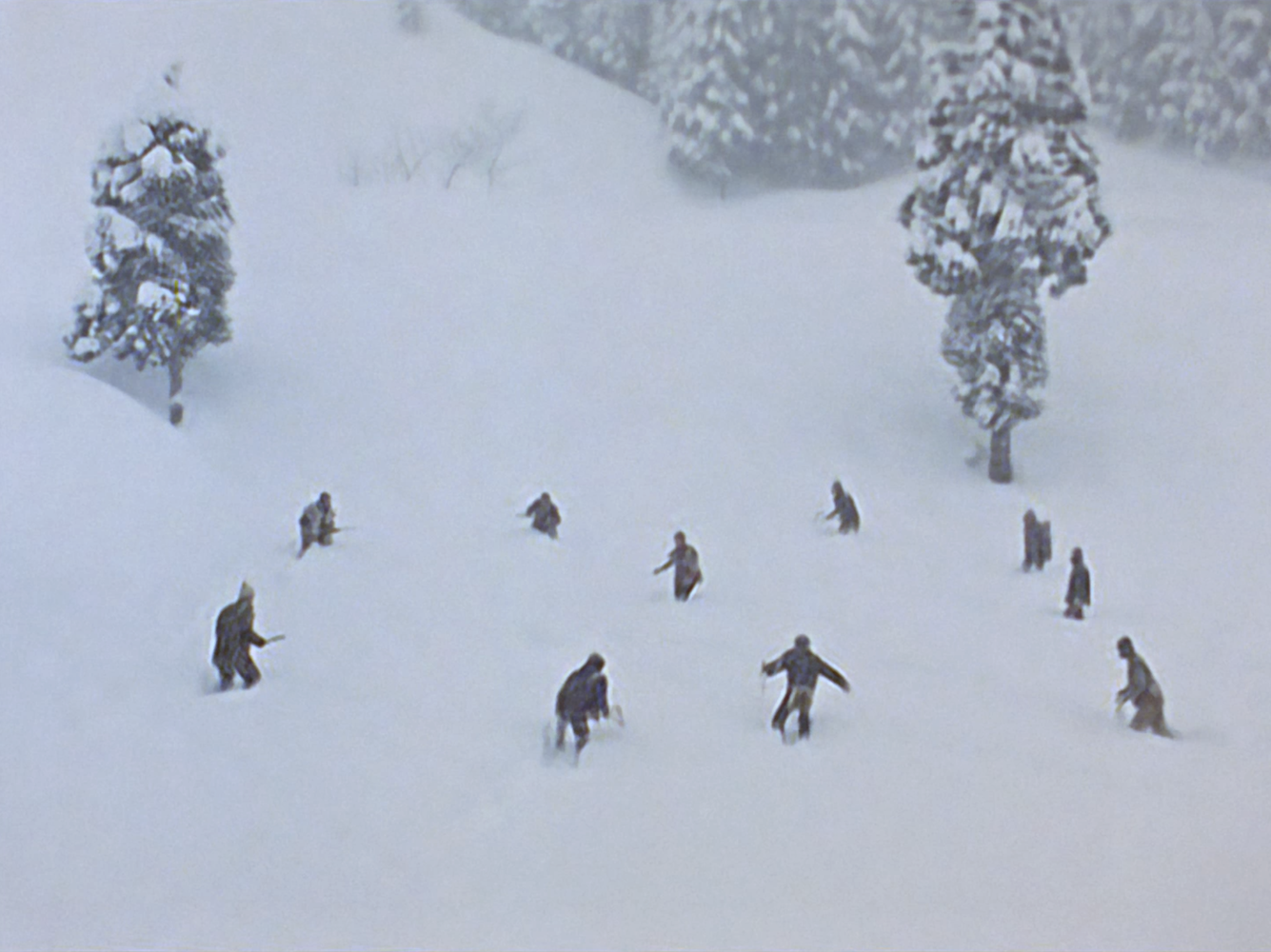
The photography is exceptional. There’s a potent visual sense of a place far removed from Science Patrol HQ, with gliding vistas of icy mountains and rolling hills of powder. The camera isn’t afraid to linger on the landscape and make maximum use of the snowy location photography. Several carefully composed shots emphasize Yuki’s isolation and fear, such as a powerful image of a circle of violent locals constricting around her.
The episode closes with an odd tonal shift. After a lingering shot that punches home the tragedy, the coda with the three SSSP members comes across as slightly dismissive, particularly the way Hayata behaves. (Although perhaps that’s understandable because he was physically removed from most of the action.) Was this closing an attempt to alleviate the story’s bleakness so the kids watching didn’t turn off the TV feeling devastated? Or did Tetsuo Kinjo and director Yuzo Higuchi want to lessen the pain for other reasons? Higuchi later said that he felt he should’ve made the supernatural elements clearer in one key shot, implying he was aiming to keep the ending from feeling too bleak.
“Phantom of the Snow Mountains” has an important spiritual successor: Return of Ultraman’s classic episode “The Monster Tamer and the Boy,” written by Tetsuo Kinjo’s friend and fellow Okinawan, Shozo Uehara. The two episodes have fascinating parallels, and each makes the other even better when seen together. Be warned, you may need some tissues by the end.
Rating: Great
Previous: Challenge to the Underground
Next: Who Goes There?
- The name “Woo” has a history with Tsuburaya Productions. It was the working title for the first show they developed for TBS and the name of its alien protagonist. Woo was never made, but many of its ideas were repurposed into Ultraman, namely the beneficial alien visitor to Earth. ↩︎
 The Ultra Project