
Directed by Shinichi Kamizawa. Written by Masakazu Migita. Airdate Jan. 4, 1997.
Ultra shows generally treat the impact of kaiju activity on the civilian population with a light hand. That’s appropriate, since the episodes would otherwise make for extremely dour entertainment, and many child viewers would have nightmares until they graduated high school. Doing something with the heaviness of the original Godzilla or Godzilla Minus One isn’t what Tsuburaya Productions was looking to achieve.
But it’s impossible to always ignore the human cost of giant monsters. The first half of “Golza Strikes Back!” successfully explores the feeling of an actual disaster and the subsequent relief efforts. The volcano Mt. Kirimon erupts, and we immediately see its effect when it terrifies young vacationers at a nearby cabin. It’s a small touch, but it makes viewers understand that the eruption isn’t just another special effect. There’s danger here. The following scenes show emergency broadcasts, a panicked evacuation, relief stations feeding refugees, and evacuees yelling angrily at TPC members for failing to anticipate the eruption.
This is bold opening material for what ends up a straightforward story about a GUTS operation and Tiga punching and kicking a monster — i.e., the stuff kids will enjoy without nightmares. But these opening scenes create a feeling of high stakes that give the standard kaiju material a stronger impact.
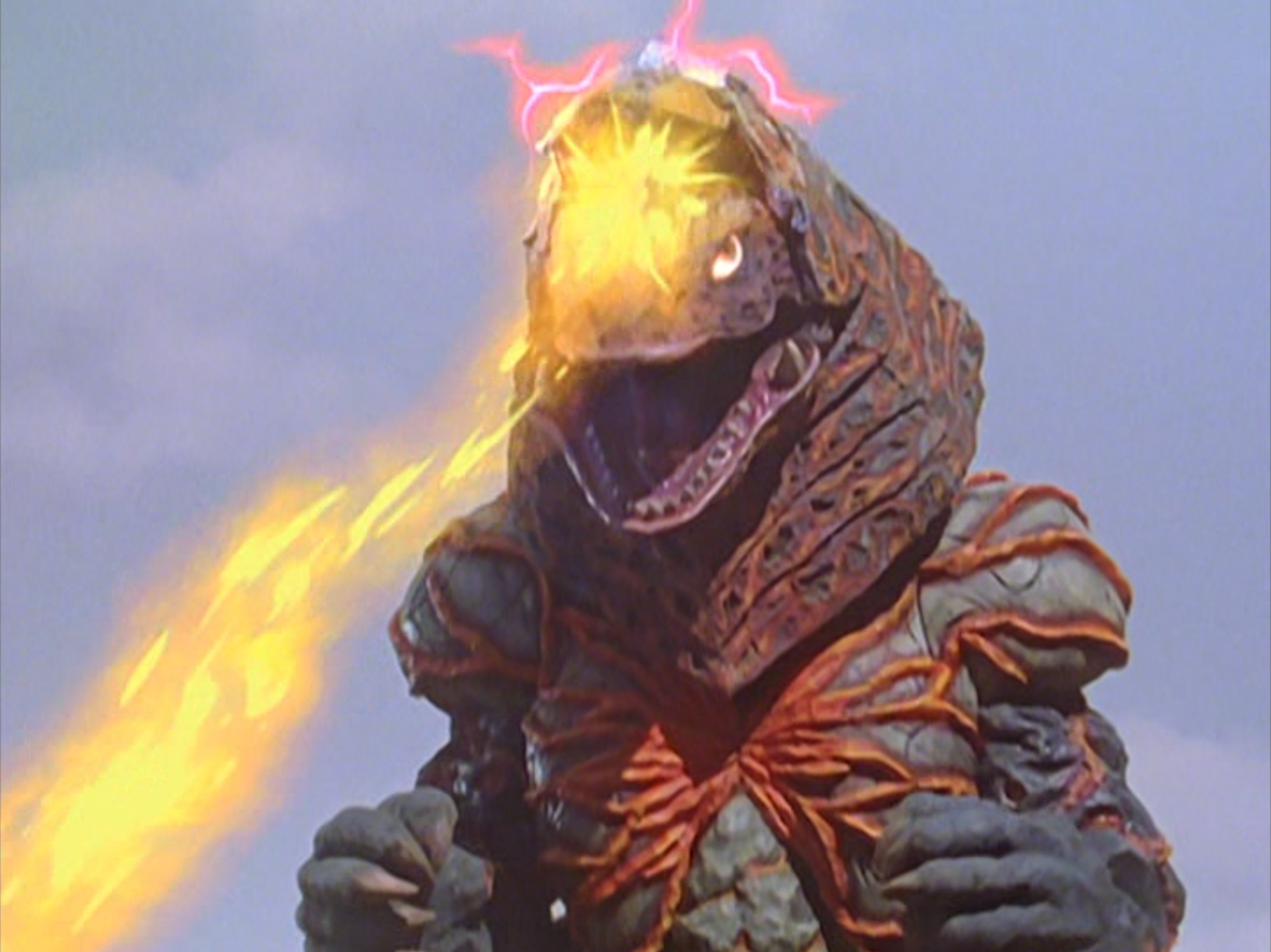
As the title proclaims, the first monster to appear on the show has come back for a second round. Golza escaped into the ground at the end of “Inheritance of Light.” It appears this is a different Golza (retroactively named “Fire Golza”), but GUTS treats it as essentially the same kaiju. The new Golza has visual upgrades to go along with its more ferocious fire attacks, and it looks great. Golza, along with Gazort, helped set the standard for Tiga’s kaiju designs.
Golza waits to make its appearance while TPC and GUTS attempt to solve the riddle of the abnormal magma flow from Mt. Kirimon. Daigo and Kinjo take GUTS’s underground drill tank, Peepar, into the roots of the mountain to freeze the magma flow. They manage the job with visuals that look like they’re inside Mount Doom, searching for a place to toss in the One Ring. Their actions arouse Fire Golza, who’s gathering energy from the magma. Daigo and Shinjoh become trapped underground while GUTS tries to force Golza to the surface so they can attack it with all their weaponry.
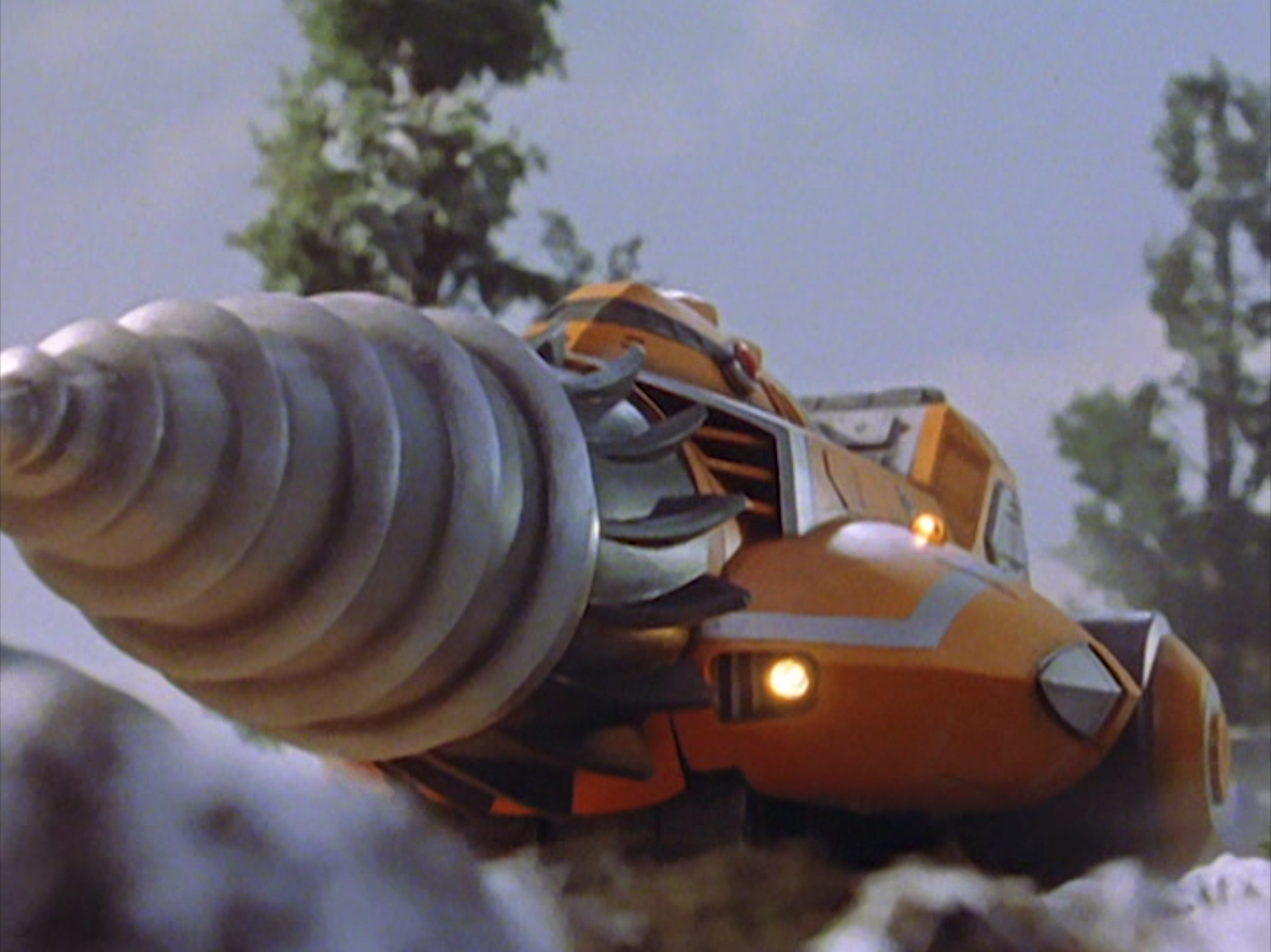
(I got déjà vu watching this episode right after Ultraman’s “Challenge to the Underground,” another episode about two defense team members trapped underground in a super-drill device. For the record, the Peepar is a much better drill vehicle than the Vellucidar — although “Peepar” is a terrible name.)
All the action with the GUTS vehicles and technology plays out well. GUTS has developed a level of confidence in their teamwork at this point. This was probably both a purposeful development of the writing and a side effect of Tsuburaya Productions and the actors getting back into the groove of making kaiju entertainment. This is an “ops-centered” show, which isn’t necessarily a negative; it’s fun to see an episode take the broad view where the team itself is the featured character rather than any individual.
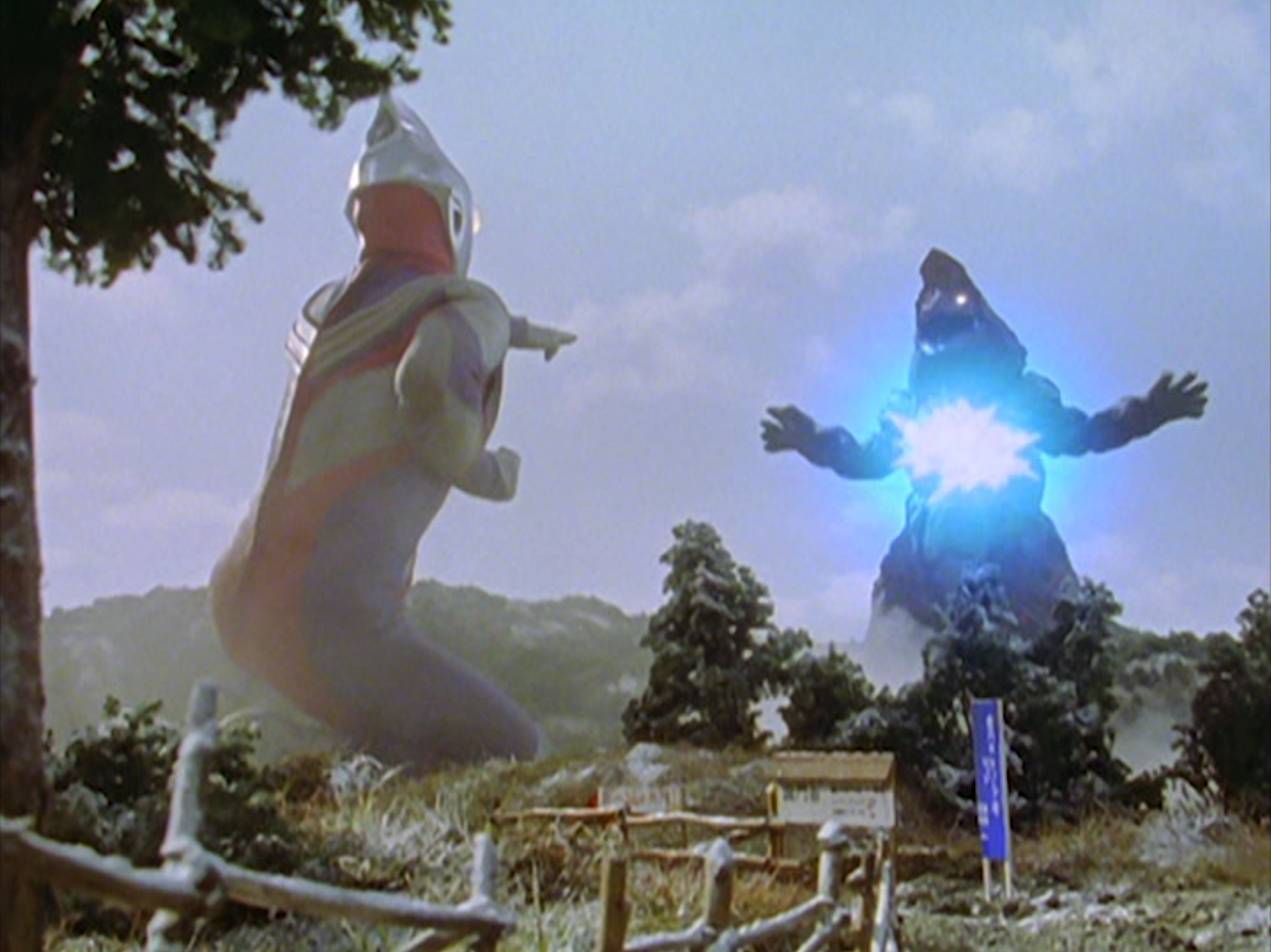
Daigo and Shinjoh get out of their subterranean dilemma fairly easily: Daigo turns into Tiga and takes the Peepar along with him as he breaks through to the surface. The main action then starts when Tiga and Golza get into one of the more exciting giant monster fights yet shot.
The battle goes on long enough for Tiga to switch up tactics and strategies as Golza resists most of his attacks. The fight has lots of close-quarters punching, kicking, and combos that give a more tactile feel to the action. At one point, the camera captures the thrill of Golza and Tiga in combat in a beautiful long dolly shot. I love these kinds of shots in the visual effects scenes because they add a dimension of scope and motion that sometimes gets lost in VFX stage environments.
“Golza Strikes Back!” leaves viewers with the pleasant feeling of seeing a job well done. GUTS used their professionalism, teamwork, and technology in combination with Tiga’s monster-smacking powers to save the day for thousands of people. Daigo makes a remark about how Tiga couldn’t have won the day alone, and he genuinely means it. The episode isn’t anything spectacular, but it’s one of the most solid examples of Ultraman Tiga functioning the way it should: optimistic science-fiction entertainment about a squad of heroes working with a giant alien who beats up monsters pretty damn good.
Rating: Good
Previous: The Battle Between Red and Blue
Next: GUTS Into Space
 The Ultra Project