
Directed by Samaji Nonagase. Written by Masahiro Yamada. Airdate Jan. 22, 1967.
Samaji Nonagase was one of the more prolific early Ultra directors. While he doesn’t receive as much attention as fan-favorite directors Akio Jissoji and Kazuho Mitsuta, he helmed several classic episodes: “Kanegon’s Cocoon” (Ultra Q), “The Monster Anarchy Zone” (Ultraman), and “The Secret of the Lake” (Ultraseven). He also wrote scripts under the pen name Ryu Minamikawa. He was fascinated by Alfred Hitchcock and liked to add gradually building tension to some of his episodes, such as the home-invasion story of “Project Blue.” “Human Specimen 5 & 6” is Nonagase’s best exploration of the suspense-centered story, and it helped to establish the future tone of Ultraseven and its parade of weird, crafty alien invaders.
You can see Nonagase’s Hitchcockian turn at its strongest during a lengthy scene in the middle of the episode. Kanako Arikawa, an agent of the Central Space Atomic Research Center, starts to suspect something is wrong with a scientist at a cosmic ray research facility. Audiences already know what’s happening because of an eerie flashback: a body-snatching extraterrestrial race, Alien Dada, has taken control of the scientist’s body and the facility. They’re looking to capture Arikawa as their next required human specimen. The tension as Arikawa puts together the pieces from her surroundings is superbly shot and edited. The pacing isn’t standard for Ultraman, but it works as simmering suspense, which is what Nonagase was aiming for.
Along with this focus on a slow boil, the episode gives Captain Muramatsu the opportunity to shift from his role as team leader to the solo hero in a spy mission. The captain is separated from the rest of the Science Patrol and stranded after a mysterious bus crash and time lapse. Muramatsu follows a woman who was also on the bus, Arikawa (Hisako Tahara, who played the undercover agent in Ultra Q’s espionage episode), to the mountaintop research center.
After Muramatu and Arikawa discover that aliens have seized control of the facility to capture and shrink human specimens for devious purposes, they join forces to escape. Muramatsu shows he has exactly what it takes to be an SSSP field agent, likely because he started as one and rose to his current position.
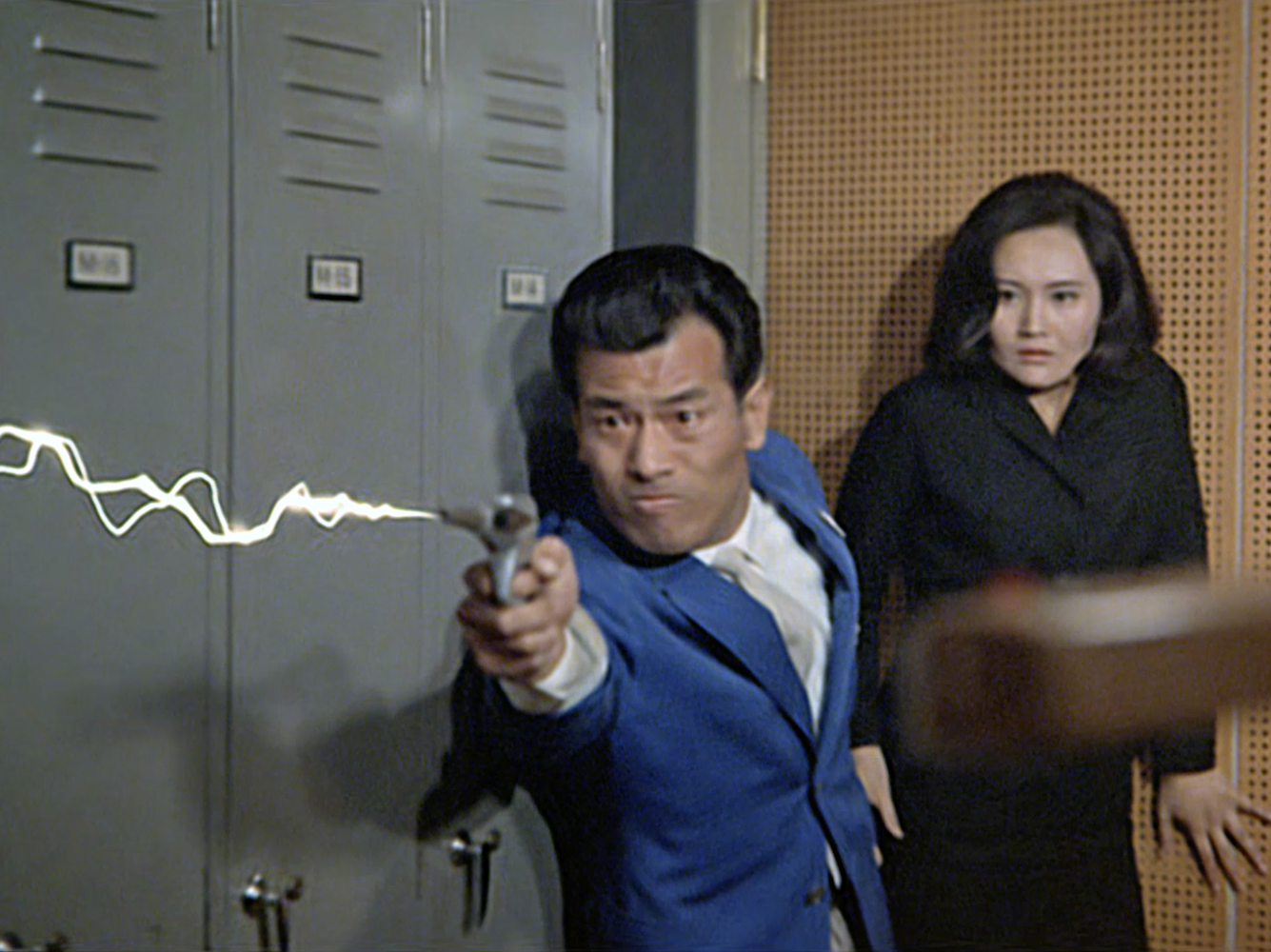
The episode builds as Muramatsu and Arikawa sneak through the mountaintop laboratory, capturing viewer interest without any large VFX set-pieces. However, Ultraman has a formula and children are tuning in, so at some point an Alien Dada will supersize itself and get into a battle with Ultraman. With Muramatsu absent and Ide in the hospital with a broken leg, Hayata takes temporary charge of the SSSP. Neither Arashi nor Fuji question this, which is a nice nod to the teamwork of the Science Patrol. Then, before any giant monster appears, Hayata transforms into Ultraman to rush to save the day. It’s a very Superman moment rather than a standard last-ditch transformation. There’s no Science Patrol in action, so it’s up to … Ultraman!
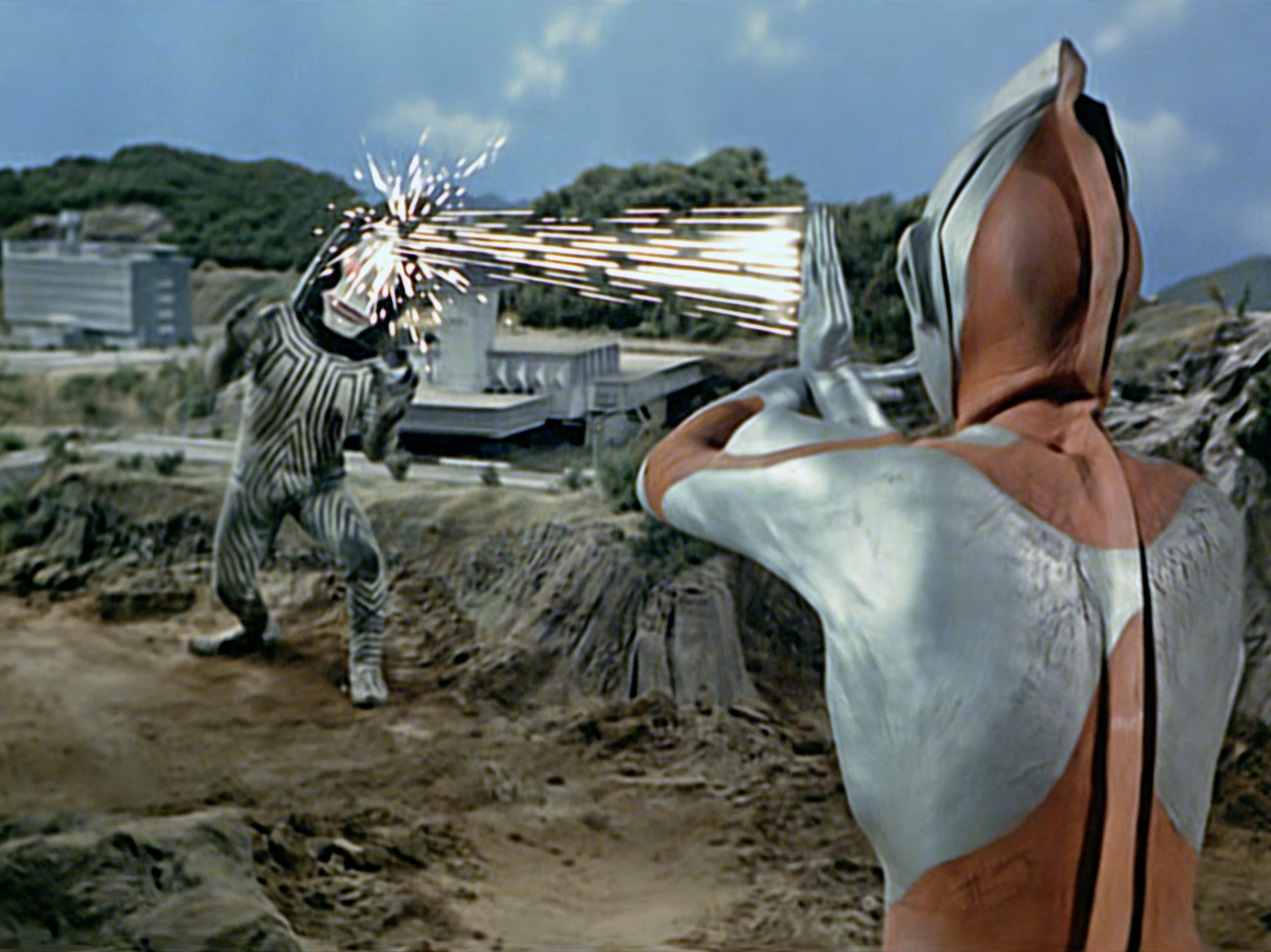
A tussle between giant Alien Dada and Ultraman sounds like it might spoil the earlier subdued tone. But the final battle is structured and choreographed so that it continues the tension and cat-and-mouse games. The fight moves in stages with several clever reversals — such as Ultraman suddenly trapped at human size — and the involvement of Muramatsu and Arikawa. Bin Furuya was particularly proud of his performance as Ultraman here. The battle is fast and nimble, making use of the flexible costumes on both performers. It’s a great follow-up to the classic kaiju style of the fights between Ultraman and Gomora in the previous episodes.
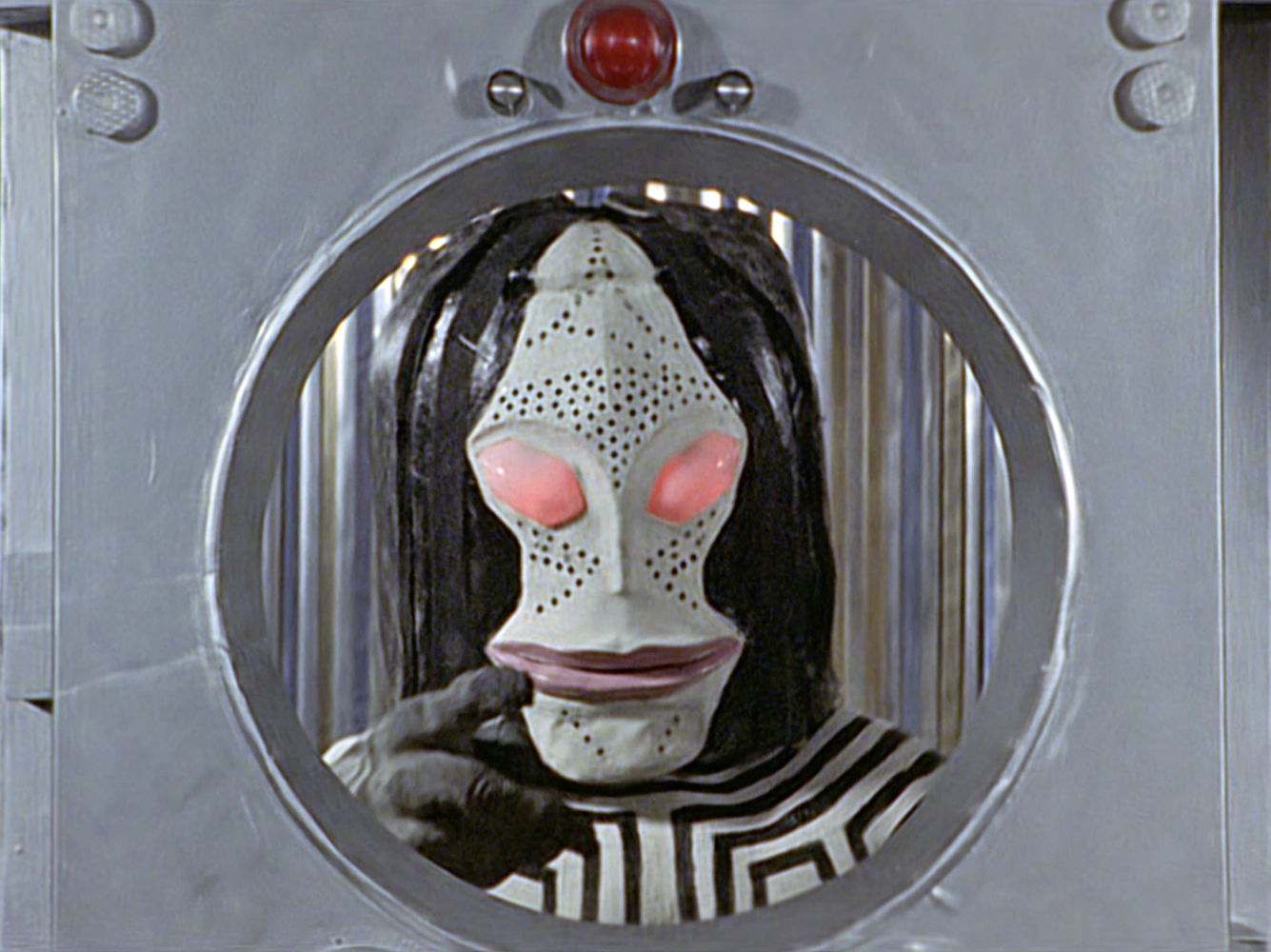
Alien Dada is among the most striking Seijin in the series: nobody forgets what they look like. Tohl Narita’s designs for Alien Dada reflect a surrealist sensibility (Dada is the name of an early 20th-century radical arts movement that became Surrealism) as well as his own abstract artwork. The aliens were intended to have an even stranger look initially, using optical illusions to cause their appearance to change based on camera perspective. The effect was too difficult to achieve, so Alien Dada was instead given multiple faces that change from scene to scene, hinting that the race has no singular form.
Alien Dada makes for excellent villains, even if their motivation for kidnapping exactly six human specimens remains unexplained. According to writer Masahiro Yamada, this was done on purpose to maintain mystery, and the episode doesn’t really require further explanation. The weirdness of these striated black-and-white beings is enough to create menace. You just need to look at their stretched faces — any of the three faces — to know something twisted is happening behind those eyes.
The scheme of shrinking and collecting humans would return with the far less competent Alien Raybeak in Ultraman Tiga’s “Human Collection.” Alien Dada has also returned several times in the Ultra Series, because nobody is going to pass up using a design that dazzling.
Rating: Great
Previous: The Monster Highness
Next: Challenge to the Underground
 The Ultra Project