
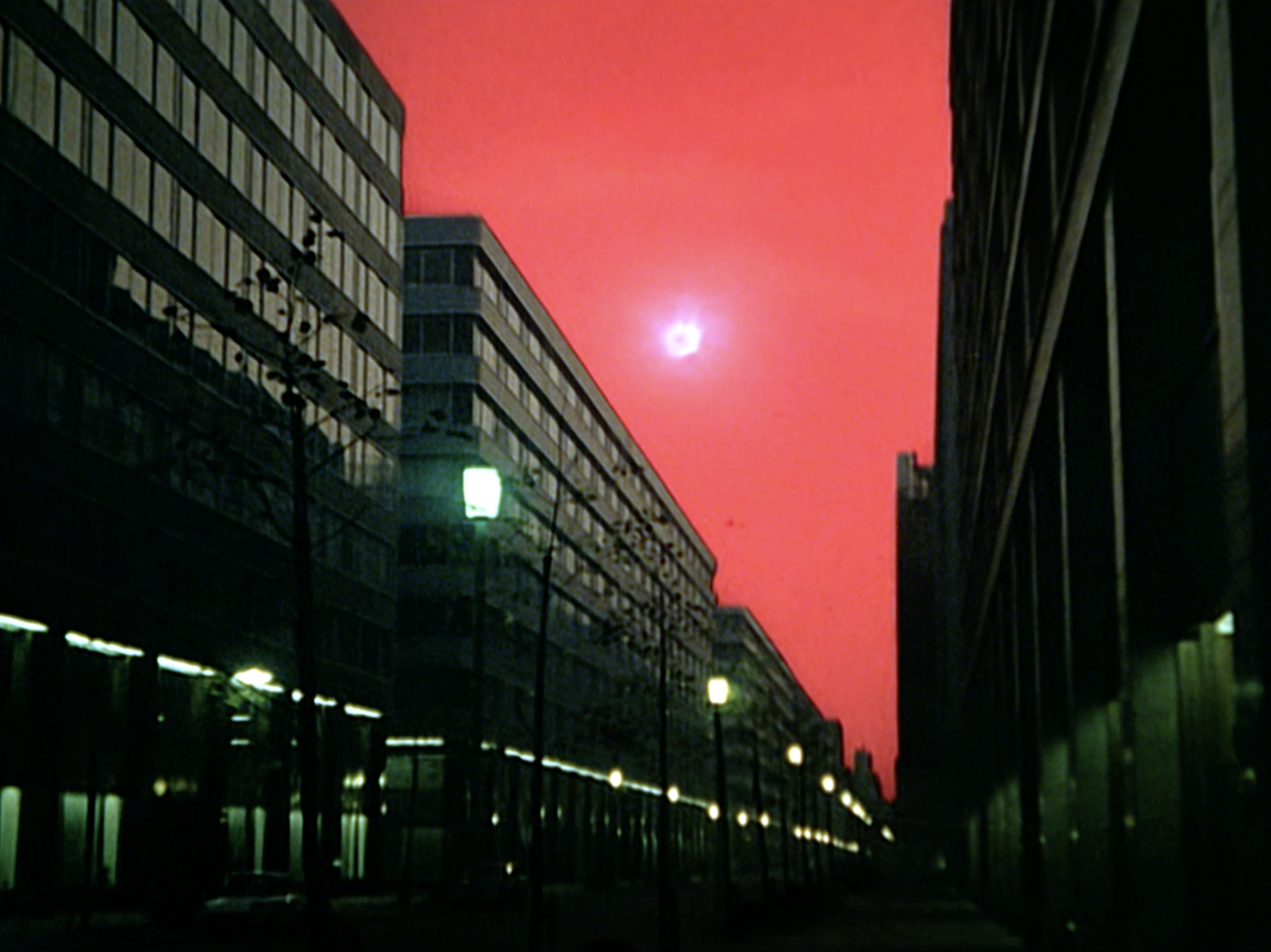
Directed by Toshihiro Iijima. Written by Bunzo Wakatsuki. Airdate Jan. 1, 1967.
In a scenario inspired by Ishiro Honda’s science-fiction epic Gorath (1962), a comet is hurtling toward Earth on a near-miss course. A near-miss is still too close: Comet Tsuifon’s cosmic rays may cause several missing older hydrogen bombs to detonate and annihilate life on the planet. After the comet makes its pass without causing an apocalypse, the Science Patrol determines there is still one missing bomb in danger of exploding. And that bomb was swallowed by a monster. And that monster is Red King. Oh dear gods, we’re all doomed…
“Mysterious Comet Tsuifon” concludes with a statement about the human race’s capacity for self-destruction, but offers hope that humanity’s intelligence will win in the future. This brings to mind a famous H. G. Wells quote: “Civilization is in a race between education and catastrophe.” I’m pointing out this heavy theme upfront because I’m about to push it aside and instead talk about monsters bashing each other while the cast has a grand time playing up their parts.
This episode is a blast, thrilling and funny even with the specter of potential nuclear annihilation. It’s the most action-filled kaiju spectacle since “The Monster Anarchy Zone,” which happens to be the last time Red King appeared. There are three monsters — Red King plus two newbies — who get into a titanic smackdown in the scenic Japanese Alps. This fight, including Ultraman’s eventual entrance, stretches across half the runtime. Every trick the visual effects crew could think of is on screen. Body slams, flips, explosions, lasers, decapitations, limbs ripped off … it is wild.
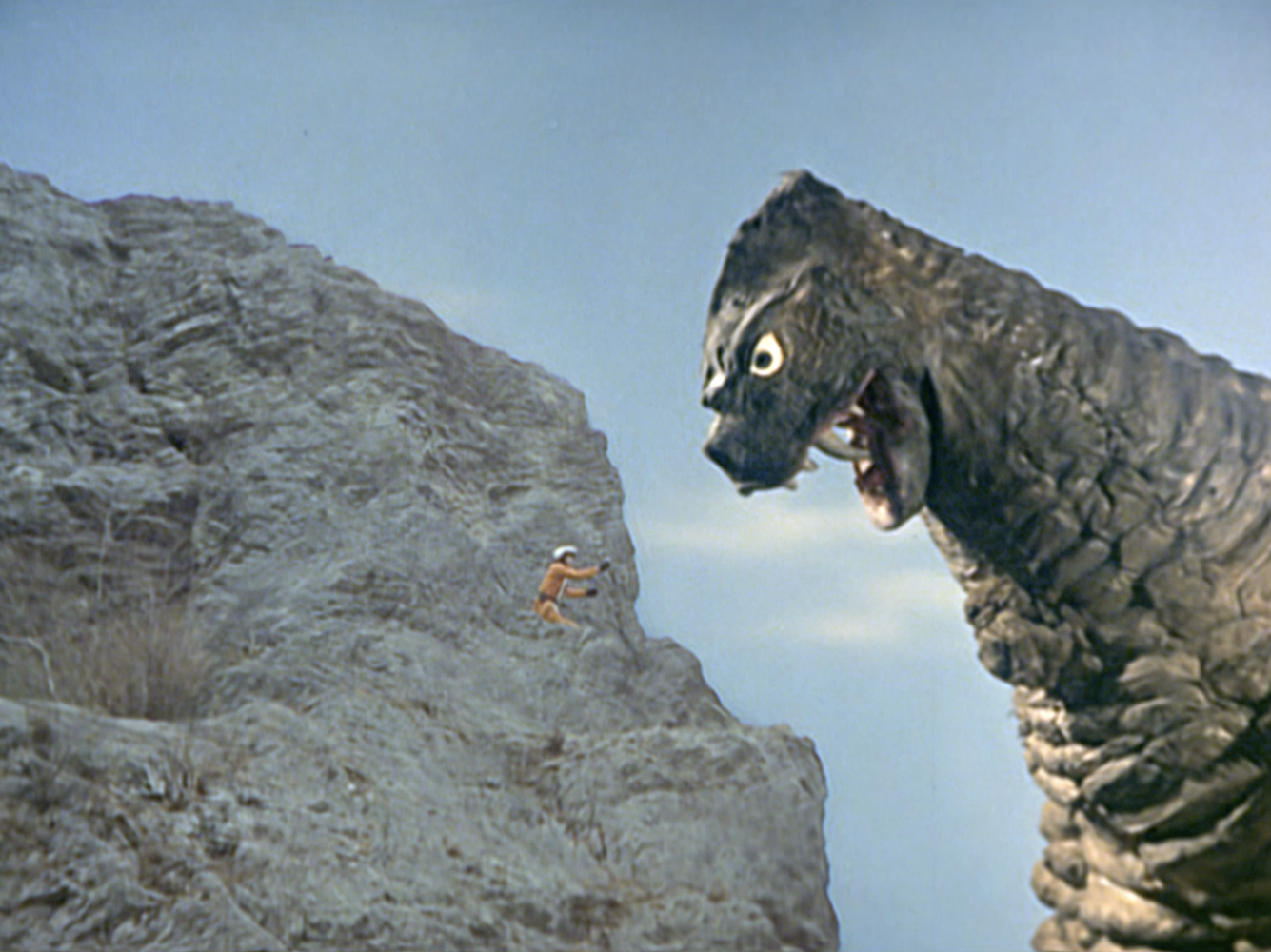
Red King wasn’t originally intended as the bomb-swallowing monster. The plan was to alter the Gorgos costume from Ultra Q’s “S.O.S. Mount Fuji” into a glacier monster to fit the alpine setting. Instead, the design team went with their second choice, Red King, likely because of the monster’s popularity. Strangely, no one in the Science Patrol recognizes Red King (a.k.a. Red King II) as identical to the monster they encountered on Tatara Island.
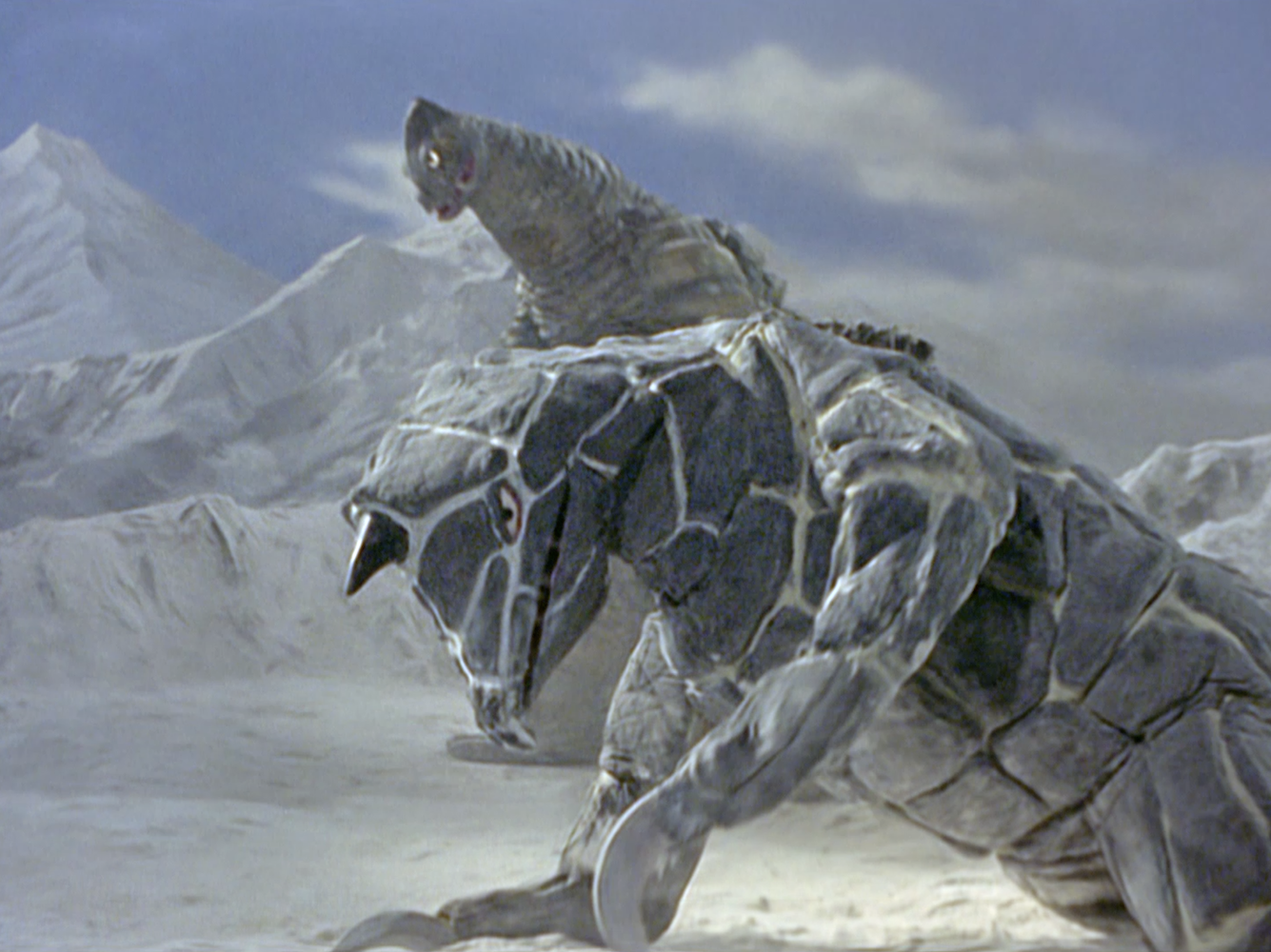
Red King absolutely earns the top-kaiju slot, showing off a delicious villain personality. Stunt performer Kunio Suzuki replaces Teruo Aragaki in the costume, but he brings the same level of bully energy to the monster: Red King is a nasty twerp who fights dirty and mocks its opponents. The outrageous finishing move Ultraman uses on the monster feels deeply satisfying because Red King is so fun to hate.
The other two monsters make good impressions. Guigass is a yeti-like beast created from the lower half of the Hydra costume from “Terror on Route 87.” Dorako, an alien kaiju that flies down from the passing comet, has a sleek and deadly look that foreshadows the design of the famous Godzilla opponent, Gigan. In a less jam-packed episode, Dorako would have the starring role, but Red King simply bulldozes over everybody and won’t share the spotlight. Red King only takes a break to sit down and cackle while watching Guigass and Dorako pound each other.
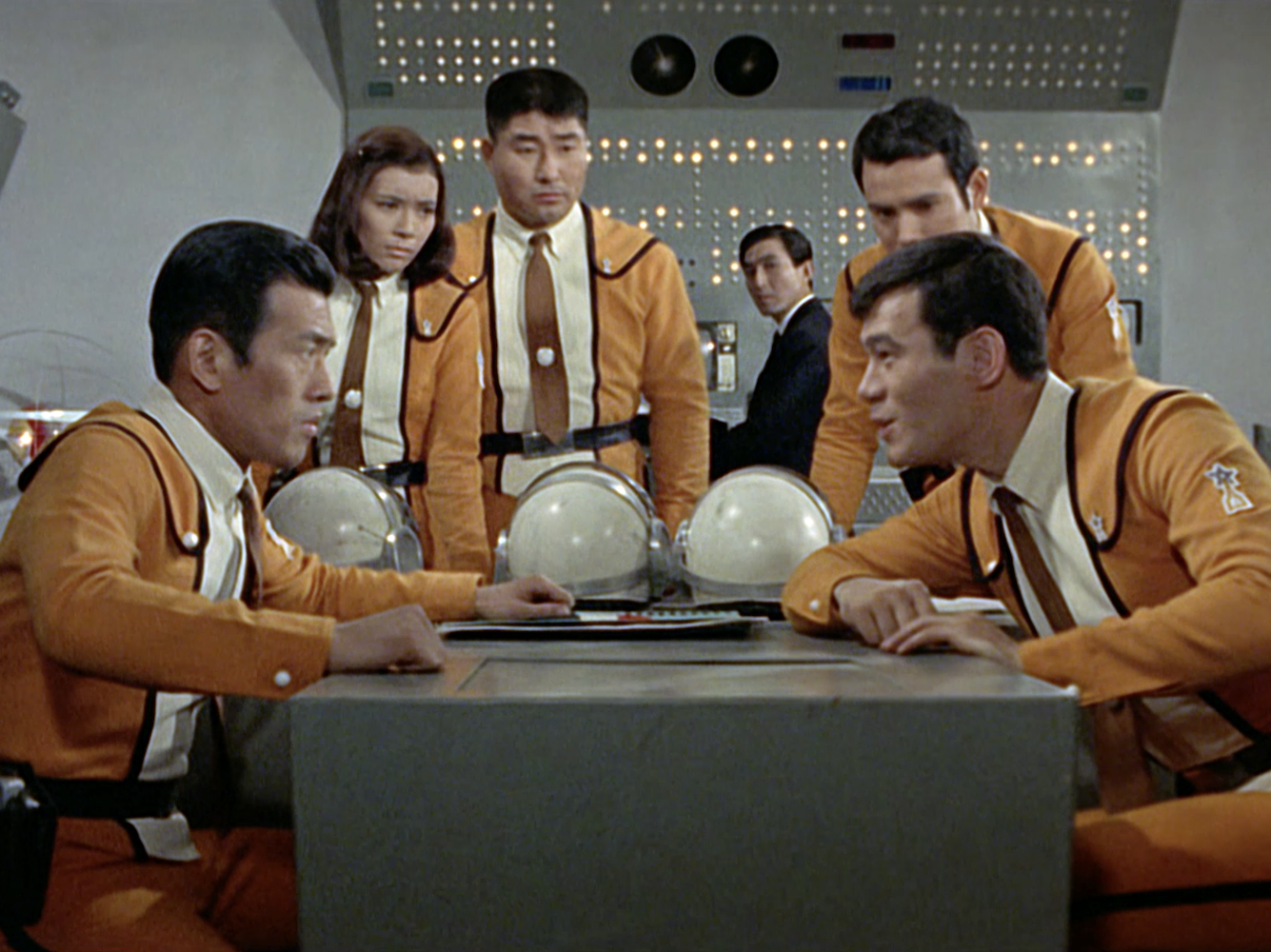
The episode isn’t all monster fisticuffs. The members of the Science Patrol have some of their most enjoyable interactions as an ensemble. This deep into the show’s run, the actors and writers have an easy feel for the characters. The early scenes at SSSP headquarters let everyone show off something essential about their personalties:
- Captain Muramatsu: Level-headed and prepared
- Ide: A bit of a goof, but smart and philosophical
- Hayata: Just kind of there, says necessary exposition
- Fuji: Chipper and young, trying to be positive
- Arashi: Loud and wrong about everything
There are humorous nuggets throughout. Fuji accidentally puts salt in everyone’s tea instead of sugar, the same mistake Ide made in “Five Seconds Before the Explosion.” (I’d say doing this to Fuji is more ‘60s sexism, but Ide did mess it up first.) The civilian crowd watching in terror as Tsuifon scrapes past Earth includes a kid wearing an astronaut costume so he’ll survive if he gets blasted off the planet. Nearly everything the monsters do is chuckle-worthy on purpose.
Back to the serious stuff for a moment. Director Toshihiro Iijima said that he wanted to use this episode to explore the theme of human reason against human cruelty: “Wisdom and reason, if used correctly, will save humanity — that’s the concept of science, right? This is the theme of this story.”
I’m glad Iijima-san wanted to get across this idea; I appreciate these humanist themes in an Ultra show because they keep the kaiju action from feeling like hollow spectacle for spectacle’s sake. But for me, the theme of this story is that giant monsters bashing each other is one of the greatest things you can put on a television screen. No shame in that. We just got the heavy and brilliant “My Home Is Earth,” so consider this the monster-crammed, joyful version of a serious story.
This is the final appearance of the character Isamu Hoshino in Ultraman. Actor Akihide Tsuzawa injured his leg at an amusement park (this one) during filming and was in the hospital for two months. Hoshino doesn’t receive an official send-off, he simply never appears again. I’ve had occasional issues with the way the show handled its kid character, but I do have genuine affection for Hoshino. Tsuzawa brought a lot to the part and made him something more than what was often on the page.
Rating: Classic
Previous: Undersea Science Center
Next: The Monster Highness
 The Ultra Project