
Directed by Kyota Kawasaki. Written by Hideyuki Kawakami. Airdate Dec. 21, 1996.
After a hint of the supernatural in the previous episode, Ultraman Tiga goes into a full-fledged fantasy drawn from Japanese legends and the country’s feudal era. The Showa era Ultra shows rarely visited this time period, mostly because the networks didn’t want to limit international sales by making the shows “too Japanese.” Thankfully, the Heisei era loosened up on this so that the more fantastical world of samurais, shoguns, ogres, and demons could burst through to Ultraman’s world. “The Revived Demon” is among the best of these types of episodes, and it’s one of director Kawasaki’s most impressive outings on Tiga.
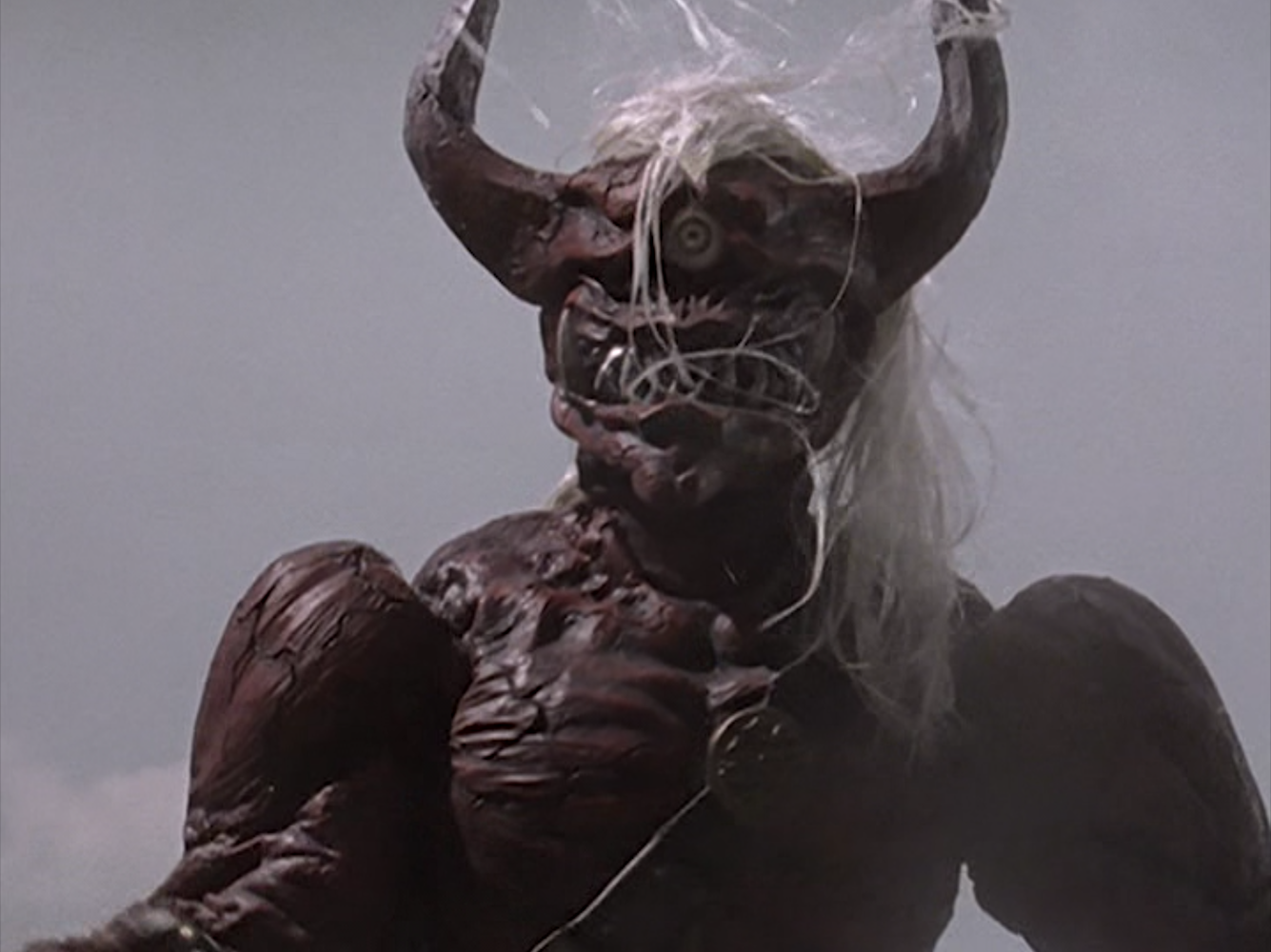
The demon of the title is Sukunaioni, an ogre-like giant with faces on the front and back of its head. During the Tokugawa period (1603–1867, the most popular era for Japanese period dramas and fantasies), a ronin samurai named Kagetatsu Nishikida defeated the demon when it was attacking the lands around Mt. Sukuna. After his victory, Kagetatsu severed Sukunaioni’s limbs and buried them under the mountain.
In the modern day, three thieves break into a shrine to Kagetatsu and steal his statue and sword. The theft of the sword allows Sukunaioni to start to reassemble its parts and break free from its mountain tomb. Kagetatsu’s spirit from the statue is able to possess one of the thieves so he can attempt to defeat the evil again.
The samurai monster-killer will have help, of course, because the GUTS team flies out to Mt. Sukuna to look into the reports of a giant arm appearing from the mountainside. (Iruma forces Shinjoh to stay behind at base, and he’s not happy about it. He must recognize that he’s becoming a more important character.)
The story isn’t a complex one, but it doesn’t need to be: the good vs. evil conflict comes from the setting of old legends, and the script and execution play everything right for an exciting adventure of two heroes joining forces against a demon. It has enough character bits, surprises, dashes of humor, and thrilling action to make it a standout episode of Ultraman Tiga.
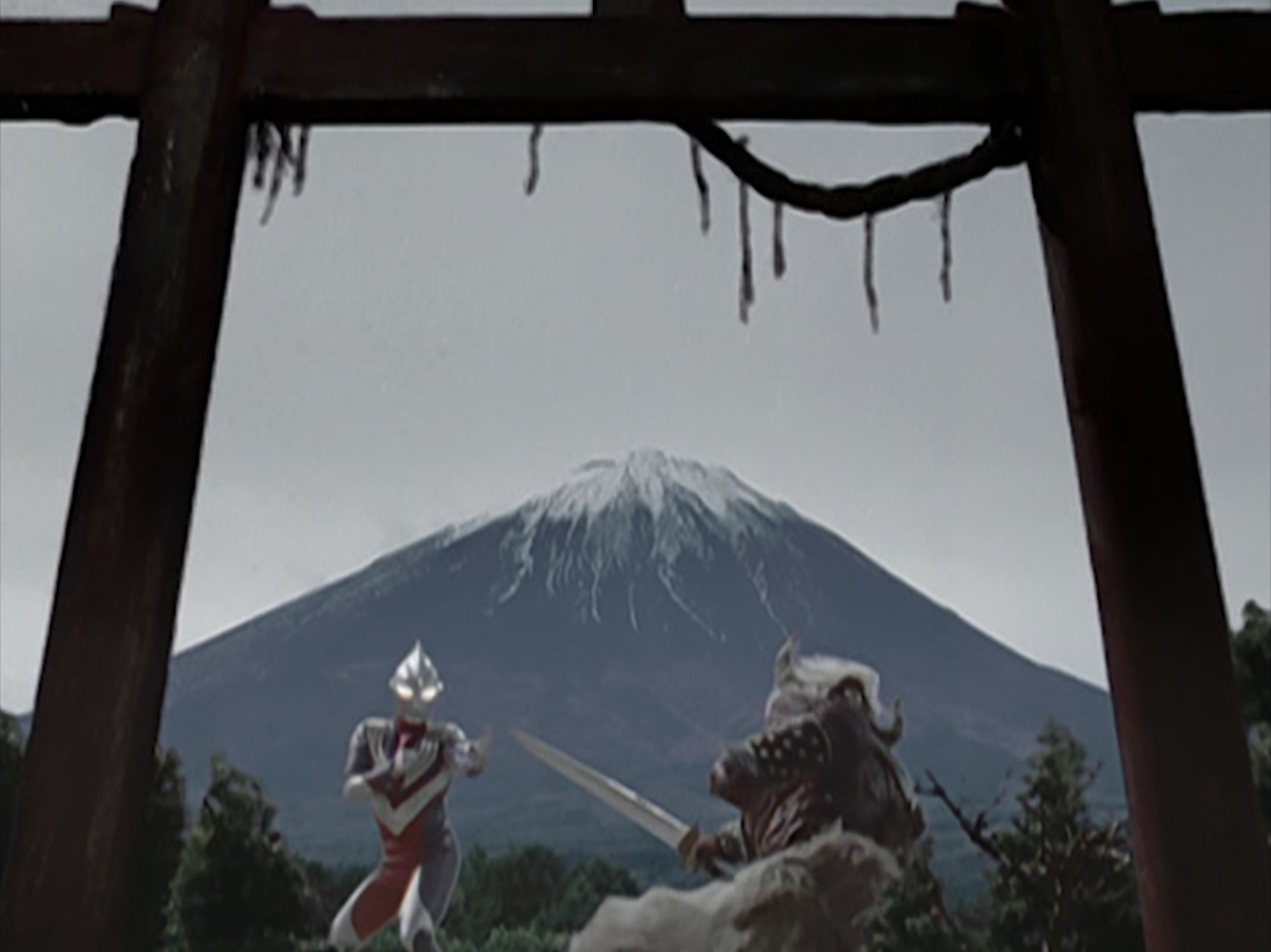
The final clash between Tiga and the ogre Sukunaioni before the mountain doesn’t look or feel like any kaiju fight seen before in the show. Even though one of the duelists is a silver alien, the fight might have sprung from a Japanese chambara (sword fighting) movie. Sukunaioni does use a sword for much of the fight, which forces a change in Tiga’s usual tactics and emphasizes the samurai fantasy elements. Some of the compositions during the battle are striking, such as framing the two combatants from a distance through a torii gate with the sprawl of Mt. Sukuna as a backdrop.
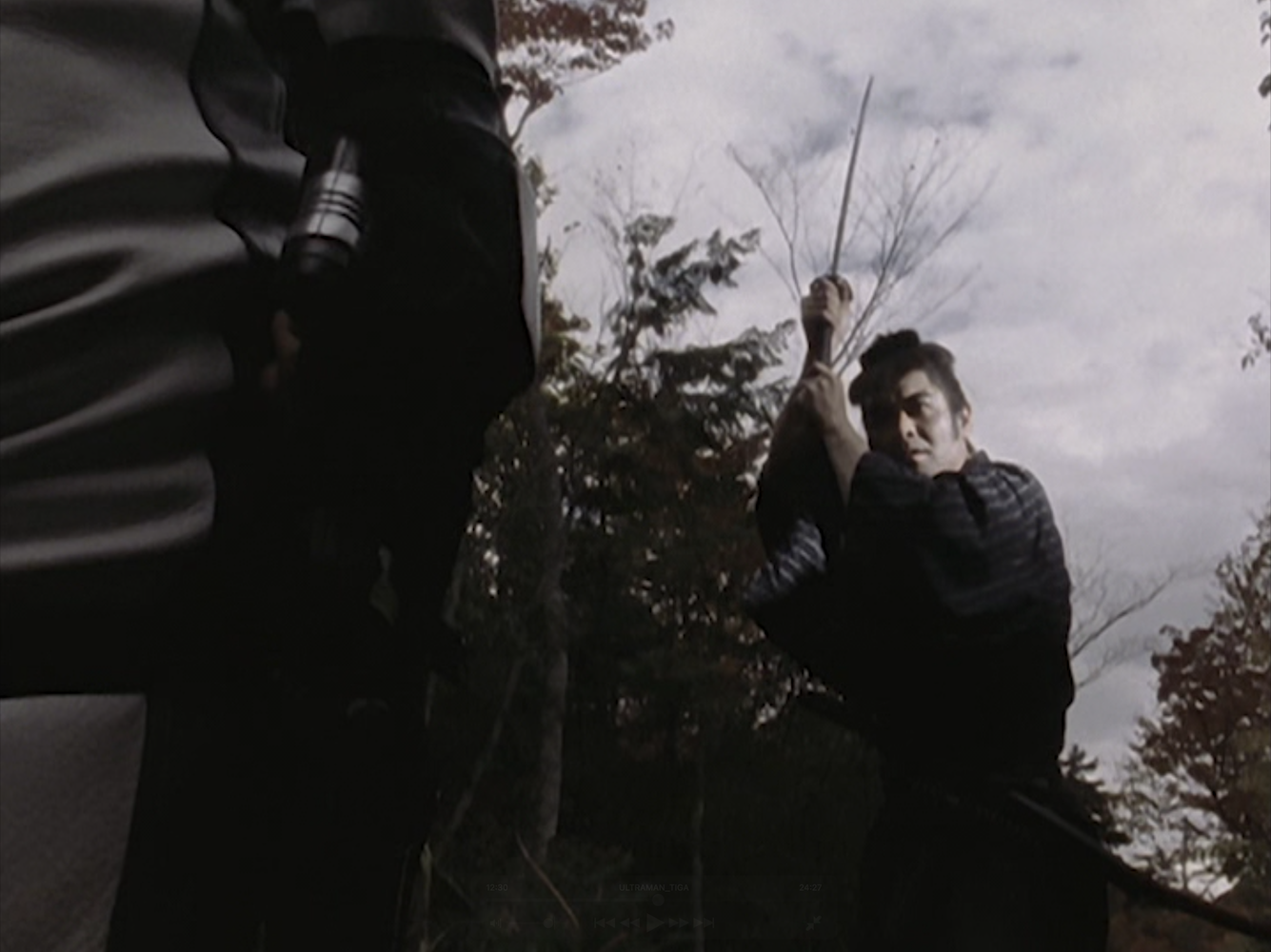
One of the most interesting aspects of the episode is the link between Daigo and Kagetatsu as warriors on the side of good. When the two first meet in the woods, Daigo peers beneath the exterior of the possessed thief (actor Hozumi Goda) to see the form of the actual samurai (actor Hiroshi Kawasaki). Kagetatsu also recognizes the alien warrior in Daigo. He acknowledges Tiga — whom he calls “Man of Light” — as a comrade in the battle against evil. Kagetatsu was known as a monster-killer in his time, the same job Tiga now holds.
Although Kawasaki doesn’t have extensive screen time as the samurai demon-hunter, he makes a strong impression because of how he deepens Tiga’s role. Goda also has a few humorous parts playing thief when he’s under the control of the ancient samurai. This is the right sprinkling of humor for the story.
The similarity between Tiga and Kagetatsu returns in a coda that adds more depth to Daigo than I think he earns over the rest of the show. Kagetatsu leaves Daigo (or Tiga) with the thought that the true hero’s fight is a lonely one; a hero must become used to solitude. This doesn’t really match Daigo’s gregarious personality and friendship with his teammates, although perhaps the message applies more to Tiga. Daigo at least leaves the episode with more to ponder.
Rating: Great
Previous: Phantom Dash
Next: The Battle Between Red and Blue
 The Ultra Project