
Directed by Hajime Tsuburaya. Written by Mieko Osanai. Airdate Dec 14, 1967.
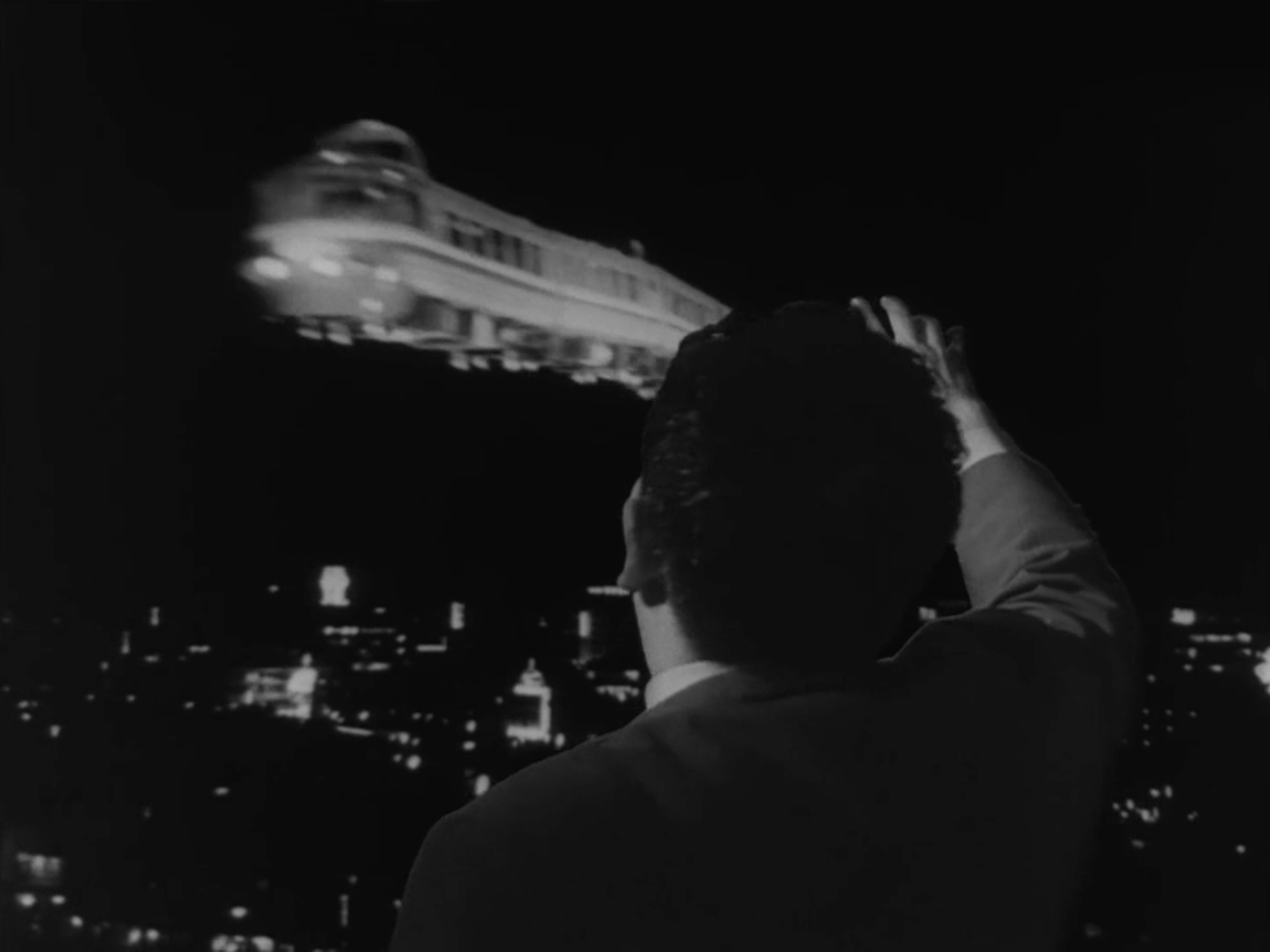
Ultra Q closes its original run with an ethereal episode, absent of monsters and high on postmodern angst. It’s hard to imagine an Ultra episode farther removed from the colorful heroics of Ultraman, so it isn’t surprising that TBS producer Takashi Kakoi decided that “Open Up!” was not a good lead-in for the new show. He removed the episode from the schedule and replaced it with the Ultraman preview special. “Open Up!” wouldn’t reach airwaves until the end of 1967, when Ultraman had finished its run and Ultraseven was already airing.
“Open Up!” may have been the last Ultra Q episode to air, but it was among the first shot. It shows an early vision for the program before TBS pressed for more monsters. It’s a cerebral episode with a mature theme about the disappointments of adult life.
The story of a mystery train flying through the night sky that can take people to that “somewhere else” they always wish to escape to is spiritual kin to The Twilight Zone, particularly the first season episode “A Stop at Willoughby.” The script mirrors one of Rod Serling’s favorite themes: the exhaustion of the middle-class business drone who wants to find some exit from the crushing drabness of his life.
The central character is Sawamura (Ken Yanagiya), a harried salaryman who drinks heavily to deal with how much he dislikes his soul-crushing job and his marriage and his daughter. Yuri and Jun nearly run over the man when he’s passed out in the middle of the street one night. When they try to drive him home, Sawamura has a panic attack at a train crossing. He then suddenly finds himself inside a bizarre commuter train containing only a handful of passengers and hurtling through a dreamscape.
One person aboard the uncanny train seems to understand what’s happening: popular science-fiction author Kenji Tomono (Hideyo Amamoto, a distinctively lanky actor who played the villainous Dr. Who in King Kong Escapes and the friendly toymaker Mr. Shinpei in All Monsters Attack). Tomono tells Sawamura that everyone who found their way aboard the phantom train is “now heading toward the world that all of you have been wanting to go” — that indefinable elsewhere free from the daily noise and pain of life.
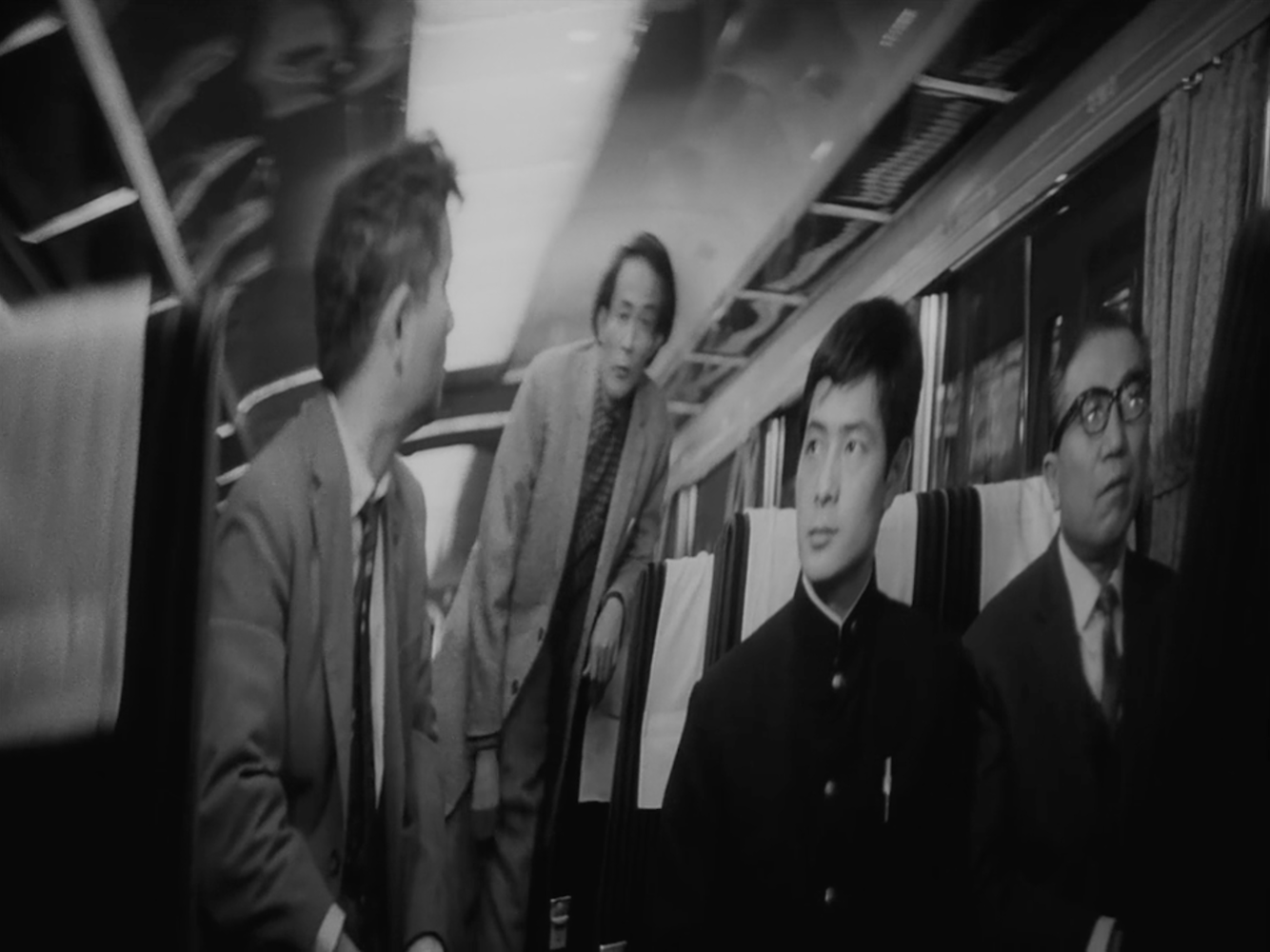
This theme of escape from suffocating modernity speaks to viewers today as strongly as it must have when the episode first aired. Ken Yanagiya, who plays Sawamura, is perfect as a pathetic and crushed man. He’s a sad figure, at first treated with searing disdain by Jun and Yuriko. When his wife and daughter drive him home, they both give him a blistering dressing-down as a useless coward. It’s an intense scene straight from a serious dramatic film, and I can imagine TBS executives getting a first look at this footage and thinking, “We need to lighten this up. Kids won’t watch this!” True enough, but it makes me yearn for the different directions Ultra Q might have gone.
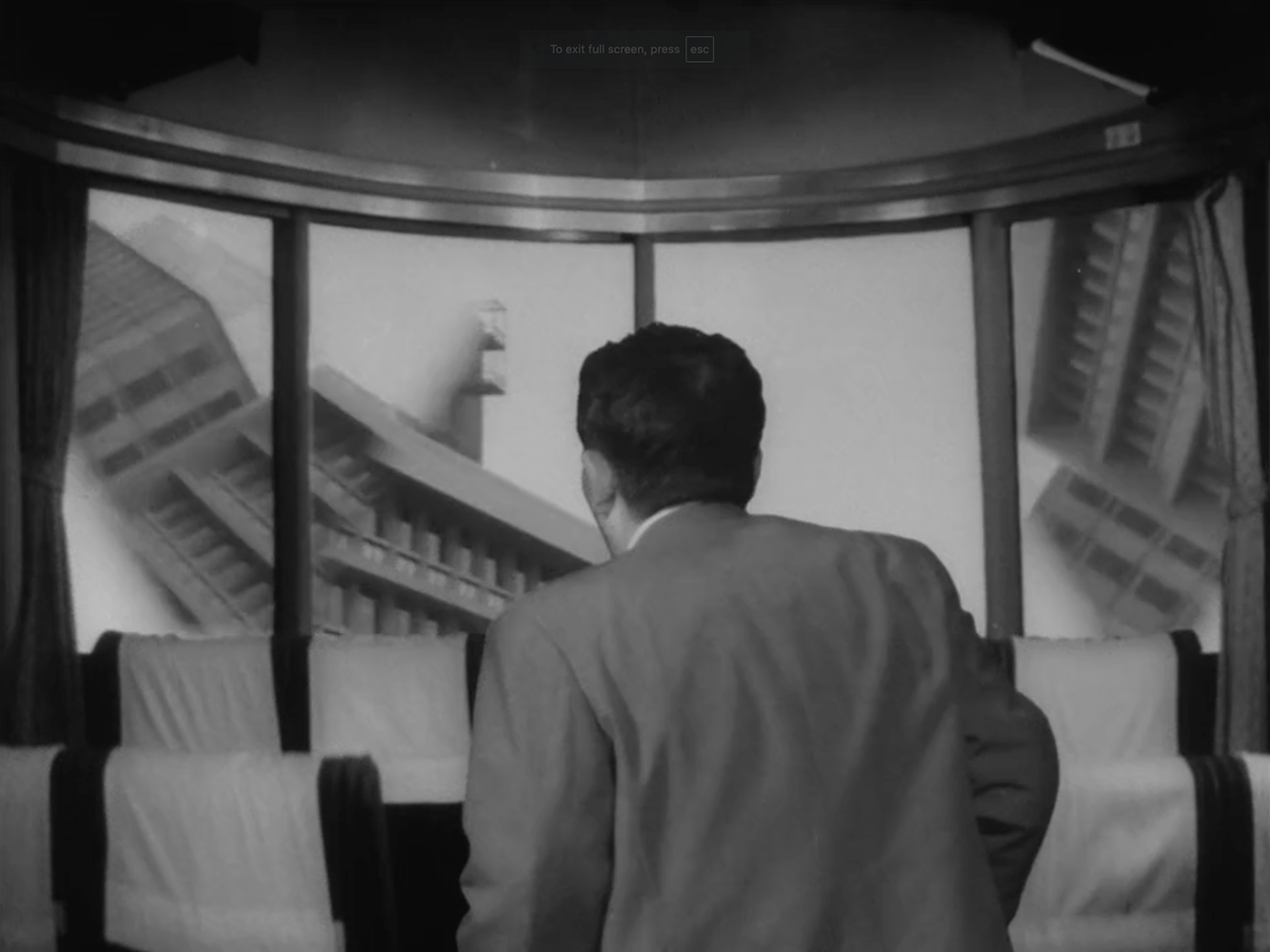
Hajime Tsuburaya, one of the regular directors of the classic Ultra shows, has a firm grip on the quiet dread of the story. The distortion effect aboard the train, the kaleidoscope visuals through the windows, and the weird sight of the train cars cruising through the empty night sky work together to create a mood of spectral loneliness. The final moments capture some of the magic of the best enigmatic conclusions from The Twilight Zone.
The investigative half of the episode isn’t as powerful as Sawamura’s story, but it doesn’t distract from it. Jun and Yuriko track down reports of vanishing train cars and discover that Tomono, the writer Sawamura says he saw on the train, hasn’t been seen in a year and a half, although manuscripts keep arriving at his home from an unknown location. Professor Ichinotani is unable to offer much rationalization for the people who claim to have stepped aboard an other-dimensional train, but the story doesn’t need everything explained. The closest it gets is to suggest that Tomono discovered a way to escape into his own fictional worlds and create a passageway for others to follow.
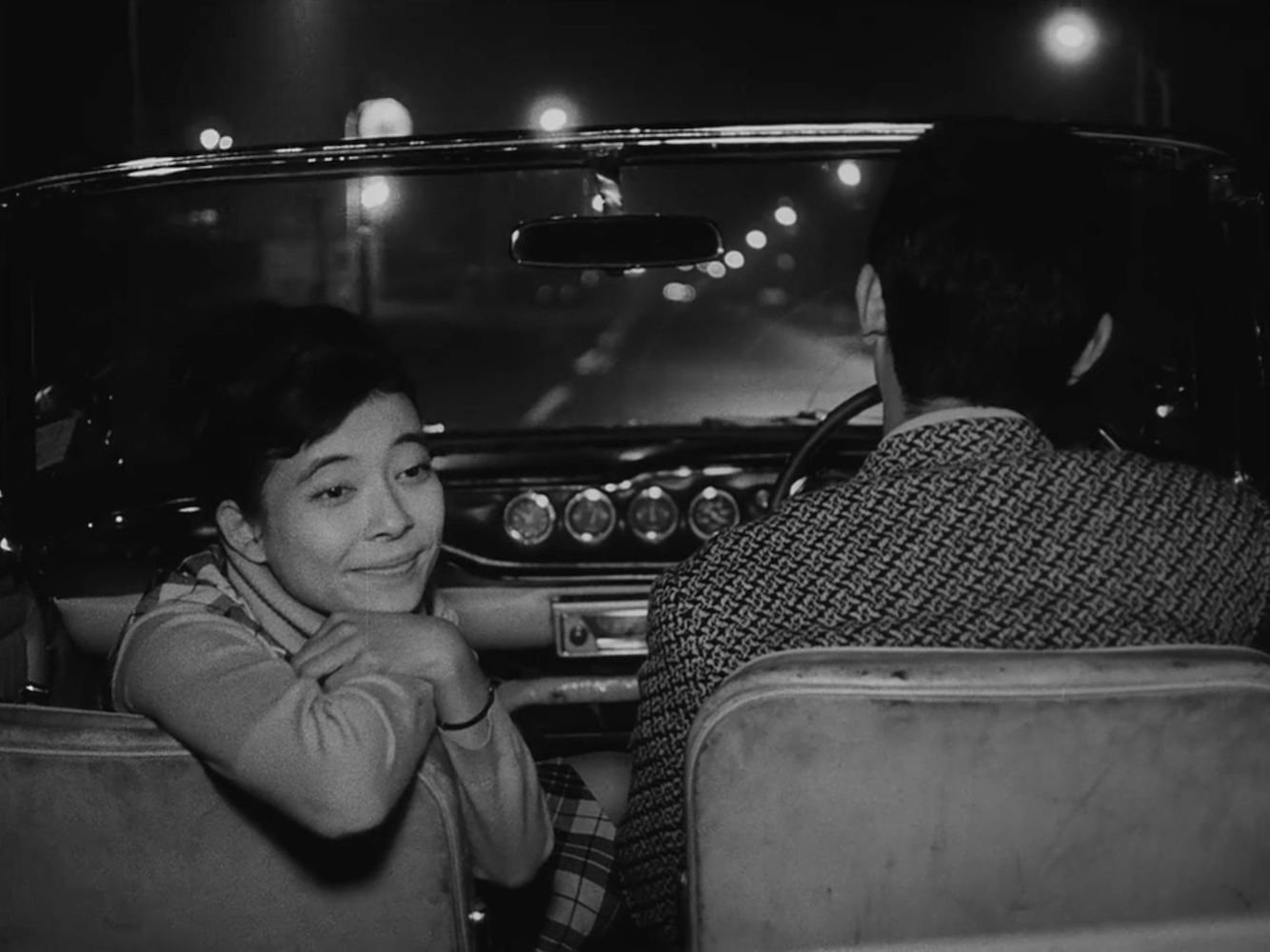
This is the essential episode for the relationship between Jun and Yuriko. As the story begins, they ditch Ippei (rather callously) to drive off on their own on what feels like a romantic date. Yuriko says she wishes for “just a world with you and me,” a lead-in to the events that will soon happen with Sawamura. As this was only the fourth episode produced, it seems that a real romance was intended for these characters, but it was dropped as the show developed more along monster-movie lines. But if watched as the final episode of Ultra Q, “Open Up!” feels like a culmination point for Jun-kun and Yuri-chan. Although I’ve never accepted that these characters belong together — the actors are almost 15 years apart in age, and Hiroko Sakurai was only 19 at the time of filming — this development in the last aired episode creates a sense of closure for the show.
There’s no Ultra Q finale as there would be for the shows that followed, but the eerie quiet of “Open Up!” and the Jun–Yuriko relationship feel like a good way to end things before hopping over to Ultraman. It may have arrived late, but such an incisive work of contemporary fantasy is a welcome way to go out.
Rating: Classic
Previous: The Disappearance of Flight 206
Next: My Favorite Ultra Q Episodes
 The Ultra Project