Directed by Kyota Kawasaki. Written by Kazuo Tsuburaya and Junki Takegami. Airdate Dec. 14, 1996.
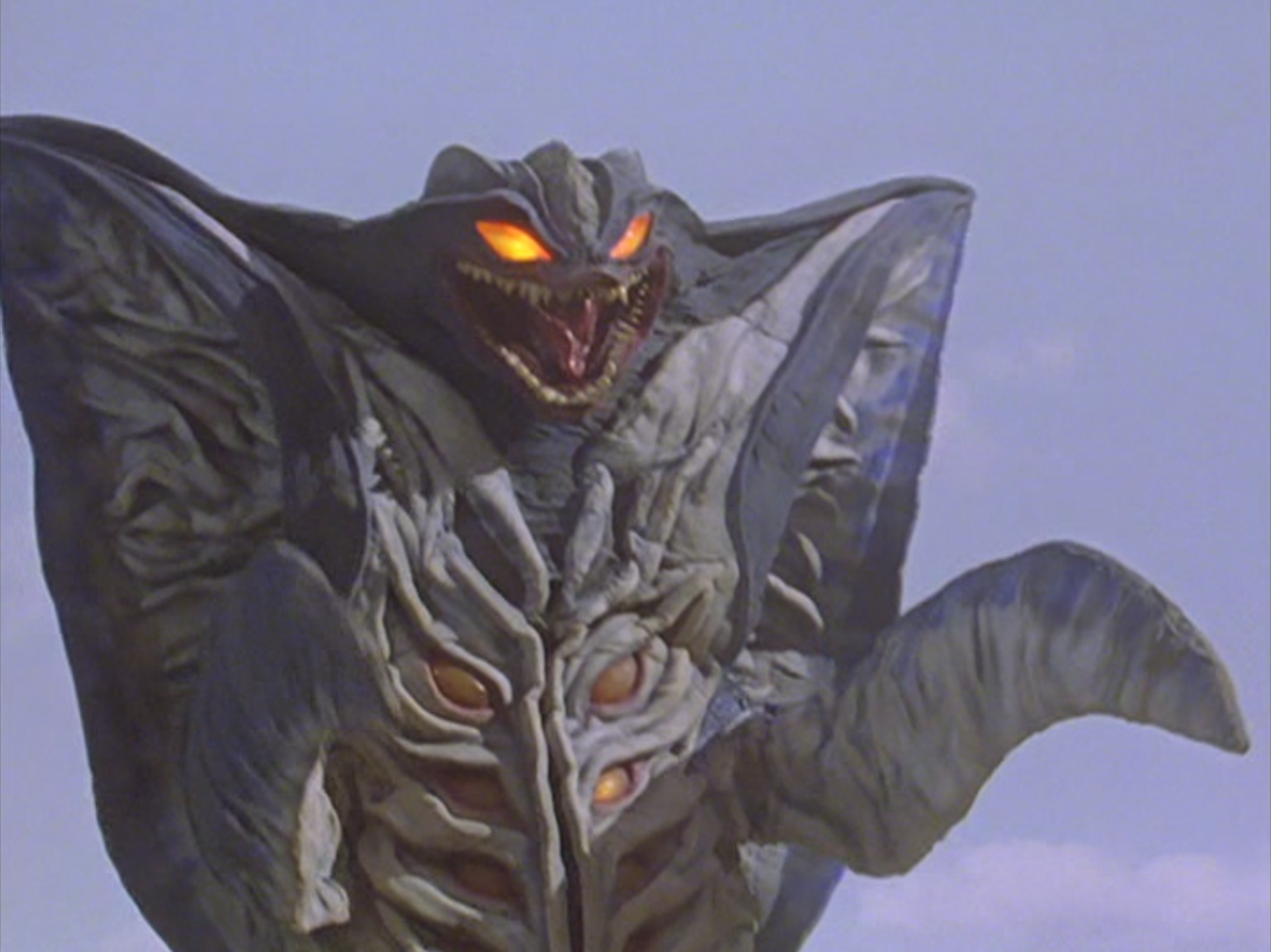
Gazort and the Clitters are back, everyone! Gazort still looks fantastic, arguably Ultraman Tiga’s most memorable kaiju. However, like the first episode with Gazort, the monster is less the star and more the catalyst for a character study. Horri was at the center of “Second Contact.” Now Shinjoh takes over as the pivotal figure, sharing the spotlight with his sister Mayumi (Kei Ishibashi). The mix of a great monster encore, an emotional character-driven story, and a touch of the weird makes for one of the best Ultraman Tiga episodes so far.
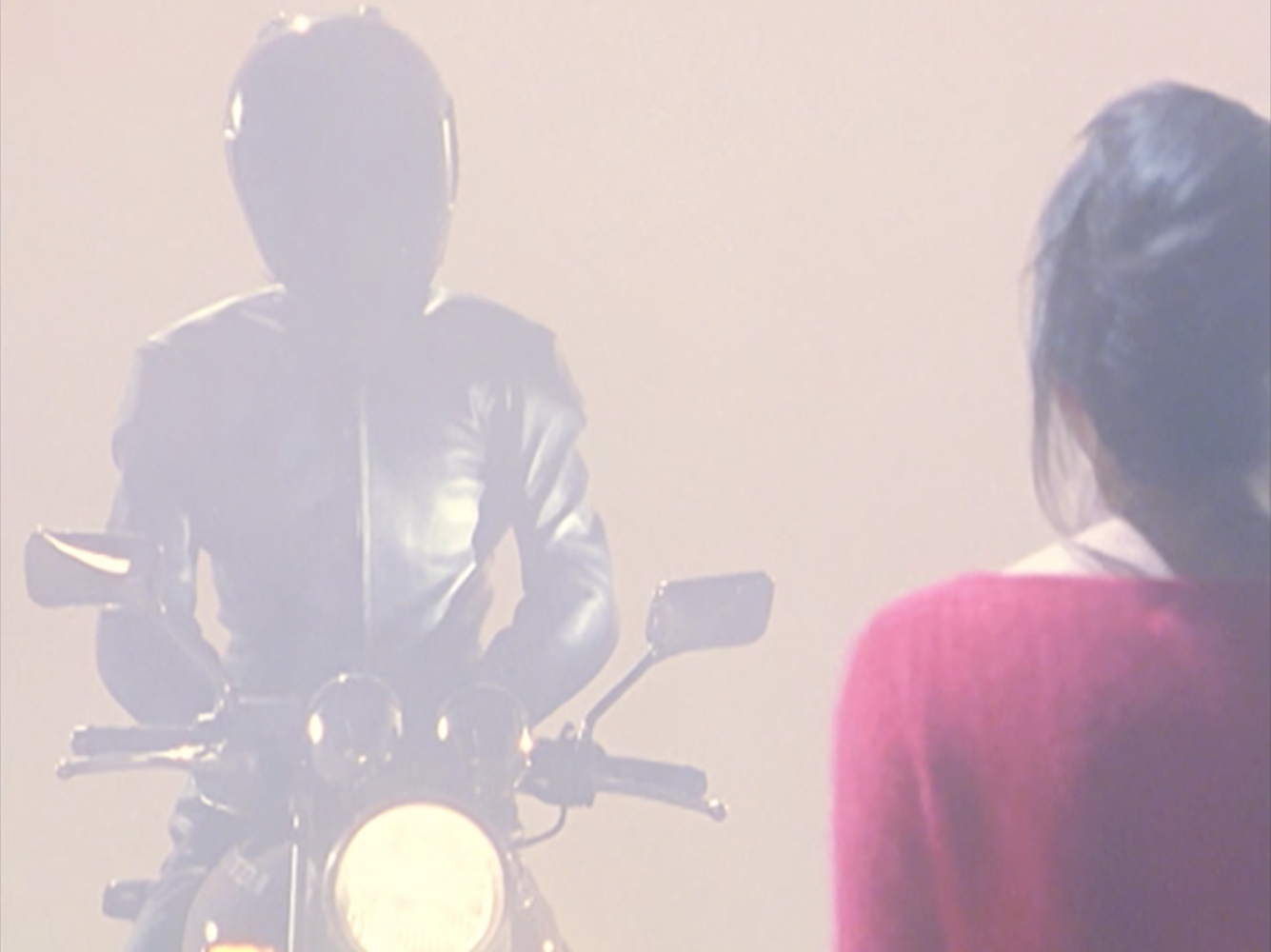
We’ve heard mention of Takuma, Mayumi’s fiancé, before. Now, Shinjoh is actually going to meet his future brother-in-law in person. Takuma, a champion motorcycle racer (played by real-life motorcycle racer Takuma Aoki), is returning to Tokyo aboard Flight 206 —
Wait a minute, Flight 206? Oh, that can’t be good news. The writers picked that flight number for a reason.
And, indeed, the bad news is Gazort’s return. Humanity’s continuing use of microwave radiation has revived the kaiju from the ionosphere. Takuma’s flight gets too near to the cloud of Clitters when Gazort emerges, and ground scanners lose all track of the plane.
When Shinjoh learns of the disappearance of Flight 206 (yes, I said it), he dashes off with Daigo to find out what happened. Shinjoh can’t stand the thought of seeing his sister unhappy and will do anything to find and rescue Takuma. But he doesn’t have the chance to search for the vanished plane for long: Gazort turns its attention toward a new solar energy generator, threatening to create a thermal event that will annihilate Tokyo.
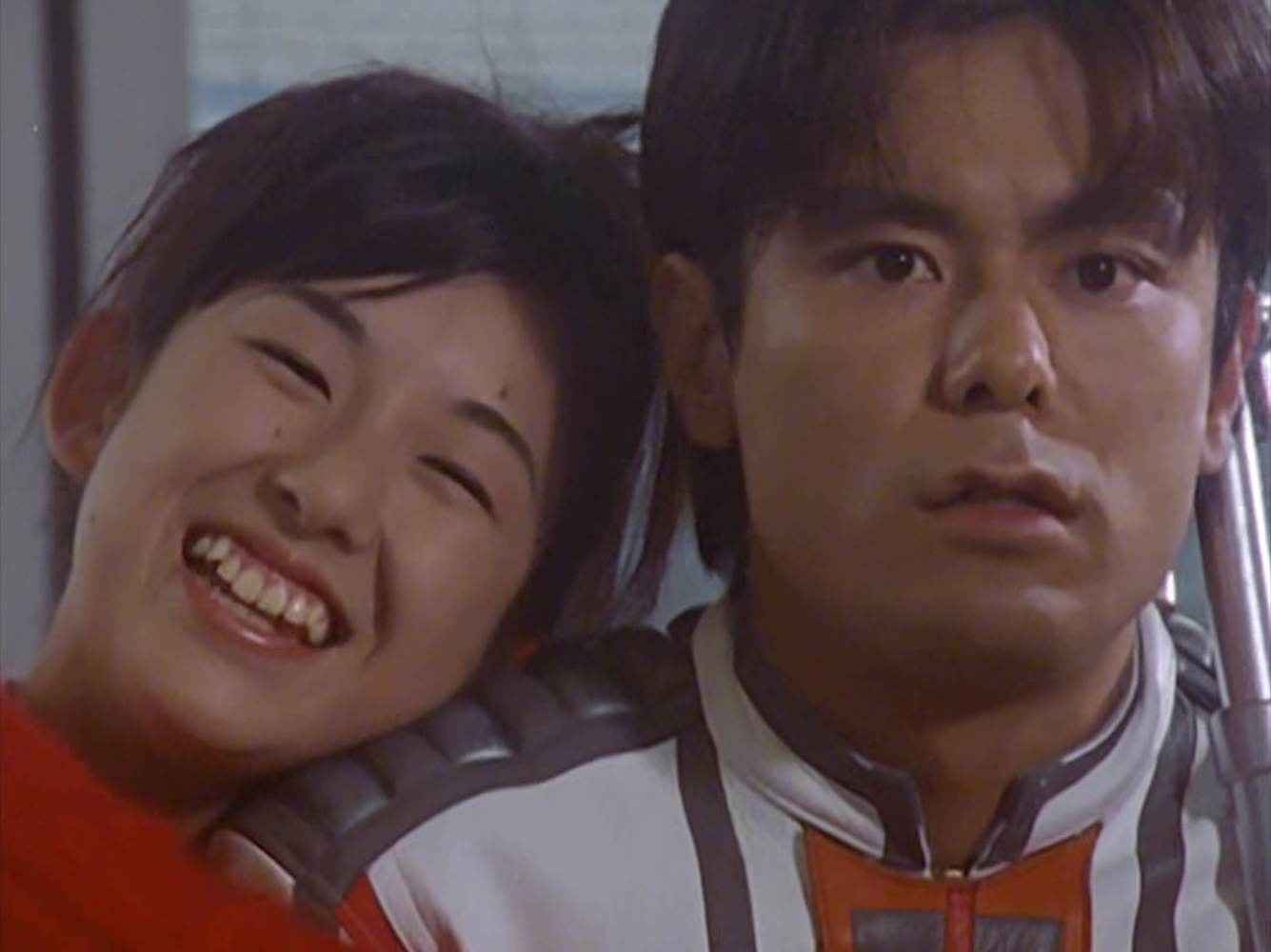
Shinjoh seems to be on a quest to become the most interesting character in GUTS. Although he never wrestles that position away from Horri and Iruma, it’s impressive how much the typical “action guy” of the show evolves to reveal different facets. Shinjoh has charm and softness that comes through his tough exterior. His chemistry with his sister is wonderful to watch. Their scenes together round off the episode on two different emotional notes, high and low. This is the biggest role for Mayumi in the show, and Kei Ishibashi does excellent work with the range of emotions she has to play.
Takuma doesn’t have much screen time to build his relationship with Mayumi, but it doesn’t hurt the episode. What happens between Mayumi and Shinjoh is what matters the most. We know enough about how Mayumi feels about Takuma from the way she acts with her brother, and Shinjoh’s focus on trying to save Takuma so his sister won’t be heartbroken further bolsters his importance to Mayumi. The episode knows where to put its character emphasis, and the ending hits the right way.
The action of the episode is top-notch if you ignore the show’s tradition of poor digital effects. (A shot of Gazort’s blasts ricocheting off a GUTS vehicle shield is a real groaner.) Horii goes into action with a microwave gun that may defeat Gazort, and there’s an exciting set-piece of Gazort vs. a motorcycle that’s definitely a different approach to kaiju action.
In the middle of all of this, Kayumi finally speaks up to ask Iruma if he can get up from his desk and deploy into the field. Iruma answers that she’ll “think about it,” like she’s his mom. That’s a cute, in-character touch for both of them. (Kayumi does not deploy.)
Gazort looks marvelous, just as it did in “Second Contact.” The monster has that special ‘90s Tsuburaya Pro magic: evil toothy mouth, big glowing eyes, manta-ray body, and an almost adorable personality that somehow doesn’t diminish its menace. But Tiga’s finishing move on Gazort is the one place where the episode botches its consistent tune. It’s funny to see Tiga’s power blast whack Gazort in the groin, and it would’ve been a terrific knock-out blow in a sillier episode. This isn’t that episode, however.
The conclusion of “Phantom Dash” leaves open the question of how something seemingly impossible just occurred. Horii offers a stab at an explanation having to do with plasma, but he doesn’t sound convinced of his own hypothesis. Someone just needed to propose an explanation. I’m content with this ambiguity. The Ultra Series is permitted to go into the arena of fantasy and the supernatural, such as in the very next episode. More often, it only brushes up against it. This is a case where the whisper of the weird has a shivery effectiveness.
The “Clitters Trilogy” will conclude in “One Vanishing Moment.” The story of Mayumi and Takuma also has another chapter: the Ultraman Dyna episode “The Phantom Bird,” the first episode of that show to make a direct link to Ultraman Tiga.
Rating: Great
Previous: The Unleashed Target
Next: The Revived Demon
 The Ultra Project