
Directed by Koji Kajita. Written by Tetsuo Kinjo and Hiroyasu Yamaura. Airdate July 3, 1966.
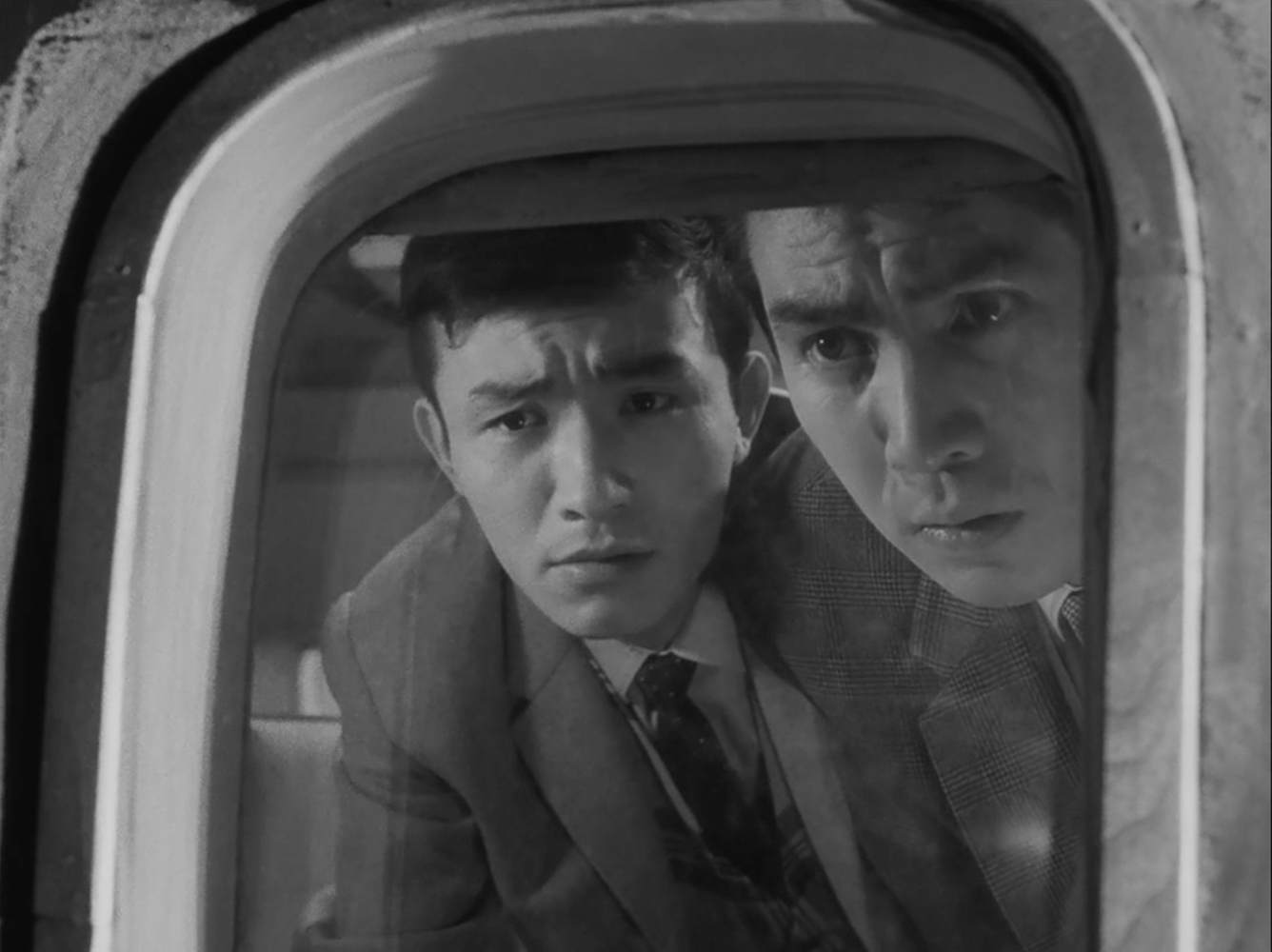
Jun and Ippei are returning from pilot training in Hong Kong aboard the maiden flight of a supersonic jet. The last time Ultra Q took a ride on the inaugural run of a super-speed vehicle, it was in “The Underground Super Express Goes West.” It was not a smooth trip. This second trip on emerging high-speed technology also goes wrong fast. Flight 206 gets dragged into a mysterious whirlpool in the sky and vanishes, leaving poor Yuriko and Professor Ichinotani at the airport baffled by yet another uncanny occurrence in the Unbalanced Zone.
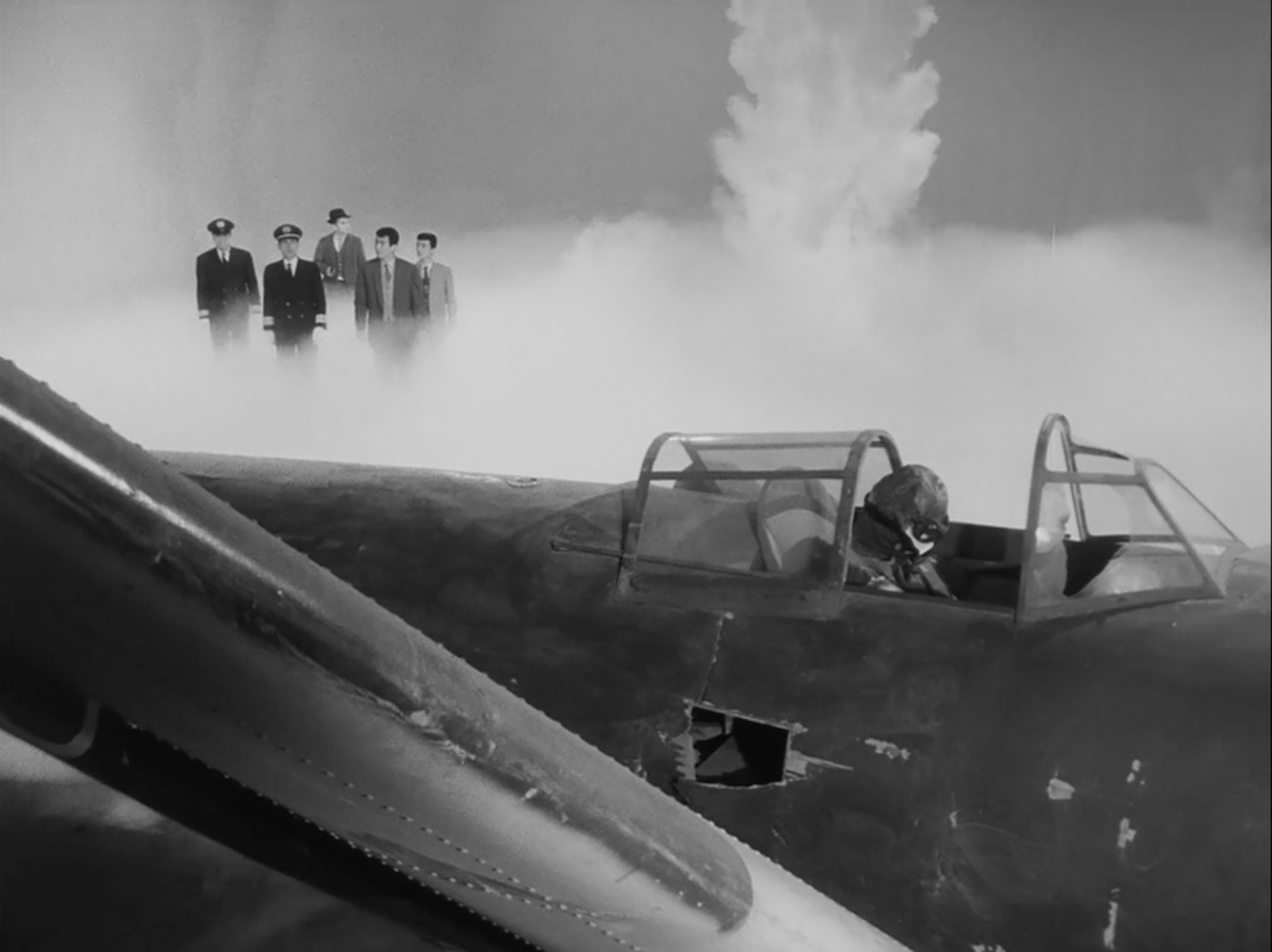
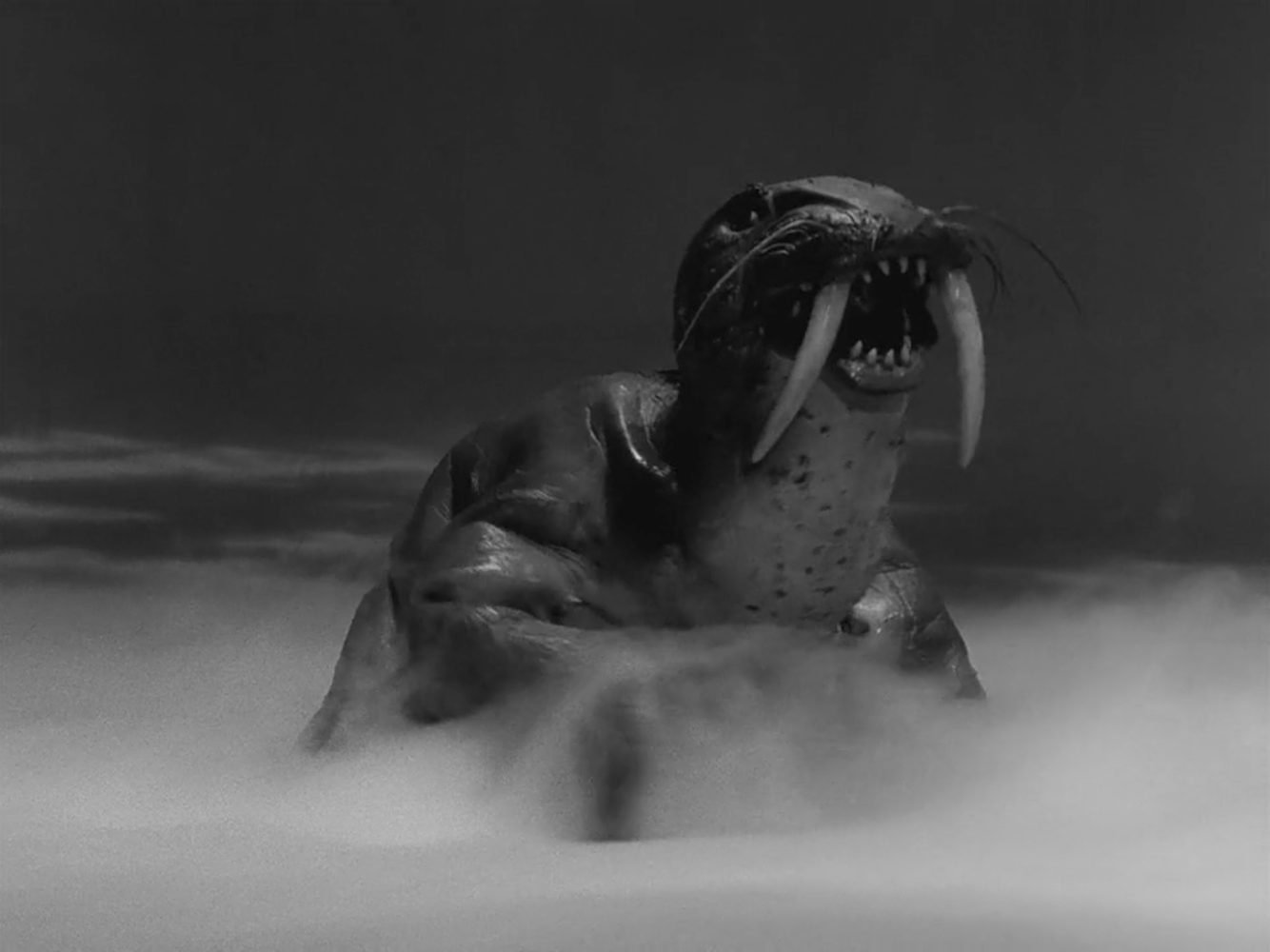
The tale of Flight 206 makes for one of the most exciting and fast-paced episodes of Ultra Q. The crew and passengers of the lost plane end up in a cloudy realm filled with the remains of World War II fighters, a sort of aerial Sargasso Sea dimension, and the tension and danger are almost constant. Not only do Jun, Ippei, and everyone else on the plane have to figure out what happened and how they can escape, but they also must deal with a criminal trying to take over the plane. Notorious murderer Taro Orion (Ishiro Honda regular Nadao Kirino, who has the gruff, gun-wielding gangster look nailed) breaks free from his police escort and holds the plane hostage with the officer’s gun. As if things weren’t bad enough, there’s a giant walrus wandering around the clouds…
Wait, what?
Yes, an enormous walrus is guarding this pocket dimension of lost planes, zero explanations offered. No Ultra Q episode has a more gratuitous use of a giant monster. This was the ninth episode produced, and it was the point where the Tokyo Broadcasting System started to insist that Tsuburaya Productions shift to more monster-filled stories. TBS worried that the earliest completed episodes had too much focus on mystery and atmosphere. Most of these ended up airing in this final episode block of the show: “Open Up!”, “The Devil Child.”
Tsuburaya Pro’s literary department made changes to “The Disappearance of Flight 206” to comply with TBS’s “monsters-first” policy. The screenplay went through several versions: Hiroyasu Yamaura wrote the early drafts, and Tetsuo Kinjo handled the rewrites that added Todola, the walrus.
Why a walrus? Because Tsuburaya Productions had access to the costume for Maguma, the super walrus that appeared in the SF epic Gorath (1962). Maguma was crammed into that movie at the insistence of producer Tomoyuki Tanaka, so the costume already had a history of getting crowbarred into stories where it wasn’t originally supposed to be.
The episode would have worked fantastically without a kaiju; the tension and action click along as fast as anything the show ever did while managing an otherworldly aura among impressive sets and props. The core story has similarities to the third season Twilight Zone episode “The Odyssey of Flight 33,” where a commercial airliner gets swept up by a mysterious airstream that causes the plane to jump through time. This was also when the legends of the Bermuda Triangle were fascinating the public, and that may have influenced the creation of a lost world of aircraft. Adding the crime-movie element of the ruthless killer aboard the plane is the script’s best ploy, creating a second threat that prevents the story from getting mired in scenes of speculation.
But the story still works with the giant monster. Todola is a better use of the walrus costume than in Gorath because rather than sidetrack the story, the mega-walrus’ appearance cranks up the tension just as Jun takes over piloting the plane to escape from the skyborne nightmare. As long as you don’t think too hard about the “why” of the situation (a floating sky jellyfish creature like the one in Dogora would have fit better), the finale works.
The action on the ground with Yuriko and Prof. Ichinotani hypothesizing about what might have happened isn’t as gripping, but it does have an important guest star, Hiromi Koizumi, as the supervisor at Haneda airport. Koizumi played the lead in the second Godzilla film, Godzilla Raids Again (1955), and also starred in Mothra (1961). His other tokusatsu film appearances include Atragon (1963), Mothra vs. Godzilla, Dogora, Ghidorah, the Three-Headed Monster (all 1964), Godzilla vs. Mechagodzilla (1974), and Godzilla: Tokyo S.O.S. (2003).
The concept of a floating alternate dimension that snatches people from the sky would return in Ultraseven with “Escape Dimension X,” where the appearance of weird creatures and a giant alien makes more sense.
Rating: Great
Previous: Blazing Glory
Next: Open Up!
 The Ultra Project