
Directed by Koji Kajita. Written by Kyoko Kitazawa and Ken Kumagai. Airdate June 19, 1966.
The massive success of Ring (1998) ignited the J-Horror boom of the late 1990s and 2000s, but the unique style of Japanese horror has a long history. Several key supernatural horror films came out in the 1960s: Onibaba (1964), Kwaidan (1965), and Kuroneko (1968). “The Devil Child” is Ultra Q’s contribution to Japanese ghost lore of this era. It combines the concept of the dangerous ghost child with science-fiction elements for that peculiar Ultra Q mix. It’s one of the show’s eeriest and subtlest achievements.
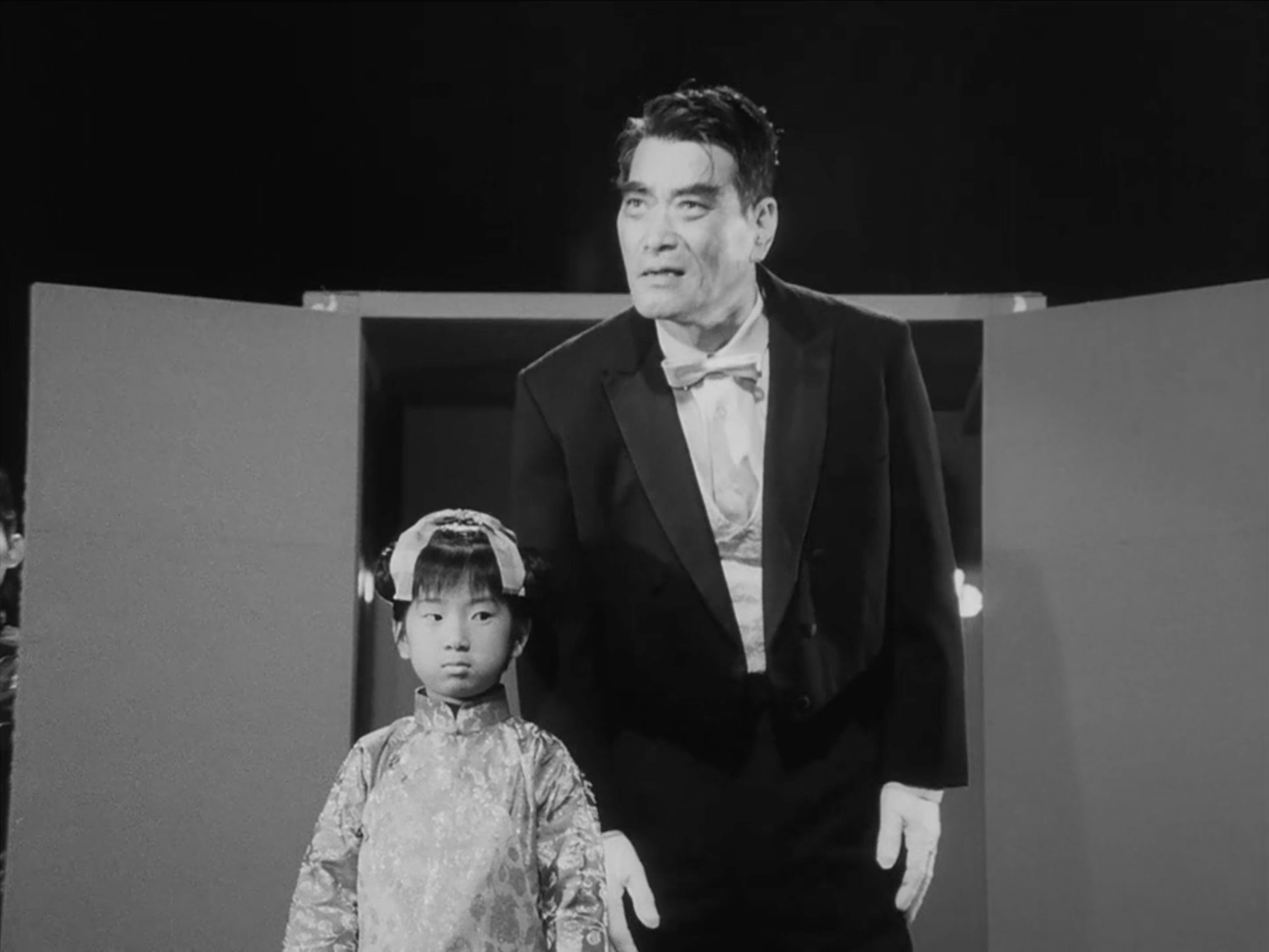
The child of the title is Lily, the young daughter of popular stage magician Akasuna (played by Yoshio Kosugi, who appeared in Seven Samurai and numerous Ishiro Honda SF movies). The main trio of series leads, along with Professor Ichinotani, watch Akasuna perform a trick where a ghostly figure of Lily materializes above a box where the actual Lily is sitting. Ichinotani, rather than suggest this was a conventional stage illusion, ponders the possibility that it’s a manifestation of human bioelectricity. Essentially, the “soul” of Lily, some other human essence, separated from her physical body through hypnosis.
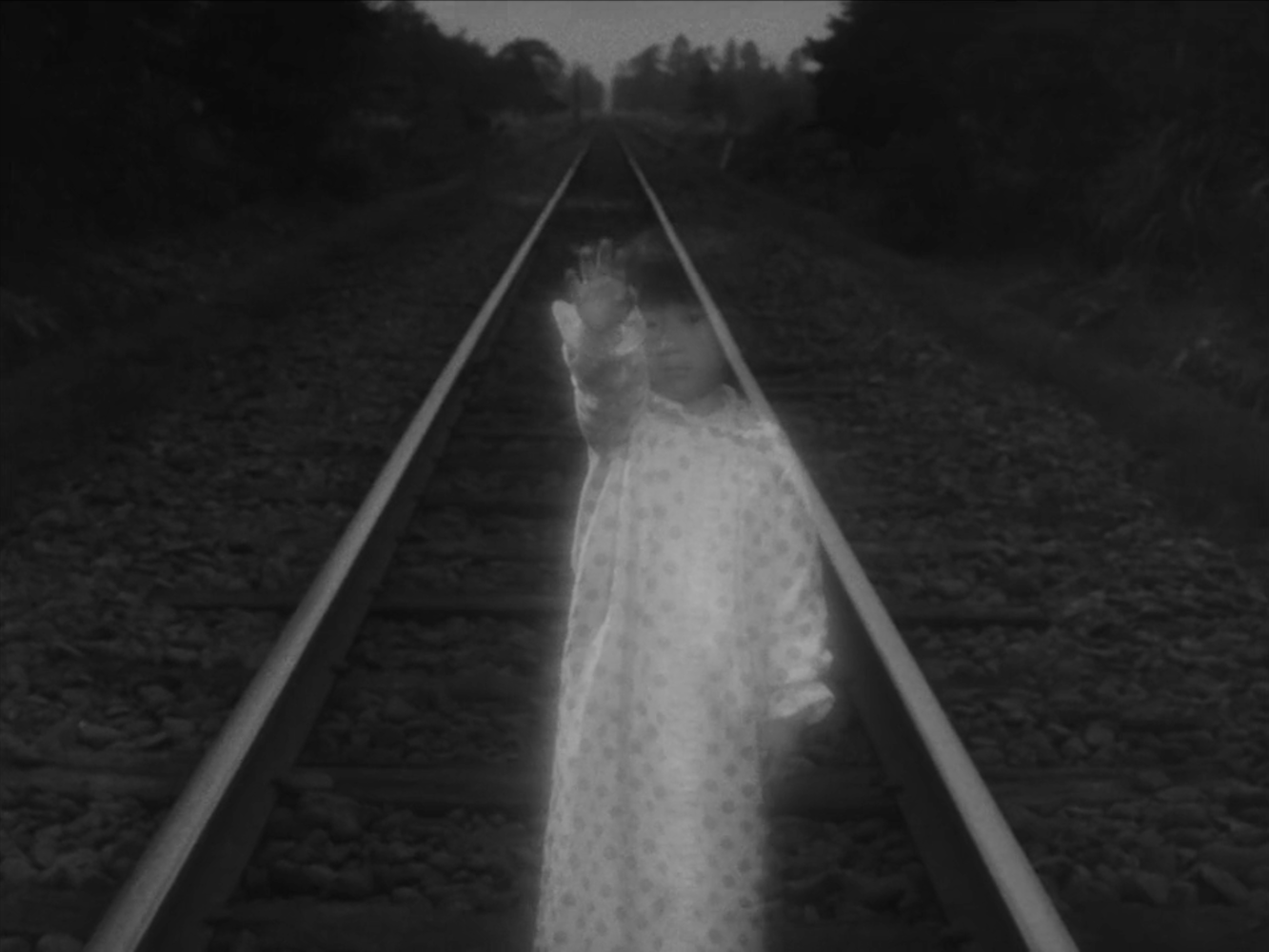
Something like this is happening, but the style of the episode prevents Ichinotani’s materialist explanations and science gizmos from distracting from the weird mystery. The pre-credits sequence, the shortest in all of Ultra Q at 35 seconds, shows a fatal car crash right before dawn. Other accidents start to occur, and with each victim, a single personal item of theirs vanishes. The episode doesn’t hide who’s responsible: Lily’s ghostly form is walking about at night creating dangerous situations. But why? And is Lily herself in jeopardy because of this spirit separation?
The thematic core of the story is a common one in horror: the inability to deal with grief over a loved one’s death. The script doesn’t press this point hard but lets it gradually emerge from Lily talking about “visiting Mother on the mountain” and the way her father continues to use hypnosis on her. The truth builds to a tragic reveal of why all this was set in motion in the first place and where it may be destined to end.
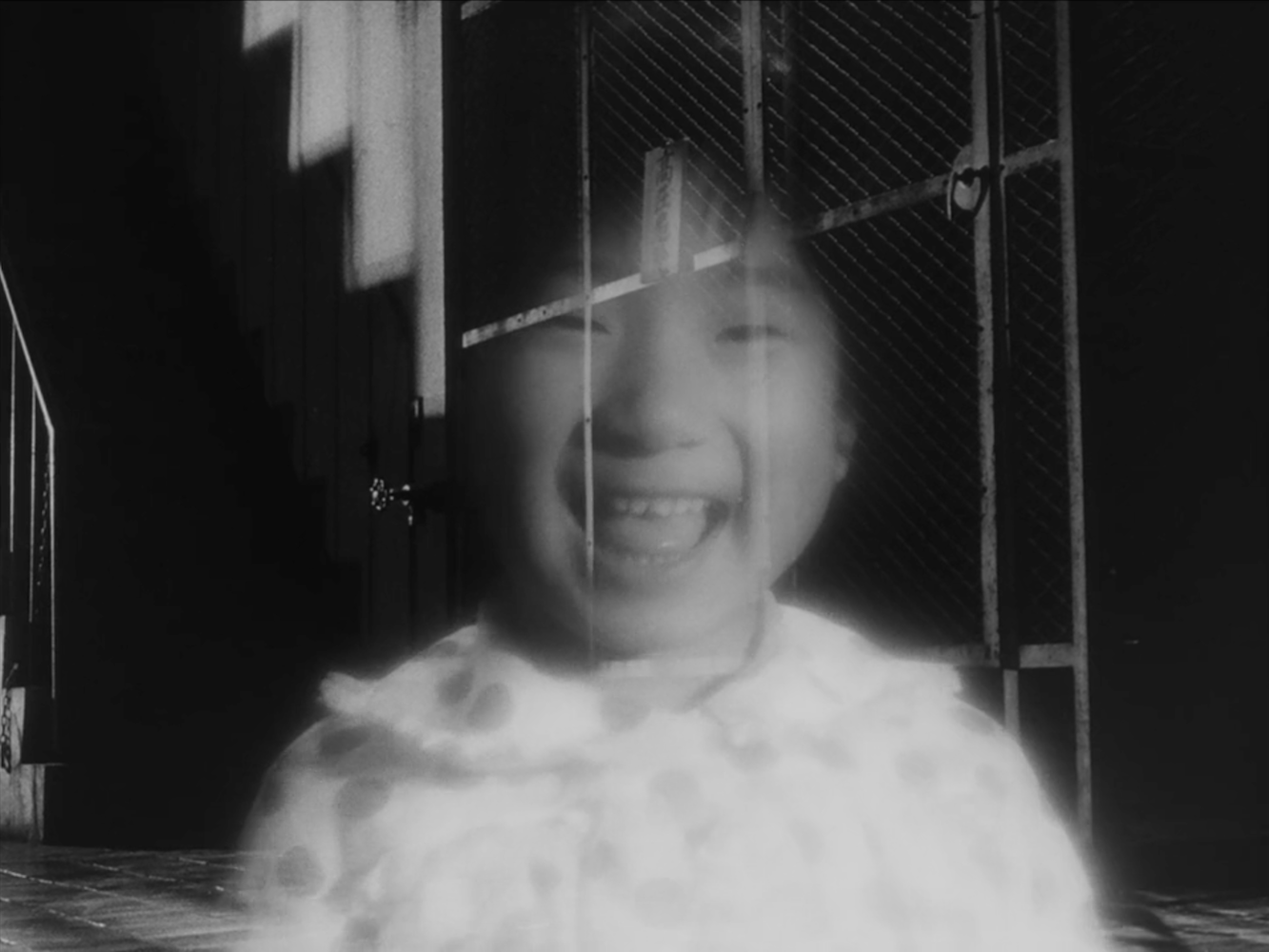
All of the scenes with Lily’s spirit form are excellent and deliver the right level of uncanny fear. The ghost form is not a difficult optical effect, but the filmmakers craft several excellent visuals from it, such as Lily appearing to walk over the waters of Tokyo Bay or her fleeting image flying past a racing truck. The finale on train tracks is a terrific work of suspense, showing that Tsuburaya Productions didn’t need a giant monster to create a nail-biting finale. The coda makes a subtle suggestion through music that the wrap-up isn’t as clean as it may at first seem. It’s one of Ultra Q‘s best closers, leaving a powerful impression.
The only misstep in the episode is a scene where Ichinotani manages to briefly separate Ippei’s “soul” — or whatever it is — in his laboratory as a demonstration. It makes the process appear too simple after Ichinotani said it was a rare phenomenon brought about by repeated hypnosis that can occur in only one in 10,000 people. Did the professor just get lucky that Ippei is one of those people? This is one spot where the science-fiction angle gets too pronounced and detracts from the eerie spectral tale.
Although the script fits well into the 30-minute time slot, there’s enough complexity and ideas within the story to easily expand into a feature film. I can see it remade into a modern horror film without having to make substantial alterations. Lily is already similar to many of the frightening ghost children who populate movies like Ring and Ju-On: The Grudge (2002). Perhaps the episode had a direct effect on some of these films. Director Shinya Tsukamoto has said that Ultra Q was a major influence on Tetsuo the Iron Man (1989), so it’s not difficult to imagine “The Devil Child” having an influence on many later horror movies.
This episode was only the third produced for Ultra Q. TBS pushed it to one of the final airing slots because of its lack of an audience-grabbing giant monster. This placement late in the show’s run ended up fortuitous. The tragic, quiet mood is a good contrast to much of what’s come before (didn’t we just have an action-espionage story last week?) and creates a sense of the program starting to transcend its own barriers.
With the arrival of the J-Horror wave in the late ’90s, Ultra Q had its first revival: 2004’s Ultra Q: Dark Fantasy. This show leaned heavily into J-Horror and featured only a few giant monsters. “Devil Child” was now the model, not the exception, to the formula. But this episode has had an impact on the Ultra series overall; folktale-style horror stories and weird supernatural tales continue to emerge even in shows centered on giant superheroes. The spirit of “The Devil Child” returns in several classic episodes with spooky children, notably Ultraseven‘s “Ambassador of the Nonmalt” and Return of Ultraman‘s “Between Devil and Angel.”
Rating: Great
Previous: The Statue of Goga
Next: Blazing Glory
 The Ultra Project