
Directed by Akio Jissoji. Written by Mamoru Sasaki. Airdate Dec. 11, 1966.
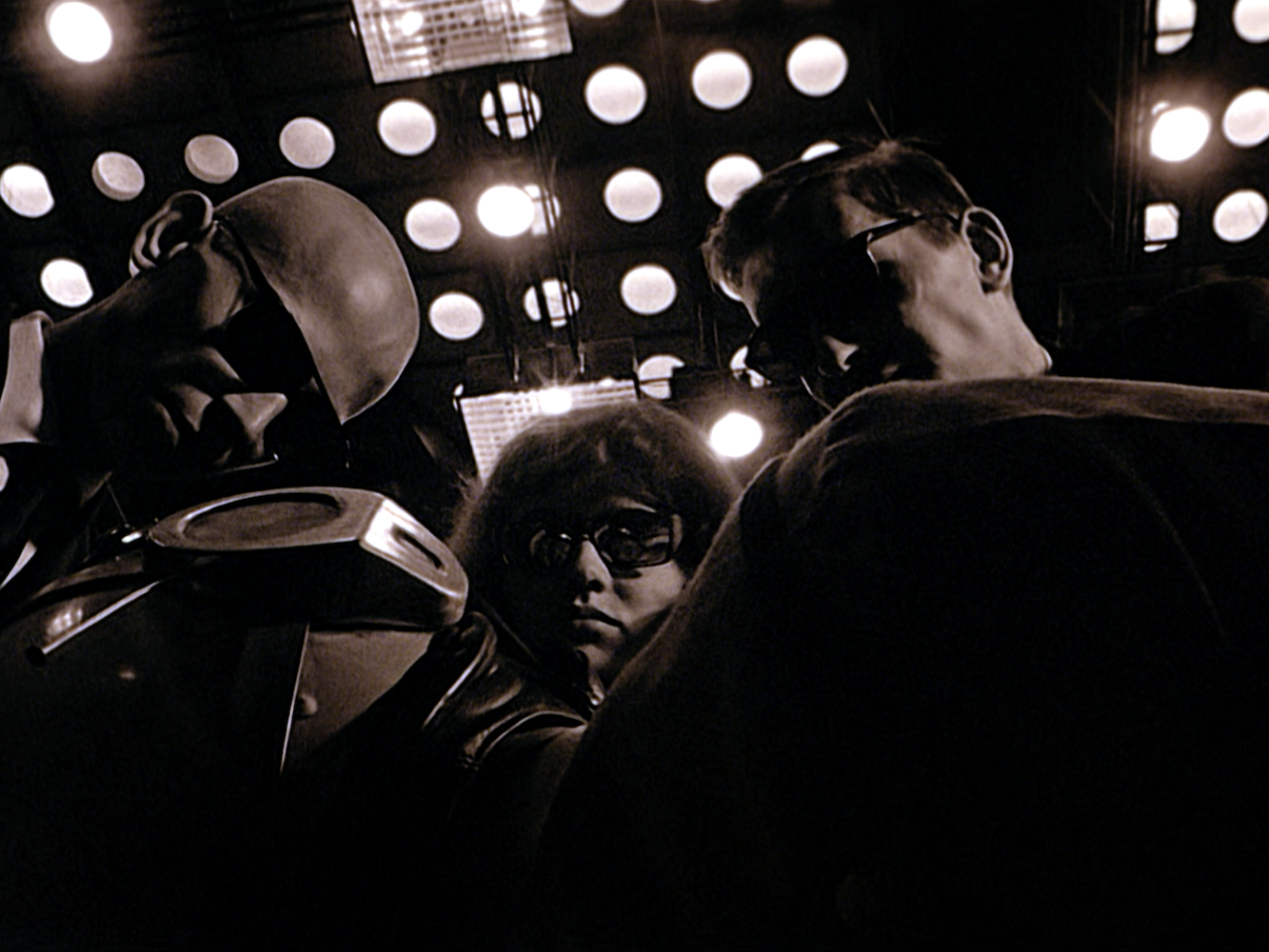
Akio Jissoji’s third Ultraman episode is when his characteristic style comes together … and then goes on a rampage. Heavily influenced by his viewing of Jean-Luc Godard’s Alphaville (1965), Jissoji cuts loose with his visuals: jittery handheld camera shots, rapid cutting, close-ups on faces and mouths, lights dimmed to almost nothing, bizarre angles, reflective surfaces, sepia photography, freeze frames. It would feel indulgent — and several of his later Ultra outings are definitely that — if it didn’t work so well for the tone of paranoia and panic he brings to this twist on the alien invasion story.
The twist is that this invasion isn’t coming from space but from beneath the Earth’s surface. The “Underground People,” a variant of the human race that went underground before the Ice Age because of tectonic shifts, now want to reclaim the surface and enslave humanity. The subterranean race knows Shin Hayata is Ultraman and needs to get him out of the way. They arrange to kidnap him by having one of their members imitate Anne Mohaimu (Annette Sonfers), an agent from the SSSP headquarters in Paris, and send her to request Hayata return to Paris with her. Once they have Hayata imprisoned, the Underground People cause a mass communication disruption on the surface and eventually unleash their own giant monster, Telesdon, on Tokyo. They’ve got an even more devious plan for Hayata and Ultraman.
Jissoji approaches this story with a mood of mystery and fear from the start, and he treats all of it with stone-faced seriousness. When communications begin to go haywire, the screen explodes into chaos. The camera darts feverishly around a darkened SSSP HQ, flying into the characters’ harried faces as they scramble to understand the situation. This mood continues for the entire episode, even when Telesdon bursts up through the ground to demolish buildings and the visual effects take over. Everything is dark, weird, and deliberately bewildering.
The centerpiece of the episode is the scenes inside the Underground People’s base, 40,000 feet below the surface, where they explain their plans to the captured Hayata. The influence of Godard’s Alphaville on Jissoji is most apparent here. Photographed in sepia monochrome and filled with claustrophobic close-ups of mouths, reflections off sunglasses, and glaring lights pointing from unseen walls, these scenes are among the most visually impressive in Ultraman. The sound design is also striking, and the Underground People speak in poetic terms (“We have been waiting for the day to bathe in the sunlight”) that make their motivations more vivid. This is the most intimidating any invader has yet felt in the Ultra series.

The previous two episodes from Jissoji were filled with humor, but there’s nary a joke cracked here. This comes across strongest in the presentation of Ide, who is highly competent and fearless as he investigates the communications blackout and searches for the Anne imposter. Compare the scene of Ide, his Marus 133 rifle in hand, stalking through an empty television station, to a similar scene from “Shoot the Invader!”, the first episode shot for the show. In “Shoot the Invader!” Ide is jittery and plays his panic for laughs. Here, he’s focused and determined, as much a tough guy as Arashi. Ide has been getting more serious over the course of the show, and with this episode and the next, he hits peak earnestness.
Given the overall grave mood, a giant monster might feel out of place. Jissoji was looking to deemphasize special effects and replace them with creative camerawork and lighting, so I can see him wanting to eliminate the kaiju of the week. But the show has a formula, so Telesdon shows up anyway.
And surprisingly, it works fantastically. Telesdon has a subdued design for a kaiju, and all its scenes take place at night. The VFX team treats Telesdon’s rampage — a glorious show of destruction and pyrotechnics — with a gravity that matches the rest of the episode. Even the final tangle with Ultraman doesn’t let things get comic, although it does create a wrap-up for the invasion story that feels a bit abrupt.
Telesdon had a good career after this episode. It made a comeback later in Ultraman in another classic episode, “A Little Hero,” and it has made regular appearances in New Generation Heroes shows and movies. The Ultraman X episode “A Song That Calls the Night” brings back both Telesdon and one of the black-shaded Underground People for a semi-remake of the monster’s original appearance.
“Overthrow the Surface” is a demarcation point in the Ultra Series where the sober approach to the material and Akio Jissoji’s creative visual style started to influence other Ultra directors. The episode feels like a test run for Ultraseven, which would turn toward darker themes and make alien invaders part of its weekly formula. Many future shows make both direct and oblique references to what Jissoji does here. It’s the perfect example of what a serious Ultra episode can be: it seamlessly blends a superhero and giant monster with a dramatic science-fiction story and comes out with an exhilarating half hour of fantasy television.
Rating: Classic
Previous: Breach the Wall of Smoke
Next: My Home Is Earth

 The Ultra Project