
Directed by Samaji Nonagase. Written by Shozo Uehara. Airdate June 12, 1966.
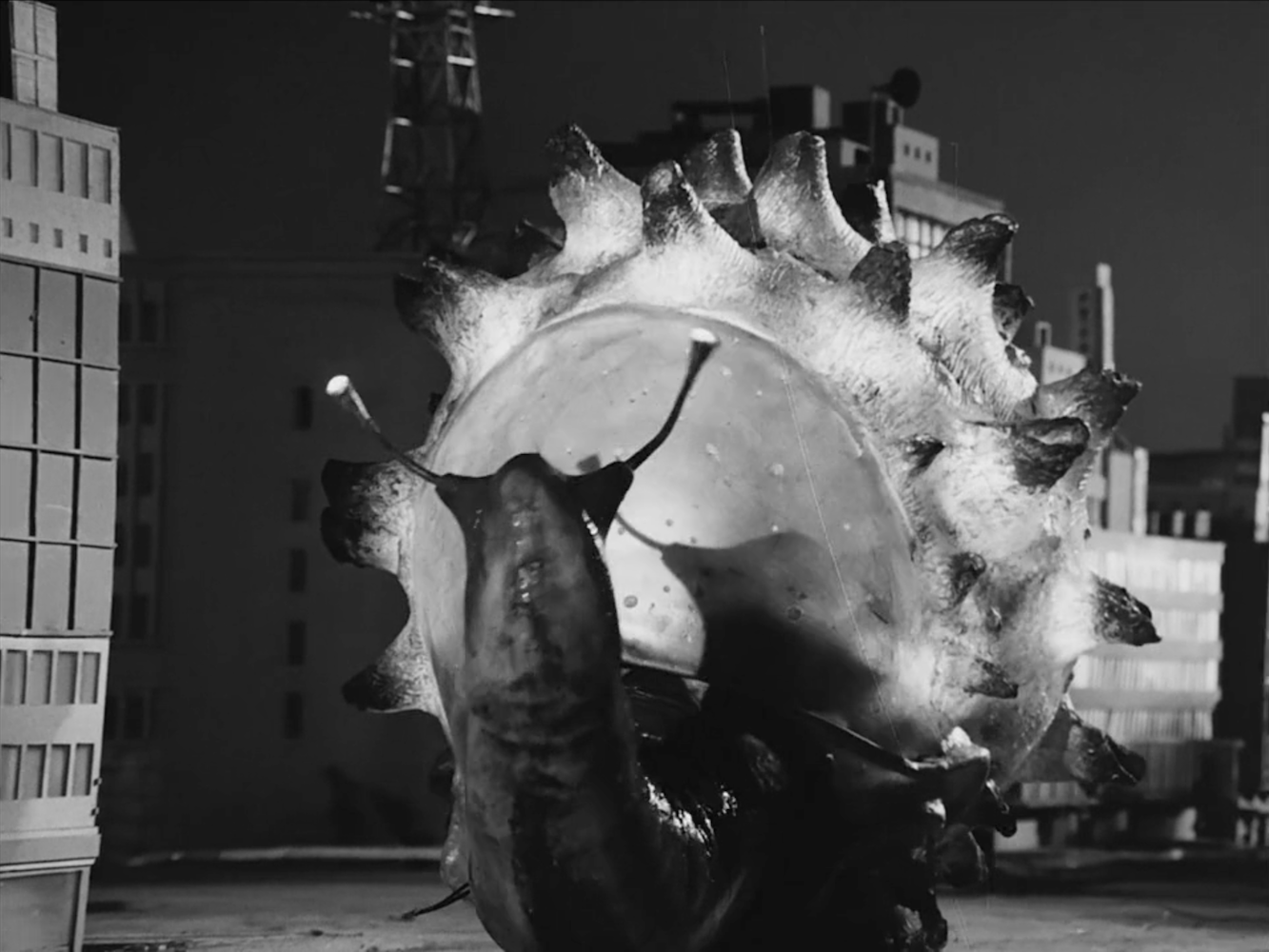
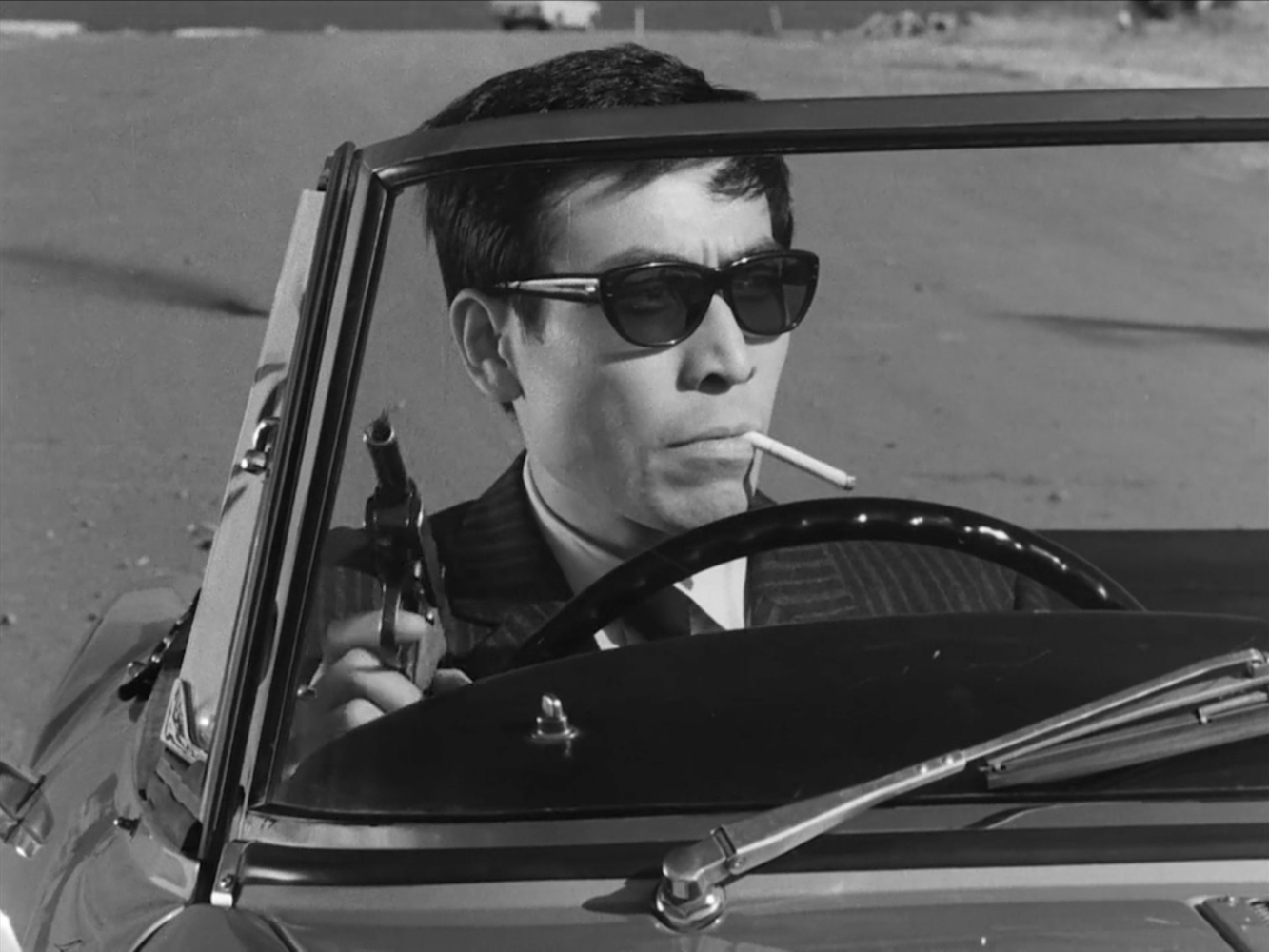
The James Bond craze has hit Japan. Time for an Ultra episode to go full espionage. The accouterments of a ‘60s spy film are all over this half hour: A wealthy villain with a hidden underground base filled with stolen artwork. Secret agents with numbered codenames who wear shades indoors. Lethal henchmen in slick suits. A swanky female spy loaded with gizmos. Wrist communication devices. Exploding cars. And, of course, a giant snail with a drill attachment. Well, this is Ultra Q, after all.
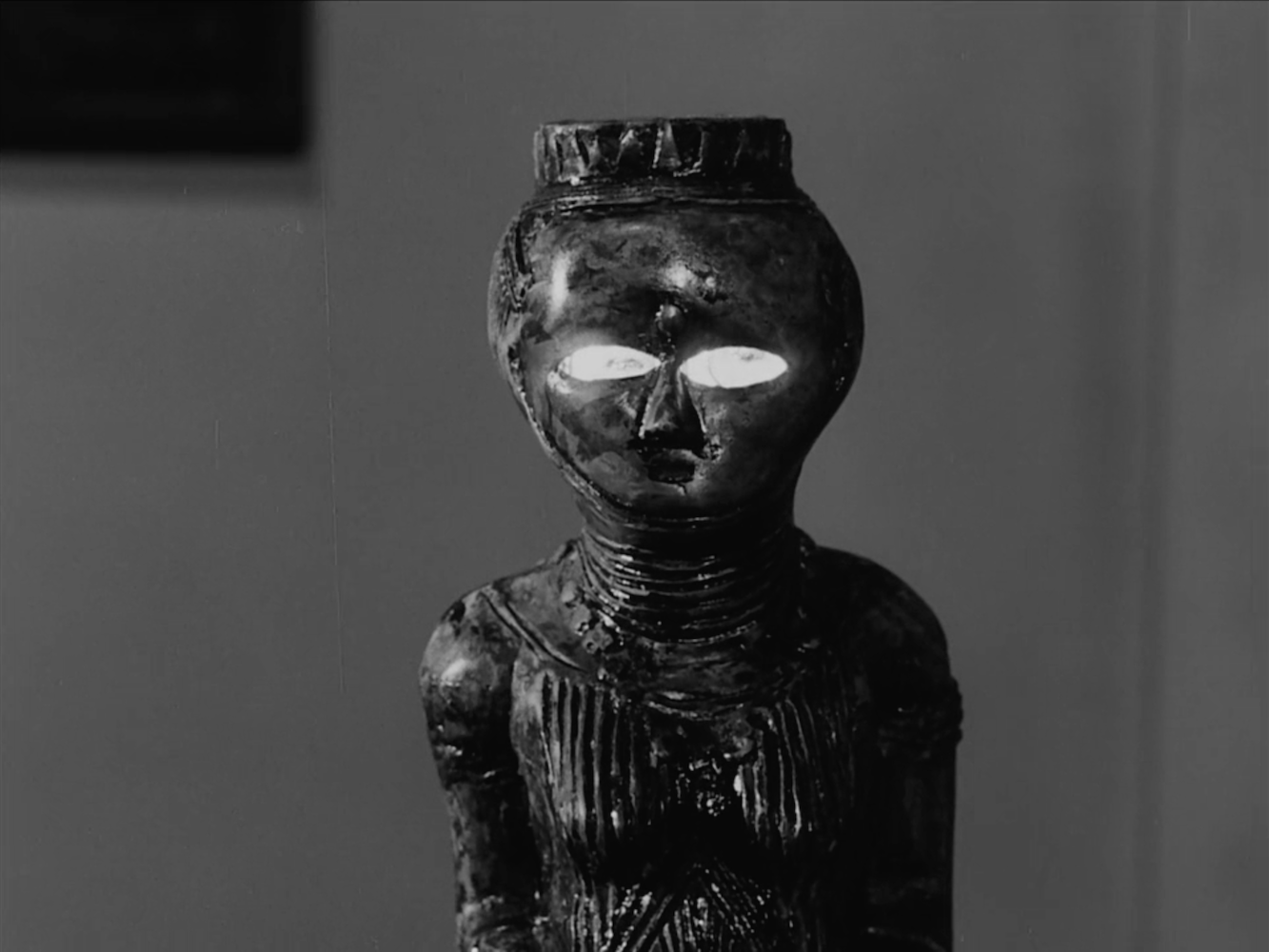
“The Statue of Goga” didn’t start out as a celebration of espionage cool. Shozo Uehara’s original script (his second for an Ultra show after “Space Directive M774”) was more of a fairy tale centered on the fantasies of a young girl. But a directive came from the network to spice up the show with more action, so Uehara rewrote the script with assistance from Testsuo Kinjo to move it in the espionage direction. The little girl became a minor character, a pawn in the dealings of dangerous art thieves who make the mistake of stealing a cursed item.
In true 007 fashion, the episode opens with a thrilling pre-credits sequence, easily one of the show’s most exciting. An ambassador arrives at the airport in Tokyo with his wife and daughter. His daughter is clutching a strange-looking statuette. Abruptly, a mystery woman and a carload of sinister men seize the statuette and the daughter and peel off. Another mystery man pursues them, but he finds their car abandoned … with a ticking bomb in the trunk. He shoves his car in reverse to barely escape the explosion that fills the screen. Boom! Roll opening credits.
Yes, a giant monster will show up later, but at this point viewers are already jazzed on the spy premise alone. The kaiju is a bonus.

The opening leaves the rest of the episode with a lot to live up to, even with a giant laser-shooting snail causing urban destruction for a climax. But, despite a few stumbles from a plot that doesn’t quite click together, “The Statue of Goga” maintains the momentum of its thriller plot all the way through its transformation into a giant monster story.
The villains are a ring of art smugglers who work for Mr. Iwakura (Tatsuo Matshuita), an ambiguously wealthy man who maintains a private underground museum of priceless artifacts pilfered from around the world. His latest illegal acquisition is the idol of Goga from the Aub Museum. The beautiful agent in the form-hugging dress who helped with the theft, Aleen (Hisako Takara), has her own agenda and secret identity.
The idol also has a dark surprise: a curse reputed to have destroyed a legendary empire six thousand years ago. That curse unleashes the actual Goga — the drill snail — right as the shooting and chasing action in the corridors of Iawakura’s hideout hits critical mass.
The episode is stylish all the way through. The production team has the perfect feel for ‘60s espionage movies, but they also capture the look and action of the popular crime dramas that Nikkatsu Studios was putting out at the time. It feels like nothing else in Ultra Q, but that’s one of the appeals of the show: it can take these genre swerves and still emerge as 100% an Eiji Tsuburaya production. As the monster and spy plots merge in the finale (and the stupidest of Iwakura’s assassins gets a wonderful death), you can feel the confidence of the filmmakers: “Wow, we can do anything on this show!”
Goga is a terrific-looking creature, although it’s odd to have a snail monster when Ultra Q already featured a giant slug, Namegon, in “The Gift From Space.” This might seem like a budget-saving move, but Goga isn’t merely Namegon with a shell slapped on its back; it’s an entirely new monster prop.
The trio of main characters are a bit of a handicap. Jun, Ippei, and Yuriko are good at investigating weird phenomena, but they aren’t the people I’d call to deal with international super criminals. This is where the show could have benefited from dipping more into its anthology roots by moving the series regulars into peripheral roles, as in “Grow Up! Little Turtle,” or remove them entirely, like “Kanegon’s Cocoon.” The story could have functioned just as well without the regulars, and it would have more room for explanations about the background of the art smugglers’ operation and how the mystery woman inserted herself into it. I’m not certain of the sequence of events before the start of the episode and how the Goga statue got to where it is. This confusion doesn’t break the overall fun, but it did leave me a bit bewildered as I attempted to piece together a timeline afterwards.
Maybe this only matters if you’re me and you have to write an analysis of the episode. On the immediate sensation level, “The Statue of Goga” deftly achieves its goal of delivering audiences a slick contemporary thriller with a giant snail finale.
Rating: Great
Previous: Fury of the South Sea
Next: The Devil Child
 The Ultra Project