
Directed by Hajime Tsuburaya. Written by Testuo Kinjo. Airdate Feb. 4, 1968.
“Escape Dimension X” is Ultraseven’s version of Ultraman’s influential episode “The Monster Anarchy Zone”: a fast-paced monster-packed adventure taking place in a weird wilderness of exotic dangers. Many Ultra shows have their own take on this pulpy Lost World concept. Now we see the darker SF sensibility of Ultraseven at work on the premise. Where “The Monster Anarchy Zone” is a wild, fun rollercoaster with plenty of giant monsters, “Escape Dimension X” is horror-tinged and eerie, with monsters of the more creepy-crawly variety. This “lost world” is also presented as a science-fiction mystery, an artificially created alternate dimension, although the story leaves most of it unexplained.
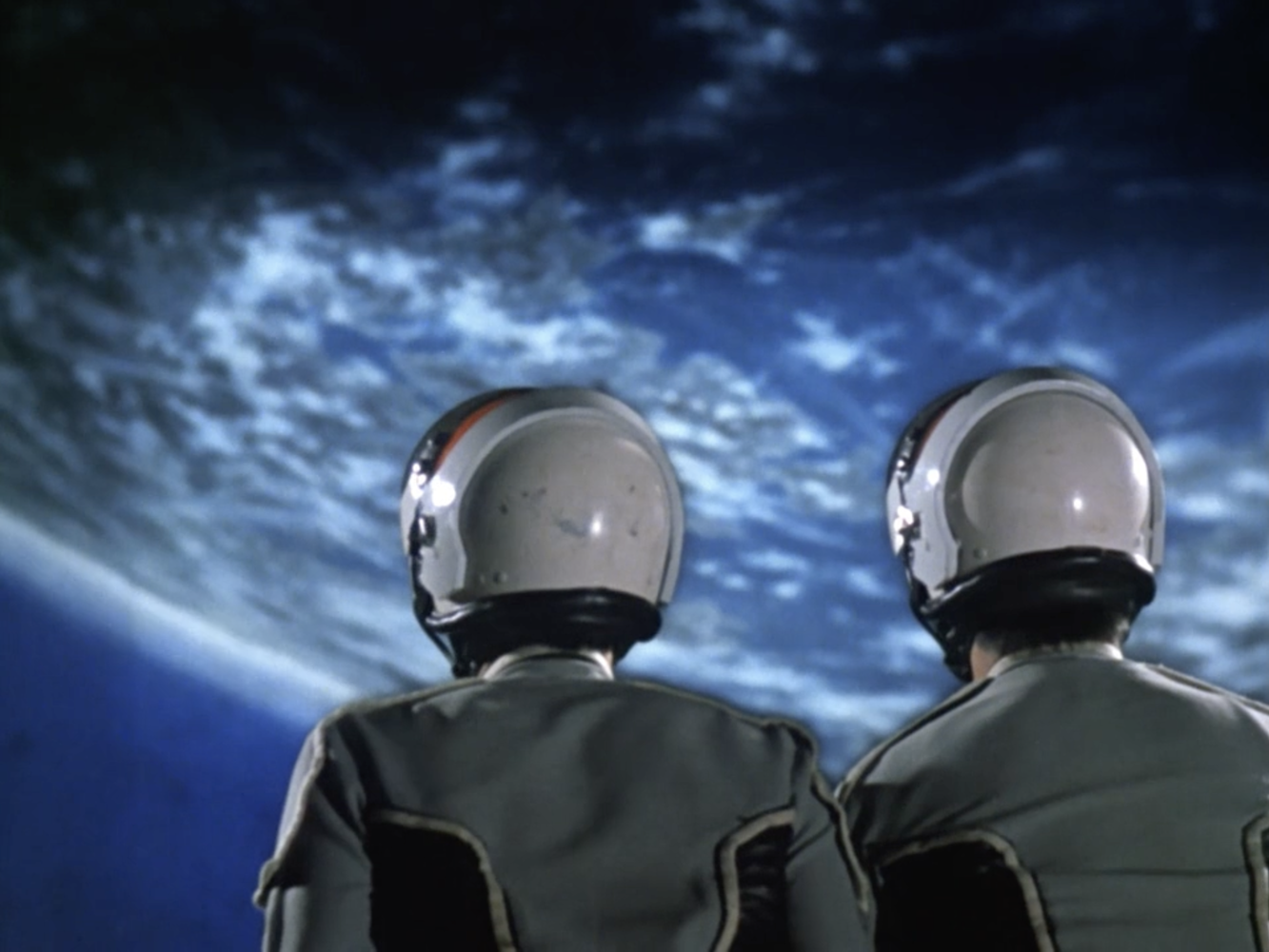
While the Ultra Guard is doing routine skydiving training, Amagi and Soga somehow fail to reach the ground. Instead, they land in a mysterious foggy forest that appears to be hanging in the upper atmosphere above Earth. (The image of the two discovering Earth hovering over them is fantastic.) The rest of the UG attempts to locate their missing comrades and get to this “pseudo-space” before their comrades die horribly from one of the many terrors in this floating world — which includes the entity responsible for it, Alien Bell.
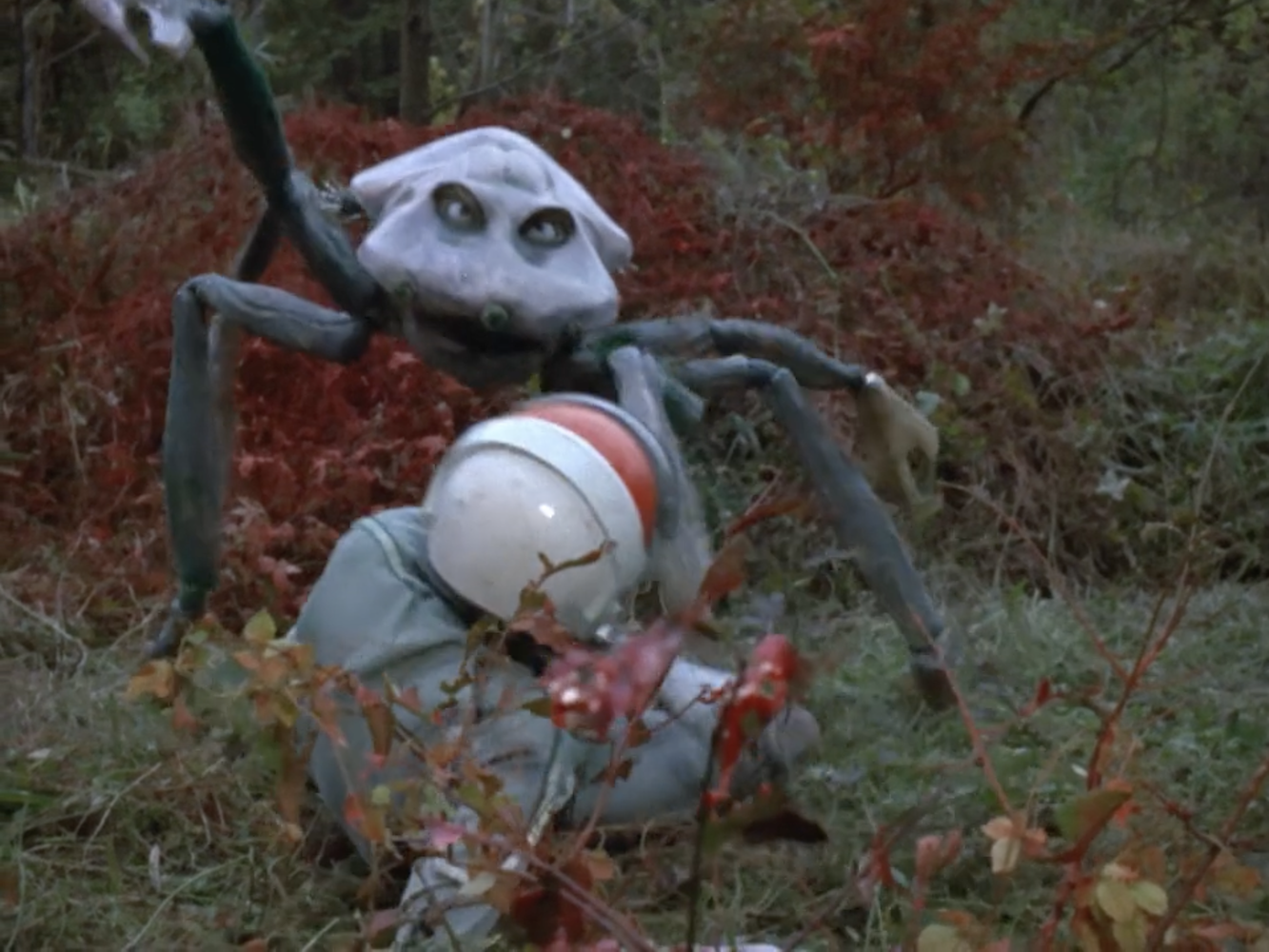
Even with their fairly meager resources, the production team manages to inject a lot of otherworldliness into the location photography of this alien forest. Hazy images, fog, tree branches painted red, weird music, and especially the monsters. The vampire vines from “The Monster Anarchy Zone” are back, and there are also super-ticks and a crab-legged spider creature that shoots out poison gas. The only giant monster is Alien Bell, who never speaks or appears in a smaller form.
The horror elements have extra impact because the main characters for most of the episode are Soga and Amagi, two UG members attempting to survive on their own. The danger from Alien Bell’s creations feels genuine, and this makes the decision to use Amagi rather than an Ultra Guard member like Dan, Furuhashi, or even Anne a smart one.
Amagi is the mystery player of the Ultra Guard. He’s underdeveloped compared to his comrades, even though the actor playing him, Bin Furuya, was the man in the Ultraman suit in the original show. Amagi is “the computer guy,” the one who stays back at the base and analyzes data for the rest of the team. When he’s put in action, he’s often on the fringes (as in “The Eye That Shines in the Darkness”). In the opening skydiving scene, Amagi is legitimately frightened of making the jump, and Soga has to push him, literally, into doing it. Bin Furuya does have a timid look to him as a performer, so putting Amagi into this kind of danger next to the more action-oriented Soga is an effective way to get him into the thick of the story. The show should’ve done more with Amagi to play up how he feels as something of an outsider to the rest of the group, but Ultraseven was less focused on characterization than Ultraman.
There’s an intriguing science-fiction idea from writer Tetsuo Kinjo: advanced alien technology that creates a floating pocket dimension. The episode doesn’t have enough space to explore the purpose of pseudo-space or Alien Bell’s motivation for creating it. Staff Officer Mamabe had previously seen this pseudo-space phenomenon when he was working in Washington. He says that pseudo-space “hunts for prey,” but it’s unclear what prey it specifically desires or why it wants to capture people in the first place. It seems that Alien Bell expended an enormous amount of energy to create a forest suspended in the upper atmosphere only to get a meager catch of two humans. Alien Bell may only be doing this for amusement; plenty of Ultra series Seijin need scant motivation aside from messing with humans and killing them. I suspect Alien Bell falls into this “extraterrestrial jerk” category.
A reason it’s hard to gauge what Alien Bell is up to is that the episode treats him more like a standard kaiju than a sentient alien. He never speaks and the fight between him and Seven goes into standard kaiju-fight antics and wrestling moves. Alien Bell uses its mind-warping powers early on against Seven, but the battle concludes as a slugfest in an alien swamp. This isn’t a complaint: it’s a good fight in a cool-looking location and it’s one of the longer Ultra fights in the show. (I again sense that Tsuburaya Pro was working to grab back the kid audience that was starting to tune out the show.) But when the narrator in the wrap-up refers to Alien Bell as “clever devils,” I can only shrug and answer, “If you say so.”
Although pseudo-space doesn’t return in Ultraseven, and Alien Bell has only appeared in minor cameos since, the concept of an alien world floating in Earth’s atmosphere with a giant monster on it would come back in episode 32, “The Strolling Planet.”
Rating: Good
Previous: Underground Go! Go! Go!
Next: Project Blue

 The Ultra Project