
Directed by Samaji Nonagase. Written by Masahiro Yamada and Samaji Nonagase. Airdate Nov. 20, 1966.
I don’t have any deep analysis of this episode. That doesn’t mean it’s bad. Quite the opposite. But what works about it is its spectacular simplicity.
Before us we have the standard Ultraman formula: an early science mystery, the appearance of a giant monster, the SSSP tries to deal with it, Ultraman shows up for the fight, Ide shouts, “Yeah, Ultraman won!”, and the episode concludes mere seconds later. The only major variation is that there are two monsters this time, and they get to fight each other. Combine the double-kaiju action with the all-around excellent execution of the show’s standard tropes, and you’ve got a half-hour of tokusatsu you can use as an exciting introduction to the Ultra shows for a newbie.
The initial science mystery has the Science Patrol studying a recently unearthed metal object that contains a blue liquid. It was buried more than 300 million years ago, possibly as a time capsule. The SSSP is unaware that there’s a second capsule with red liquid that was also excavated but tossed aside.
The wacky science of the Ultra-universe confirms that a more advanced human civilization existed in an era before the Mesozoic called “The Mysterious Age.” This must be true — Fuji reads about it in a magazine! Professor Fukuyama (Yoshiyuki Fukuda), the guest science-explainer, discovers ancient writing on a sheet of metal found in the capsule that he says is similar to the script of a lost civilization of Mu. (Mu is the adversary in Atragon, by the way.) The deciphered message warns that the people of the Mysterious Age liquefied and buried two rampaging monsters, Aboras the Blue and Banila the Red, to protect humanity.
And with that, the ancient civilization mystery takes a bow and exits the episode, never to return. Out-of-season lightning has already caused both monsters to mutate and grow from their liquid forms and start rampaging through Tokyo. Fukuyama utters “let them fight” (or words to that effect) and viewers settle in for one of the best monster melee spectacles in all of Ultraman.
The early SF mystery is a leftover from the first version of the script where the time capsules didn’t contain two monsters, but a monster and one of the primeval humans. The human revives first, decides he wants to annihilate modern humanity, and resurrects the monster to do it. He also steals the mind of a scientist and has a run-in with Ide at a restaurant. Sounds like a good potential episode, but also one with too many plot threads for a half hour. The simplification of the story to monster-vs.-monster and restricting the ancient race to a single written communication was apparently a choice made by director Samaji Nonagase, who did rewrites under a pseudonym. It was the right decision, since the final result flows and builds without a single bump.
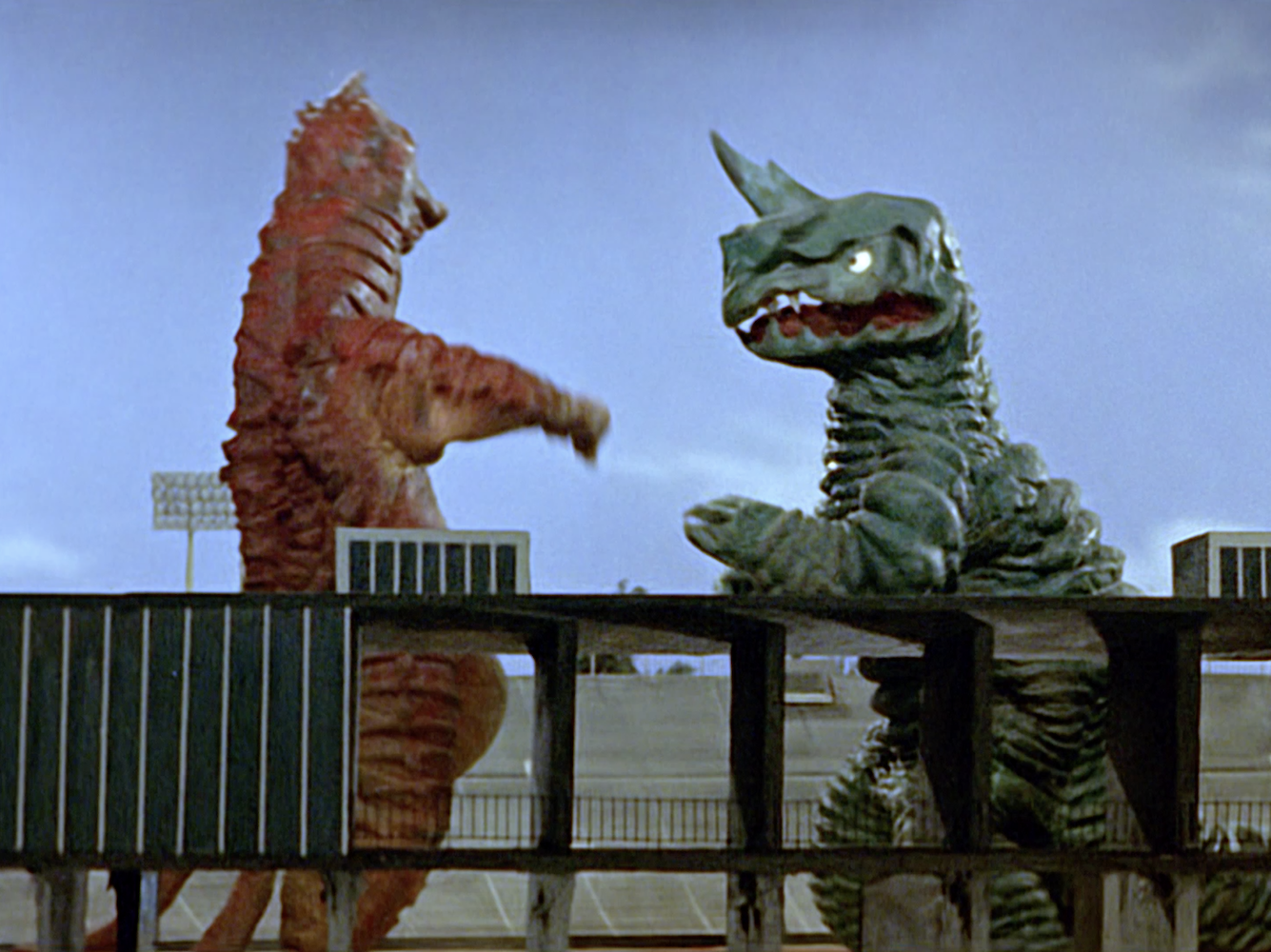
Aboras and Banila are classic kaiju designs, made to be visual opposites on screen, not just in color but in shape. Banila has a long neck and tiny head, and Aboras’s head looks like it weighs twice as much as the rest of its body. Aboras also looks more green than blue to me, but I’m not going to get hung up on chromatic nitpicks.
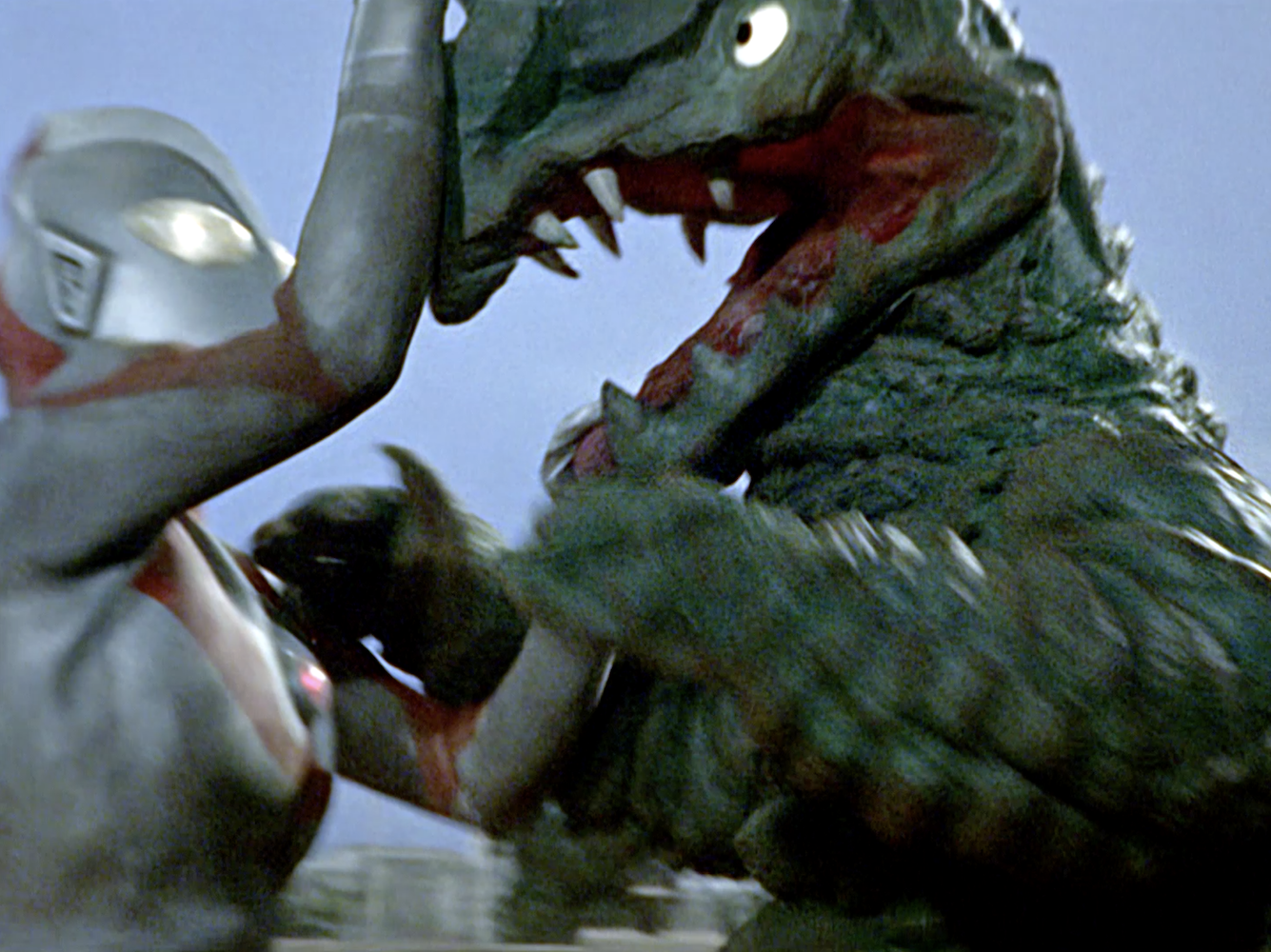
The monsters stomp some Tokyo property before they meet in the National Stadium for a showdown done with marvelous VFX work and staging. A lot of work went into the stadium model, and the monsters make sure to obliterate most of it. The fight is already peak kaiju excitement before Ultraman shows up to challenge the winner.
The quality of the effects in the finale may be the result of the direct participation of the Old Man himself, Eiji Tsuburaya, who allegedly directed these scenes himself because of a production schedule crunch. I can certainly believe Tsuburaya is behind the camera: the scenes have that special magic of his best kaiju films for Toho. Lending a hand is our pal Haruo Nakajima in the Aboras costume, showing once again that nobody did it better when it came to monster acting.
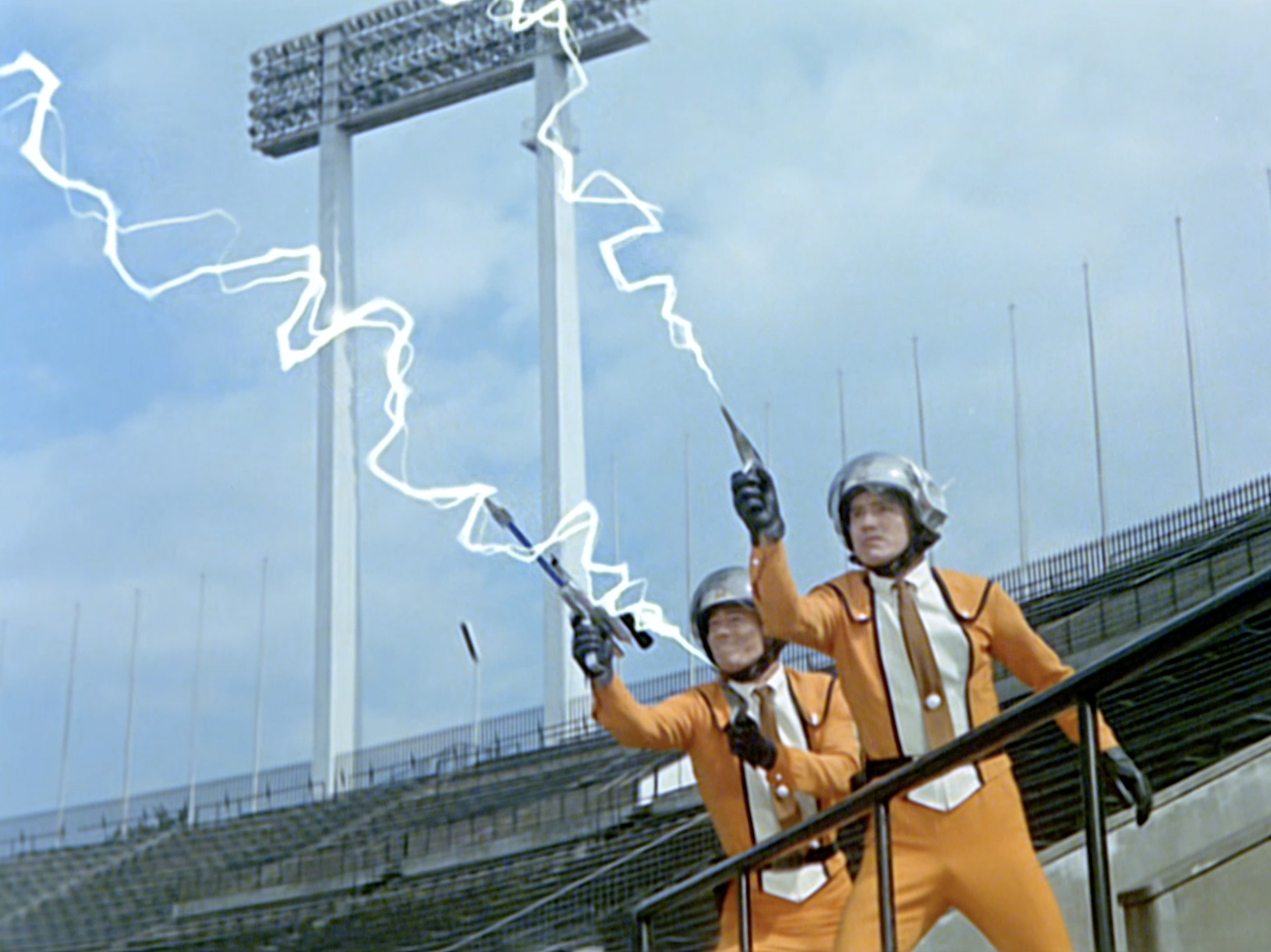
With all the visual effects action and the early investigative portion, the episode doesn’t leave the SSSP members much time for standout character moments. But at this point in production, the actors know how to get the most from their little bits. Ide falls down and shouts,“Ow, ow, ow, ow,” and Arashi gets to use all his guns. I don’t think we need more.
“Demons Rise Again” may not reach the same Saturday morning nirvana as “The Monster Anarchy Zone,” but it’s in a similar range. It’s got that same energy, that same joy of the best of Showa-era Kaiju Kraziness. You want to see monsters fight and smash buildings? Here you go, have fun. And trust me, you will have fun.
Rating: Great
Previous: Brother From Another Planet
Next: Terror on Route 87
 The Ultra Project