Directed by Kazuya Konaka. Written by Kazunori Saito.
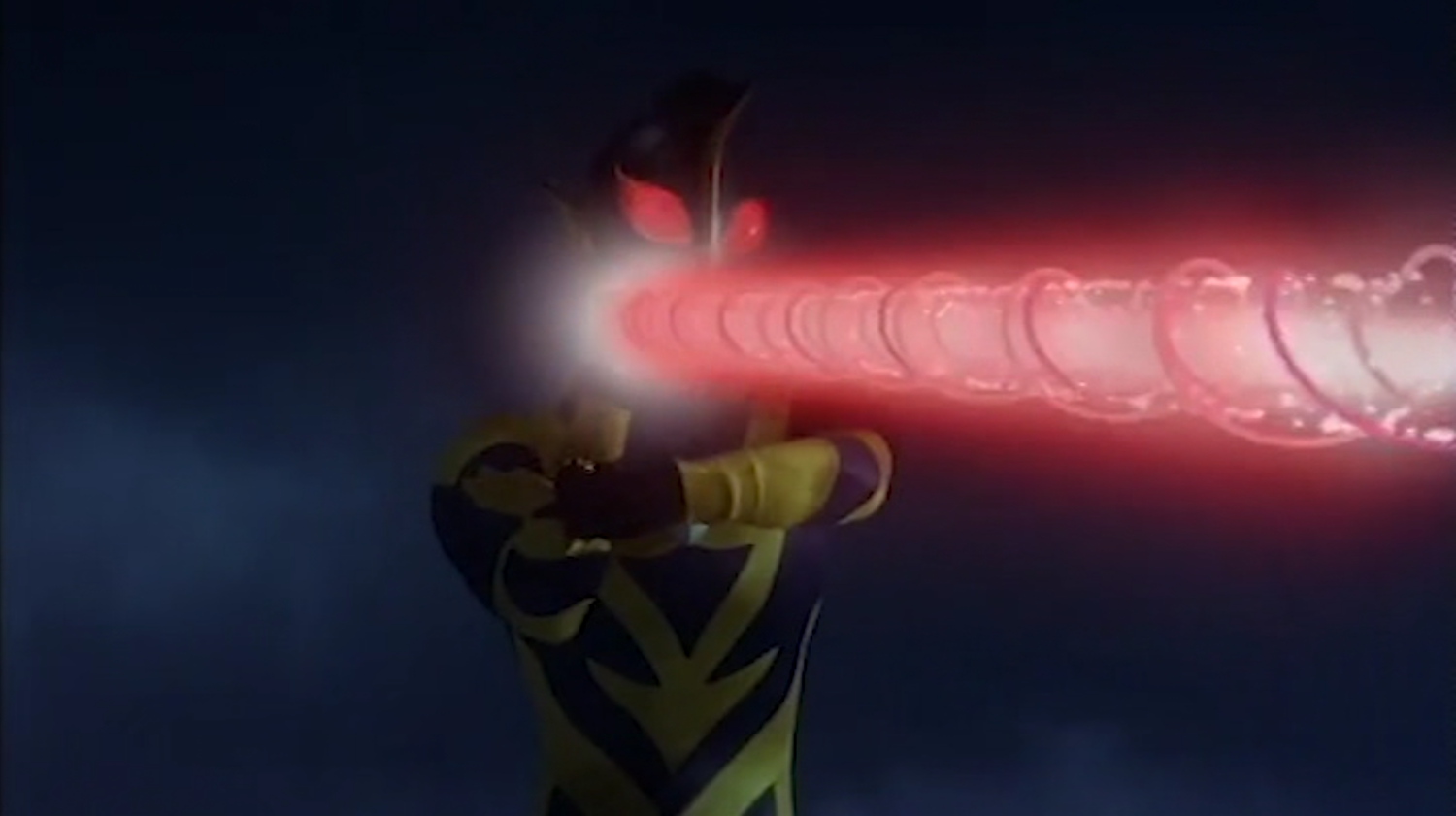
I’m glad to report that Ultraman Zearth 2 (in full, Ultraman Zearth 2: Superhuman Big Battle—Light and Shadow) is a significant improvement over its predecessor. The first Ultraman Zearth was a joke, a parody played for kids and nobody else. I found it often painful to watch as its comedy flopped on its face over and over again. Ultraman Zearth 2 takes itself more seriously — although it’s still featherweight entertainment — and it pulls off one basic trick that elevates the entire movie: it gives the hero a legitimate obstacle to overcome, not a gag one. Zearth is no longer terrified of dirt and mud. He’s broken from a failed battle with an evil Ultraman and must regain his confidence so he can save the world from an alien invader.
It’s a simple story spine, about what you expect from a children’s movie. But it’s amazing how much more tolerable the movie becomes with the addition of the most standard of character conflicts. The first Ultraman Zearth gives the audience nothing to latch onto. It reduces Ultraman to a childish caricature who cringes and freaks out at the sight of mud puddles. If you can’t stand to watch the hero of the movie, what is there to care about? Now, Zearth and his human form, Katsuto Asahi (Masaharu Sekiguchi), have real drama to work with and a character who isn’t a chore to endure.

The theme of gaining confidence carries over to the rest of the film: the evil Lady Alien Benzene (played by Uno Kanda in human form) aims to conquer Earth by enslaving those who have lost hope. All of this is Screenplay 101 stuff, but it does make a difference when you sense a film is actually trying. Congratulations, Ultraman Zearth 2, for doing the minimum required for a watchable story.
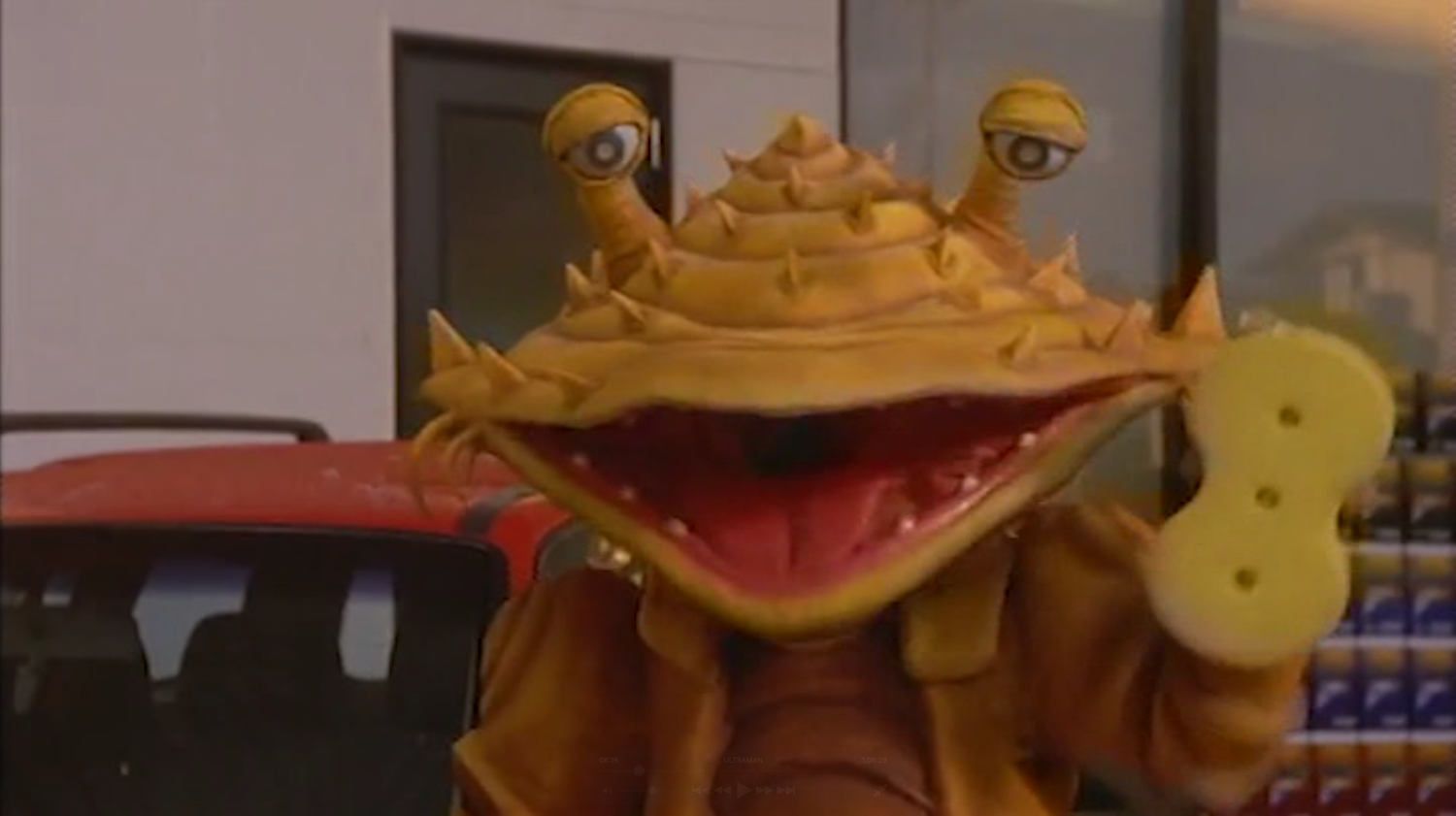
I know I’m throwing out pretty weak praise, but Ultraman Zearth 2 is decent both as a children’s movie and an Ultraman experience. More fights, more monsters, some good set-pieces. The villainous anti-Ultraman, Ultraman Shadow, is a fun opponent. For fans, there’s the inclusion of capsule monsters and a big role for Kohji Moritsugu, the original Dan Moroboshi from Ultraseven, as the new chief of MYDO — the defense team that still has to pull double duty as gas station attendants. Best of all, at least for me, there’s Kanegon! Not the original Ultra Q Kanegon, but “Digital Kanegon,” a robot that works at the MYDO gas station and can scan credit cards. I can deal with this type of humor when it’s Kanegon. I love Kanegon too much, even this odd knock-off.
The other comedy parts aren’t terrible, either. The comedy is tonally more in line with the humor from the Showa Era rather than the unrestrained attempts at zany “parody” in Ultraman Zearth. The jokes feel organic to the world, not a mockery of it. The villain is again one of the funniest parts, with Uno Kanda vamping it up as an outrageous evil alien. Campy aliens will always be a welcome part of the Ultra series.

The story is enough to hold together the 66-minute runtime. Ultraman Zearth suffers a defeat from Ultraman Shadow in the Antarctic, and this pushes Katsuto Asahi into his downward spiral of fear that prevents him from transforming into Zearth. While Lady Alien Benzene continues with her conquest plan, using brainwashed children in martial arts outfits to help train Shadow to become even more powerful, Katsuto seeks to restore his confidence at a Seidokan dojo, where he hopes training can finally give him the edge he needs. The urgency of the situation increases when Alien Benzene enslaves Toru, one of the members of MYDO.
The training at the dojo recalls Ultraman Leo. Episodes would frequently have Gen fail to defeat opponents and then require Dan to run him through martial arts training that would allow him to develop a special technique to defeat his enemies. I’m not a fan of martial arts movies in general, so the scenes of Katsuto training to learn a special kick tend to drag for me. But to be fair, I feel the same way about these sequences in Ultraman Leo.
The practical effects are again strong, and there’s greater variety to them. We get an actual confrontation in the middle of a city, something the first movie didn’t have. The two capsule monsters who duke it out among the buildings both have memorable designs. Miraclon, Katsuto’s capsule monster, is an homage to Miclas from Ultraseven and also has a bit of Pigmon’s cuteness. The costume was later redesigned into one of Neo Ultra Q’s most wonderful kaiju, where the Pigmon look took over. Darklar, Shadow’s capsule monster, is the best kaiju design in the movie and wouldn’t be out of place in Ultraman Tiga.

There’s bad news with the VFX, however. The digital effects haven’t gotten better. In fact, they seem to have gotten worse, or maybe there’s much more of them than in Ultraman Zearth. Unfortunately, the movie opens with the worst of the worst CGI as it depicts a lengthy aerial pursuit between Zearth and Shadow among Antarctic glaciers. Even for the mid-‘90s, the Dark Age of digital effects, this is abysmal. When Zearth and Shadow land and change into stunt performers in suits on an effects soundstage, it’s a relief. You’re reminded that Tsuburaya Pro still knows how to do suitmation and model work. But there’s still too many digital effects ahead.
The cameos for the original cast of Ultraman again occur in one place. Susumu Kurobe repeats the beta-capsule pose joke, and I did smile at it this time. Actor Akiji Kobayashi (the original Captain Muramatsu) died between films, but he makes an appearance in a framed photo that Masanari Nihei affectionately calls “Dad.”
In conclusion, the best compliment that I can pay Ultraman Zearth 2 is that I might, just might, rewatch it some day. I can’t say the same for the first movie.
Rating: Average
 The Ultra Project