
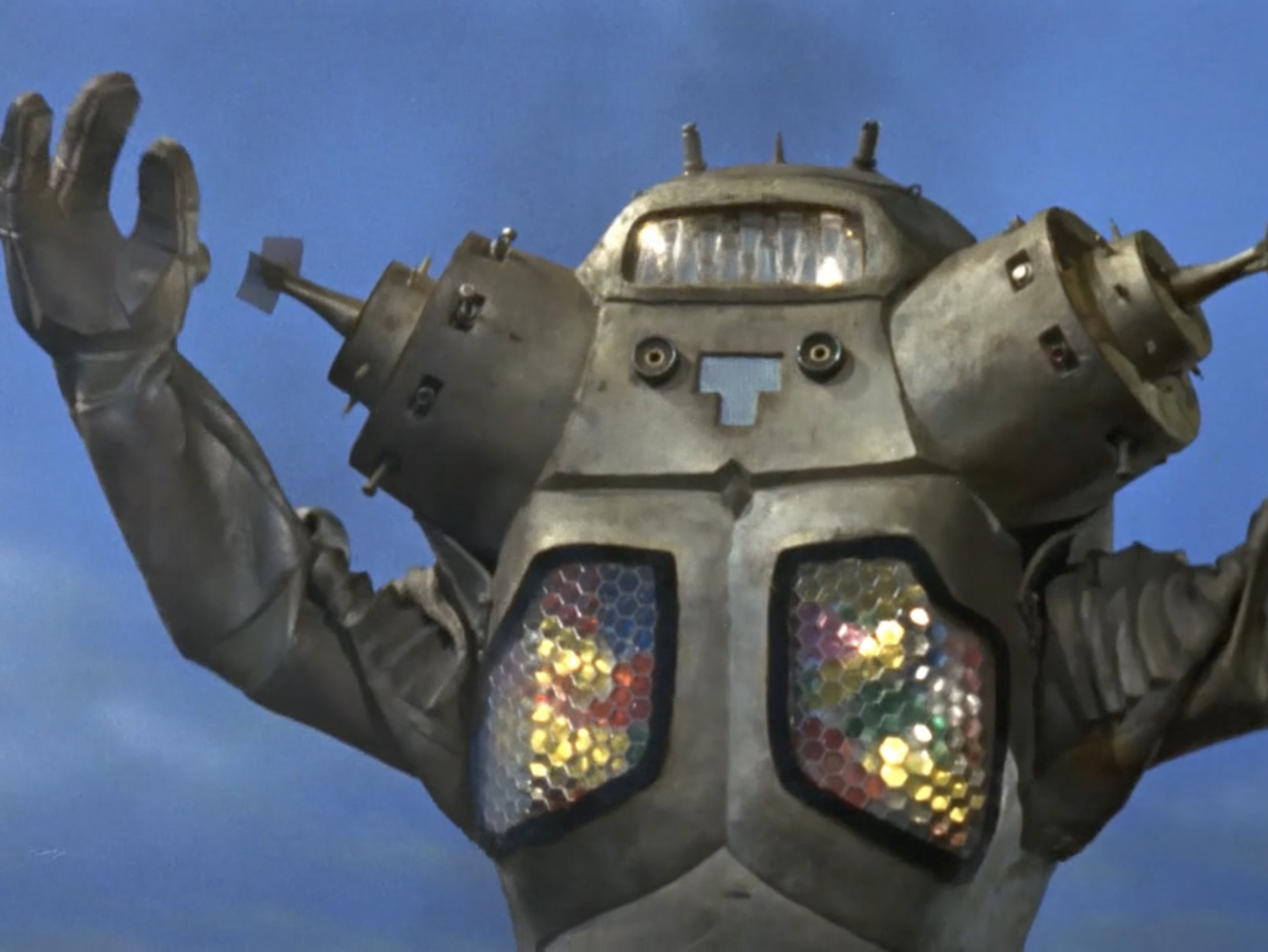
Directed by Kazuho Mitsuta. Written by Tetsuo Kinjo. Airdate Jan. 7 & 14, 1968.
When I looked at “Space Prisoner 303,” I speculated that it was the point where younger viewers started to lose interest in Ultraseven during its initial run. It seems there’s truth to this, as that episode had a 30% drop in viewership. It’s not a good episode, so the decline makes some sense; but the next episode, “The Marked Town,” had the same audience attrition, and that’s one of the greatest episodes in the history of the franchise! Still, it was different and strange, and kids probably weren’t getting the fun they anticipated after watching Ultraman’s weekly monster smackdowns.
How to fix this problem? Tsuburaya Pro’s answer was “The Ultra Guard Goes West.” The first Ultraseven two-parter and an overt effort to pull back in those viewers looking for epic monster action. The show’s sponsor, Takeda Pharmaceutical Company, was also looking for an episode set near Osaka, their headquarters. (This is the “Goes West” of the title, as Osaka is west of Tokyo.) Tsuburaya Pro gathered their forces, created one of the most memorable monster villains in Ultra history, put one of the best series directors at the helm, and slammed viewers with an action-packed epic. It didn’t stop the slow decline in viewership, but it sure is awesome to watch today.
The double-header gives the story the time to play around with genres before it settles into the giant monster/alien invasion fare. Part 1 starts as an espionage thriller with some James Bond vibes: a mysterious caucasian man comes up from the water at the Kobe docks in a wetsuit, changes into a business suit, then watches as ships start to blow up in the bay. That’s the opening to Goldfinger, not even slightly disguised. Then an unseen assassin snipes and kills a Canadian tourist (played by Yusuf Osman, who ran a talent agency for foreign actors working in Tokyo) at the airport. We learn along with the Ultra Guard that several foreign nationals have recently been murdered, with no apparent connection between them.
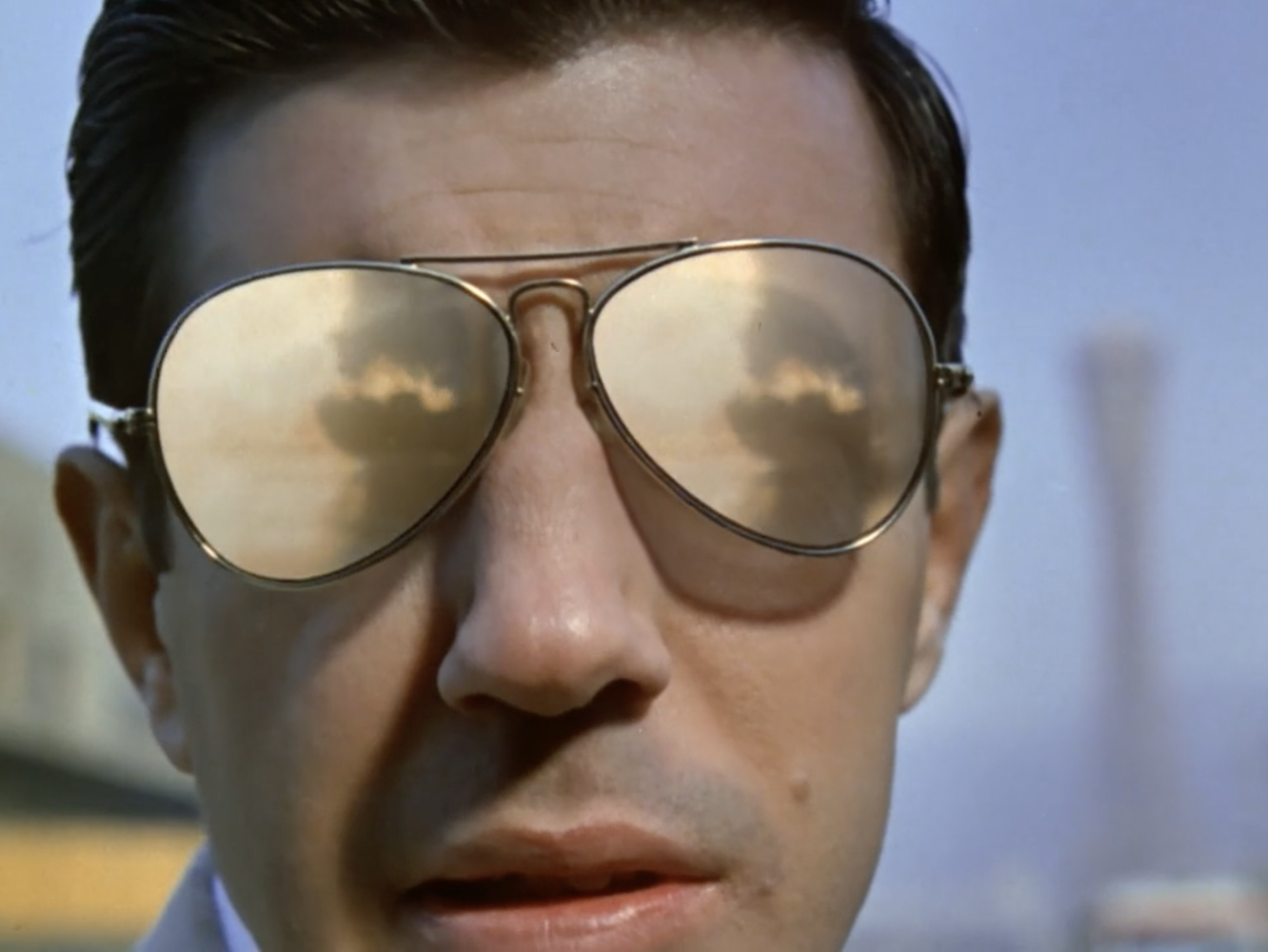
Cap. Kiriyama doesn’t think it’s the Ultra Guard’s business to investigate routine murders, but the TDF brass steps in with distressing news: all the assassinated people were scientists traveling in disguise. An alien race, Pedan, believes a recent Earth probe sent to observe their planet was a hostile attack, and they’ve transmitted messages to the TDF swearing revenge. The scientists were heading to an emergency conference at Special Defense Headquarters in the Kansai region. It’s now the Ultra Guard’s job to protect the conference and escort one of the most important scientists, Dorothy Anderson (Linda Hardisty). It won’t be easy, since there’s a spy in the TDF tipping off Alien Pedan about the whereabouts of the scientists.
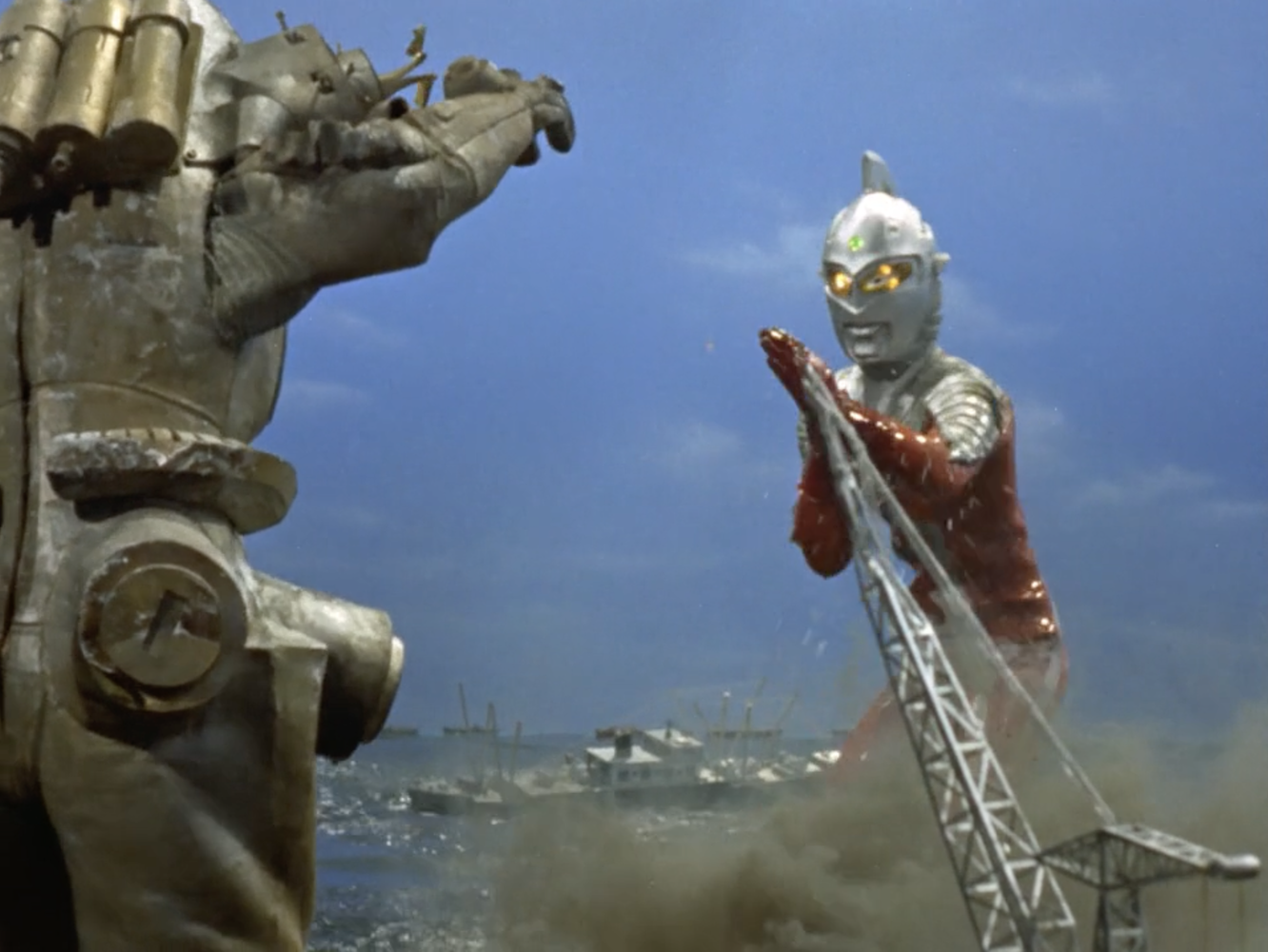
After the espionage thriller warm-up, Tsuburaya Pro pulls out the big guns … King Joe! (The name is a sly wink at writer Testuo Kinjo). King Joe is Alien Pedan’s attack robot that forms from multiple pieces to become one of the most fearsome foes the Ultra Guard and Ultraseven have ever faced.
Just on the level of effects and spectacle, “The Ultra Guard Goes West” is some of Tsuburaya Pro’s best work on television so far. There are two fights between Seven and King Joe, and not only are they lengthy battles packed with pyrotechnics and fantastic choreography, they take place in dazzling visual settings: first the Kyoto International Conference Center (standing in for the Special Defense Headquarters), and then among the ships at the Kobe docks, where King Joe can pick up a cargo ship and swing it like a truncheon. The Ultra Guard gets to go into action with Ultra Hawk 1 and their underwater attack vessel, the Hydranger. The kids who did tune in must’ve loved it.
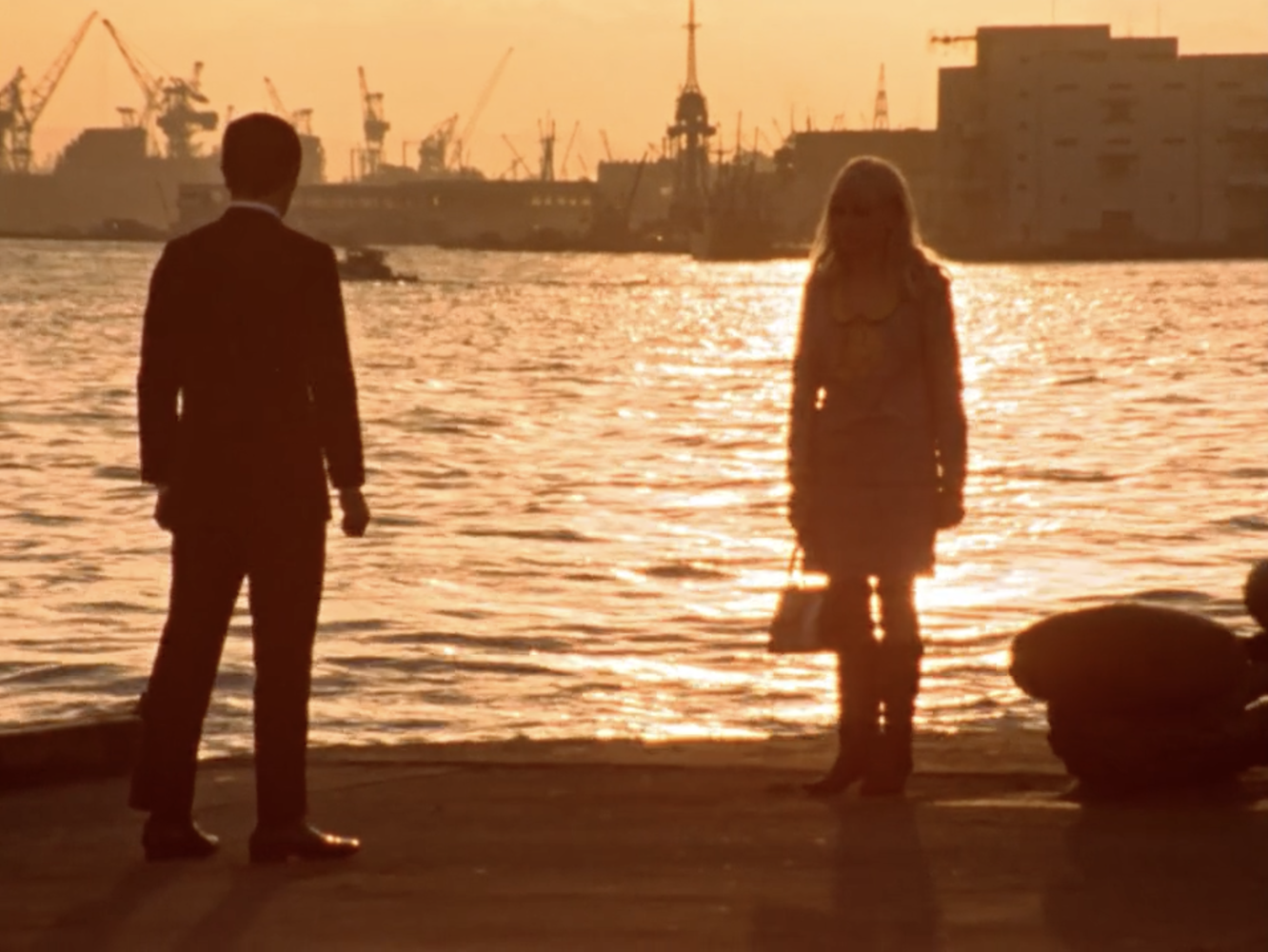
Between the VFX is an effective story that has Dan attempting to act as an ambassador who can possibly stop Alien Pedan’s attack. The whole dangerous situation might be an overreaction from an alien species that misunderstands Earth’s intentions. The most memorable non-effects scene in the two episodes has Dan in a tense sunset negotiation with Alien Pedan’s spy in human disguise. These occasional “aliens-vs.-aliens” detours are good reminders that although he appears human, Dan Moroboshi isn’t an Earthling, and his views are often radically different from the other members of the Ultra Guard.
There’s a Star Trek flavor to the scenes of Dan trying to find a peaceful solution to the situation. But unlike Star Trek, Dan’s assessment that Alien Pedan may be open to making a deal ends up wrong. Nope, the Pedans are just looking for any excuse to crush Earth. Maybe Dan learned the wrong lesson from dealing with Alien Pegassa in “Dark Zone.” Ultraseven has already featured a few alien species that ended up less hostile than they looked at first, but this isn’t the episode for playing nice. If you’re used to Star Trek, this may seem like an odd approach, but the Ultra universe is not the Star Trek universe.
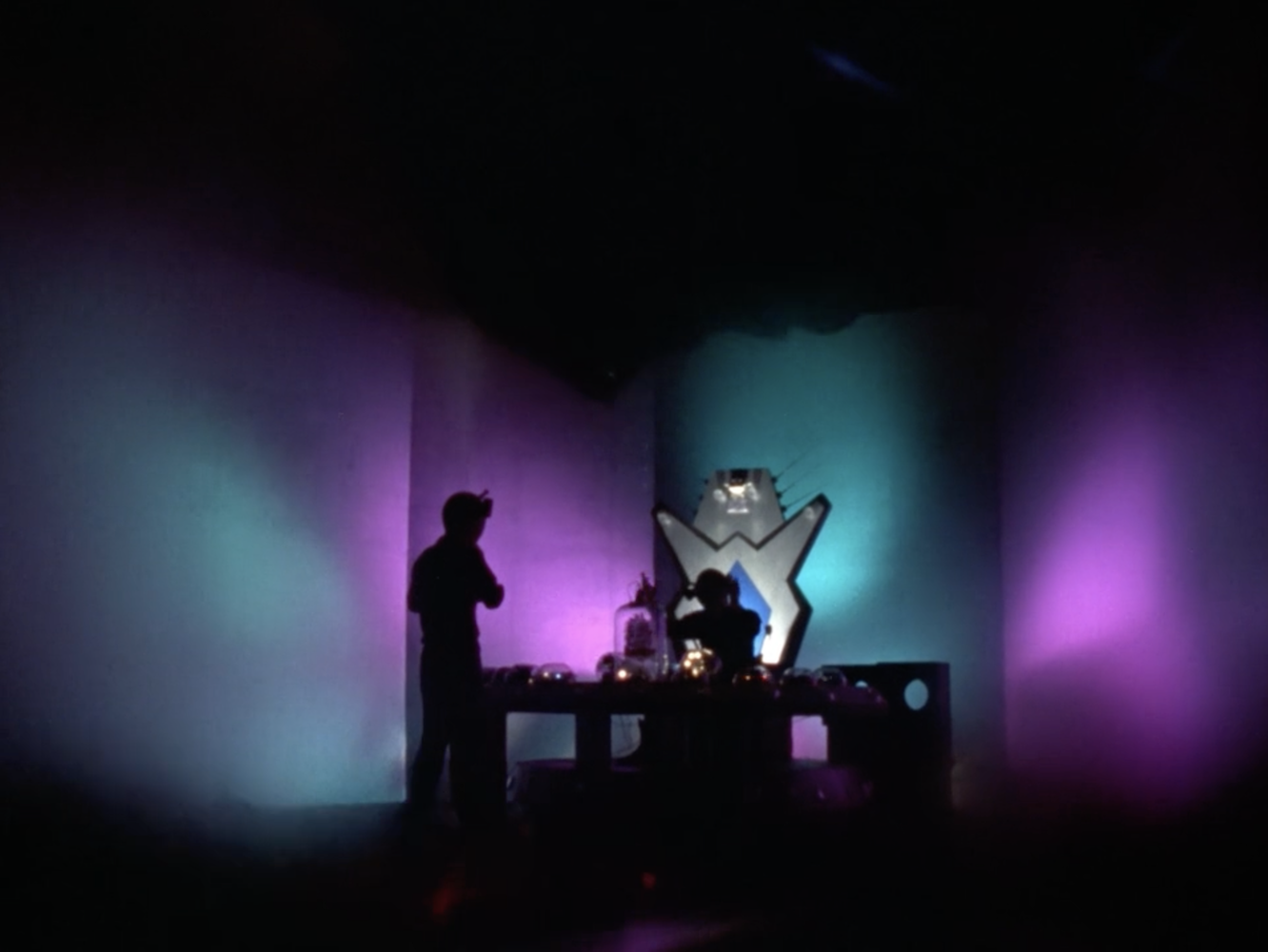
Yoshio Tsuchiya makes his third appearance in the Ultra series after major roles in Ultra Q’s “Goro and Goro” and Ultraman’s “Brother From Another Planet.” Tsuchiya’s scientist role isn’t a flashy one, but he’s such a commanding actor that he grabs the screen anyway. Ishiro Honda and Akira Kurosawa loved casting him for good reason.
Another interesting guest star turn comes from Terry Farnsworth, a Canadian martial artist who competed in the 1972 Olympics and studied Judo in Tokyo for several years. He’s not a superb actor, but he has an intimidating physical presence that makes him ideal for US secret agent Marvin Webb, who may or may not be an Alien Pedan infiltrator.
The other caucasian guest star, Idaho-born Linda Hardisty, manages to hold her own in a critical scene with Dan, but she’s definitely not an actor: at the time she was an international student who later taught English in Tokyo. Tragically, she died at the young age of 39 in Washington State.
“The Ultra Guard Goes West” is all that you want in an Ultra show two-parter: epic story, tremendous action, more money allocated to effects and location photography, and the extra space for some twists and heavy themes. The extended running time lets the first episode explore an espionage adventure before the second goes into the biggest alien invasion tale so far. Although designed to lure back the audiences who loved Ultraman, it’s still solidly an Ultraseven adventure with bigger kaiju fight scenes. And who couldn’t love King Joe? The super-robot has gone on to a robust career: it was one of the best parts of the first season of Ultra Galaxy Mega Monster battle, where we get to see what would happen if there were like a million King Joes on the attack.
Rating: Classic
Previous: The Man Who Came From V3
Next: The Eye That Shines in the Darkness
 The Ultra Project