
Directed by Hajime Tsuburaya. Written by Tetsuo Kinjo. Airdate April 24, 1966.
I’m guilty of calling Ultra Q “the Japanese Twilight Zone” or “Twilight Zone with Godzilla monsters,” even though I know that’s a superficial description that doesn’t capture the different sensibilities of creators Rod Serling and Eiji Tsubaraya. But The Twilight Zone was an influence on Ultra Q, and head writer Tetsuo Kinjo had an affinity for many of Serling’s favorite themes: using science fiction for social commentary and telling stories seen through the eyes of outsiders who are out of step with reality. In both ways, Kinjo’s “The ⅛ Project” is the most Twilight Zone-like episode of Ultra Q — and it still finds a way to include the concept of giant monsters in clever meta-commentary.
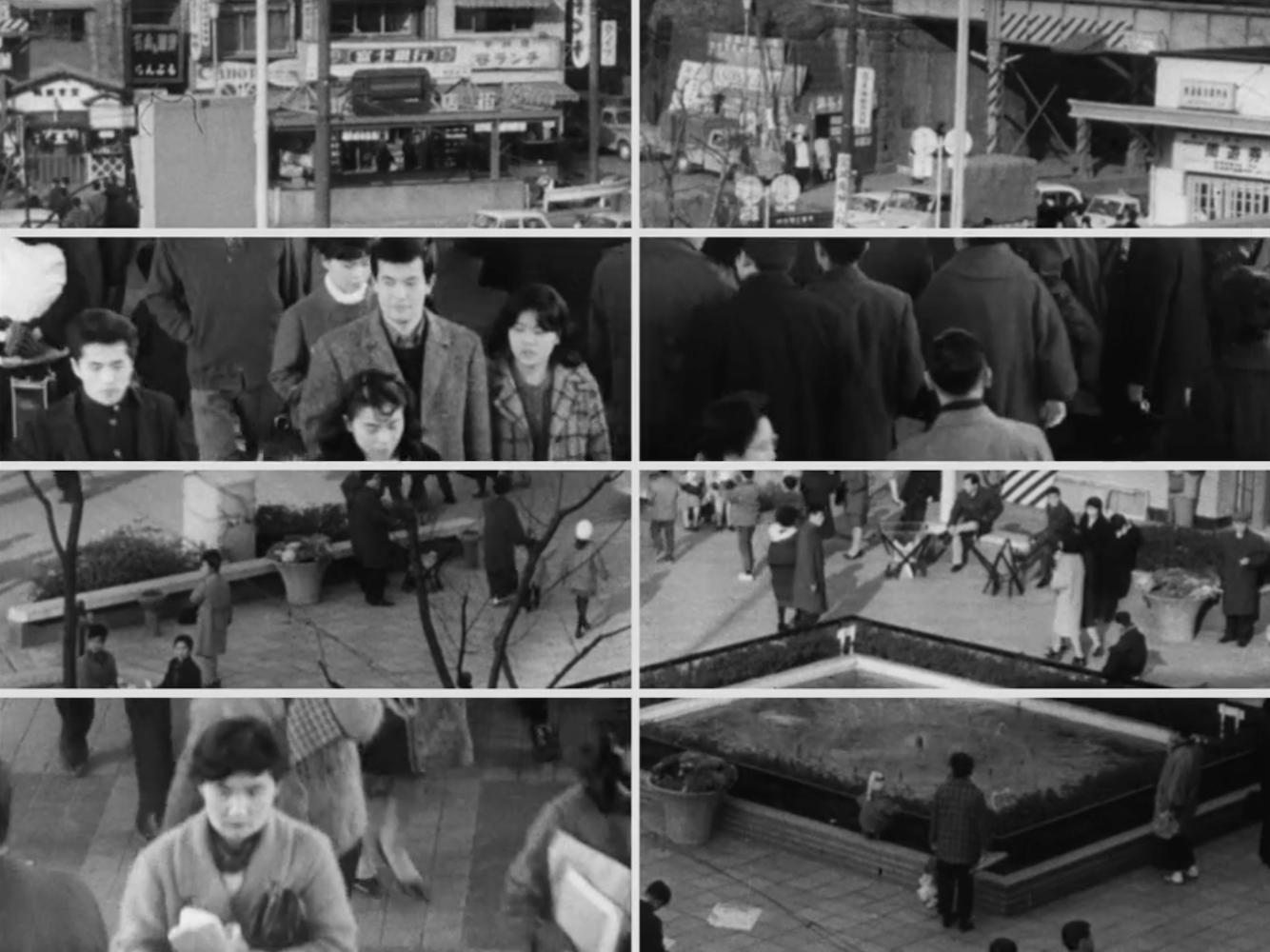
“The ⅛ Project” is also unusual in that it’s a character study for one of the regular leads. The show’s trio of main characters rarely act as the emotional center of episodes, leaving that to the guest stars. Here, the story centers on Yuriko (played by Hiroko Sakurai). Until this point, Yuriko has been portrayed as a modern young Tokyo woman: confident, playful, aggressive. But in the opening scene, she’s almost crushed in a stampede of people in a downtown train station. This is one of the most legitimately frightening moments in Ultra Q. The madness of the crowd in one of the most densely populated metropolitan areas on Earth is horrifying, and Yuri-chan freezes in a full-blown panic attack. I can relate.

The train station incident is presumably what interests Yuriko in the ⅛ Project, an organization that offers to solve overcrowding and the high cost of modern living: volunteers are shrunk down to an eighth their size so they can live in an inexpensive miniature environment, District S13.1 (One couple at the ⅛ Project offices bemoans that they just got married but can’t afford a house. That’s not relevant today at all, is it?) While investigating the ⅛ Project, Yuriko gets swept up in another crowd in an elevator and is subjected to the shrinking process. She’s assigned a number instead of a name, but she immediately wants out of the promised paradise.
Here’s where Kinjo’s script makes its most devastating move, which isn’t connected to social commentary about people trying to escape the crush and cost of modernity through size reduction. Yuriko tries to find her way back to her old life, but discovers through eavesdropping that her old life no longer wants her. It barely misses her. She was never important in the first place.
This is the loneliness of a classic Rod Serling tale: would you matter to the world if you vanished? Yuri-chan finds the answer is “no,” although as we’ll eventually discover this is only her perception. It’s still a painful conclusion to reach and displays a deeper level to Yuriko beneath her snappy exterior. It also reflects the way women were seen in ‘60s society. Tetsuo Kinjo appears to have more interest in this theme of alienation than in the episode’s social critique.
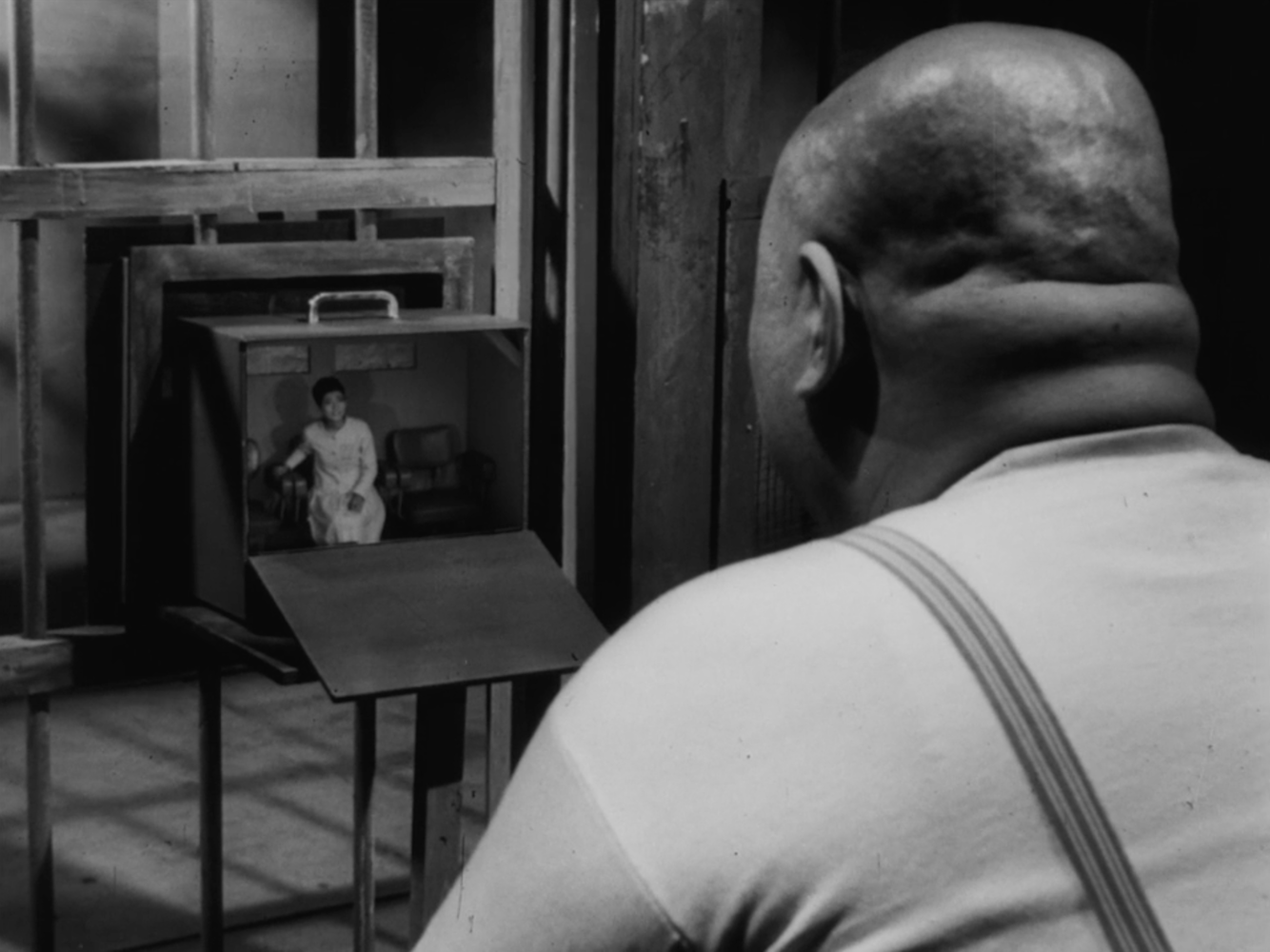
The miniaturization special effects are among Ultra Q’s most memorable and ingenious. Eiji Tsubaraya already had experience with tiny characters from the Twin Fairies of the Mothra and Godzilla movies. The VFX team’s work with large props, oversized sets, optical printing, and hidden edits on camera moves is a marvel to watch, even today. A scene of the shrunken Yuriko talking to a man in a jail cell while she sits inside a tiny transport box is seamless. The effects artists likely took influence from the 1950s classic The Incredible Shrinking Man; some of the “gags,” like Yuriko trying to call the newspaper office on a humongous phone, feel like direct inspirations.
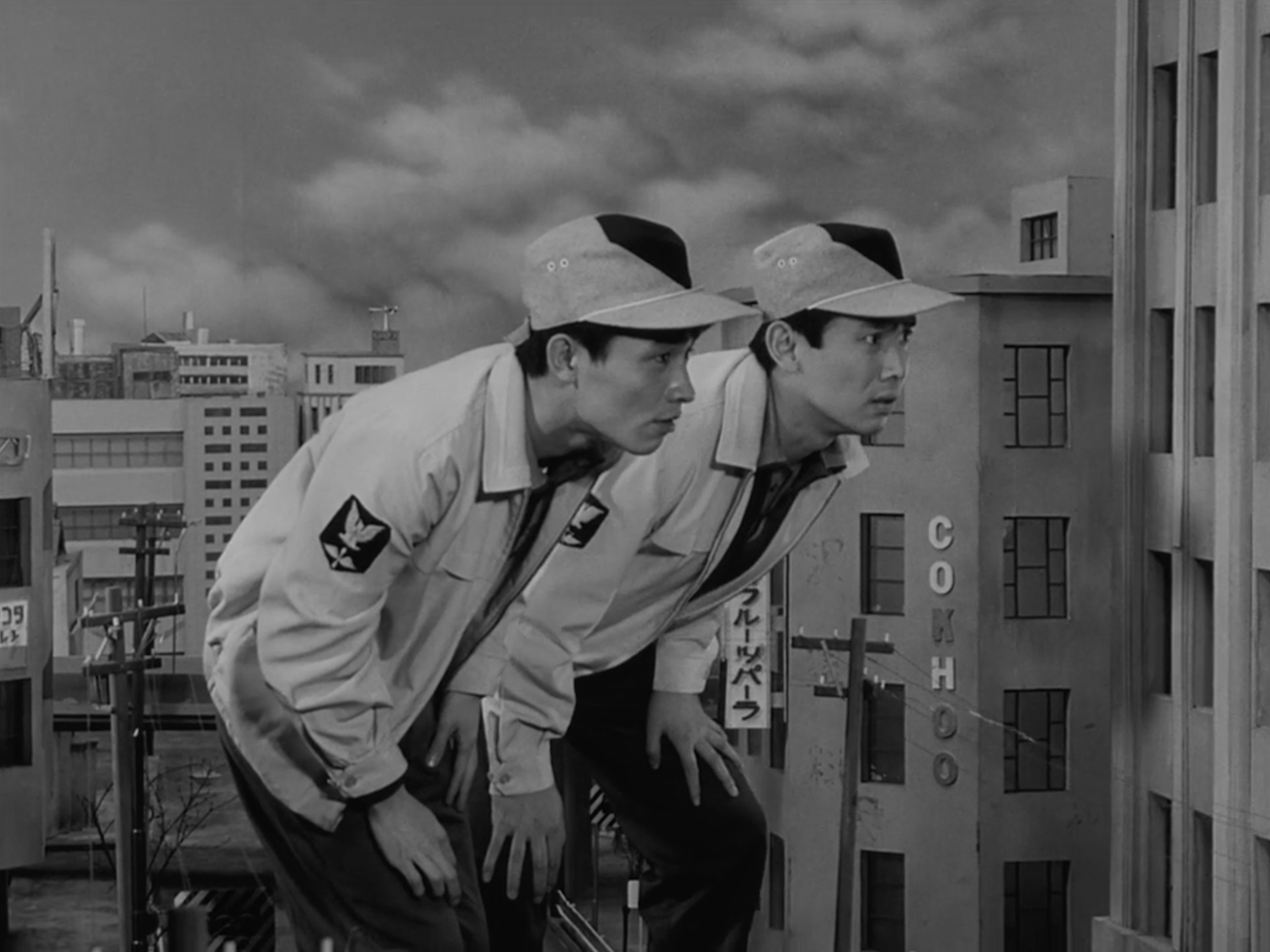
The episode’s most memorable scene is a meta-sequence that plays with how kaiju cinema is photographed. After Yuriko surrenders to living among the ⅛ people, Jun and Ippei go searching for her in District S13. Among the miniature buildings, two normal-sized men look like 40-meter-tall giants — making them the episode’s “giant monsters.” It gives viewers a behind-the-scenes look at how giant monster movies are shot: we’re seeing the miniature buildings that make the monsters look bigger actually playing miniature buildings. Putting two actors who aren’t in monster costumes among these buildings, trying to move among them without knocking them over, purposely reveals the façade. Many future Ultra episodes would have meta-episodes about the artistry of the franchise; this is the first and one of the best.
I have to address the ending, so spoilers if you’ve gotten this far. It turns out that most of the episode was Yuriko having a hallucination after her panic attack in the train station. She’s been lying unconscious in a hospital the whole time. Yes, it was all a dream — but I’ll gladly give this cliché a pass. Ultra Q doesn’t have the freedom of an anthology show like The Twilight Zone; its characters must continue into future episodes. The reveal of the hallucination doesn’t harm the story or its themes: Yuriko was wrong that no one would care about her disappearance, but she still perceived that they would. Jun and Ippei do care about her, but the madness of the frantic world and the way it dehumanizes people is still real, something Yuriko cannot shake. She’ll have to face the nightmare of modern living again. For us watching in the 21st century, this is more terrifying than any giant monster.
Rating: Classic
Previous: Garamon Strikes Back
Next: The Rainbow’s Egg
- This is the same premise as Downsizing, a 2017 film starring Matt Damon and directed by Alexander Payne. The movie was a box-office dud and received lukewarm reviews. I doubt the filmmakers were aware of “The ⅛ Project” but you never know. ↩︎
 The Ultra Project