
Directed by Kyota Kawasaki. Written by Chiaki J. Konaka. Airdate Oct. 12, 1996.
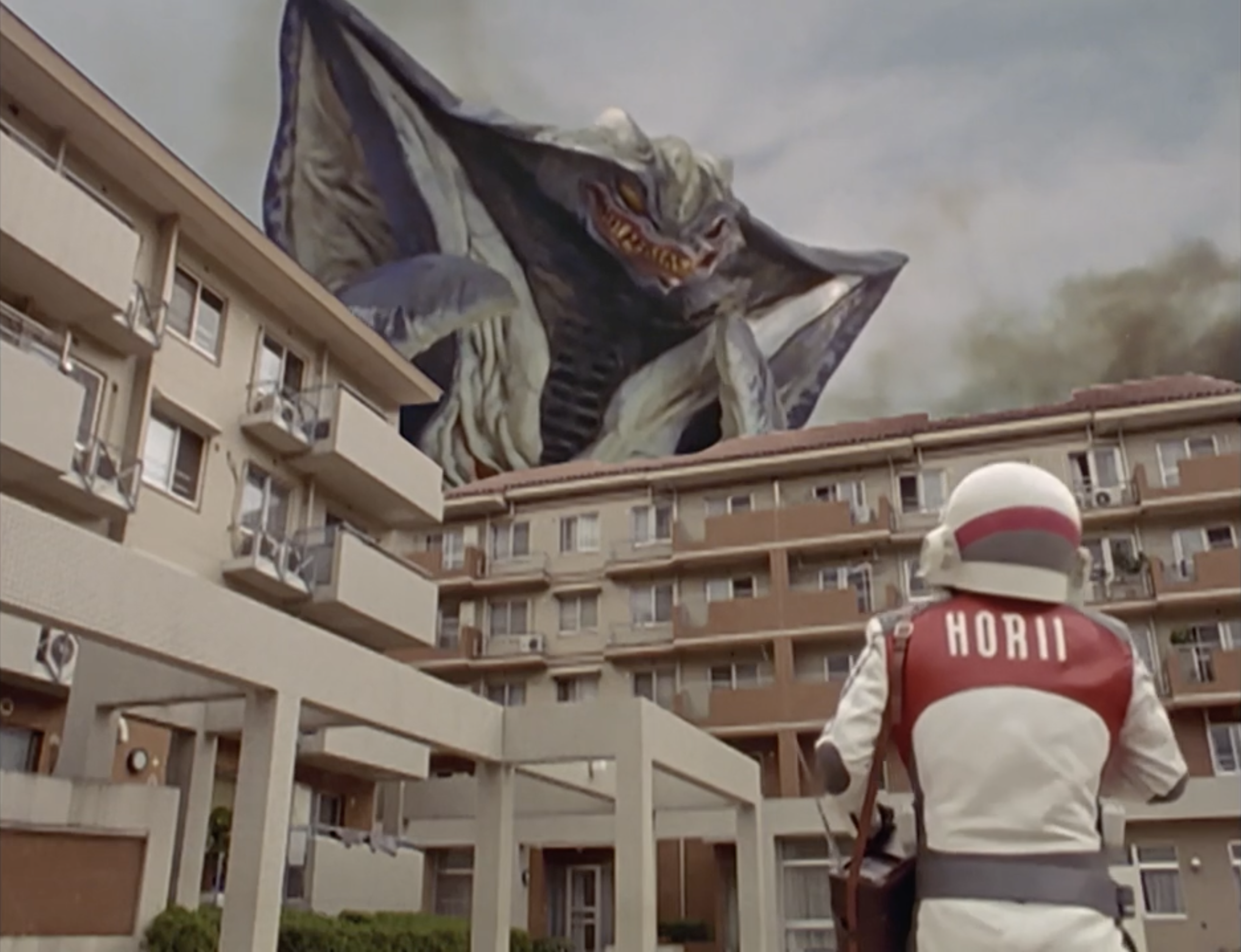
The first episode centered on Horii, GUTS’s resident scientist and comedy character. Like Ide from Ultraman, Horii is much more than just “the funny guy” in the ensemble. He shines in this episode as he tries to solve a monster problem that he has a deep personal connection to. Add in a cool kaiju, Gazort — one of the most memorable creatures to debut in the show — and you have the best episode of Ultraman Tiga so far.
The episode starts with Horii’s mentor, Dr. Mizuno, investigating an ominous black cloud that’s headed for Japan. Dr. Mizuno is on a career-long quest to prove the existence of “Clitters” (sometimes spelled “Critters”), tiny airborne creatures he believes live in Earth’s ionosphere. Tragically, Mizuno’s craft is destroyed in the cloud just as he thinks he’s on the verge of making first contact with the Clitters.
Based on data from the remains of Dr. Mizuno’s probe, Horii theorizes the Clitters have come down from their home high in the Earth’s atmosphere because of massive amounts of radio waves emanating from developing human technology. The Clitters have also evolved a new form — the giant monster Gazort. When the Clitters’ cocoon emerges from the cloud and crashes into the ground, it hatches Gazort, who goes looking for food. Which means smashing stuff.
The big surprise is Horii’s reaction to all of this: Dr. Mizuno’s death doesn’t make him vengeful toward the Clitters or Gazort, which is the sort of turn you would typically expect from this kind of Ultra show plot. There are plenty of stories about characters who let uncontrolled wrath at a monster overwhelm and blind them. Although Horii is devastated by the death of his mentor, he quickly pushes aside any rage. He instead sees himself inheriting Mizuno’s lifelong ambition to communicate with the Clitters. He tries to find a way to stop Gazort that involves reaching the mind of the Clitters and communicating friendship with them.
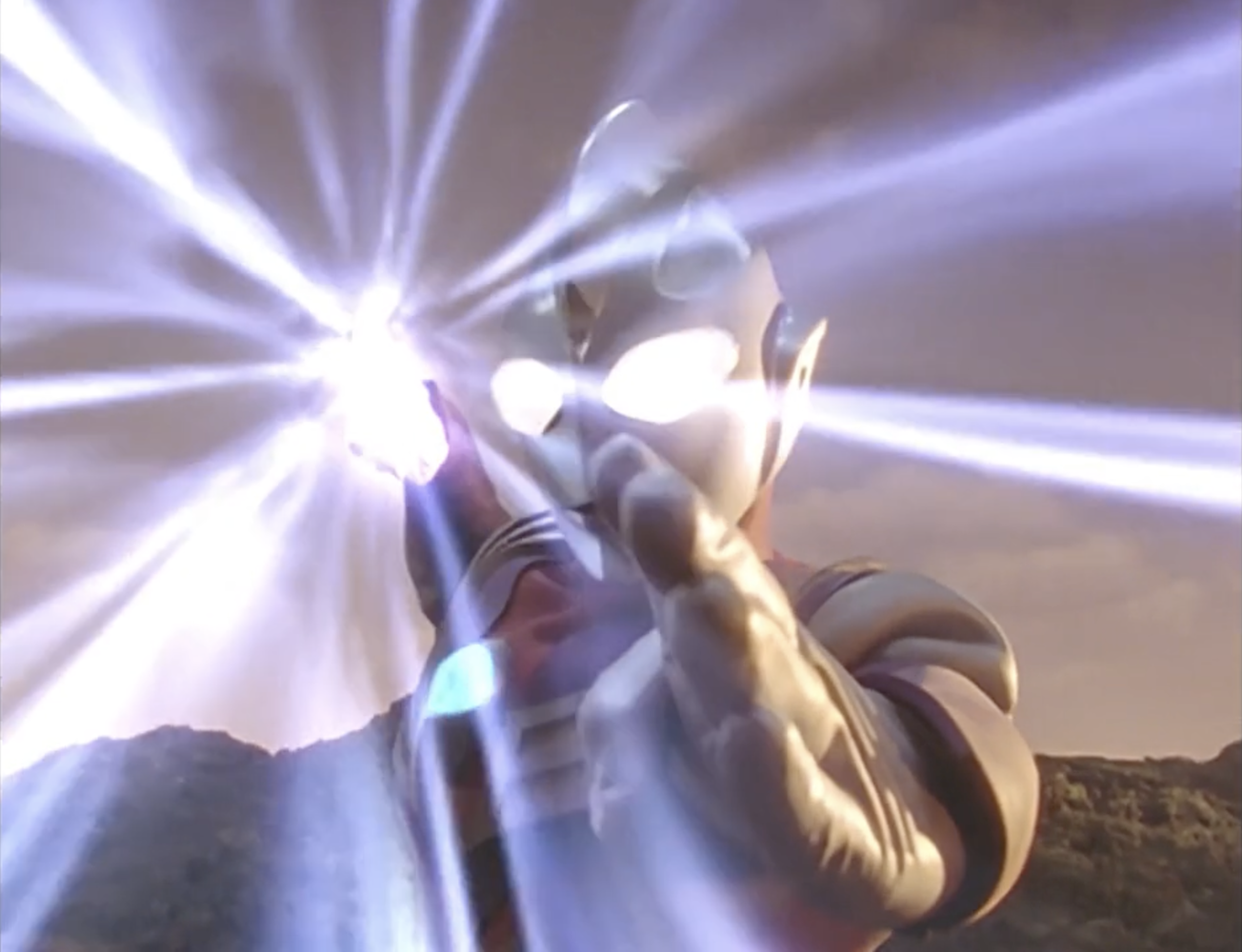
Horii’s regard for all life on the planet emphasizes that GUTS has a mission that’s more protective than aggressive. A true “defense” team. It’s a key part of Ultraman Tiga. The Ultra Guard from Ultraseven might have just sought to wipe out the Clitters rather than risk more Gazorts running around and lowering Japanese property rates while driving up the premiums on kaiju insurance. (That’s got to be a thing in this world, right?) Ultimately, Horii realizes that although communication with the Clitters is possible, there’s a linguistic barrier about what “friends” mean to the creatures that he can’t get around. The episode doesn’t dwell on this as a failure, however, but a part of a process that Horii completes for his mentor.
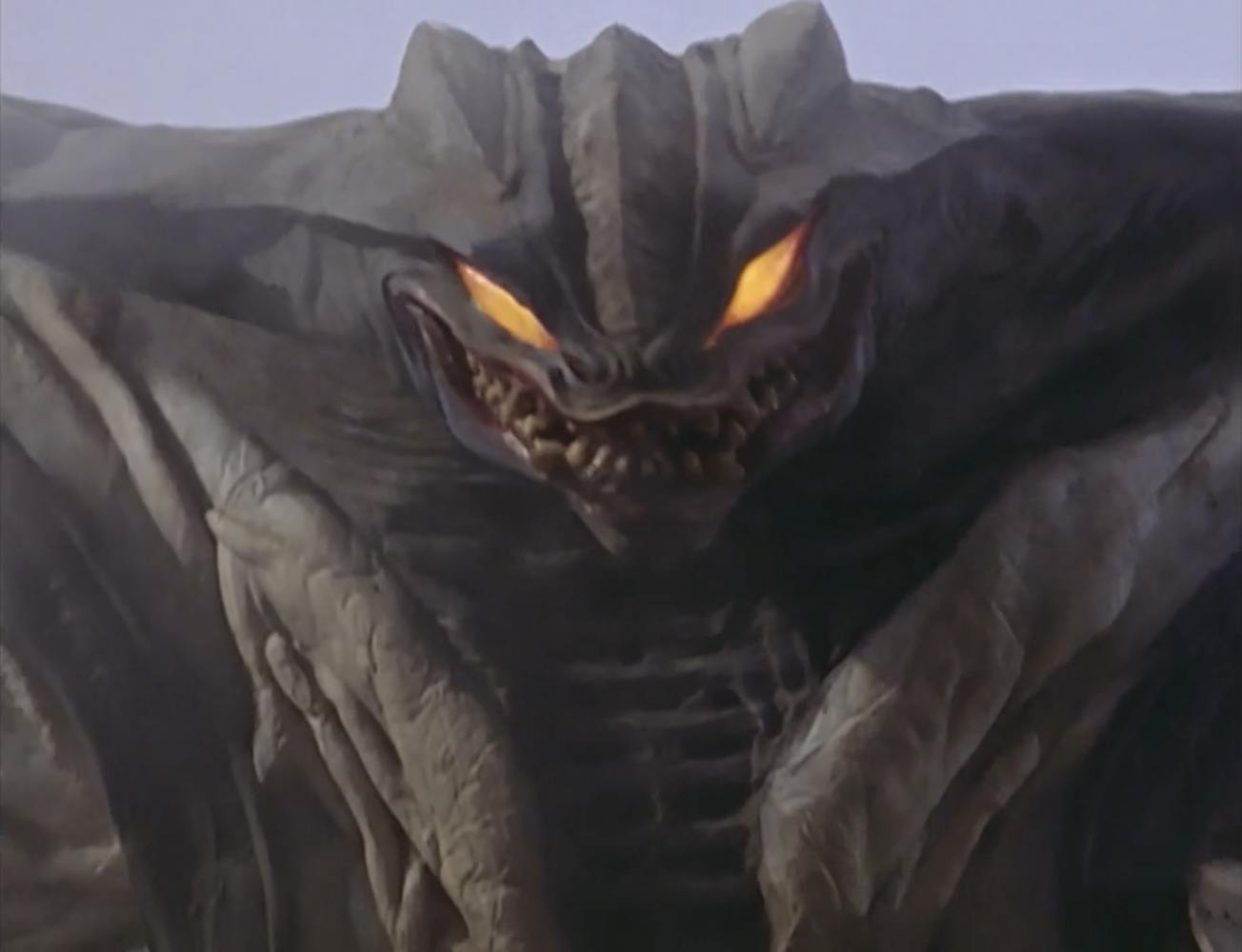
The more pacifist approach to dealing with a monster doesn’t mean we don’t get some great kaiju action and stuff going boom. Gazort is a wonderful monster with a design that makes it fearsome but also gives it personality. Its manta-ray shaped back not only looks cool, it makes it believable that Gazort is an evolution from creatures that float permanently in the sky. Even as Horii creates sympathy for the Clitters in the audience, Gazort looks fierce and dangerous — we still want to see Tiga land a few major blows against it in the finale. The action doesn’t let us down.
Well … maybe it does in one way. The only drawback to “Second Contact” is the cheesy digital flying effects for when Tiga and Gazort go airborne. Digital compositing is always one of Ultraman Tiga’s weak points. I’d much rather see Showa Era-type miniatures swinging around on wires.
This isn’t the last time we’ll see Gazort or the Clitters in Ultraman Tiga. The story of the Clitters continues in the episodes “Phantom Dash” and “One Vanishing Moment,” which form a mini-arc within the show. Kyota Kawasaki directed all three episodes, and wrote the last, giving them coherence as a trilogy.
Review: Great
Previous: The Day When the Monster Appeared
Next: The Man Who Came Down to Earth
 The Ultra Project