
Directed by Toshitsugu Suzuki. Written by Bunzo Wakatsuki. Airdate Dec. 3, 1967.
Young Akira is stuck at home in his bedroom with a broken leg after a car accident. He passes the time by using a pair of binoculars to spy on his next door neighbor. An odd neighbor, who may be up to something sinister…
Somebody at Tsuburaya Productions must have wanted to do a Hitchcock homage, because this is an obvious riff on Rear Window, complete with the voyeur having his leg in a cast. But we’re talking about Ultraseven, so once we discover that the suspicious neighbor is, of course, an antagonistic extraterrestrial, the Rear Window premise goes out the, uhm, window and we’re back into familiar alien invasion territory.
Aside from getting the Ultra Guard to notice the alien invader in the first place, young Akira doesn’t have much to do with the story. Anne is friends with Akira’s older sister, and when she hears about the boy’s suspicions, she returns with Dan to check up on them. Dan’s Ultra abilities allow him to discover a pocket fourth dimension near the neighbor’s house. It turns out the neighbor is Alien Icarus, who’s plotting to attack Earth from the safety of this pocket dimension. The dimension is also a trap: once Dan enters, he can’t escape it or transform into Seven.
In a strange move, Dan chooses to fly into the fourth dimension right in front of Anne and Akira. That seems like it would blow his cover as Ultraseven. Anne doesn’t seem to think Dan leaping out a window and floating several feet before vanishing is unusual — or maybe she already suspects Dan is Ultraseven, but there’s no indication that this tips her off. It’s an awkward moment, and like several other parts of the episode doesn’t feel like it was thought out completely.
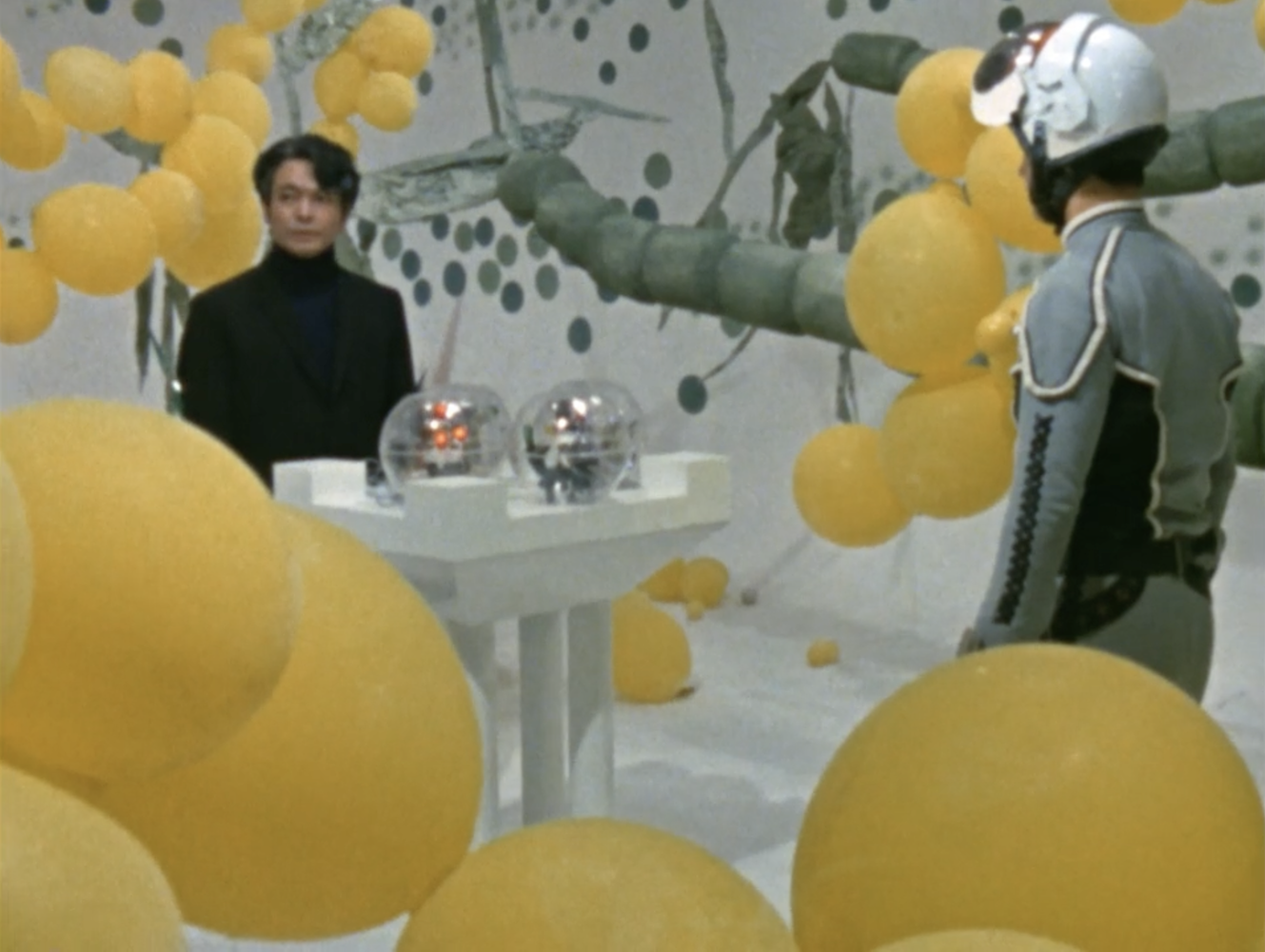
The episode centerpiece is the surreal design for Alien Icarus’s fourth dimension hideout. It’s … not that impressive. The set is a medium-sized white room filled with yellow globes and some tentacle-like obstructions. The production team was probably trying to make the set feel like endless white on all sides, but the stage walls are obvious, and no one will mistake the yellow orbs as anything other than inexpensive party balloons. Lens distortions try to give the place a more otherworldly aura, but it still looks like the set for a 1960s children’s TV show or a sketch from Sesame Street. A director like Akio Jissoji may have had the photographic savvy to execute this with flair, but all I can say about the actual results is, “Oh well, good try.”
Most of the episode budget was allocated to the double finale. First, Seven faces a giant Alien Icarus and its attack saucer. Then two of the Ultra Hawks pursue the Icarus spacecraft, done with impressive outer space effects. This type of dual ending works for the show’s variation on the Ultra formula: a monster fight doesn’t have to be the conclusion, and the defense team can play a decisive role separate from the superhero. The Ultra Guard is one of the most effectively lethal, even ruthless, of the defense teams, and they definitely earn their pay this time.
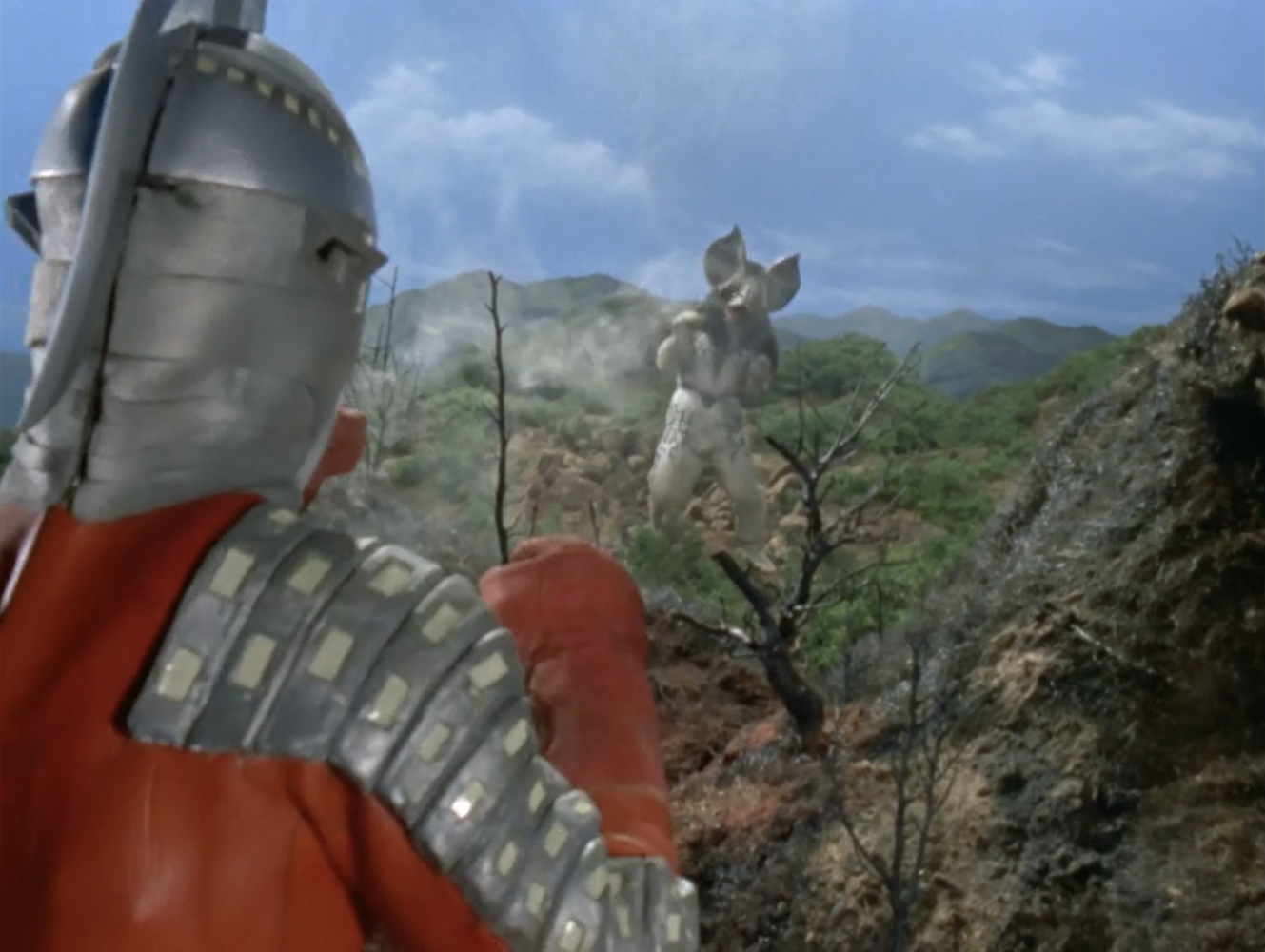
Alien Icarus is a bit cute, like a wingless bat, and its twitchy mannerisms come across as too humorous. But the kaiju fight is a strong one with a variety of attacks and special maneuvers from the combatants. Ren Yamamoto, so memorable as the petty wish-monster creator in Ultraman’s “The Rascal From Outer Space,” returns as Alien Icarus’s human form. He’s not as outstanding a presence this time, but he still shows villain promise that should have resulted in more roles in future Ultra programs.
In closing, a message for any children watching: kids, don’t do what the narrator recommends at the end and snitch on your neighbors because you think they might be aliens. They’re probably not.
Rating: Mediocre
Previous: Operation Android Zero
Next: Fly to Devil Mountain
 The Ultra Project