
Directed by Samaji Nonagase. Written by Masahiro Yamada. Airdate April 10, 1966.
After four giant monster episodes in a row, it’s time for something different. Really different. Something so out there it doesn’t even have room for any of the series leads. Spoilers ahead, but believe me, they don’t matter. In fact, go watch the episode right now and come back so we can share.
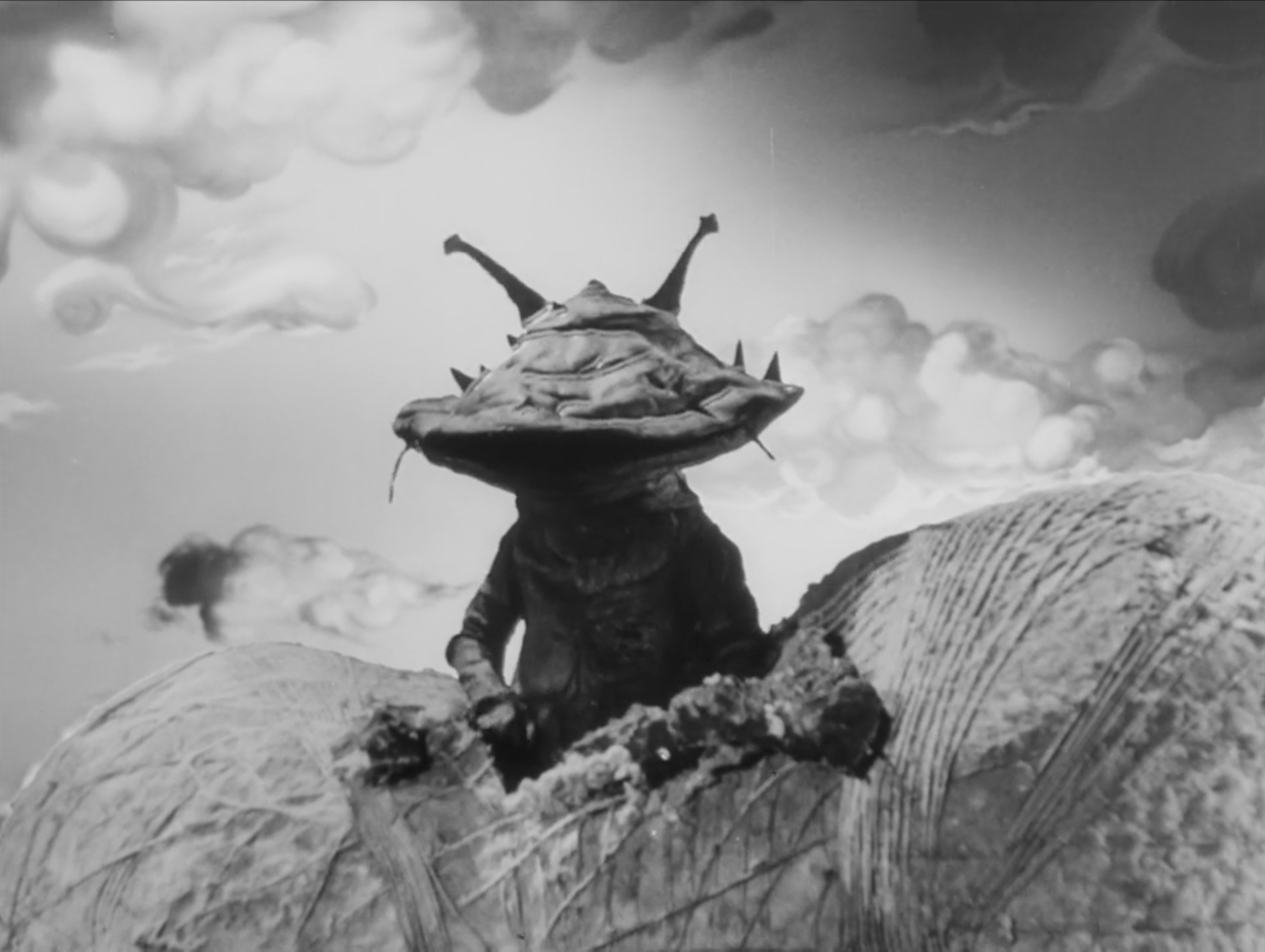
Once upon a time, there was a boy named Kaneo Kaneda, whose first name is similar to the Japanese word for money (okane). Kaneo loved finding coins lying on the ground and collecting them. He loved collecting coins so much that his grouchy parents told him he was greedy, and a greedy child might turn into a “Kanegon”: a monster with a Martian’s body and a coin purse for a head. (Kaneo’s parents may drink too much.)
One day, Kaneo discovered a strange cocoon full of coins in the dirt field where he and his friends played. He took it home, and the cocoon grew enormous and sucked him inside. He emerged the next day transformed into a Kanegon! He had to eat money to live and was miserable and sad because his friends turned against him. But then he stood up to the big, bad tractor-driving bullies who liked to run over the kids’ bicycles, and by magic, he turned back into a boy. But when he went home, he found that his parents had turned into Kanegons! Oh no! The End.
So … I love this episode. It might be my favorite Ultra Q episode. I only own one Funko Pop! figure, and it’s of Kanegon. That should tell you something.
I’m not joking. The loony story I just described is that wonderful on screen. It’s a perfect children’s fantasy comedy — a fairy tale with the dry moralism mercifully sucked out of it and replaced with joyful surrealism. Franz Kafka’s Metamorphosis as a kiddie sitcom. It’s bizarre but makes sense in the world where it occurs. Watching it is like living in a child’s dream where no adult ideas have ever intruded. It has that kind of purity of invention.
Ultra Q visited the fairy tale previously in “Grow Up! Little Turtle,” and this episode takes a similar approach of playing the story for comedy/parody rather than teaching a moral lesson. Kaneo doesn’t seem greedy enough to be punished this way; he likes collecting coins. His friends are much worse, forgetting about friendship and instead trying to find ways to profit from Kaneo’s transformation, like selling him to a circus or a college research center. (“Anyone would buy him. He’s a rare animal!”)
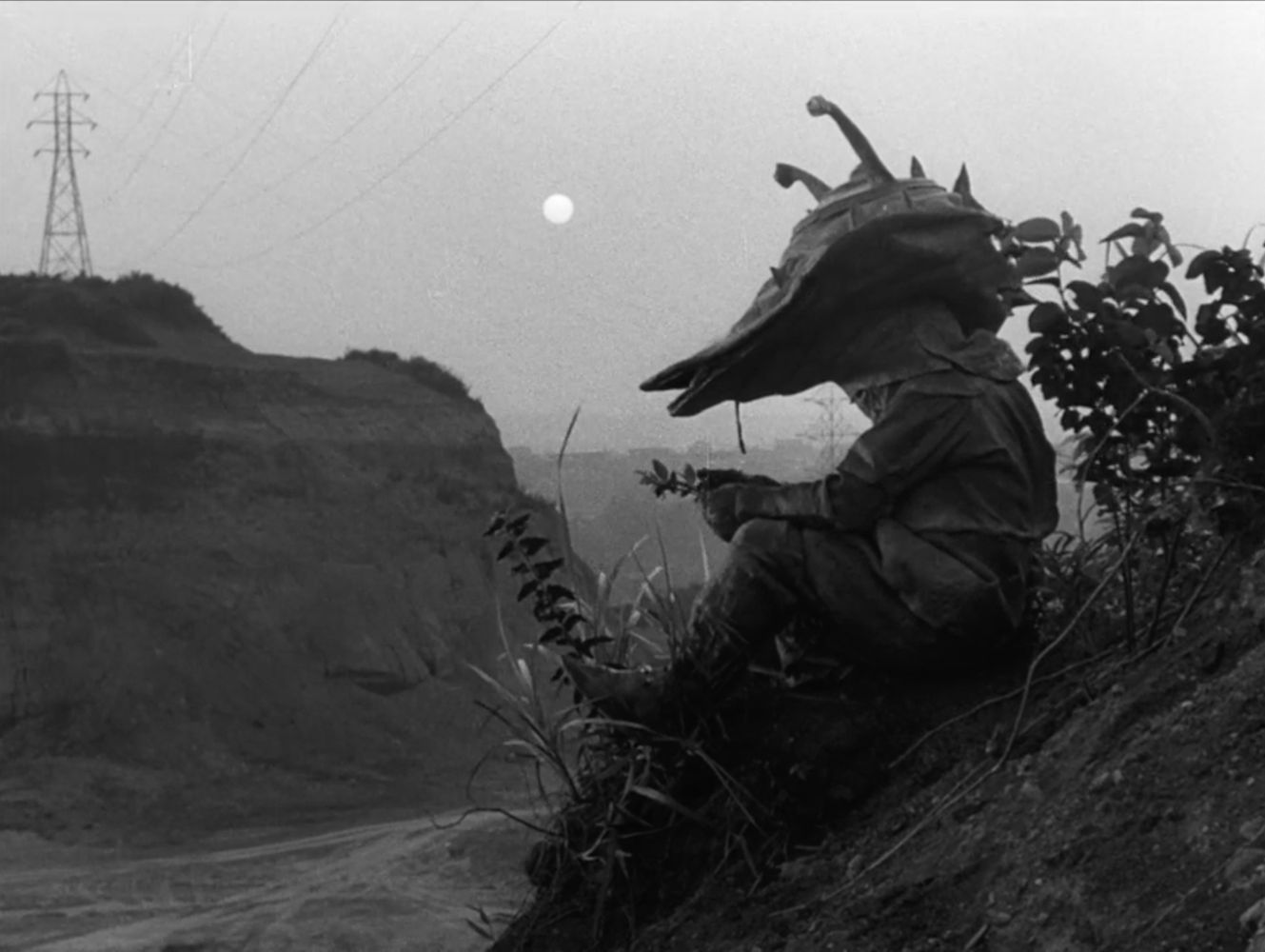
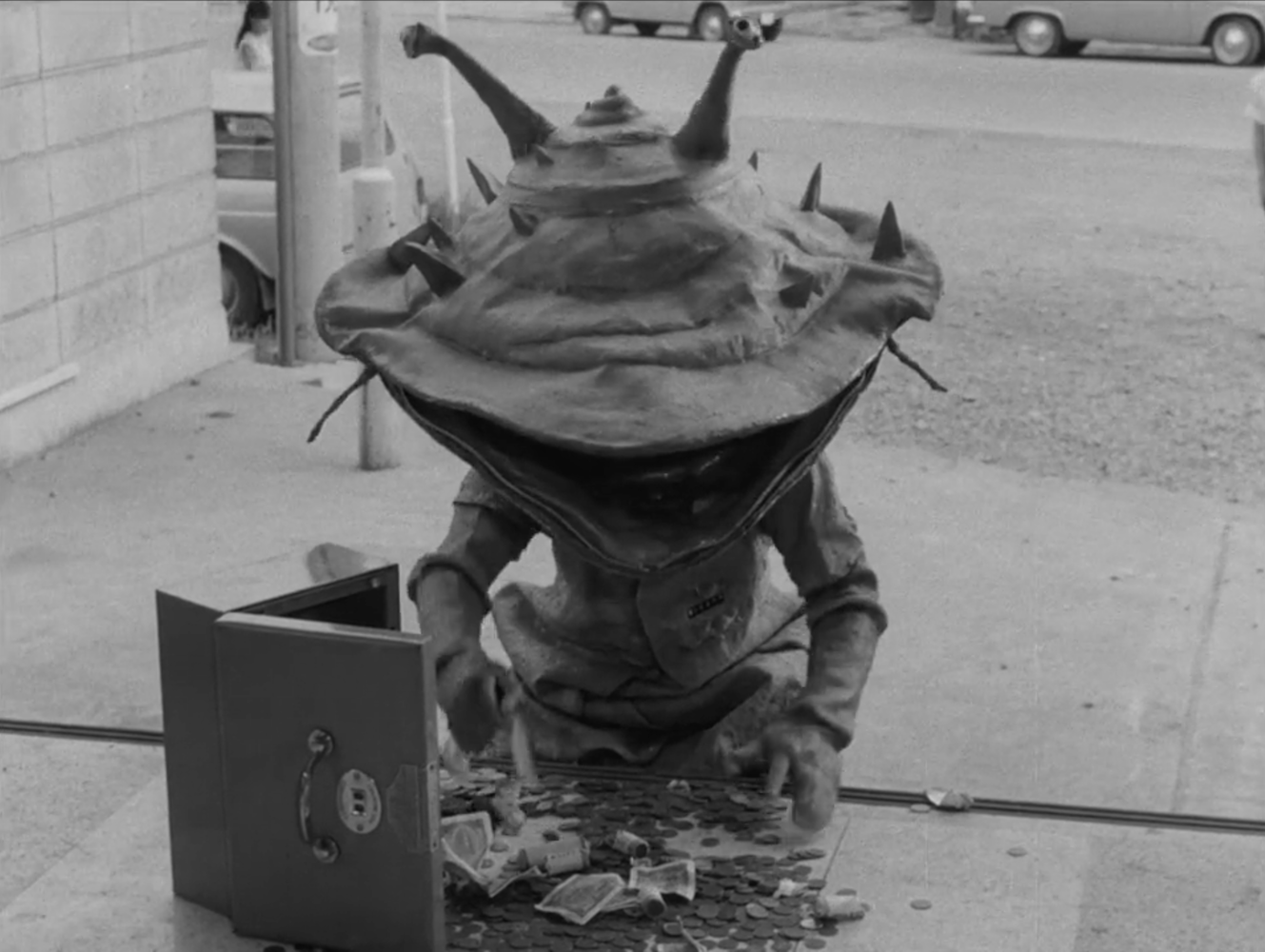
What raises “Kanegon’s Cocoon” above most Ultra show fairy tales is its lead, Kanegon the Coin-Eating Abomination. One of the most memorable monsters in Japanese tokusatsu, Kanegon is a masterpiece of cute kaiju design: adorable and funny without being cloying. The coin-purse head with the zipper tags at the end, the big flapping lips that have a morose sag but also humorous awkwardness, the thorny bumps, the eye stalks, the coin-counter readout telling when Kanegon will run out of the money it needs to eat for food, and the general cute-but-sad quality to it — it’s all fantastic. We feel sorry for Kanegon, but we also love all the antics that happen around it.
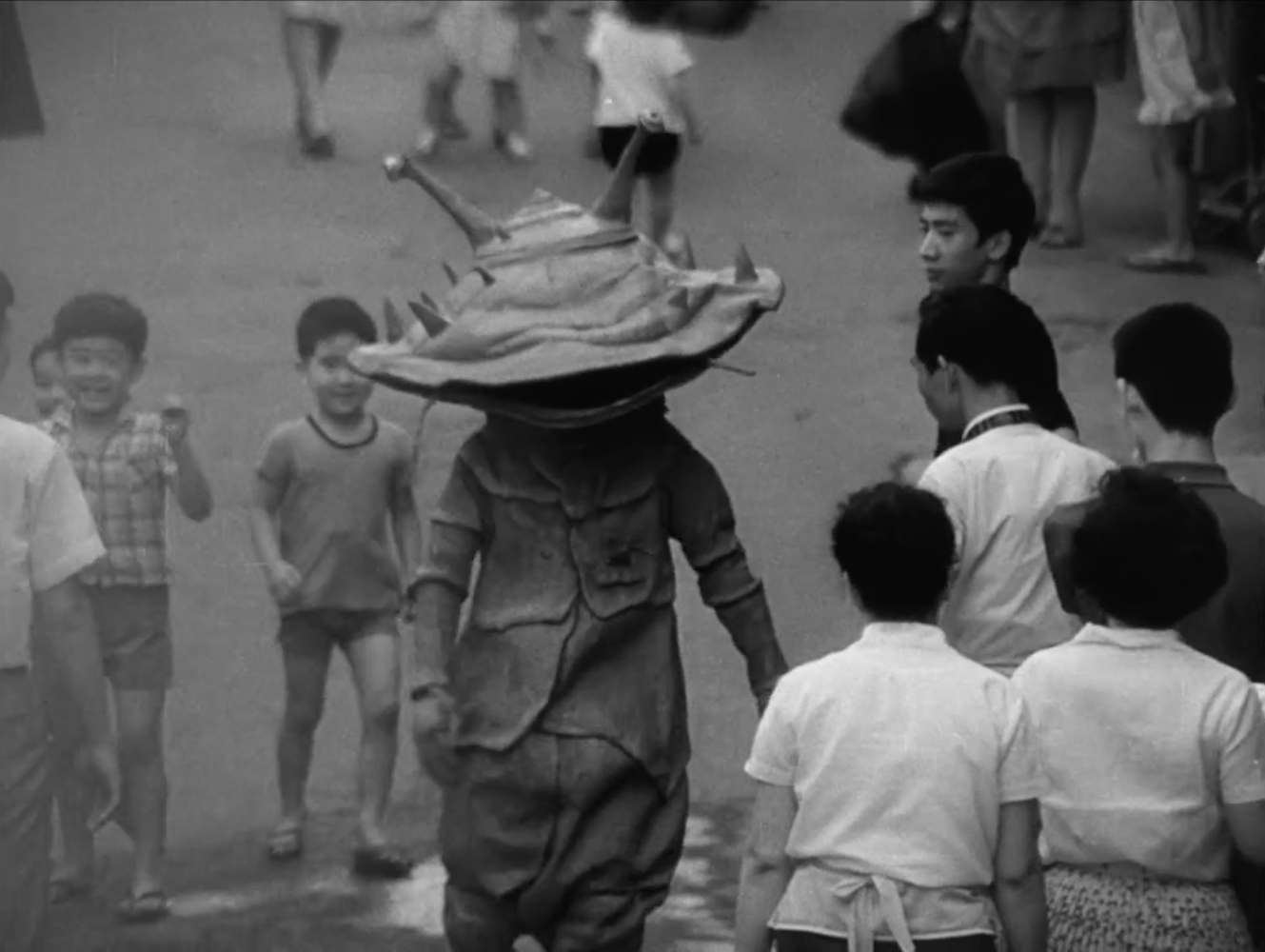
There are numerous scenes and shots that bring out the character of this strange-looking thing: Kanegon wandering the streets like a poor drifter; hungrily gobbling up coins from a dropped bank cash box; tumbling into a dirt pit while running away from maniacs on a bulldozer; perched alone on a hillside at sunset, moaning about hunger.
Big credit goes to Kanegon’s performers: suit actor Haruyoshi Nakamura and voice actor Mitsuko Aso, who also voices Kaneo as a human child. Nakamura’s performance is comedy perfection, gifting Kanegon with a mixture of bumbling silliness and sadness. Nakamura had already brought his gift for humorous monster acting to Ultra Q as M1 in “The Underground Super Express Goes West,” and would later play the headlining cute monster in the Tsuburaya Pro children’s sitcom Kaiju Booska.
Masanari Nihei has his third Ultra Q comedy role before graduating to lead status in Ultraman. He plays one of the two tractor drivers who apparently have no job other than chasing kids away from an empty dirt patch and generally acting like the adult jerk-wads whom children love to see eventually get humiliated. Nihei plays second fiddle to the main driver, whom the kids call “Daddy Walrus” because of his absurd handlebar mustache. This all makes total sense.
Even the ending makes sense. Not literal sense, but the twist with Kaneo’s parents feels like the best way to close out the humorous fable. Like much in the episode, it’s a mockery of the idea of a morality tale.
If you couldn’t already tell, I love every second of “Kanegon’s Cocoon.” It delighted me the first time I saw it, and it cinched my love of Ultra Q forever. That the show could veer off in this nutty direction in an episode without any of the regular cast was a revelation to me about what Tsuburaya Productions could pull off. Here was something closer to The Muppet Show than The Twilight Zone, and it was such a giddy surprise.
What’s most surprising about “Kanegon’s Cocoon” is its legacy as a defining moment for the Ultra series. The kaiju Kanegon has appeared many times since, often as a series mascot and merchandising icon. Everybody just wants this weird thing around. The episode’s style has had an even greater influence, creating the potential for its childlike spirit to resurface at any time in an Ultra show. The episode’s enduring popularity gave the franchise a freedom I think it would’ve otherwise lacked. Only the mad genius of Eiji Tsuburaya, who loved dangerous monsters but also entertaining children, could’ve hatched this original work. It is weirdness perfected that has transcended its original show to become a kind of Japanese cultural folklore.
Rating: Classic
Previous: Tokyo Ice Age
Next: Garamon Strikes Back
 The Ultra Project