
Directed by Samaji Nonagase. Written by Masahiro Yamada. Airdate April 3, 1966.
The most terrifying monster of all has arrived: climate change! Yes, scientists already knew about this encroaching global threat in 1966 and were sounding the alarm bells. They didn’t, however, warn that melting Antarctic ice combined with nuclear power plant accidents would force the deep-freeze monster Peguila north to wreck wintry havoc! Would more people have paid attention if they did? I think so.
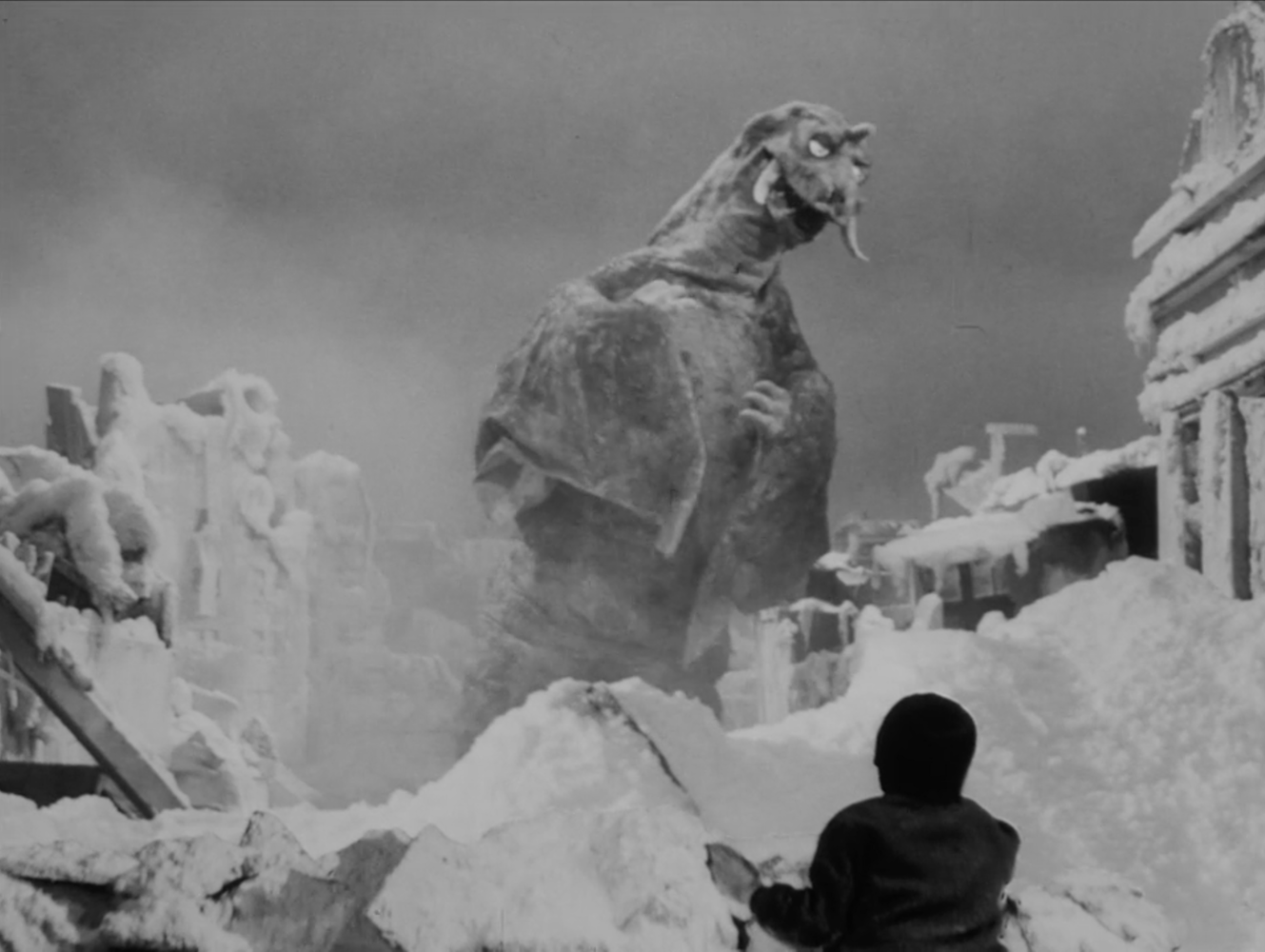
The giant walrus-penguin thingy from the episode “Pequila Is Here!” has returned. It’s the first time in the Ultra franchise that an earlier adversary comes back to make more trouble. Worse trouble. Peguila has left the Antarctic wastes to inflict its freezing powers on Tokyo for a full-frontal giant monster story of urban destruction. It’s the biggest, most action-filled Ultra Q episode yet, and one of its best giant monster outings. It’s also one of the show’s better constructed scripts when viewed as a miniature version of a big-screen kaiju film. Our main trio of characters all have reasons to get caught up in the action and the climax pays off all the story elements.
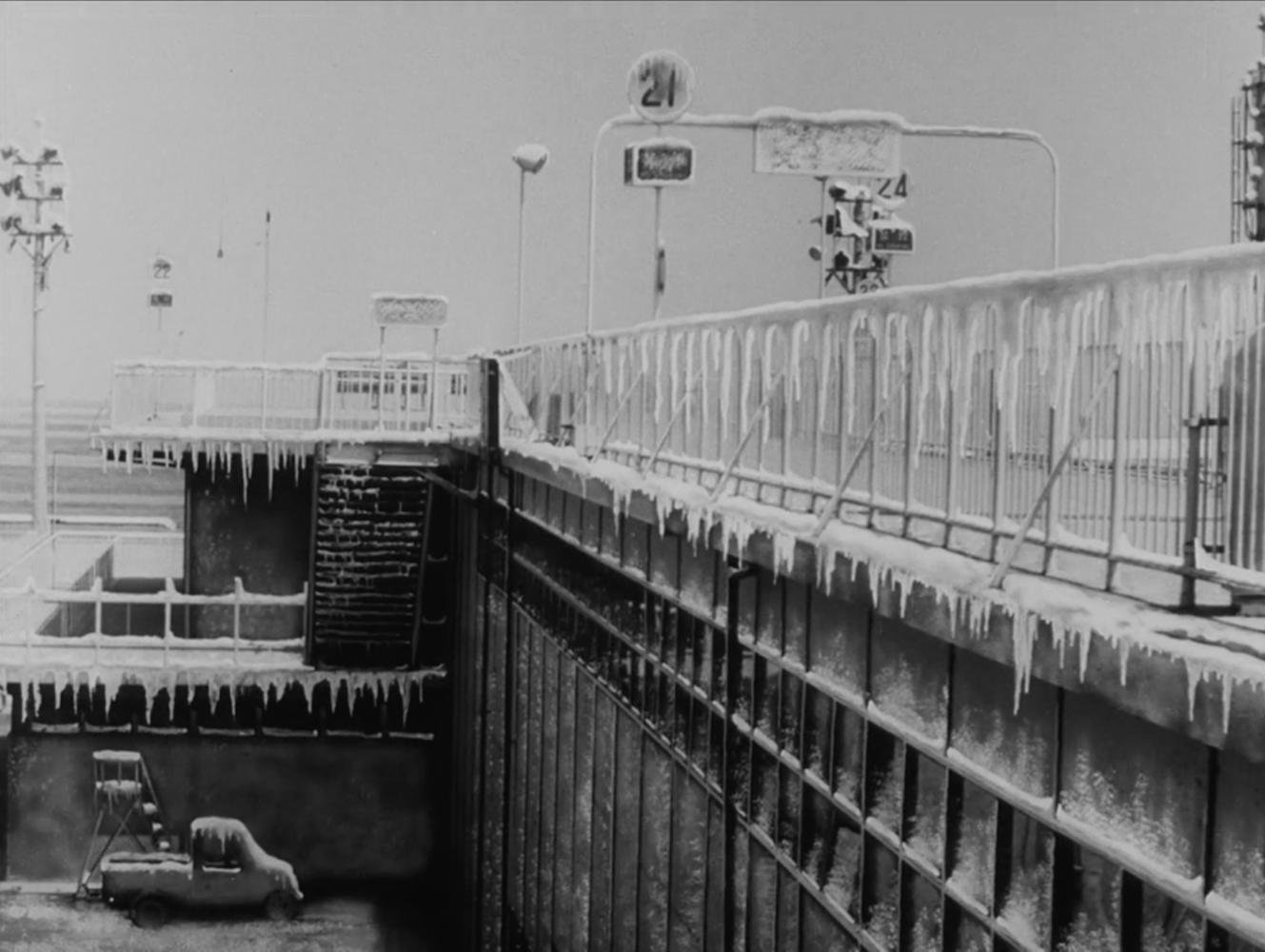
The special effects are some of the show’s best. This was probably a costly episode, but I can’t imagine the Tokyo Broadcasting System complained about what they got for their money; these giant monster episodes pulled in the biggest ratings. Peguila crushes a lot of Tokyo architecture and uses its weird zero gravity breath weapon again, and there are several stunning vistas of Tokyo and Haneda Airport transformed into hellscapes of frost and icicles. (“A cold, cold winter day that occurred in the middle of the summer,” the narrator intones over the frozen tableau of the airport during the opening credits.)
It may be Peguila’s return engagement, but it’s not actually Peguila’s story. This time, the spotlight is on Haruo (Hideaki Sato), a young boy who has traveled by himself all the way to Tokyo to attempt to find his father, former fighter pilot turned drunk, Captain Teruo Sawamura (Masahiko Arima). Yuriko finds young Haruo while she’s trying to scrounge up a story to report on. She thinks this boy’s long-distance search for his father might make good copy. Yuriko’s boss at the Daily News logically recommends checking out why Haneda Airport suddenly froze and caused a passenger plane to crash, but we don’t need to worry — these plot threads are definitely going to meet.
The way the story strands eventually weave together won’t surprise most viewers, but surprise isn’t the appeal of an episode like this. Meeting audience expectations in an exciting and fulfilling way is what matters. Will the jewel thief who’s holding up Jun and Ippei to steal their plane, just when the plane is desperately needed to fetch the special substance that can stop Peguila, have some connection to Haruo and his dad? Of course he will. The moment the thief pops up, you’ll immediately guess who he is and see the exact redemption arc that will play out over the rest of the episode. But it works and gets all the main characters pulled into a story that has both personal and global stakes.
Yuriko shows off the quirkiest side of her personality, and this is when I love her the most. She’s hilariously cavalier in her pursuit of a newspaper story and displays some serious Austrian booksmarts when she quotes Rainer Maria Rilke’s observation on cities: “Here, then, is where people come to live; I’d have thought it more a place to die in.” (Taken from Rilke’s only novel, The Notebooks of Malte Laurids Brigge.) You don’t get Rilke quoted often in giant monster movies, so thank you, Ultra Q.
The big scene-stealer is Yoshifumi Tajima, who has the most screen time so far as recurring character Seki-san, Yuriko’s boss at the Daily News. Tajima is a fantastic presence in just about any movie or television show he appears in — he’s a classic Character Actor Man, infusing personality into all his scenes. It’s ludicrous to think a vague “academic society” is restricting the use of Peguimin-H against Peguila, but when you hear Tajima snarling about it on the phone (“Jeez, City Hall’s system is unacceptable.”) you believe it and get a good laugh too.
If you love Toho monster movies and aren’t as tuned into the weirder side of Ultra Q, this is definitely one of the more enjoyable half hours of the show. Did I mention the effects are great? I don’t think I talked them up enough, but this is cinema-tier work from the Tsuburaya Pro effects team.
Rating: Great
Previous: Garadama
Next: Kanegon’s Cocoon
 The Ultra Project