
Directed by Kyota Kawasaki. Written by Chiaki J. Konaka. Airdate Oct. 5, 1996.
Ultra warriors tend to blow up their monster opponents or fly them out to space to dispose of them. But what about the monsters they defeat that leave behind massive carcasses on land? “The Day When the Monster Appeared” takes a look at the disposal operation for one of these dead kaju — although this creature washed ashore rather than being a leftover after a fight with an Ultra.
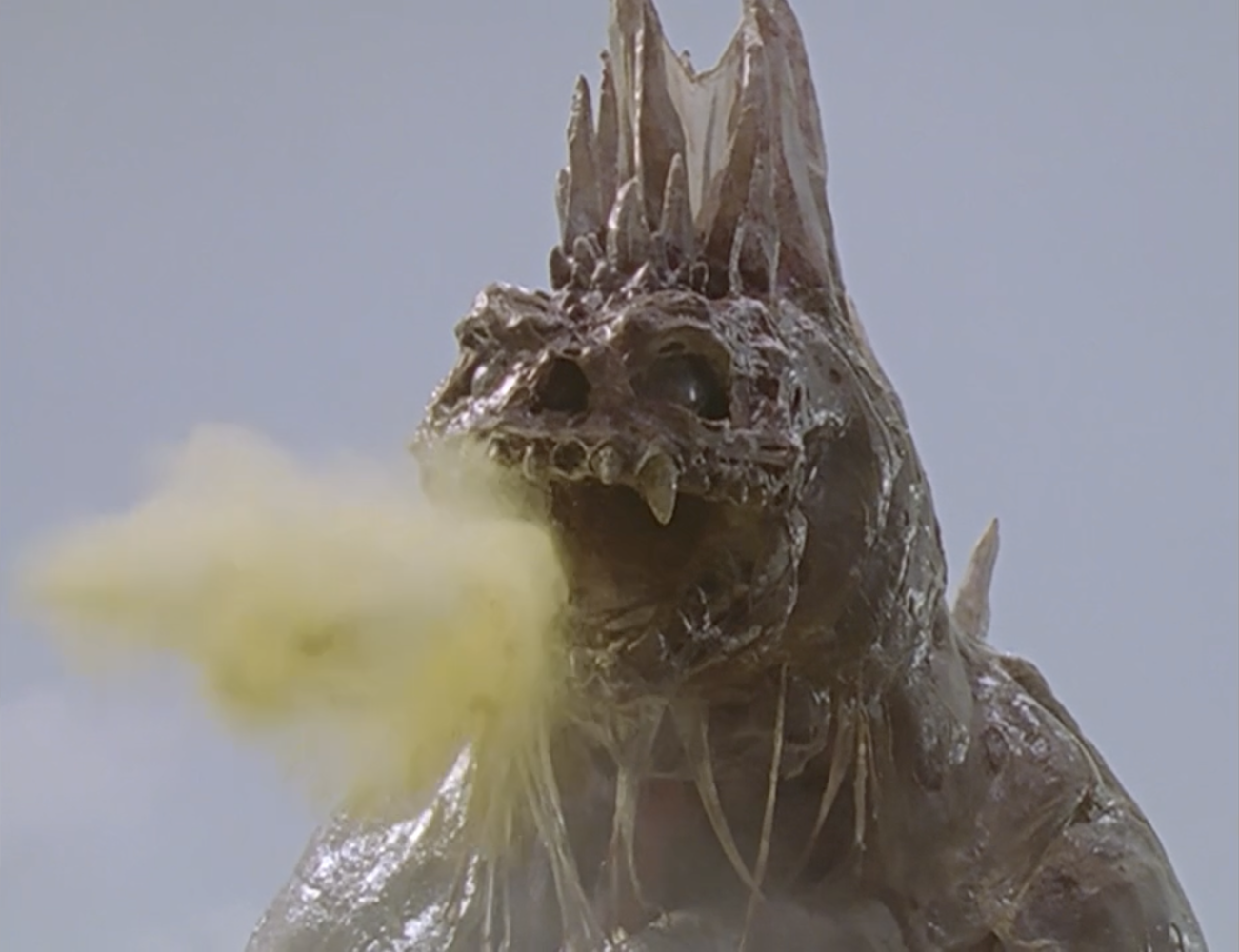
The dead kaiju, known as Sealizar (never named on screen), has washed up on a beach off of Shizuoka. Captain Iruma recommends an investigation into the dead creature, but the rotting hulk stinks so nauseatingly that the locals demand either incinerating it or immediately removing it. Media coverage of the event isn’t trending favorably toward GUTS or the TPC, so Iruma buckles under the pressure and sends Vice-Captain Seiichi Munakata to oversee lifting Sealizar away.
The disposal operation doesn’t last long, because when the GUTS Wings try to airlift Sealizar, the monster resurrects as a shambling undead creature. Now GUTS has a much bigger problem: a smelly, destructive, and seemingly invincible kaiju zombie lumbering inland. If they thought the media coverage was bad before…
We’ve seen undead kaiju in the Ultra shows before, notably Seabozu from Ultraman. Sealizar, however, is a special level of disgusting: a mass of squishy, liquefying decay. I can feel writer Chiaki J. Konaka showing off his background in horror, and the VFX and design teams do a superb job of making the corpse monster revolting. Sealizar is mindless but dangerous, and its attack method of shoving things into its putrescent, festering body (including Tiga’s head) is the definition of “yeeech.” This thing must smell awful enough to empty people’s stomachs. I can’t blame the locals for wanting GUTS to get rid of it as soon as possible.
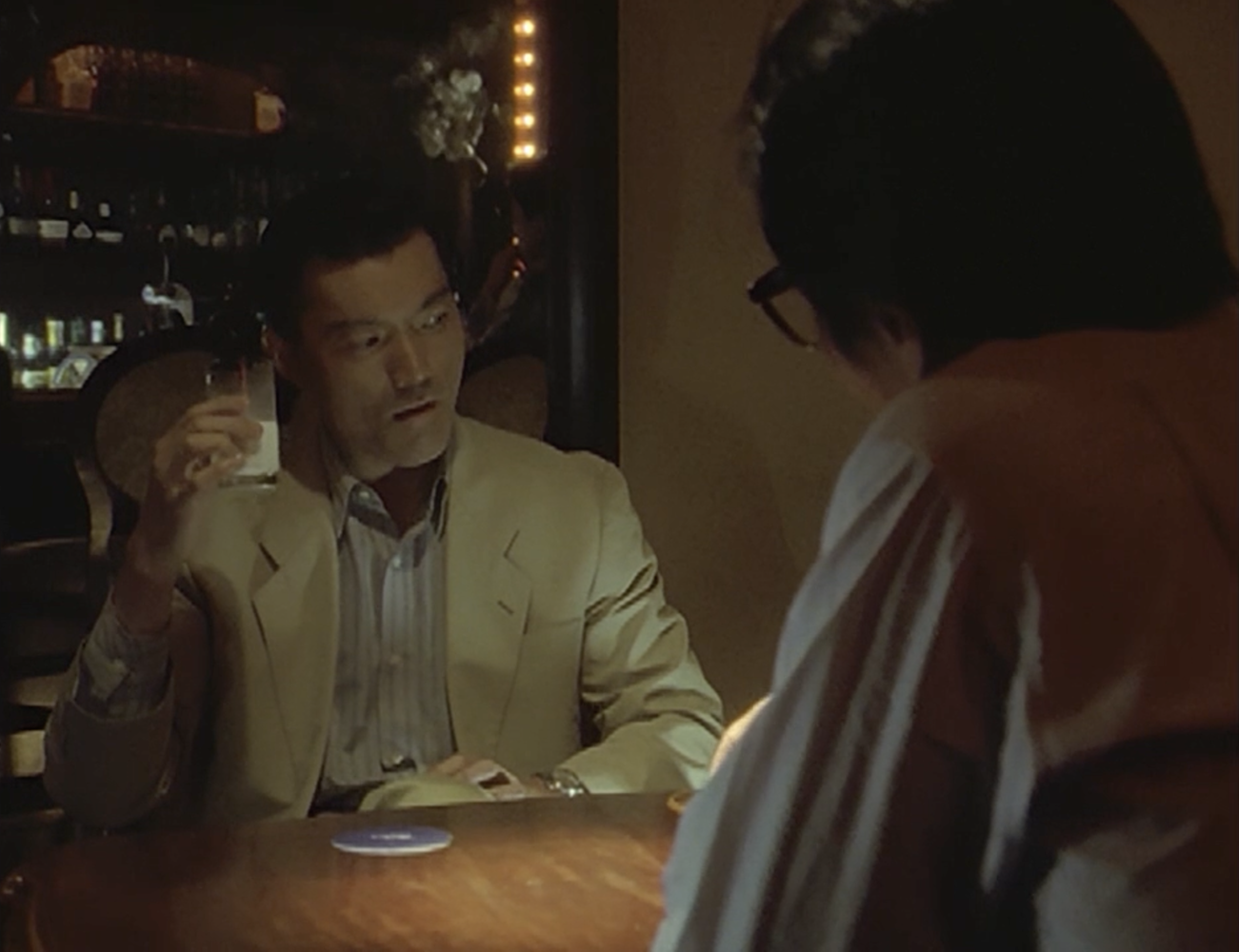
This is an action-heavy episode with shifting strategies as GUTS tries to solve an evolving problem. But it’s also a character piece for Munakata. The episode begins with him in a dimly lit bar, glass of milk in hand, while smoky jazz plays. As he tells Onoda (Akira Ohtani), a reporter he sometimes shares info with, he’s taking a break from alcohol. This noirish scene is a nice touch, not something you’d expect in the sleek, high-tech world of Tiga. The point of this unusual opening — aside from the gag that Munakata is drinking milk in a shadowy bar — is to show the stress Munakata is under as the team’s second-in-command responsible for rallying complex field operations.
The episode doesn’t overplay Munakata’s subplot. It simply lets viewers watch him in action and see how he attempts to handle a frustrating situation that isn’t earning GUTS or TPC any points with the public. Onoda ends up on Munakata’s side, functioning as a POV character for the audience to examine the vice-captain specifically and the role of GUTS in general.
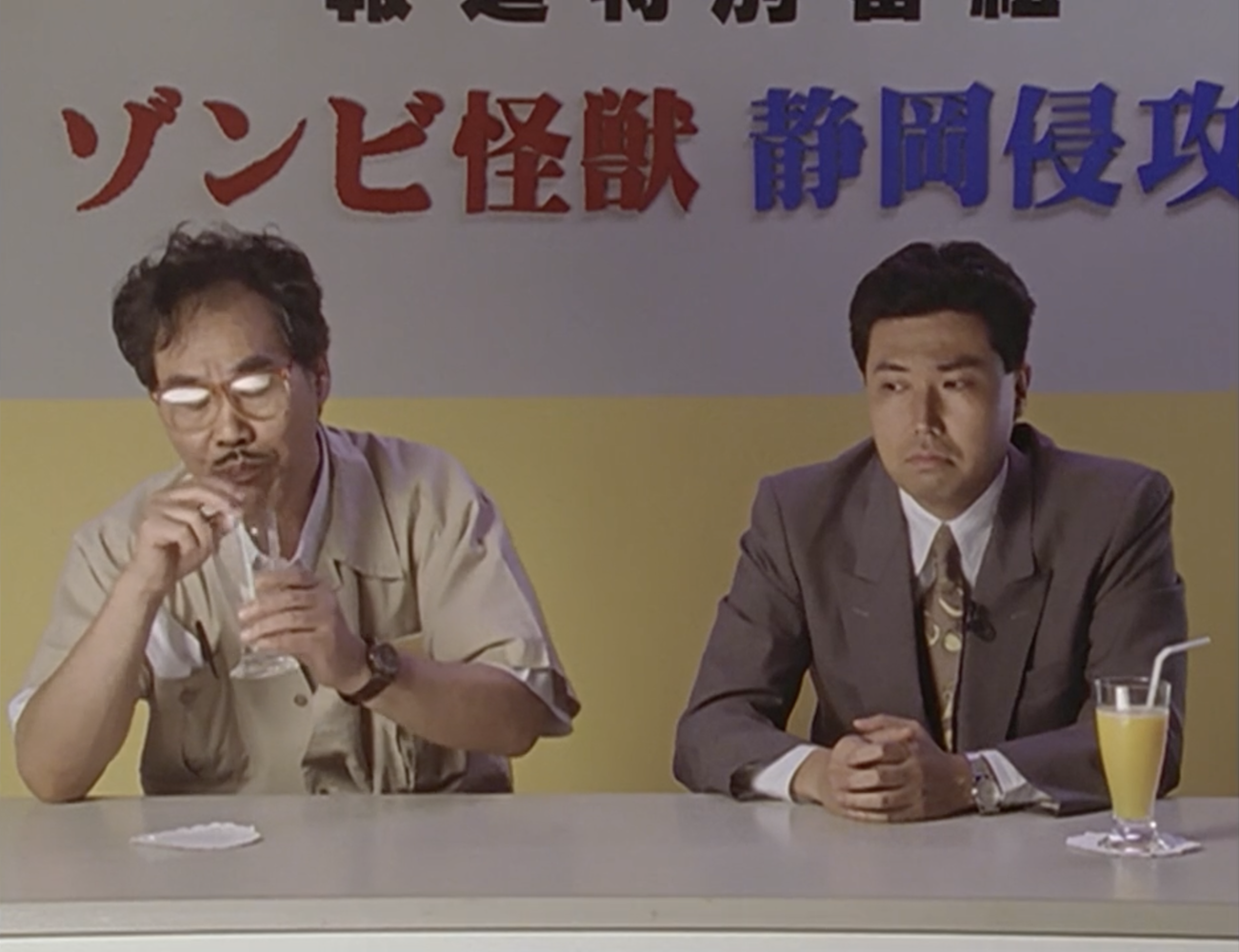
Along with Munakata’s story, the episode gives us some world-building with the media coverage of the zombie kaiju nightmare. Most of the news coverage is quite funny, like the “Monster Disaster Analyst” who I think is drunk on mimosas. The person-on-the-street interviews show a range of public opinions, such anger that the more aggressive Terran Defense Force was replaced with the more pacifist TPC. We’ve already seen this tension within the TPC itself.
One interview subject remarks that she’s not worried about this kaiju because it’s not in Tokyo. A callous-sounding attitude, but in a country where monsters are a regular menace it makes sense many people would feel this way. “It’s not in my neighborhood. I’m going to go about my day.”
There’s a brief bit between Rena and Daigo in an elevator that hints at the beginnings of their romance story. Daigo fumbles a joke as he tries to lighten the mood, and Rena’s response after telling him to be serious is a quiet, “Thanks anyway.” It’s a small moment, but sweet.
At the end, the episode loops back to the smoky bar and Munakata with his milk talking to Onoda. It feels as if Munakata has gone on a long journey during the story, even if he was just doing his job in the field. This sort of subtle characterization is one of Ultraman Tiga’s strengths. Writer Konaka was adept with horror, but he also knew how to get the most from the human side of a gross zombie monster clean-up operation.
Rating: Great
Previous: Goodbye, Planet Earth
Next: Second Contact
 The Ultra Project